VS

Dacia Bigster vs Renault Arkana comparison

Compare performance (158 HP vs 143 HP), boot space and price (20,600 £ vs 28,500 £ ) at a glance. Find out which car is the better choice for you – Dacia Bigster or Renault Arkana?

Dacia Bigster vs Renault Arkana: Key differences

Dacia Bigster

4.6 (10 Reviews)
rate
  • visibly cheaper
  • very slightly more power
  • somewhat quicker 0–100 km/h
  • very slightly lighter
details

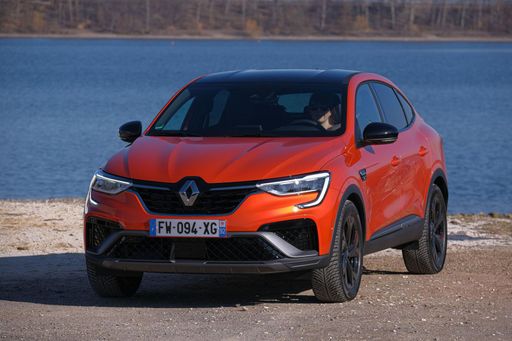
Renault Arkana

4 (7 Reviews)
rate
details

All details on performance, efficiency, range and trunk space can be found in the technical comparison below – including user reviews for both models.

By Achim Sedelmaier

Bigster

The Battle of the Stylish SUVs: Renault Arkana vs. Dacia Bigster

The SUV segment continues to rule the roads, and two names are creating quite the buzz—Renault Arkana and Dacia Bigster. Both offer a combination of style, performance, and practicality, but what are the real differences that set them apart? Let's delve into the technical details and innovations to see which might deserve a spot in your garage.

Arkana

Performance and Powertrain

For the Renault Arkana, power is delivered through a range of engines, including a Full Hybrid and a Petrol MHEV. The full hybrid setup offers up to 143 HP with a maximum torque of 205 Nm, while petrol engines reach as high as 158 HP with 270 Nm, providing an impressive acceleration range of 9.1 to 10.8 seconds for a 0-100 km/h sprint. The automatic transmission supports a seamless driving experience, suitable for city scapes and open highways alike.

Dacia Bigster, on the other hand, presents a mesh of Petrol MHEV, Full Hybrid, and LPG engines. Offering power up to 155 HP and a torque of 230 Nm, its performance may seem slightly modest but rapid nonetheless, with a 0-100 km/h range from 9.7 to 11.2 seconds. Unique to the Bigster is the option for both manual and automatic transmissions, catering to different driver preferences, while also offering both front-wheel and all-wheel drive configurations.


Bigster

Fuel Efficiency and Environmental Impact

Fuel efficiency is a critical consideration for today's buyers, and both vehicles deliver commendably. The Renault Arkana’s fuel consumption ranges between 4.7 to 6 L/100km, depending on the engine choice, positioned closely with its Dacia counterpart. The Bigster offers a fuel consumption range from 4.7 to 6.1 L/100km. With these figures, both SUVs provide environments conscientious designs, with CO2 emissions between 106 to 137 g/km for the Bigster and 106 to 135 g/km for the Arkana.

Arkana

Dimensions and Capacity

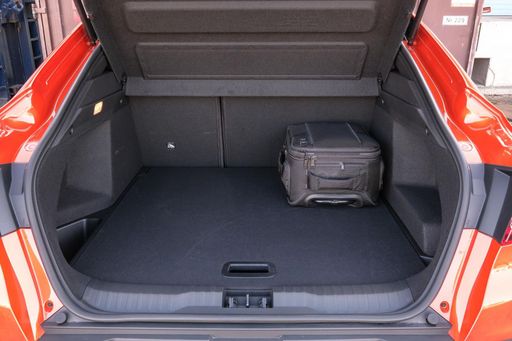
In terms of size, Renault Arkana measures 4568 mm in length, 1821 mm in width, and stands 1576 mm tall. The trunk capacity ranges from 480 to 513 liters, making it versatile for urban commutes and family getaways.

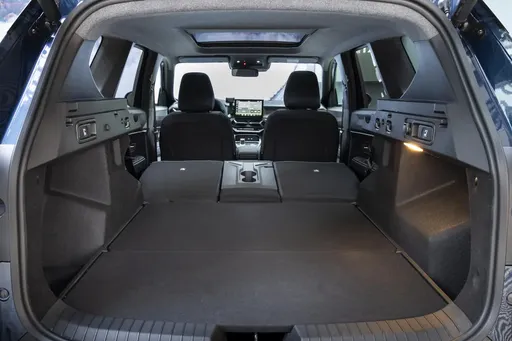
Dacia Bigster offers slightly larger dimensions, measuring 4570 mm in length, 1813 mm in width, and a towering height of 1705 mm. The trunk space varies significantly between 546 and 667 liters, an attribute that could easily sway buyers needing spacious storage for longer road trips or larger cargo.

Bigster

Innovation and Technology

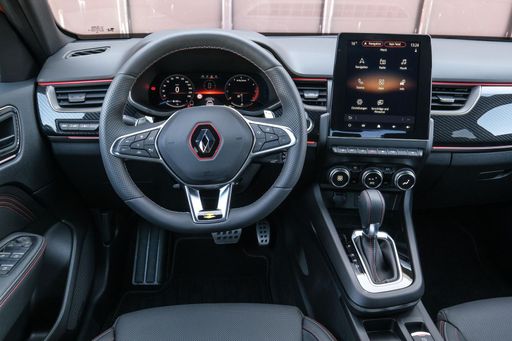
In terms of technology, Renault Arkana embraces modernity with features characteristic of its brand's dedication to innovation. Its automatic gearbox, along with multiple driving aids, makes it a savvy choice for the tech-loving driver. The Arkana also offers hybrid powertrains that demonstrate Renault’s commitment to environmentally friendly technology without compromising on performance.

Dacia Bigster keeps things practical and modern, ensuring that essential technological needs are met without unnecessary complexity. The addition of a manual gearbox option reflects a driver-oriented design ethos, providing a connection that driving enthusiasts may find appealing. The Bigster's varied engine choices demonstrate Dacia's nuanced understanding of market needs and a commitment to providing flexible options.

Arkana

Conclusion: Choosing the Right SUV for You

Choosing between the Renault Arkana and Dacia Bigster ultimately comes down to personal priorities and lifestyle needs. If you are leaning towards a vehicle packed with advanced technology and a seamless urban ride, the Renault Arkana stands out with its more integrated tech offerings and hybrid options.

On the other hand, those driving long distances or transporting larger loads may find Dacia Bigster's generous storage and option of a manual drive appealing. Furthermore, its competitive pricing with essential features makes it an attractive option for budget-conscious buyers wanting a contemporary SUV experience.

Both SUVs bring to the table unique qualities that cater to varying demands, proving that whether you're drawn to the sophistication of Renault or the practicality of Dacia, there's an attractive SUV waiting to hit the road with you.

Here’s where it gets real: The technical differences in detail

Bigster

Costs and Efficiency:

Price and efficiency are often the first things buyers look at. Here it becomes clear which model has the long-term edge – whether at the pump, the plug, or in purchase price.

Dacia Bigster is visibly cheaper – starting at 20,600 £ , while the Renault Arkana costs 28,500 £ . That’s a price difference of around 7,895 £.

Both cars consume an average of 4.7 L/100km – no difference here.

Arkana

Engine and Performance:

Power, torque and acceleration are the classic benchmarks for car enthusiasts – and here, some clear differences start to show.

When it comes to engine power, the Dacia Bigster offers very slightly more power – delivering 158 HP compared to 143 HP. That’s roughly 15 HP more horsepower.

When accelerating from 0 to 100 km/h, the Dacia Bigster is somewhat quicker – completing the sprint in 9.7 s, while the Renault Arkana takes 10.8 s. That’s about 1.1 s quicker.

There’s also a difference in torque: the Dacia Bigster delivers somewhat more torque with 230 Nm compared to 205 Nm. That’s about 25 Nm more.

Bigster

Space and Everyday Use:

Whether family car or daily driver – which one offers more room, flexibility and comfort?

Both vehicles offer seating for 5 people.

In terms of curb weight, Dacia Bigster is very slightly lighter – 1,425 kg compared to 1,510 kg. The difference is around 85 kg.

When it comes to payload, the Dacia Bigster carries marginally more – 465 kg compared to 451 kg. That’s a difference of about 14 kg.

Who wins the race in the data check?

The Dacia Bigster is far ahead overall in the objective data comparison.
This result only shows which model scores more points on paper – not which of the two cars feels right for you.

from £20,600
Bigster

Dacia Bigster

  • Engine Type Petrol MHEV, Full Hybrid, LPG
  • Transmission Manuel, Automatic
  • Drive Type Front-Wheel Drive, All-Wheel Drive
  • Power HP 140 - 158 HP
  • Consumption L/100km 4.7 - 7.2 L/100km
Dacia Bigster
Renault Arkana

Costs and Consumption

View detailed analysis

Engine and Performance

View detailed analysis

Dimensions and Body

View detailed analysis

Dacia Bigster

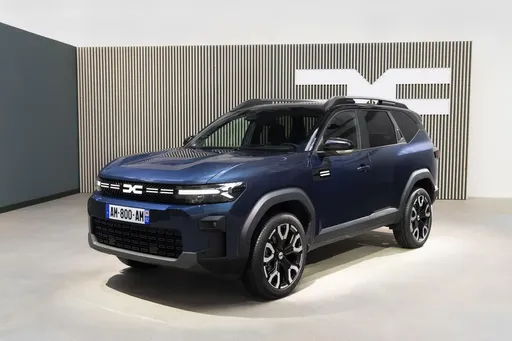
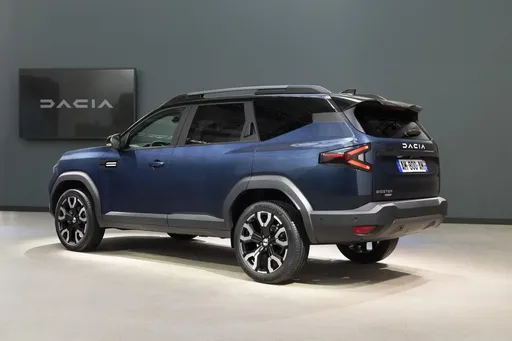
The Dacia Bigster is a straightforward, value-driven SUV that emphasizes space, practicality and low running costs rather than flashy tech. It’s a sensible choice for buyers who want a roomy, well-built family car with rugged styling and easy-to-use features at an affordable price.

details

Renault Arkana

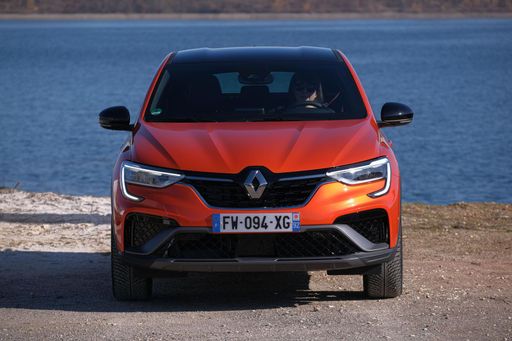
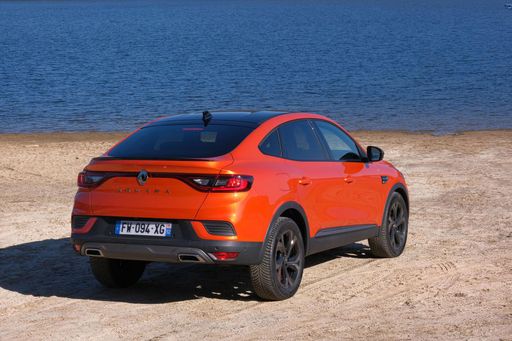
The Renault Arkana turns heads with its coupe-like roofline and SUV practicality, offering stylish presence without pretending to be a supercar. It feels composed and economical on everyday roads, making it a savvy choice for buyers who want flair and sensible running costs with a wink rather than a roar.

details
Dacia Bigster
Renault Arkana

Costs and Consumption

Price
20,600 - 28,100 £
Price
28,500 - 31,900 £
Consumption L/100km
4.7 - 7.2 L/100km
Consumption L/100km
4.7 L/100km
Consumption kWh/100km
-
Consumption kWh/100km
-
Electric Range
-
Electric Range
-
Battery Capacity
-
Battery Capacity
-
co2
106 - 134 g/km
co2
106 g/km
Fuel tank capacity
-
Fuel tank capacity
-

Dimensions and Body

Body Type
SUV
Body Type
SUV
Seats
5
Seats
5
Doors
-
Doors
-
Curb weight
1,425 - 1,611 kg
Curb weight
1,510 kg
Trunk capacity
444 - 667 L
Trunk capacity
-
Length
-
Length
-
Width
1,813 mm
Width
1,821 mm
Height
-
Height
-
Max trunk capacity
-
Max trunk capacity
-
Payload
434 - 465 kg
Payload
451 kg

Engine and Performance

Engine Type
Petrol MHEV, Full Hybrid, LPG
Engine Type
Full Hybrid
Transmission
Manuel, Automatic
Transmission
Automatic
Transmission Detail
Manual Gearbox, Automated Manual, Dual-Clutch Automatic
Transmission Detail
Automatic Gearbox
Drive Type
Front-Wheel Drive, All-Wheel Drive
Drive Type
Front-Wheel Drive
Power HP
140 - 158 HP
Power HP
143 HP
Acceleration 0-100km/h
9.7 - 10.5 s
Acceleration 0-100km/h
10.8 s
Max Speed
-
Max Speed
-
Torque
230 Nm
Torque
205 Nm
Number of Cylinders
3 - 4
Number of Cylinders
4
Power kW
103 - 116 kW
Power kW
105 kW
Engine capacity
1,199 - 1,789 cm3
Engine capacity
1,598 cm3

General

Model Year
2025
Model Year
2025
CO2 Efficiency Class
D, C
CO2 Efficiency Class
C
Brand
Dacia
Brand
Renault
DriveDuel uses data analysis and artificial intelligence to evaluate vehicle data and create content. Content is regularly reviewed and improved. The displayed prices are estimates based on German list prices, adjusted to the respective country’s VAT. Country-specific registration taxes are not included. This information is not legally binding.