
 Deutschland
 France
 Nederland
 Great Britain
 Sverige
 Norge
Norge Danmark
 Suomi
Suomi Italia
 Polska
 España
VS
Hyundai Bayon vs Hongqi H9 – Which car suits you better?
Both models have their strengths – but which one suits you more?
Compare performance, efficiency, price and space directly: Hyundai Bayon or Hongqi H9?
Bayon
@ Hyundai Motor Company
Costs and Efficiency:
When it comes to price and running costs, the biggest differences usually appear. This is often where you see which car fits your budget better in the long run.
Hyundai Bayon has a significantly advantage in terms of price – it starts at 20100 £, while the Hongqi H9 costs 60000 £. That’s a price difference of around 39938 £.
Fuel consumption also shows a difference: Hyundai Bayon manages with 5.40 L and is therefore significantly more efficient than the Hongqi H9 with 9.60 L. The difference is about 4.20 L per 100 km.
Bayon
@ Hyundai Motor Company
Engine and Performance:
Under the bonnet, it becomes clear which model is tuned for sportiness and which one takes the lead when you hit the accelerator.
When it comes to engine power, the Hongqi H9 has a decisively edge – offering 245 HP compared to 100 HP. That’s roughly 145 HP more horsepower.
In acceleration from 0 to 100 km/h, the Hongqi H9 is significantly quicker – completing the sprint in 7.80 s, while the Hyundai Bayon takes 11.30 s. That’s about 3.50 s faster.
In terms of top speed, the Hongqi H9 performs evident better – reaching 230 km/h, while the Hyundai Bayon tops out at 179 km/h. The difference is around 51 km/h.
There’s also a difference in torque: Hongqi H9 pulls decisively stronger with 380 Nm compared to 200 Nm. That’s about 180 Nm difference.
Bayon
@ Hyundai Motor Company
Space and Everyday Use:
Cabin size, boot volume and payload all play a role in everyday practicality. Here, comfort and flexibility make the difference.
Both vehicles offer seating for 5 people.
In curb weight, Hyundai Bayon is decisively lighter – 1170 kg compared to 1875 kg. The difference is around 705 kg.
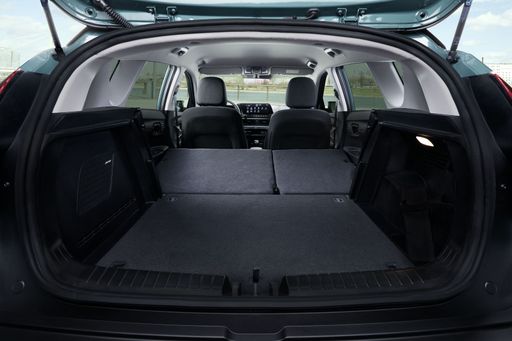
In terms of boot space, the Hyundai Bayon offers clearly more room – 411 L compared to 0 L. That’s a difference of about 411 L.
When it comes to payload, Hyundai Bayon barely noticeable takes the win – 465 kg compared to 450 kg. That’s a difference of about 15 kg.
Who comes out on top?
Overall, the Hyundai Bayon shows itself to be wins the duel decisively and secures the title of DriveDuel Champion.
It convinces with the more balanced overall package and proves to be the more versatile choice for everyday use.
from about £20,100
 @ Hyundai Motor Company
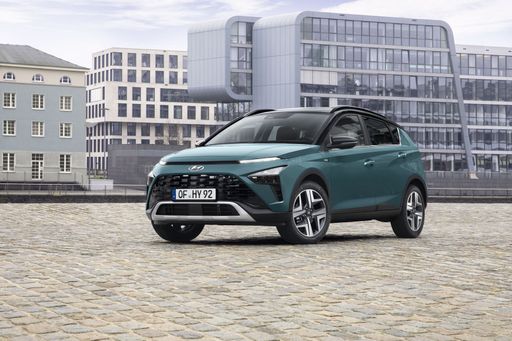
Hyundai Bayon
Hyundai Bayon
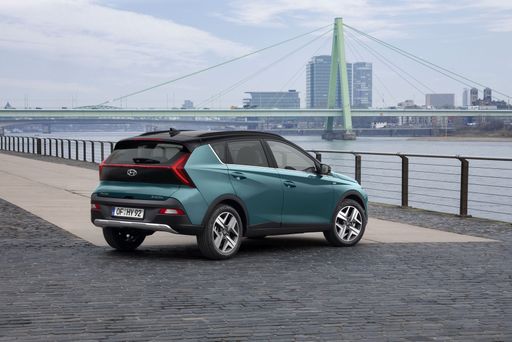
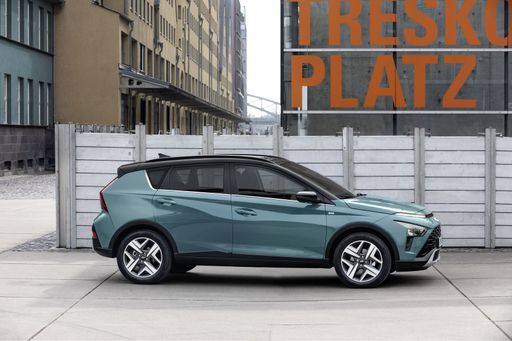
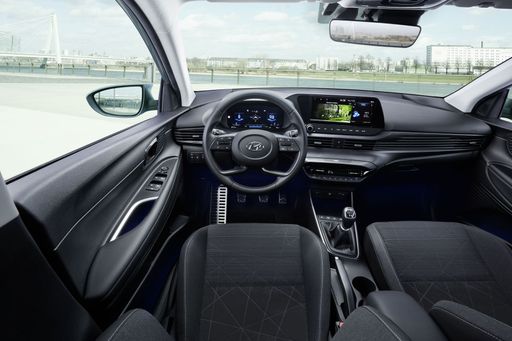
The Hyundai Bayon is a compact crossover that effortlessly merges practicality with modern design. Its sleek exterior and spacious interior make it an ideal choice for urban settings and longer journeys alike. With a focus on comfort and connectivity, this vehicle provides a smooth driving experience paired with advanced technology features.
details
@ Hyundai Motor Company
 @ Hyundai Motor Company
 @ Hyundai Motor Company
 @ Hyundai Motor Company
 @ Hyundai Motor Company
Hongqi H9
The Hongqi H9 asserts itself as a luxury sedan that seamlessly combines sophisticated design with opulent interior features, catering to those who appreciate grandeur and comfort. Characterized by a bold and elegant exterior, it commands the road with a presence that is both modern and majestic. Inside, occupants are treated to a lavish experience, with premium materials and advanced technology throughout, making every journey as pleasurable as possible.
details
Hyundai Bayon
Hongqi H9
|
@ Hyundai Motor Company
|
|
|
|
|
Costs and Consumption |
|
|---|---|
|
Price
20100 - 25800 £
|
Price
60000 £
|
|
Consumption L/100km
5.4 - 5.5 L
|
Consumption L/100km
9.60 L
|
|
Consumption kWh/100km
-
|
Consumption kWh/100km
-
|
|
Electric Range
-
|
Electric Range
-
|
|
Battery Capacity
-
|
Battery Capacity
-
|
|
co2
124 g/km
|
co2
220 g/km
|
|
Fuel tank capacity
40 L
|
Fuel tank capacity
62 L
|
Dimensions and Body |
|
|---|---|
|
Body Type
SUV
|
Body Type
Sedan
|
|
Seats
5
|
Seats
5
|
|
Doors
5
|
Doors
4
|
|
Curb weight
1170 - 1195 kg
|
Curb weight
1875 kg
|
|
Trunk capacity
411 L
|
Trunk capacity
0 L
|
|
Length
4180 mm
|
Length
5137 mm
|
|
Width
1775 mm
|
Width
1904 mm
|
|
Height
1500 mm
|
Height
1493 mm
|
|
Max trunk capacity
1205 L
|
Max trunk capacity
-
|
|
Payload
460 - 465 kg
|
Payload
450 kg
|
Engine and Performance |
|
|---|---|
|
Engine Type
Petrol
|
Engine Type
Petrol MHEV
|
|
Transmission
Manuel, Automatic
|
Transmission
Automatic
|
|
Transmission Detail
Manual Gearbox, Dual-Clutch Automatic
|
Transmission Detail
Dual-Clutch Automatic
|
|
Drive Type
Front-Wheel Drive
|
Drive Type
Rear-Wheel Drive
|
|
Power HP
100 HP
|
Power HP
245 HP
|
|
Acceleration 0-100km/h
11.3 - 12.4 s
|
Acceleration 0-100km/h
7.80 s
|
|
Max Speed
176 - 179 km/h
|
Max Speed
230 km/h
|
|
Torque
172 - 200 Nm
|
Torque
380 Nm
|
|
Number of Cylinders
3
|
Number of Cylinders
4
|
|
Power kW
74 kW
|
Power kW
180 kW
|
|
Engine capacity
998 cm3
|
Engine capacity
1989 cm3
|
General |
|
|---|---|
|
Model Year
2024
|
Model Year
2025
|
|
CO2 Efficiency Class
D
|
CO2 Efficiency Class
G
|
|
Brand
Hyundai
|
Brand
Hongqi
|
What drivetrain options does the Hyundai Bayon have?
The Hyundai Bayon is available as Front-Wheel Drive.
The prices and data displayed are estimates based on German list prices and may vary by country. This information is not legally binding.