
 Deutschland
 France
 Nederland
 Great Britain
 Sverige
 Norge
Norge Danmark
 Suomi
Suomi Italia
 Polska
 España
VS
Land Rover Range Rover vs NIO ET5 – Which one offers the better deal?
Compare performance, boot capacity, efficiency and price at a glance.
Find out which car is the better choice for you – Land Rover Range Rover or NIO ET5?
Range Rover
@ Jaguar Land Rover Media
Costs and Efficiency:
When it comes to price and running costs, the biggest differences usually appear. This is often where you see which car fits your budget better in the long run.
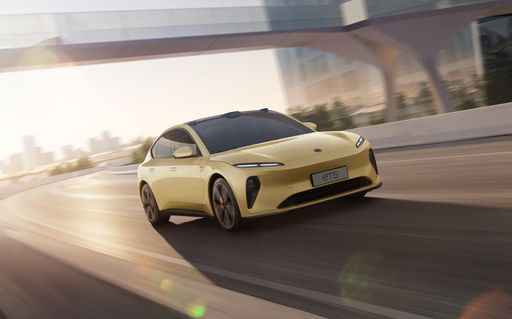
NIO ET5 has a significantly advantage in terms of price – it starts at 40700 £, while the Land Rover Range Rover costs 122700 £. That’s a price difference of around 82028 £.
As for range, the NIO ET5 performs decisively better – achieving up to 590 km, about 473 km more than the Land Rover Range Rover.
ET5
@ NIO Inc.
Engine and Performance:
Power, torque and acceleration are the classic benchmarks for car enthusiasts – and here, some clear differences start to show.
When it comes to engine power, the Land Rover Range Rover has a clearly perceptible edge – offering 615 HP compared to 490 HP. That’s roughly 125 HP more horsepower.
In acceleration from 0 to 100 km/h, the NIO ET5 is to a small extent quicker – completing the sprint in 4 s, while the Land Rover Range Rover takes 4.50 s. That’s about 0.50 s faster.
In terms of top speed, the Land Rover Range Rover performs evident better – reaching 261 km/h, while the NIO ET5 tops out at 200 km/h. The difference is around 61 km/h.
There’s also a difference in torque: Land Rover Range Rover pulls slightly stronger with 800 Nm compared to 700 Nm. That’s about 100 Nm difference.
Range Rover
@ Jaguar Land Rover Media
Space and Everyday Use:
Cabin size, boot volume and payload all play a role in everyday practicality. Here, comfort and flexibility make the difference.
Seats: Land Rover Range Rover offers distinct more seating capacity – 7 vs 5.
In curb weight, NIO ET5 is to a small extent lighter – 2215 kg compared to 2504 kg. The difference is around 289 kg.
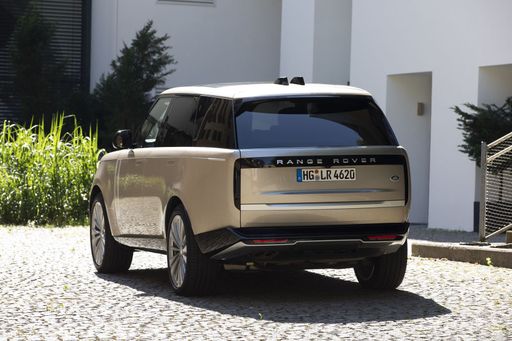
In terms of boot space, the Land Rover Range Rover offers decisively more room – 818 L compared to 386 L. That’s a difference of about 432 L.
In maximum load capacity, the Land Rover Range Rover performs convincingly better – up to 2176 L, which is about 1041 L more than the NIO ET5.
When it comes to payload, Land Rover Range Rover decisively takes the win – 846 kg compared to 475 kg. That’s a difference of about 371 kg.
Who wins the race?
The NIO ET5 proves to be outperforms in nearly all aspects and therefore becomes our DriveDuel Champion!
NIO ET5 is the better all-rounder in this comparison.
from about £40,700
 @ NIO Inc.
NIO ET5
Land Rover Range Rover
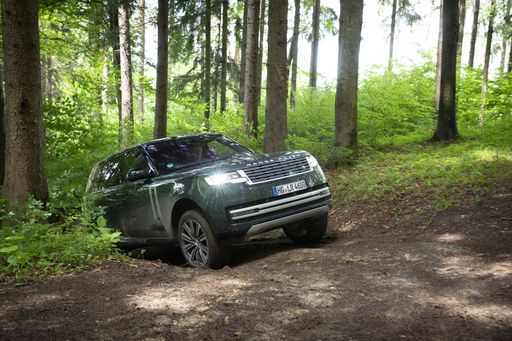
The Land Rover Range Rover epitomises luxury and capability in the realms of off-road vehicles. Its elegant design seamlessly marries sophistication with ruggedness, making it equally suitable for urban environments and challenging terrains. Inside, passengers are treated to a plush interior with premium materials and cutting-edge technology that ensure a comfortable and connected driving experience.
details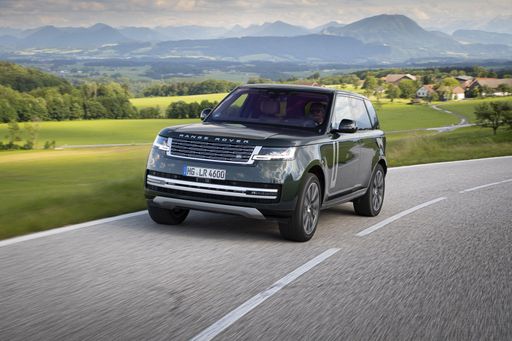 @ Jaguar Land Rover Media
 @ Jaguar Land Rover Media
 @ Jaguar Land Rover Media
 @ Jaguar Land Rover Media
NIO ET5
The ET5, a sleek and innovative model from NIO, seamlessly blends futuristic design with advanced electric vehicle technology. Its interior offers a luxurious yet minimalist vibe, showcasing high-quality materials and cutting-edge digital interfaces. With impressive range capabilities and dynamic performance, the ET5 is set to captivate both car enthusiasts and those focused on sustainable driving solutions.
details
@ NIO Inc.
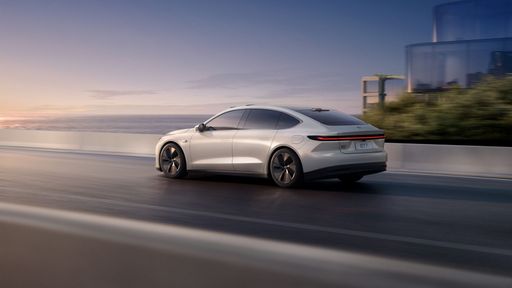 @ NIO Inc.
Land Rover Range Rover
NIO ET5
|
@ Jaguar Land Rover Media
|
@ NIO Inc.
|
|
|
|
Costs and Consumption |
|
|---|---|
|
Price
122700 - 244700 £
|
Price
40700 - 58700 £
|
|
Consumption L/100km
2.7 - 11.7 L
|
Consumption L/100km
-
|
|
Consumption kWh/100km
-
|
Consumption kWh/100km
18.6 - 18.9 kWh
|
|
Electric Range
116 - 117 km
|
Electric Range
456 - 590 km
|
|
Battery Capacity
31.80 kWh
|
Battery Capacity
73.5 - 90 kWh
|
|
co2
62 - 265 g/km
|
co2
0 g/km
|
|
Fuel tank capacity
71 - 90 L
|
Fuel tank capacity
-
|
Dimensions and Body |
|
|---|---|
|
Body Type
Off-Roader
|
Body Type
Hatchback
|
|
Seats
5 - 7
|
Seats
5
|
|
Doors
5
|
Doors
5
|
|
Curb weight
2504 - 2810 kg
|
Curb weight
2215 - 2235 kg
|
|
Trunk capacity
212 - 818 L
|
Trunk capacity
386 L
|
|
Length
5052 - 5258 mm
|
Length
4790 mm
|
|
Width
2047 mm
|
Width
1960 mm
|
|
Height
1870 mm
|
Height
1499 mm
|
|
Max trunk capacity
1841 - 2176 L
|
Max trunk capacity
1135 L
|
|
Payload
589 - 846 kg
|
Payload
455 - 475 kg
|
Engine and Performance |
|
|---|---|
|
Engine Type
Plugin Hybrid, Petrol MHEV, Diesel MHEV
|
Engine Type
Electric
|
|
Transmission
Automatic
|
Transmission
Automatic
|
|
Transmission Detail
Automatic Gearbox
|
Transmission Detail
Reduction Gearbox
|
|
Drive Type
All-Wheel Drive
|
Drive Type
All-Wheel Drive
|
|
Power HP
300 - 615 HP
|
Power HP
490 HP
|
|
Acceleration 0-100km/h
4.5 - 6.6 s
|
Acceleration 0-100km/h
4 s
|
|
Max Speed
218 - 261 km/h
|
Max Speed
200 km/h
|
|
Torque
650 - 800 Nm
|
Torque
700 Nm
|
|
Number of Cylinders
6 - 8
|
Number of Cylinders
-
|
|
Power kW
221 - 452 kW
|
Power kW
360 kW
|
|
Engine capacity
2997 - 4395 cm3
|
Engine capacity
-
|
General |
|
|---|---|
|
Model Year
2025
|
Model Year
2023
|
|
CO2 Efficiency Class
B, G
|
CO2 Efficiency Class
A
|
|
Brand
Land Rover
|
Brand
NIO
|
What drive types are available for the Land Rover Range Rover?
Available configurations include All-Wheel Drive.
The prices and data displayed are estimates based on German list prices and may vary by country. This information is not legally binding.