VS

Skoda Elroq vs Hyundai Kona comparison

Compare performance (340 HP vs 204 HP), boot space and price (32,000 £ vs 23,600 £ ) at a glance. Find out which car is the better choice for you – Skoda Elroq or Hyundai Kona?

Skoda Elroq vs Hyundai Kona: Key differences

Skoda Elroq

4.5 (8 Reviews)
rate
  • noticeably more power
  • slightly more electric range
  • clearly quicker 0–100 km/h
  • very slightly more trunk space
details

Hyundai Kona

4.5 (8 Reviews)
rate
  • noticeably cheaper
  • barely more efficient
  • significantly lighter
details

All details on performance, efficiency, range and trunk space can be found in the technical comparison below – including user reviews for both models.

By Achim Sedelmaier

Elroq

Hyundai Kona VS Skoda Elroq — practical comparison for real buyers

Hyundai Kona VS Skoda Elroq pits a city‑savvy, efficiency‑minded compact SUV against a calmer, roomier rival that leans toward long‑distance comfort. This piece focuses on how each car feels in day‑to‑day life — character, cabin, practicality and who will sleep better after a long drive. You’ll read clear contrasts: which one is easier to live with in town, which one soothes on the motorway, and where compromises crop up. The goal is to help you match needs to personality rather than compare specs in a spreadsheet.
Kona

Character and driving personality

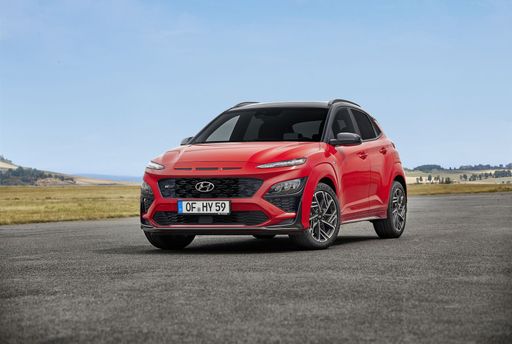
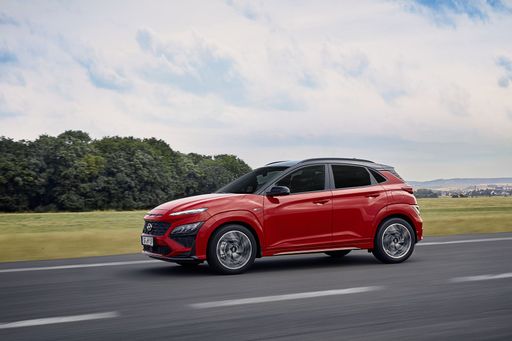
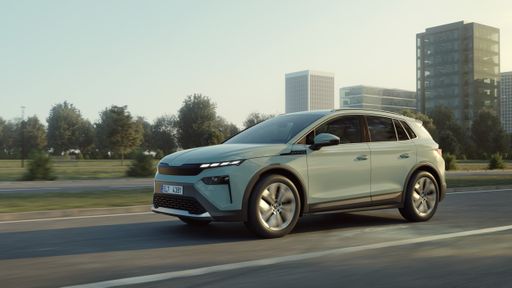
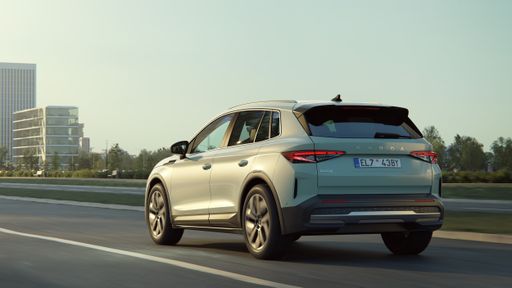
The Hyundai Kona drives like a lighter, nimbler B‑SUV — quick to turn into a parking space and forgiving in stop‑start urban traffic — while the Skoda Elroq presents itself as a composed, steady companion for longer trips. Kona’s steering and suspension bias make it feel agile and easy to hustle down narrow streets, whereas Elroq’s heavier, planted feel soaks up gusts and lane changes with calm. That difference matters: Kona rewards city commuters and tight‑parking situations, Elroq rewards drivers who prefer to settle in and relax on fast roads. If you want sharper responses, neither car is a sports car, but Kona tilts toward liveliness and Elroq toward serenity.

Elroq

Comfort and long‑distance behavior

On the motorway the Skoda Elroq clearly leans into isolation and ride composure, offering a quieter cabin and a suspension that masks longer road hours better than the Kona. The Hyundai Kona is comfortable in town and on shorter commutes, but under sustained high‑speed work the hybrid setups and lighter structure can feel busier and a touch more strained. For anyone who does frequent long runs with passengers, Elroq’s relaxed cruise and subdued noise levels save fatigue. Conversely, Kona’s city‑tuned comfort and slightly firmer responses make it a pleasant, confidence‑inspiring daily driver for urban life.

Kona

Cabin feel, controls and infotainment

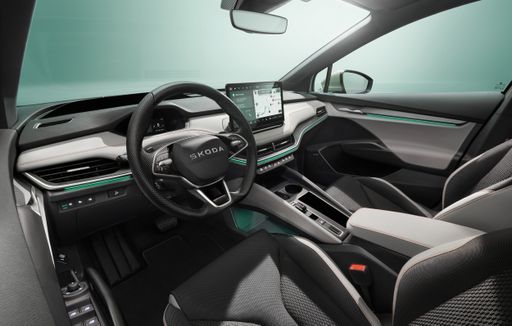
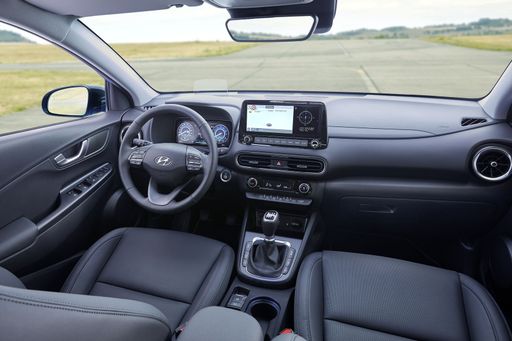
Inside, the Kona trades sleek minimalism for practical tactility: physical buttons, direct menus and a layout that’s easy to operate without a learning curve. The Elroq goes cleaner and more modern with a large touchscreen focus, which looks smart but places basic functions like climate control behind touch menus — a trade‑off between polish and quick ergonomics. Material quality feels comparable, but the Kona aims for functional clarity while the Elroq aims for a calmer, slightly more refined ambience. If you care how quickly you can adjust settings without taking your eyes off the road, Kona’s physical controls win; if you prefer a showroom‑clean dash and don’t mind the touchscreen, Elroq pulls ahead.

Elroq

Practicality and everyday usability

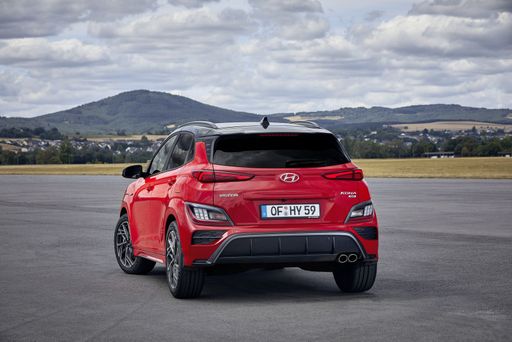
Both cars are family‑friendly, but they make different practical choices: the Hyundai Kona offers a very usable boot and straightforward load‑in, plus optional seat‑folding layouts that simplify mixed cargo and passenger days. The Skoda Elroq gives up a little on loading ergonomics with a higher sill and a not‑fully flat floor, yet compensates with clever in‑cabin storage, roomy rear seats and thoughtful details that make daily organization easier. For parents juggling strollers and weekly shopping, Kona’s easier loading and simple layout feel like lower‑stress solutions. For rear‑seat comfort and long trips with adults in the back, Elroq feels more considerate and comfortable.

Kona

Buyer fit and final trade‑offs before the technical deep‑dive

Choose the Hyundai Kona if you value city agility, straightforward controls, a very usable boot and a lower entry price — it suits commuters, small families and tech‑minded buyers who want simple, efficient daily transport. Opt for the Skoda Elroq if your priority is rear‑seat comfort, motorway serenity, and an interior filled with practical solutions that reward longer journeys and passengers’ comfort. Each car makes concessions: Kona sacrifices some long‑distance hush for urban ease, Elroq sacrifices a bit of loading convenience for cabin calm and rear space. Read on to the technical comparison to check exact range, charging behavior and performance so you can decide which set of trade‑offs lines up with your routine.

Here’s where it gets real: The technical differences in detail

Elroq

Costs and Efficiency:

When it comes to price and running costs, the biggest differences usually appear. This is often where you see which car fits your budget better in the long run.

Hyundai Kona is noticeably cheaper – starting at 23,600 £ , while the Skoda Elroq costs 32,000 £ . That’s a price difference of around 8,477 £.

In terms of energy consumption, the Hyundai Kona is barely more efficient: consuming 14.6 kWh/100km compared to 15.1 kWh/100km for the Skoda Elroq. That’s a difference of about 0.5 kWh/100km.

As for electric range, the Skoda Elroq offers slightly more range – reaching up to 574 km, about 64 km more than the Hyundai Kona.

Kona

Engine and Performance:

Power, torque and acceleration are the classic benchmarks for car enthusiasts – and here, some clear differences start to show.

When it comes to engine power, the Skoda Elroq offers noticeably more power – delivering 340 HP compared to 204 HP. That’s roughly 136 HP more horsepower.

When accelerating from 0 to 100 km/h, the Skoda Elroq is clearly quicker – completing the sprint in 5.4 s, while the Hyundai Kona takes 8.1 s. That’s about 2.7 s quicker.

There’s also a difference in torque: the Skoda Elroq delivers clearly more torque with 679 Nm compared to 265 Nm. That’s about 414 Nm more.

Elroq

Space and Everyday Use:

Cabin size, boot volume and payload all play a role in everyday practicality. Here, comfort and flexibility make the difference.

Both vehicles offer seating for 5 people.

In terms of curb weight, Hyundai Kona is significantly lighter – 1,370 kg compared to 2,036 kg. The difference is around 666 kg.

Looking at boot space, the Skoda Elroq offers very slightly more boot space – 470 L compared to 466 L. That’s a difference of about 4 L.

When it comes to payload, the Skoda Elroq carries slightly more – 549 kg compared to 490 kg. That’s a difference of about 59 kg.

Who wins the race in the data check?

The Skoda Elroq is far ahead overall in the objective data comparison.
This result only shows which model scores more points on paper – not which of the two cars feels right for you.

from £32,000
Elroq

Skoda Elroq

  • Engine Type Electric
  • Transmission Automatic
  • Drive Type Rear-Wheel Drive, All-Wheel Drive
  • Power HP 190 - 340 HP
  • Consumption kWh/100km 15.1 - 16.3 kWh/100km
  • Electric Range 441 - 574 km
Skoda Elroq
Hyundai Kona

Costs and Consumption

View detailed analysis

Engine and Performance

View detailed analysis

Dimensions and Body

View detailed analysis

Skoda Elroq

The Skoda Elroq is a practical and well-rounded compact SUV that blends clever packaging with a calm, comfortable ride. It offers a sensible interior, straightforward technology and a value-focused approach, making it a particularly good choice for families and everyday drivers.

details

Hyundai Kona

The Hyundai Kona is a compact crossover that pairs bold styling with practical everyday usability, offering a comfortable cabin and intuitive tech for modern drivers. Available in both conventional and electrified versions, Kona brings lively handling and strong value for buyers who want crossover versatility and standout character.

details
Skoda Elroq
Hyundai Kona

Costs and Consumption

Price
32,000 - 47,000 £
Price
23,600 - 41,900 £
Consumption L/100km
-
Consumption L/100km
4.6 - 7 L/100km
Consumption kWh/100km
15.1 - 16.3 kWh/100km
Consumption kWh/100km
14.6 - 16.1 kWh/100km
Electric Range
441 - 574 km
Electric Range
380 - 510 km
Battery Capacity
-
Battery Capacity
-
co2
0 g/km
co2
0 - 163 g/km
Fuel tank capacity
-
Fuel tank capacity
-

Dimensions and Body

Body Type
SUV
Body Type
SUV
Seats
5
Seats
5
Doors
-
Doors
-
Curb weight
2,036 - 2,255 kg
Curb weight
1,370 - 1,773 kg
Trunk capacity
470 L
Trunk capacity
466 L
Length
-
Length
-
Width
1,884 mm
Width
1,825 mm
Height
-
Height
-
Max trunk capacity
-
Max trunk capacity
-
Payload
482 - 549 kg
Payload
420 - 490 kg

Engine and Performance

Engine Type
Electric
Engine Type
Petrol, Full Hybrid, Electric
Transmission
Automatic
Transmission
Manuel, Automatic
Transmission Detail
Reduction Gearbox
Transmission Detail
Manual Gearbox, Dual-Clutch Automatic, Reduction Gearbox
Drive Type
Rear-Wheel Drive, All-Wheel Drive
Drive Type
Front-Wheel Drive, All-Wheel Drive
Power HP
190 - 340 HP
Power HP
115 - 204 HP
Acceleration 0-100km/h
5.4 - 8.5 s
Acceleration 0-100km/h
8.1 - 11.9 s
Max Speed
-
Max Speed
-
Torque
350 - 679 Nm
Torque
200 - 265 Nm
Number of Cylinders
-
Number of Cylinders
3 - 4
Power kW
140 - 250 kW
Power kW
85 - 150 kW
Engine capacity
-
Engine capacity
998 - 1,598 cm3

General

Model Year
2026
Model Year
2025
CO2 Efficiency Class
A
CO2 Efficiency Class
D, C, E, F, A
Brand
Skoda
Brand
Hyundai
DriveDuel uses data analysis and artificial intelligence to evaluate vehicle data and create content. Content is regularly reviewed and improved. The displayed prices are estimates based on German list prices, adjusted to the respective country’s VAT. Country-specific registration taxes are not included. This information is not legally binding.