VS

Skoda Enyaq vs Mercedes EQB comparison

Compare performance (340 HP vs 292 HP), boot space and price (36,800 £ vs 45,900 £ ) at a glance. Find out which car is the better choice for you – Skoda Enyaq or Mercedes EQB?

Skoda Enyaq vs Mercedes EQB: Key differences

Skoda Enyaq

4.6 (5 Reviews)
rate
  • visibly cheaper
  • moderately more power
  • barely more efficient
  • very slightly more electric range
  • a bit quicker 0–100 km/h
  • very slightly lighter
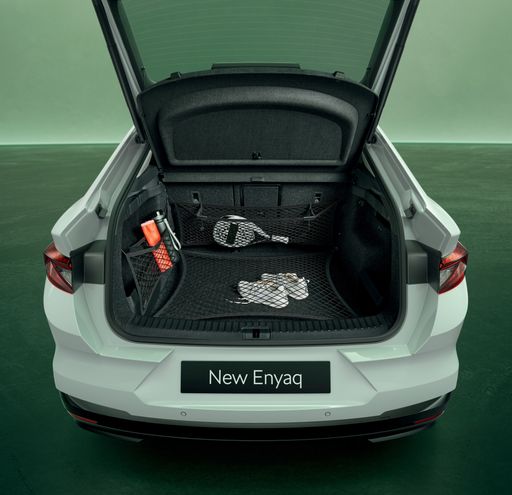
  • moderately more trunk space
details

Mercedes EQB

4.3 (4 Reviews)
rate
details

All details on performance, efficiency, range and trunk space can be found in the technical comparison below – including user reviews for both models.

By Achim Sedelmaier

Enyaq

Quick take: Mercedes EQB and Skoda Enyaq face off

The Mercedes EQB and the Skoda Enyaq arrive with different priorities, which is why shoppers often frame the choice as Mercedes EQB VS Skoda Enyaq. The EQB leans into Mercedes’ premium feel and the unusual option of seven seats in a compact footprint, while the Enyaq prioritises spaciousness, long‑distance calm and a stronger value proposition. In everyday terms that means the EQB sells comfort and brand cachet at a higher price, and the Enyaq trades a bit of gloss for more luggage, more usable rear room and less fuss on the motorway. These are not two flavors of the same car but two answers to family‑SUV needs: one upscale and versatile, the other composed and pragmatic. Your decision will come down to whether you value Mercedes polish and occasional extra seats or steady, roomy utility and travel efficiency.
EQB

Cabin feel and perceived quality

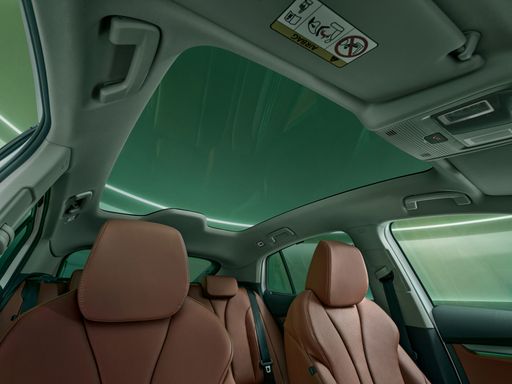
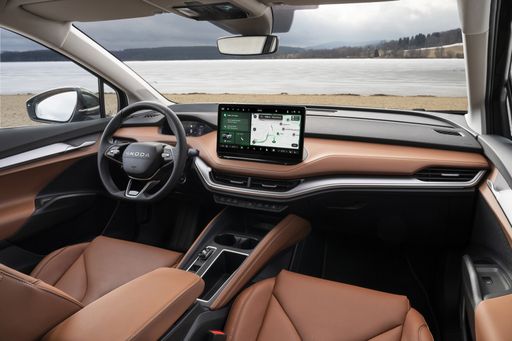
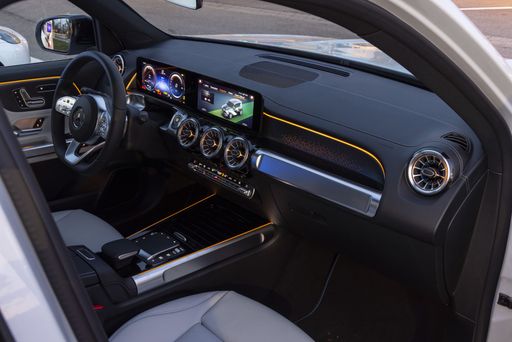
Step inside the Mercedes EQB and you immediately notice the intent to feel premium: materials, ambient lighting and that Mercedes layout read as classier than the Enyaq. The Skoda Enyaq, however, impresses with clean, functional design and clever storage that feels thoughtfully engineered rather than ostentatious. Mercedes’ MBUX brings high‑end tech and helpful route planning but can feel busy or fiddly in daily use, whereas the Enyaq’s interface is plainer and sometimes missing physical knobs, which frustrates some users despite being easier to live with once set up. In short, the EQB sells emotion and finish, the Enyaq sells pragmatic usability and a near‑premium feel without the premium price tag.

Enyaq

Space, practicality and family use

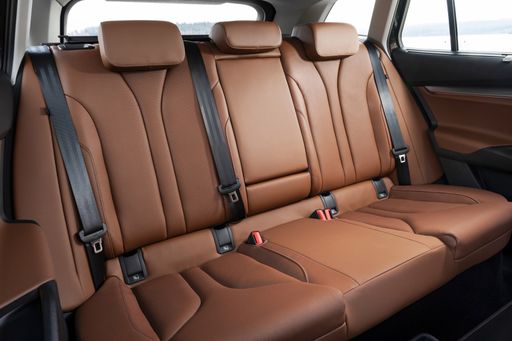
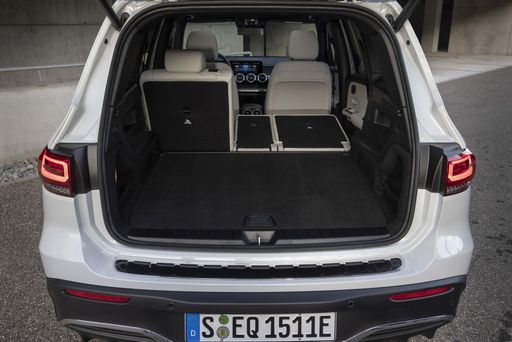
If cargo and real rear‑seat comfort are top priorities, the Skoda Enyaq makes life easier with a squarer boot and roomier back seats that accommodate child seats and adults without gymnastics. The Mercedes EQB counters with the unique option of two extra seats in the back, which is useful for families who occasionally need seven places — but those third‑row seats are clearly for kids and shrink usable luggage room when deployed. Both cars fit five passengers comfortably in normal use, yet the Enyaq’s flat floor and wider doorway make everyday loading and child‑seat handling less of a hassle. So choose the EQB if occasional third‑row flexibility and Mercedes practicality matter; choose the Enyaq if you want consistent space and a larger, more usable boot every day.

EQB

Comfort and long‑distance behavior

On long trips the Skoda Enyaq shows its strengths: an exceptionally quiet cabin and composed ride that make motorway miles feel effortless, and a charging and range story that keeps stops more predictable. The Mercedes EQB is also calm at lower speeds and very comfortable in town, but its charging rate and consumption mean you’ll plan more and likely face longer pauses on extended runs. Wind and tyre noise can intrude on the EQB at higher speeds depending on spec, while the Enyaq’s strong noise suppression keeps conversations and music calmer over distance. For frequent motorway driving the Enyaq’s steadier long‑haul behavior feels distinctly less taxing; the EQB rewards those who value a plush, premium environment closer to home and shorter trips.

Enyaq

City friendliness and daily usability

In urban use the Mercedes EQB plays to its strengths with excellent visibility, a compact feeling in traffic and Mercedes’ driver aids that simplify close‑quarters manoeuvres. The Skoda Enyaq is larger on paper but surprisingly manoeuvrable—especially in rear‑wheel‑drive guise—and wins on everyday practicality thanks to its straightforward storage and a bigger boot for weekly shopping or pram handling. The EQB’s interior trim and small‑car dimensions make it feel nicer in tight city contexts; the Enyaq’s greater cargo capacity and easier rear access make it more useful for real family lives. Consider the EQB for refined city commuting with premium touches, and the Enyaq if your daily routine includes frequent loading, longer commutes or weekend gear hauls.

EQB

Buyer fit: who should pick which car

The Mercedes EQB suits buyers chasing a compact Mercedes with a premium cabin, excellent day‑to‑day comfort and the odd need for seven seats — ideal for families who prioritise brand, interior polish and urban ease over pure range economics. The Skoda Enyaq fits buyers who want maximum space, a quieter motorway companion and better real‑world practicality at a lower price point, making it the sensible choice for regular long‑distance driving and luggage‑heavy family life. If option costs and long‑haul charging predictability worry you, the Enyaq will feel less compromising; if interior quality, badge and occasional extra seats matter more, the EQB will keep you satisfied. Read on to the technical comparison for the measurable ways these character differences translate into range, charging and cargo figures that will affect real ownership decisions.

Here’s where it gets real: The technical differences in detail

Enyaq

Costs and Efficiency:

Looking at overall running costs, both models reveal some interesting differences in everyday economy.

Skoda Enyaq is visibly cheaper – starting at 36,800 £ , while the Mercedes EQB costs 45,900 £ . That’s a price difference of around 9,021 £.

In terms of energy consumption, the Skoda Enyaq is barely more efficient: consuming 14.9 kWh/100km compared to 15.2 kWh/100km for the Mercedes EQB. That’s a difference of about 0.3 kWh/100km.

As for electric range, the Skoda Enyaq offers very slightly more range – reaching up to 589 km, about 54 km more than the Mercedes EQB.

EQB

Engine and Performance:

Under the bonnet, it becomes clear which model is tuned for sportiness and which one takes the lead when you hit the accelerator.

When it comes to engine power, the Skoda Enyaq offers moderately more power – delivering 340 HP compared to 292 HP. That’s roughly 48 HP more horsepower.

When accelerating from 0 to 100 km/h, the Skoda Enyaq is a bit quicker – completing the sprint in 5.4 s, while the Mercedes EQB takes 6.2 s. That’s about 0.8 s quicker.

There’s also a difference in torque: the Skoda Enyaq delivers visibly more torque with 679 Nm compared to 520 Nm. That’s about 159 Nm more.

Enyaq

Space and Everyday Use:

Beyond pure performance, interior space and usability matter most in daily life. This is where you see which car is more practical and versatile.

Both vehicles offer seating for 5 people.

In terms of curb weight, Skoda Enyaq is very slightly lighter – 2,074 kg compared to 2,105 kg. The difference is around 31 kg.

Looking at boot space, the Skoda Enyaq offers moderately more boot space – 585 L compared to 495 L. That’s a difference of about 90 L.

When it comes to payload, the Skoda Enyaq carries somewhat more – 526 kg compared to 435 kg. That’s a difference of about 91 kg.

Who wins the race in the data check?

The Skoda Enyaq is decisively ahead in the objective data comparison.
This result only shows which model scores more points on paper – not which of the two cars feels right for you.

from £36,800
Enyaq

Skoda Enyaq

  • Engine Type Electric
  • Transmission Automatic
  • Drive Type Rear-Wheel Drive, All-Wheel Drive
  • Power HP 190 - 340 HP
  • Consumption kWh/100km 14.9 - 15.9 kWh/100km
  • Electric Range 449 - 589 km
Skoda Enyaq
Mercedes EQB

Costs and Consumption

View detailed analysis

Engine and Performance

View detailed analysis

Dimensions and Body

View detailed analysis

Skoda Enyaq

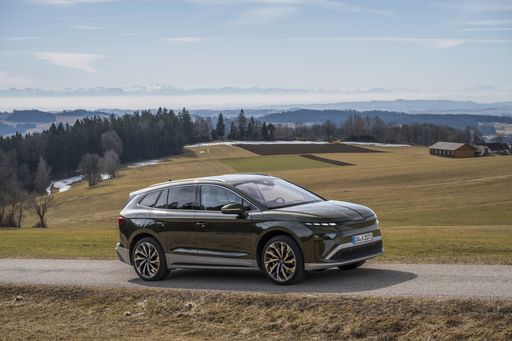
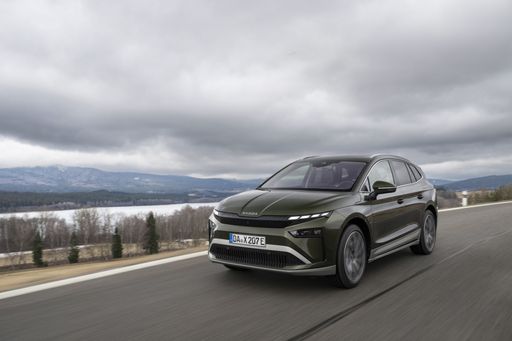
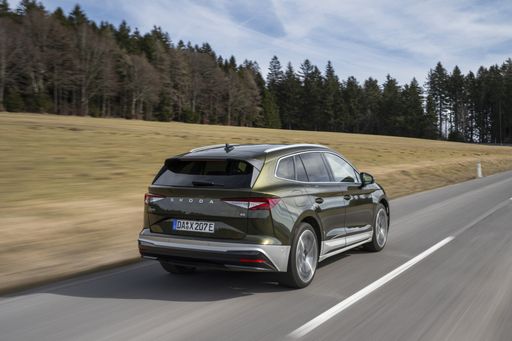
The Skoda Enyaq is a practical and well-appointed electric SUV that blends a roomy interior and everyday usability with clean, understated design. It’s a comfortable, efficient choice for buyers who want a sensible electric family car without flash, backed by solid build quality and clever practicality.

details

Mercedes EQB

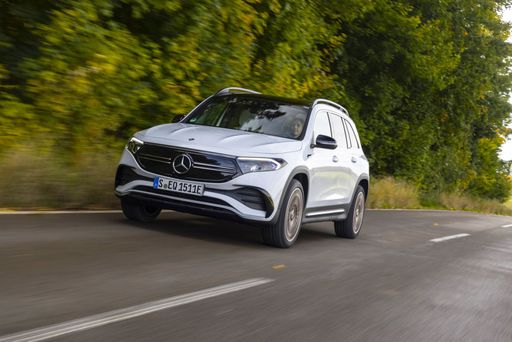
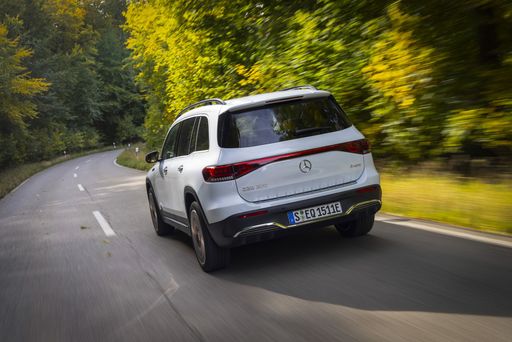
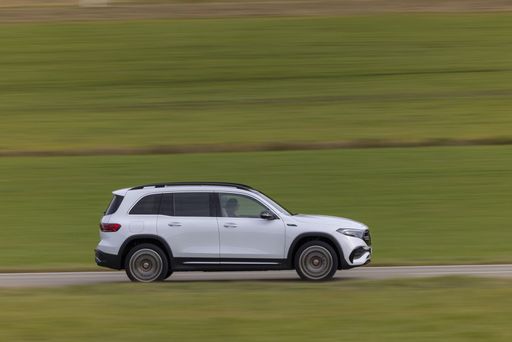
The Mercedes EQB is an electric compact SUV that dresses Mercedes' premium feel in practical clothing, with flexible seating and a serene, composed ride that turns everyday errands into a small luxury. It won't thrill the enthusiast, but for buyers who want a smart, spacious and well-made EV with tasteful tech and real-world usability, the EQB is a sensible, slightly buttoned-up choice that impresses without shouting.

details
Skoda Enyaq
Mercedes EQB

Costs and Consumption

Price
36,800 - 52,800 £
Price
45,900 - 58,900 £
Consumption L/100km
-
Consumption L/100km
-
Consumption kWh/100km
14.9 - 15.9 kWh/100km
Consumption kWh/100km
15.2 - 17.2 kWh/100km
Electric Range
449 - 589 km
Electric Range
468 - 535 km
Battery Capacity
-
Battery Capacity
70.5 kWh
co2
0 g/km
co2
0 g/km
Fuel tank capacity
-
Fuel tank capacity
-

Dimensions and Body

Body Type
SUV
Body Type
SUV
Seats
5
Seats
5
Doors
-
Doors
5
Curb weight
2,074 - 2,284 kg
Curb weight
2,105 - 2,170 kg
Trunk capacity
570 - 585 L
Trunk capacity
495 L
Length
-
Length
4,684 mm
Width
1,879 mm
Width
1,834 mm
Height
-
Height
1,654 - 1,689 mm
Max trunk capacity
-
Max trunk capacity
1,710 L
Payload
449 - 526 kg
Payload
435 kg

Engine and Performance

Engine Type
Electric
Engine Type
Electric
Transmission
Automatic
Transmission
Automatic
Transmission Detail
Reduction Gearbox
Transmission Detail
Reduction Gearbox
Drive Type
Rear-Wheel Drive, All-Wheel Drive
Drive Type
Front-Wheel Drive, All-Wheel Drive
Power HP
190 - 340 HP
Power HP
190 - 292 HP
Acceleration 0-100km/h
5.4 - 8.6 s
Acceleration 0-100km/h
6.2 - 8.9 s
Max Speed
-
Max Speed
160 km/h
Torque
350 - 679 Nm
Torque
385 - 520 Nm
Number of Cylinders
-
Number of Cylinders
-
Power kW
140 - 250 kW
Power kW
140 - 215 kW
Engine capacity
-
Engine capacity
-

General

Model Year
2026
Model Year
2,024 - 2,025
CO2 Efficiency Class
A
CO2 Efficiency Class
A
Brand
Skoda
Brand
Mercedes-Benz
DriveDuel uses data analysis and artificial intelligence to evaluate vehicle data and create content. Content is regularly reviewed and improved. The displayed prices are estimates based on German list prices, adjusted to the respective country’s VAT. Country-specific registration taxes are not included. This information is not legally binding.