VS

Suzuki S-Cross vs Honda HR-V comparison

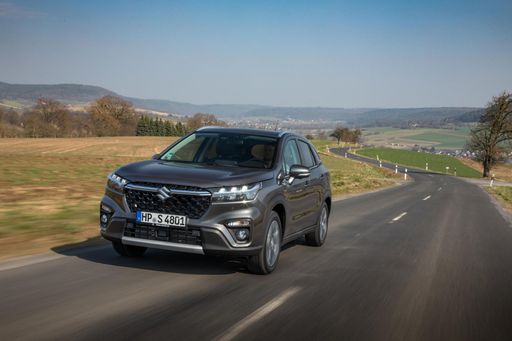
Compare performance (110 HP vs 131 HP), boot space and price (21,800 £ vs 29,100 £ ) at a glance. Find out which car is the better choice for you – Suzuki S-Cross or Honda HR-V?

Suzuki S-Cross vs Honda HR-V: Key differences

Suzuki S-Cross

4.7 (4 Reviews)
rate
  • noticeably cheaper
  • barely more efficient
  • somewhat lighter
  • markedly more trunk space
details

Honda HR-V

4.3 (15 Reviews)
rate
  • moderately more power
details

All details on performance, efficiency, range and trunk space can be found in the technical comparison below – including user reviews for both models.

By Achim Sedelmaier

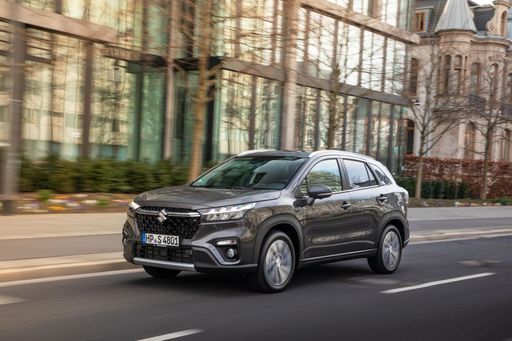
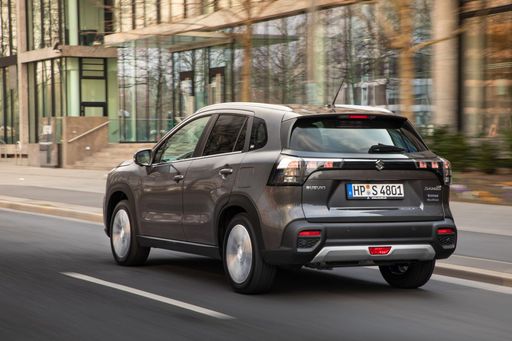
S-Cross

Introduction

The automotive market is constantly evolving, and the competition among compact SUVs is fiercer than ever. In this article, we will delve into the specifications, performance, and innovations of two notable offerings: the Honda HR-V and the Suzuki S-Cross. Both vehicles cater to a growing audience seeking the perfect combination of style, functionality, and efficiency.
HR-V

Engine Options and Performance

The Honda HR-V is powered by a full hybrid engine that produces 130 HP at 96 kW and delivers a torque of 253 Nm. Its engine capacity stands at 1498 cm3, and it uses a continuously variable transmission (CVT) for a seamless driving experience. The HR-V can accelerate from 0 to 100 km/h in approximately 10.6 seconds and offers a maximum speed of 170 km/h.

On the other hand, the Suzuki S-Cross presents prospective buyers with a choice between a full hybrid engine and a petrol MHEV variant, producing power outputs of 116 HP and 129 HP. The torque output is slightly lower than the HR-V, maxing out at 235 Nm. The engine capacities vary from 1373 cm3 to 1462 cm3, with transmission options including both automated manual and traditional manual gearboxes. With a quicker acceleration of around 9.5 seconds for the 0-100 km/h sprint, the S-Cross boasts a top speed range of 175 to 195 km/h, making it a sporty competitor in this segment.

S-Cross

Fuel Efficiency and Emissions

Fuel efficiency is a crucial consideration for modern drivers, and both the HR-V and S-Cross hold their own. The Honda HR-V consumes an average of 5.4 L/100 km, with carbon dioxide emissions of 122 g/km. The 40 L fuel tank provides an adequate range for urban and highway driving.

Conversely, the Suzuki S-Cross excels in fuel economy, with consumption figures ranging from 5.1 to 5.8 L/100 km depending on the version. CO2 emissions vary from 116 g/km to 131 g/km, showcasing improved efficiency, particularly with the lower-end petrol engine options. The increased fuel tank capacity of 47 liters further enhances the S-Cross's long-distance driving capabilities.

HR-V

Size and Storage

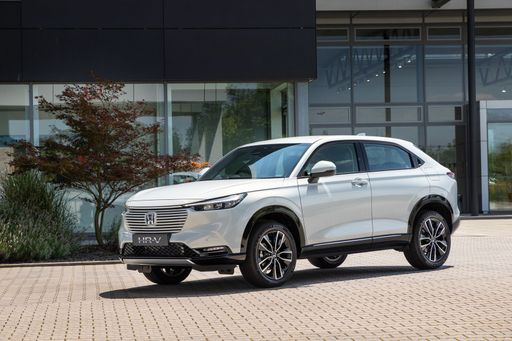
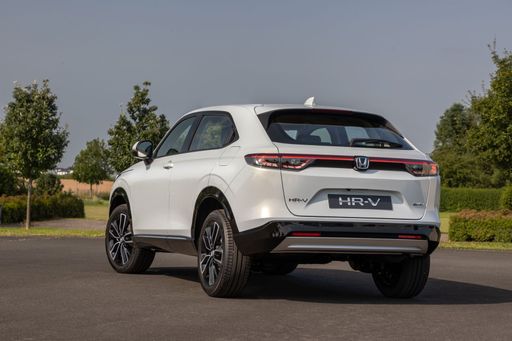
In terms of dimensions, the Honda HR-V measures 4340 mm in length, 1582 mm in height, while offering a trunk capacity that ranges from 320 to 335 liters. This design balances style with practicality, making it a suitable choice for everyday usage.

The Suzuki S-Cross is slightly larger at 4300 mm in length and 1785 mm in width, providing a more spacious cabin experience. Its trunk capacity is generous at 430 liters, making it an ideal option for those who prioritize cargo space for outings or travels.

S-Cross

Interior Features and Technology

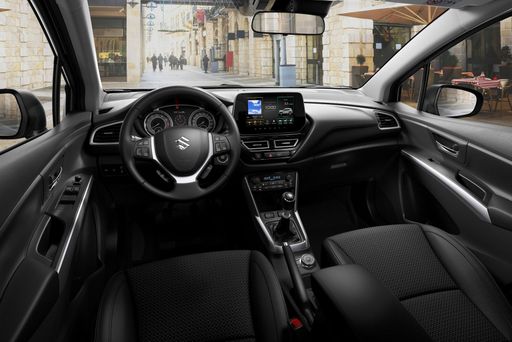
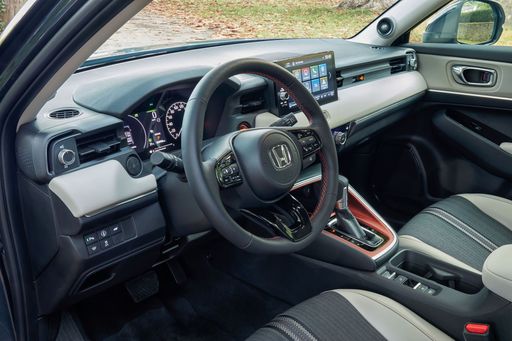
Inside, both vehicles offer a blend of comfort and cutting-edge technology. The Honda HR-V excels in providing a driver-centric experience with a user-friendly infotainment system and high-quality materials. Features include a touch-screen interface, smartphone integration, and comfortable seating for five.

The Suzuki S-Cross, meanwhile, focuses on enhancing passenger comfort with ample legroom and a refined infotainment setup. Depending on the trim, features like navigation, Bluetooth connectivity, and advanced safety systems can elevate the driving experience.

HR-V

Safety Innovations

Both manufacturers have prioritized safety in their latest models. The Honda HR-V boasts several advanced safety features, including collision mitigation braking, lane-keeping assist, and adaptive cruise control to support drivers in various situations.

Suzuki's S-Cross also lives up to safety standards with a suite of driver-assistance technologies such as adaptive cruise control, lane departure warning, and a rearview camera. Additionally, its solid build quality ensures passenger safety during accidents.

S-Cross

Conclusion

The Honda HR-V and Suzuki S-Cross represent strong contenders in the compact SUV market, each with its unique strengths. While the HR-V offers a smooth hybrid experience and robust technological features, the S-Cross impresses with fuel efficiency, performance, and spacious storage. Ultimately, the choice will hinge on personal preferences regarding performance, comfort, and practicality.

Here’s where it gets real: The technical differences in detail

S-Cross

Costs and Efficiency:

When it comes to price and running costs, the biggest differences usually appear. This is often where you see which car fits your budget better in the long run.

Suzuki S-Cross is noticeably cheaper – starting at 21,800 £ , while the Honda HR-V costs 29,100 £ . That’s a price difference of around 7,295 £.

Fuel consumption also shows a difference: the Suzuki S-Cross uses 5.3 L/100km and is barely more efficient than the Honda HR-V with 5.4 L/100km. The difference is about 0.1 L/100km.

HR-V

Engine and Performance:

Power, torque and acceleration are the classic benchmarks for car enthusiasts – and here, some clear differences start to show.

When it comes to engine power, the Honda HR-V offers moderately more power – delivering 131 HP compared to 110 HP. That’s roughly 21 HP more horsepower.

There’s also a difference in torque: the Honda HR-V delivers very slightly more torque with 253 Nm compared to 235 Nm. That’s about 18 Nm more.

S-Cross

Space and Everyday Use:

Beyond pure performance, interior space and usability matter most in daily life. This is where you see which car is more practical and versatile.

Both vehicles offer seating for 5 people.

In terms of curb weight, Suzuki S-Cross is somewhat lighter – 1,280 kg compared to 1,452 kg. The difference is around 172 kg.

Looking at boot space, the Suzuki S-Cross offers markedly more boot space – 430 L compared to 319 L. That’s a difference of about 111 L.

When it comes to payload, the Honda HR-V carries only slightly more – 418 kg compared to 405 kg. That’s a difference of about 13 kg.

Who wins the race in the data check?

The Suzuki S-Cross is slightly ahead in the objective data comparison.
This result only shows which model scores more points on paper – not which of the two cars feels right for you.

from £21,800
S-Cross

Suzuki S-Cross

  • Engine Type Petrol MHEV
  • Transmission Manuel, Automatic
  • Drive Type Front-Wheel Drive, All-Wheel Drive
  • Power HP 110 HP
  • Consumption L/100km 5.3 - 5.8 L/100km
Suzuki S-Cross
Honda HR-V

Costs and Consumption

View detailed analysis

Engine and Performance

View detailed analysis

Dimensions and Body

View detailed analysis

Suzuki S-Cross

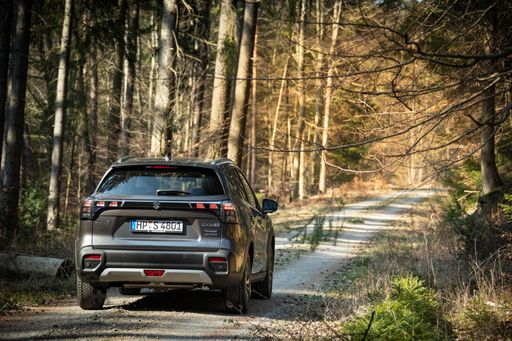
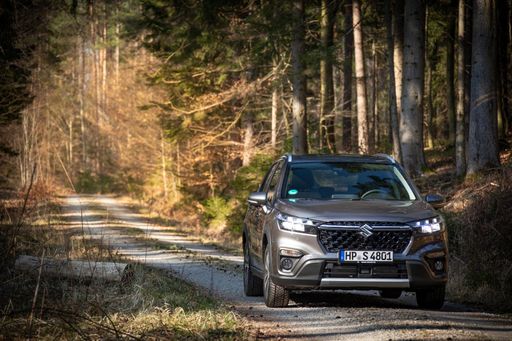
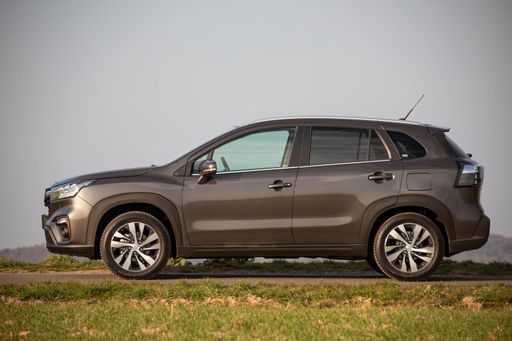
The Suzuki S-Cross is a practical, well-built compact crossover that puts comfort, efficiency and everyday reliability first. With a roomy cabin, straightforward technology and sensible design, it’s a no-nonsense choice for buyers seeking a versatile family car.

details

Honda HR-V

The Honda HR-V is a compact crossover that blends practical versatility with a comfortable, refined cabin, making it a strong choice for daily driving and weekend trips. Its clever packaging and easy-to-use features give owners flexible cargo space and a confidence-inspiring driving experience without feeling fussy.

details
Suzuki S-Cross
Honda HR-V

Costs and Consumption

Price
21,800 - 34,200 £
Price
29,100 - 34,700 £
Consumption L/100km
5.3 - 5.8 L/100km
Consumption L/100km
5.4 L/100km
Consumption kWh/100km
-
Consumption kWh/100km
-
Electric Range
-
Electric Range
-
Battery Capacity
-
Battery Capacity
-
co2
119 - 138 g/km
co2
122 g/km
Fuel tank capacity
-
Fuel tank capacity
-

Dimensions and Body

Body Type
SUV
Body Type
SUV
Seats
5
Seats
5
Doors
-
Doors
-
Curb weight
1,280 - 1,385 kg
Curb weight
1,452 kg
Trunk capacity
430 L
Trunk capacity
319 L
Length
-
Length
-
Width
1,785 mm
Width
1,866 mm
Height
-
Height
-
Max trunk capacity
-
Max trunk capacity
-
Payload
395 - 405 kg
Payload
418 kg

Engine and Performance

Engine Type
Petrol MHEV
Engine Type
Full Hybrid
Transmission
Manuel, Automatic
Transmission
Automatic
Transmission Detail
Manual Gearbox, Automatic Gearbox
Transmission Detail
Automatic Gearbox
Drive Type
Front-Wheel Drive, All-Wheel Drive
Drive Type
Front-Wheel Drive
Power HP
110 HP
Power HP
131 HP
Acceleration 0-100km/h
-
Acceleration 0-100km/h
10.6 - 10.8 s
Max Speed
-
Max Speed
-
Torque
235 Nm
Torque
253 Nm
Number of Cylinders
4
Number of Cylinders
4
Power kW
81 kW
Power kW
96 kW
Engine capacity
1,373 cm3
Engine capacity
1,498 cm3

General

Model Year
2025
Model Year
2025
CO2 Efficiency Class
D, E
CO2 Efficiency Class
D
Brand
Suzuki
Brand
Honda
DriveDuel uses data analysis and artificial intelligence to evaluate vehicle data and create content. Content is regularly reviewed and improved. The displayed prices are estimates based on German list prices, adjusted to the respective country’s VAT. Country-specific registration taxes are not included. This information is not legally binding.