
 Deutschland
 France
 Nederland
 Great Britain
 Sverige
 Norge
Norge Danmark
 Suomi
Suomi Italia
 Polska
 España
VS
BMW X7 vs Aston Martin DBX – Performance, range & efficiency compared
Everyday use, family trips or long-distance drives – here’s where the differences show.
Discover whether BMW X7 or Aston Martin DBX fits your lifestyle better.
X7
@ BMW Group Press
Costs and Efficiency:
Looking at overall running costs, both models reveal some interesting differences in everyday economy.
BMW X7 has a convincingly advantage in terms of price – it starts at 90800 £, while the Aston Martin DBX costs 204400 £. That’s a price difference of around 113657 £.
Fuel consumption also shows a difference: BMW X7 manages with 8 L and is therefore convincingly more efficient than the Aston Martin DBX with 14.20 L. The difference is about 6.20 L per 100 km.
DBX
@ Aston Martin Lagonda
Engine and Performance:
Under the bonnet, it becomes clear which model is tuned for sportiness and which one takes the lead when you hit the accelerator.
When it comes to engine power, the Aston Martin DBX has a noticeable edge – offering 707 HP compared to 530 HP. That’s roughly 177 HP more horsepower.
In acceleration from 0 to 100 km/h, the Aston Martin DBX is significantly quicker – completing the sprint in 3.30 s, while the BMW X7 takes 4.70 s. That’s about 1.40 s faster.
In terms of top speed, the Aston Martin DBX performs somewhat better – reaching 310 km/h, while the BMW X7 tops out at 250 km/h. The difference is around 60 km/h.
There’s also a difference in torque: Aston Martin DBX pulls to a small extent stronger with 900 Nm compared to 750 Nm. That’s about 150 Nm difference.
X7
@ BMW Group Press
Space and Everyday Use:
Whether family car or daily driver – which one offers more room, flexibility and comfort?
Seats: BMW X7 offers evident more seating capacity – 7 vs 5.
In curb weight, Aston Martin DBX is slight lighter – 2320 kg compared to 2490 kg. The difference is around 170 kg.
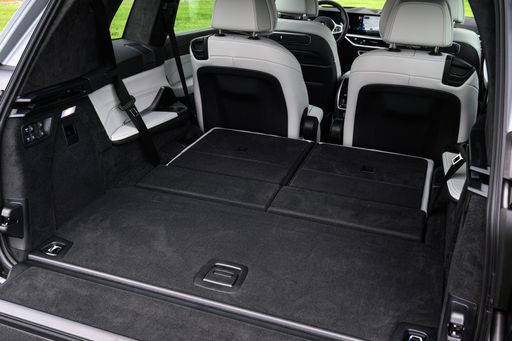
In terms of boot space, the BMW X7 offers distinct more room – 750 L compared to 491 L. That’s a difference of about 259 L.
In maximum load capacity, the BMW X7 performs clearly perceptible better – up to 2120 L, which is about 590 L more than the Aston Martin DBX.
When it comes to payload, BMW X7 barely noticeable takes the win – 760 kg compared to 710 kg. That’s a difference of about 50 kg.
Who comes out on top?
Overall, the BMW X7 shows itself to be outperforms in nearly all aspects and secures the title of DriveDuel Champion.
It convinces with the more balanced overall package and proves to be the more versatile choice for everyday use.
from about £90,800
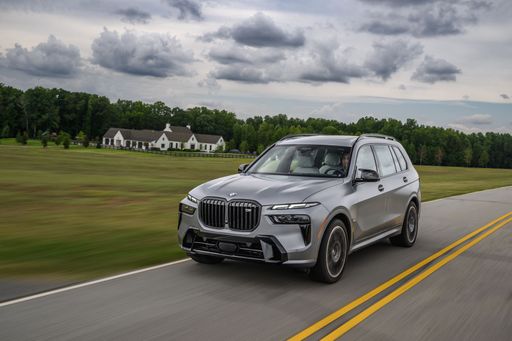 @ BMW Group Press
BMW X7
BMW X7
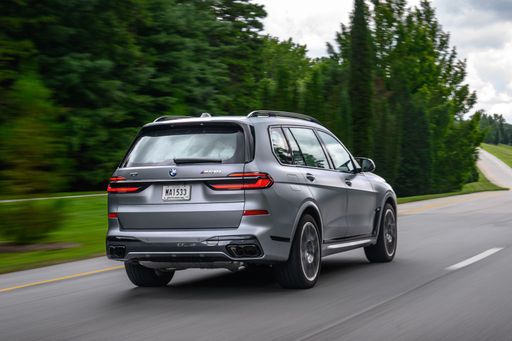
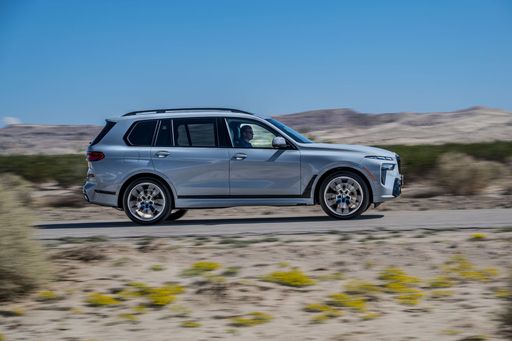
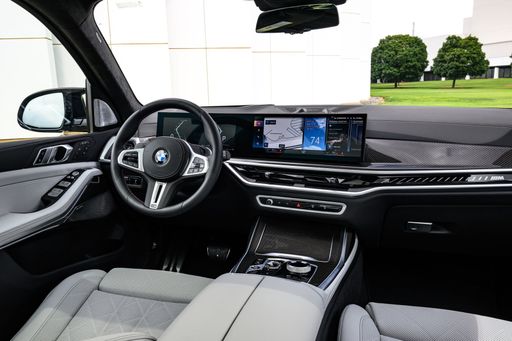
The BMW X7 stands as a remarkable testament to luxury and performance within the SUV market. Its design seamlessly blends elegance with a robust presence, ensuring a commanding stance on the road. Inside, it offers a lavish interior adorned with premium materials and cutting-edge technology to enhance the driving experience.
details
@ BMW Group Press
 @ BMW Group Press
 @ BMW Group Press
 @ BMW Group Press
 @ BMW Group Press
Aston Martin DBX
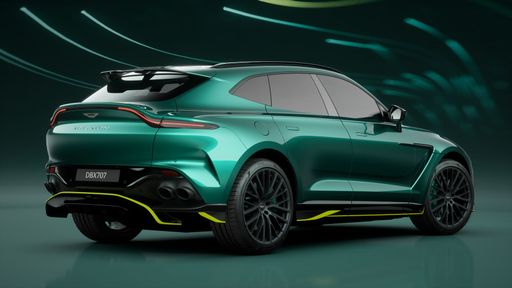
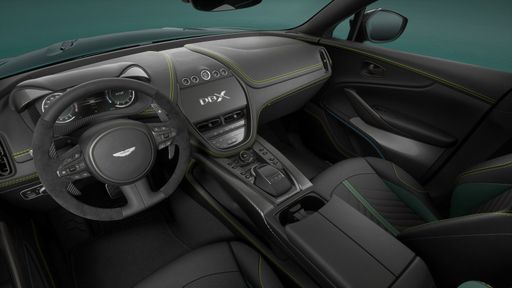
The Aston Martin DBX represents the luxury brand's bold foray into the SUV market, combining sporty aesthetics with elegant design. It offers a luxurious interior that envelops passengers in comfort and top-quality materials, delivering an exceptionally refined driving experience. This vehicle seamlessly marries Aston Martin's storied racing heritage with the practical versatility needed for everyday adventures.
details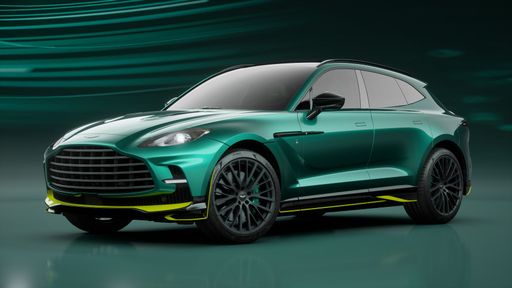 @ Aston Martin Lagonda
 @ Aston Martin Lagonda
 @ Aston Martin Lagonda
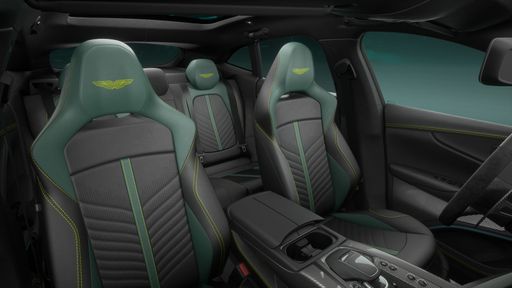 @ Aston Martin Lagonda
BMW X7
Aston Martin DBX
|
@ BMW Group Press
|
@ Aston Martin Lagonda
|
|
|
|
Costs and Consumption |
|
|---|---|
|
Price
90800 - 117500 £
|
Price
204400 £
|
|
Consumption L/100km
8 - 12.1 L
|
Consumption L/100km
14.20 L
|
|
Consumption kWh/100km
-
|
Consumption kWh/100km
-
|
|
Electric Range
-
|
Electric Range
-
|
|
Battery Capacity
-
|
Battery Capacity
-
|
|
co2
210 - 274 g/km
|
co2
323 g/km
|
|
Fuel tank capacity
80 - 83 L
|
Fuel tank capacity
87 L
|
Dimensions and Body |
|
|---|---|
|
Body Type
SUV
|
Body Type
SUV
|
|
Seats
7
|
Seats
5
|
|
Doors
5
|
Doors
5
|
|
Curb weight
2490 - 2675 kg
|
Curb weight
2320 kg
|
|
Trunk capacity
750 L
|
Trunk capacity
491 L
|
|
Length
5181 mm
|
Length
5039 mm
|
|
Width
2000 mm
|
Width
1998 mm
|
|
Height
1835 mm
|
Height
1680 mm
|
|
Max trunk capacity
2120 L
|
Max trunk capacity
1530 L
|
|
Payload
680 - 760 kg
|
Payload
710 kg
|
Engine and Performance |
|
|---|---|
|
Engine Type
Petrol MHEV, Diesel MHEV
|
Engine Type
Petrol
|
|
Transmission
Automatic
|
Transmission
Automatic
|
|
Transmission Detail
Automatic Gearbox
|
Transmission Detail
Automatic Gearbox
|
|
Drive Type
All-Wheel Drive
|
Drive Type
All-Wheel Drive
|
|
Power HP
352 - 530 HP
|
Power HP
707 HP
|
|
Acceleration 0-100km/h
4.7 - 5.9 s
|
Acceleration 0-100km/h
3.30 s
|
|
Max Speed
245 - 250 km/h
|
Max Speed
310 km/h
|
|
Torque
520 - 750 Nm
|
Torque
900 Nm
|
|
Number of Cylinders
6 - 8
|
Number of Cylinders
8
|
|
Power kW
259 - 390 kW
|
Power kW
520 kW
|
|
Engine capacity
2993 - 4395 cm3
|
Engine capacity
3982 cm3
|
General |
|
|---|---|
|
Model Year
2025
|
Model Year
2022
|
|
CO2 Efficiency Class
G
|
CO2 Efficiency Class
G
|
|
Brand
BMW
|
Brand
Aston Martin
|
What drivetrain options does the BMW X7 have?
The BMW X7 is available as All-Wheel Drive.
The prices and data displayed are estimates based on German list prices and may vary by country. This information is not legally binding.