
 Deutschland
 France
 Nederland
 Great Britain
 Sverige
 Norge
Norge Danmark
 Suomi
Suomi Italia
 Polska
 España
VS
Hyundai IONIQ 6 vs Mercedes C-Class Sedan - Differences and prices compared
IONIQ 6
@ Hyundai Motor Company
Costs and Efficiency:
Price and efficiency are often the first things buyers look at. Here it becomes clear which model has the long-term edge – whether at the pump, the plug, or in purchase price.
Hyundai IONIQ 6 has a hardly perceptible advantage in terms of price – it starts at 37600 £, while the Mercedes C-Class Sedan costs 41200 £. That’s a price difference of around 3538 £.
As for range, the Hyundai IONIQ 6 performs convincingly better – achieving up to 614 km, about 497 km more than the Mercedes C-Class Sedan.
C-Class Sedan
@ Mercedes-Benz Group Media
Engine and Performance:
Power, torque and acceleration are the classic benchmarks for car enthusiasts – and here, some clear differences start to show.
When it comes to engine power, the Mercedes C-Class Sedan has a slight edge – offering 680 HP compared to 650 HP. That’s roughly 30 HP more horsepower.
In acceleration from 0 to 100 km/h, the Hyundai IONIQ 6 is minimal quicker – completing the sprint in 3.20 s, while the Mercedes C-Class Sedan takes 3.40 s. That’s about 0.20 s faster.
In terms of top speed, the Mercedes C-Class Sedan performs minimal better – reaching 280 km/h, while the Hyundai IONIQ 6 tops out at 257 km/h. The difference is around 23 km/h.
There’s also a difference in torque: Mercedes C-Class Sedan pulls noticeable stronger with 1020 Nm compared to 770 Nm. That’s about 250 Nm difference.
IONIQ 6
@ Hyundai Motor Company
Space and Everyday Use:
Beyond pure performance, interior space and usability matter most in daily life. This is where you see which car is more practical and versatile.
Seats: offers more seating capacity – vs .
In curb weight, Mercedes C-Class Sedan is slight lighter – 1695 kg compared to 1850 kg. The difference is around 155 kg.
In terms of boot space, the Mercedes C-Class Sedan offers a bit more room – 455 L compared to 401 L. That’s a difference of about 54 L.
When it comes to payload, Mercedes C-Class Sedan evident takes the win – 570 kg compared to 430 kg. That’s a difference of about 140 kg.
Who wins the race?
The Hyundai IONIQ 6 proves to be dominates this comparison and therefore becomes our DriveDuel Champion!
Hyundai IONIQ 6 is the better all-rounder in this comparison.
from about £37,600
 @ Hyundai Motor Company
Hyundai IONIQ 6
Hyundai IONIQ 6
Mercedes C-Class Sedan
Costs and Consumption
View detailed analysis
View detailed analysis
Engine and Performance
View detailed analysis
View detailed analysis
Dimensions and Body
View detailed analysis
View detailed analysis
Hyundai IONIQ 6
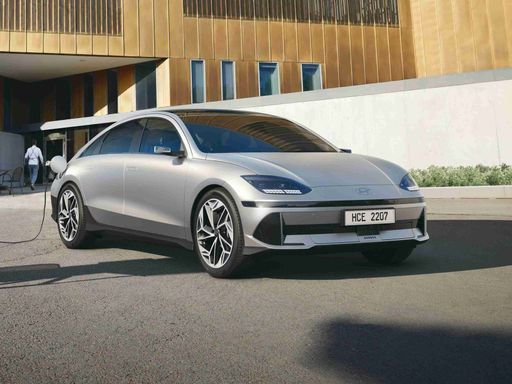
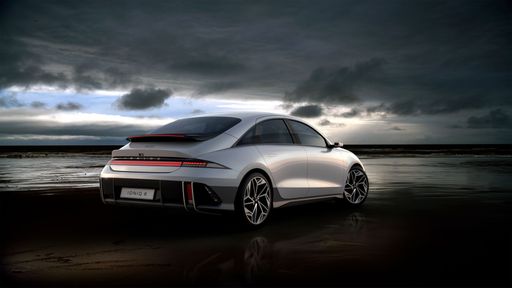
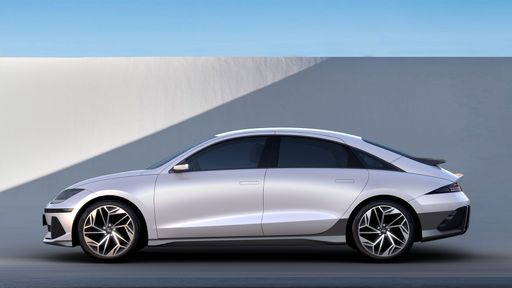
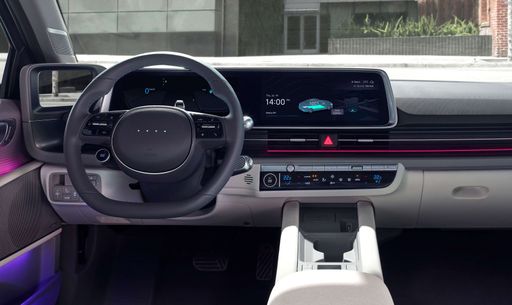
The Hyundai IONIQ 6 glides down the road with a poise that feels more runway model than commuter car, its sleek silhouette promising efficiency without trying too hard. Inside, a calm, minimalist cabin packed with clever, usable tech makes it a compelling choice for buyers who want electric motoring that's smart, stylish and quietly practical.
details
@ Hyundai Motor Company
 @ Hyundai Motor Company
 @ Hyundai Motor Company
 @ Hyundai Motor Company
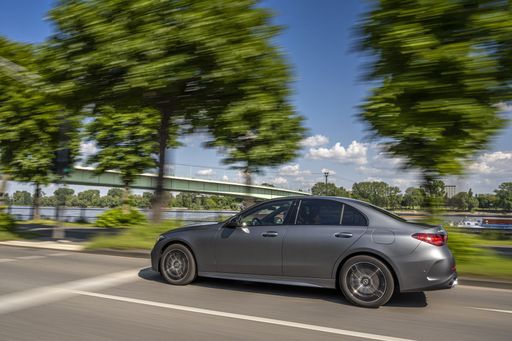
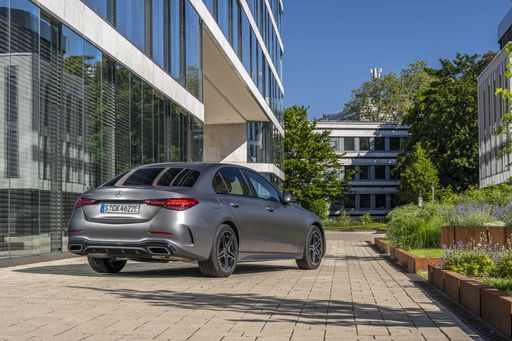
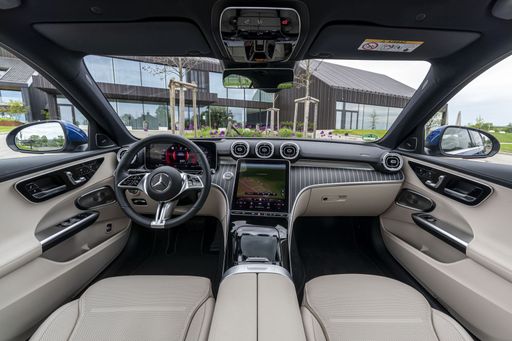
Mercedes C-Class Sedan
The Mercedes C‑Class is the compact executive that dresses like it owns the boulevard, with an interior that blends modern elegance and plush comfort to make everyday driving feel unexpectedly special. On the road it pairs poise with a hint of cheeky agility, rewarding drivers who want refinement without forfeiting a touch of fun — and yes, it still looks great in the driveway.
details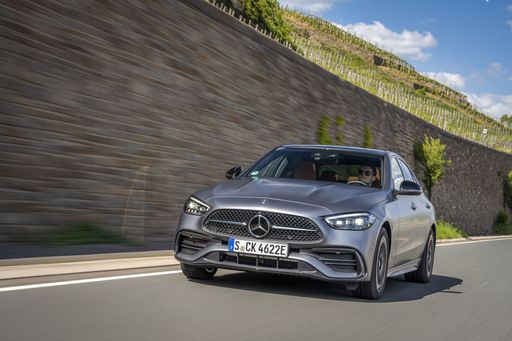 @ Mercedes-Benz Group Media
 @ Mercedes-Benz Group Media
 @ Mercedes-Benz Group Media
 @ Mercedes-Benz Group Media
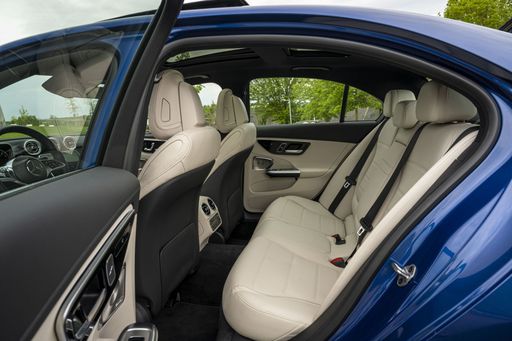 @ Mercedes-Benz Group Media
Hyundai IONIQ 6
Mercedes C-Class Sedan
|
@ Hyundai Motor Company
|
@ Mercedes-Benz Group Media
|
|
|
|
Costs and Consumption |
|
|---|---|
|
Price
37600 - 64300 £
|
Price
41200 - 103100 £
|
|
Consumption L/100km
-
|
Consumption L/100km
1.6 - 9 L
|
|
Consumption kWh/100km
13.9 - 15.1 kWh
|
Consumption kWh/100km
-
|
|
Electric Range
429 - 614 km
|
Electric Range
11 - 117 km
|
|
Battery Capacity
53 - 84 kWh
|
Battery Capacity
19.50 kWh
|
|
co2
0 g/km
|
co2
41 - 205 g/km
|
|
Fuel tank capacity
-
|
Fuel tank capacity
40 - 66 L
|
Dimensions and Body |
|
|---|---|
|
Body Type
Hatchback
|
Body Type
Sedan
|
|
Seats
5
|
Seats
5
|
|
Doors
4
|
Doors
4
|
|
Curb weight
1850 - 2095 kg
|
Curb weight
1695 - 2195 kg
|
|
Trunk capacity
401 L
|
Trunk capacity
280 - 455 L
|
|
Length
4855 - 4935 mm
|
Length
4751 - 4842 mm
|
|
Width
1880 - 1940 mm
|
Width
1820 - 1900 mm
|
|
Height
1495 mm
|
Height
1438 - 1458 mm
|
|
Max trunk capacity
-
|
Max trunk capacity
-
|
|
Payload
425 - 430 kg
|
Payload
480 - 570 kg
|
Engine and Performance |
|
|---|---|
|
Engine Type
Electric
|
Engine Type
Petrol MHEV, Plugin Hybrid, Diesel MHEV
|
|
Transmission
Automatic
|
Transmission
Automatic
|
|
Transmission Detail
Reduction Gearbox
|
Transmission Detail
Automatic Gearbox
|
|
Drive Type
Rear-Wheel Drive, All-Wheel Drive
|
Drive Type
Rear-Wheel Drive, All-Wheel Drive
|
|
Power HP
151 - 650 HP
|
Power HP
183 - 680 HP
|
|
Acceleration 0-100km/h
3.2 - 8.8 s
|
Acceleration 0-100km/h
3.4 - 8.6 s
|
|
Max Speed
185 - 257 km/h
|
Max Speed
230 - 280 km/h
|
|
Torque
350 - 770 Nm
|
Torque
250 - 1020 Nm
|
|
Number of Cylinders
-
|
Number of Cylinders
4
|
|
Power kW
111 - 478 kW
|
Power kW
135 - 500 kW
|
|
Engine capacity
-
|
Engine capacity
1496 - 1999 cm3
|
General |
|
|---|---|
|
Model Year
2022 - 2025
|
Model Year
2024 - 2025
|
|
CO2 Efficiency Class
A
|
CO2 Efficiency Class
E, B, D, G
|
|
Brand
Hyundai
|
Brand
Mercedes-Benz
|
What drive types are available for the Hyundai IONIQ 6?
Available configurations include Rear-Wheel Drive or All-Wheel Drive.
The prices and data displayed are estimates based on German list prices and may vary by country. This information is not legally binding.