
 Deutschland
 France
 Nederland
 Great Britain
 Sverige
 Norge
Norge Danmark
 Suomi
Suomi Italia
 Polska
 España
VS
Tesla Model S vs Hyundai IONIQ 9 - Differences and prices compared
Compare performance (1020 HP vs 428 HP), boot space and price (94300 £ vs 58700 £ ) at a glance. Find out which car is the better choice for you – Tesla Model S or Hyundai IONIQ 9?
Model S
Costs and Efficiency:
Price and efficiency are often the first things buyers look at. Here it becomes clear which model has the long-term edge – whether at the pump, the plug, or in purchase price.
Hyundai IONIQ 9 has a clearly advantage in terms of price – it starts at 58700 £ , while the Tesla Model S costs 94300 £ . That’s a price difference of around 35563 £.
In terms of energy consumption, the advantage goes to the Tesla Model S: with 16.80 kWh per 100 km, it’s somewhat more efficient than the Hyundai IONIQ 9 with 19.90 kWh. That’s a difference of about 3.10 kWh.
As for electric range, the Tesla Model S performs to a small extent better – achieving up to 744 km, about 124 km more than the Hyundai IONIQ 9.
Model S
Engine and Performance:
Power, torque and acceleration say a lot about how a car feels on the road. This is where you see which model delivers more driving dynamics.
When it comes to engine power, the Tesla Model S has a convincingly edge – offering 1020 HP compared to 428 HP. That’s roughly 592 HP more horsepower.
In acceleration from 0 to 100 km/h, the Tesla Model S is significantly quicker – completing the sprint in 2.10 s, while the Hyundai IONIQ 9 takes 5.20 s. That’s about 3.10 s faster.
In terms of top speed, the Tesla Model S performs evident better – reaching 322 km/h, while the Hyundai IONIQ 9 tops out at 200 km/h. The difference is around 122 km/h.
Ad · Affiliate
As an Amazon Associate, we earn from qualifying purchases.
Model S
Space and Everyday Use:
Whether family car or daily driver – which one offers more room, flexibility and comfort?
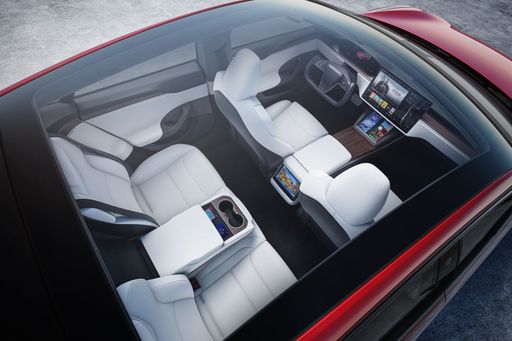
Seats: Hyundai IONIQ 9 offers evident more seating capacity – 7 vs 5.
In curb weight, Tesla Model S is distinct lighter – 2092 kg compared to 2594 kg. The difference is around 502 kg.
In terms of boot space, the Tesla Model S offers decisively more room – 799 L compared to 338 L. That’s a difference of about 461 L.
In maximum load capacity, the Hyundai IONIQ 9 performs distinct better – up to 2419 L, which is about 591 L more than the Tesla Model S.
When it comes to payload, Hyundai IONIQ 9 noticeable takes the win – 643 kg compared to 442 kg. That’s a difference of about 201 kg.
Who wins the race?
The Tesla Model S proves to be is largely superior and therefore becomes our DriveDuel Champion!
Tesla Model S is the better all-rounder in this comparison.
from about £94,300
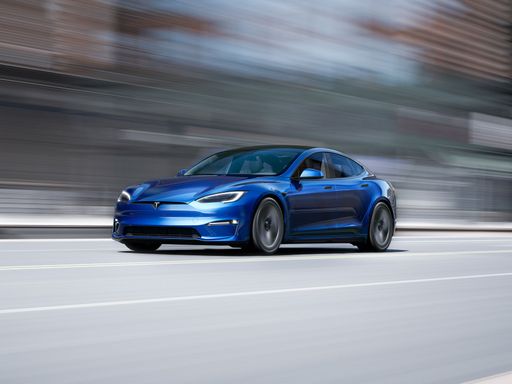
Tesla Model S
Tesla Model S
Hyundai IONIQ 9
Costs and Consumption
View detailed analysis
View detailed analysis
Engine and Performance
View detailed analysis
View detailed analysis
Dimensions and Body
View detailed analysis
View detailed analysis
Tesla Model S
4.7 (1 Reviews)
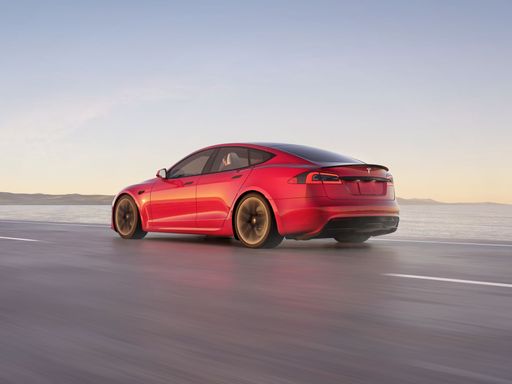
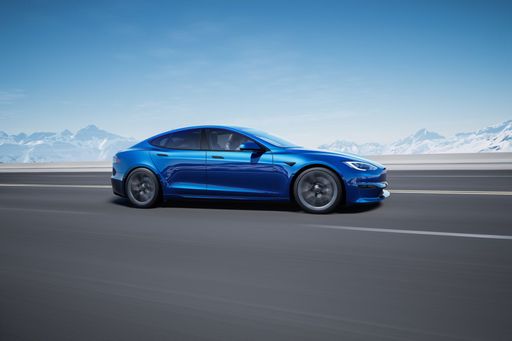
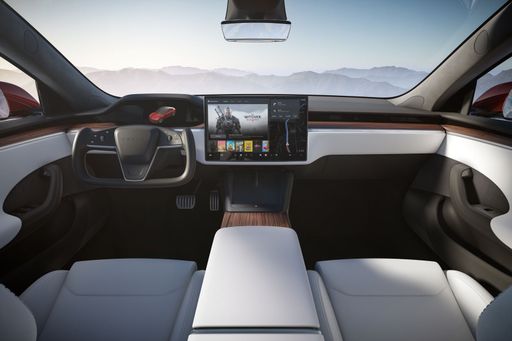
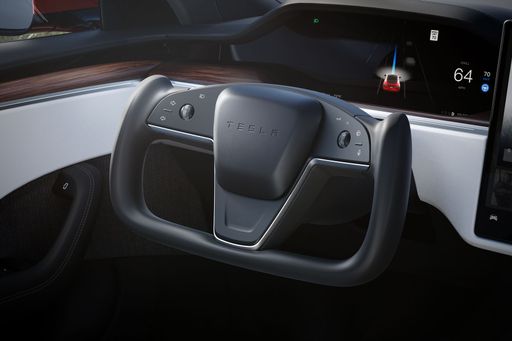
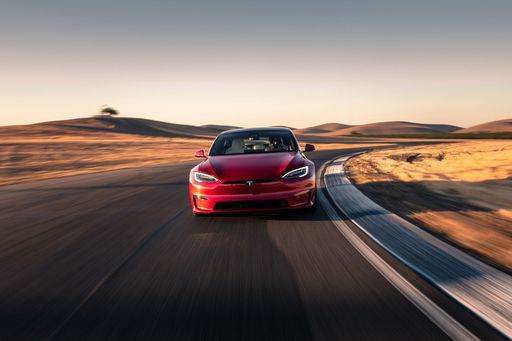
The Tesla Model S glides like a luxury sedan from the future, delivering instant shove and serene highway composure that make it feel equally at home on a rush-hour commute or a long-distance cruise. Inside, its minimalist cabin and gadget-forward interface turn every drive into a tech demo, making it as much a statement piece as a practical choice — and one that still manages to feel a little bit magical.
details
Hyundai IONIQ 9
The Hyundai IONIQ 9 is a bold step forward in the automotive world, combining cutting-edge electric technology with a sleek and modern design. This model stands out with its spacious interior and advanced features, ensuring both comfort and convenience for drivers and passengers alike. As Hyundai pushes the envelope in eco-friendly innovation, the IONIQ 9 represents the future of sustainable driving with its impressive range and performance capabilities.
details
Tesla Model S
Hyundai IONIQ 9
Costs and Consumption |
|
|---|---|
|
Price
94300 - 102800 £
|
Price
58700 - 74400 £
|
|
Consumption L/100km
-
|
Consumption L/100km
-
|
|
Consumption kWh/100km
16.8 - 18 kWh
|
Consumption kWh/100km
19.9 - 20.6 kWh
|
|
Electric Range
611 - 744 km
|
Electric Range
600 - 620 km
|
|
Battery Capacity
-
|
Battery Capacity
110 kWh
|
|
co2
0 g/km
|
co2
0 g/km
|
|
Fuel tank capacity
-
|
Fuel tank capacity
-
|
Dimensions and Body |
|
|---|---|
|
Body Type
Hatchback
|
Body Type
SUV
|
|
Seats
5
|
Seats
7
|
|
Doors
5
|
Doors
5
|
|
Curb weight
2092 - 2197 kg
|
Curb weight
2594 - 2689 kg
|
|
Trunk capacity
799 L
|
Trunk capacity
338 L
|
|
Length
5021 mm
|
Length
5060 mm
|
|
Width
1987 mm
|
Width
1980 mm
|
|
Height
1431 mm
|
Height
1790 mm
|
|
Max trunk capacity
1828 L
|
Max trunk capacity
2419 L
|
|
Payload
432 - 442 kg
|
Payload
586 - 643 kg
|
Engine and Performance |
|
|---|---|
|
Engine Type
Electric
|
Engine Type
Electric
|
|
Transmission
Automatic
|
Transmission
Automatic
|
|
Transmission Detail
Reduction Gearbox
|
Transmission Detail
Reduction Gearbox
|
|
Drive Type
All-Wheel Drive
|
Drive Type
Rear-Wheel Drive, All-Wheel Drive
|
|
Power HP
670 - 1020 HP
|
Power HP
218 - 428 HP
|
|
Acceleration 0-100km/h
2.1 - 3.2 s
|
Acceleration 0-100km/h
5.2 - 9.4 s
|
|
Max Speed
240 - 322 km/h
|
Max Speed
190 - 200 km/h
|
|
Torque
-
|
Torque
350 - 700 Nm
|
|
Number of Cylinders
-
|
Number of Cylinders
-
|
|
Power kW
493 - 750 kW
|
Power kW
160 - 315 kW
|
|
Engine capacity
-
|
Engine capacity
-
|
General |
|
|---|---|
|
Model Year
2025
|
Model Year
2025
|
|
CO2 Efficiency Class
A
|
CO2 Efficiency Class
A
|
|
Brand
Tesla
|
Brand
Hyundai
|
Is the Tesla Model S offered with different drivetrains?
The Tesla Model S is available as All-Wheel Drive.
The prices shown are estimates based on German list prices, adjusted for local VAT. Local registration taxes (e.g. NoVA, BPM or CO2 malus) are not included. This information is not legally binding.