
 Deutschland
 France
 Nederland
 Great Britain
 Sverige
 Danmark
 Suomi
Suomi Italia
 Polska
 España
VS
Aston Martin DBX vs Rolls-Royce Cullinan comparison
Compare performance (707 HP vs 600 HP), boot space and price (204,400 £ vs 275,400 £ ) at a glance. Find out which car is the better choice for you – Aston Martin DBX or Rolls-Royce Cullinan?
DBX
Costs and Efficiency:
Looking at overall running costs, both models reveal some interesting differences in everyday economy.
Aston Martin DBX is noticeably cheaper – starting at 204,400 £ , while the Rolls-Royce Cullinan costs 275,400 £ . That’s a price difference of around 70,972 £.
Fuel consumption also shows a difference: the Aston Martin DBX uses 14.2 L/100km and is a bit more efficient than the Rolls-Royce Cullinan with 16 L/100km. The difference is about 1.8 L/100km.
Cullinan
Engine and Performance:
Power, torque and acceleration are the classic benchmarks for car enthusiasts – and here, some clear differences start to show.
When it comes to engine power, the Aston Martin DBX offers moderately more power – delivering 707 HP compared to 600 HP. That’s roughly 107 HP more horsepower.
When accelerating from 0 to 100 km/h, the Aston Martin DBX is significantly quicker – completing the sprint in 3.3 s, while the Rolls-Royce Cullinan takes 4.9 s. That’s about 1.6 s quicker.
Both models offer the same torque – 900 Nm.
DBX
Space and Everyday Use:
Beyond pure performance, interior space and usability matter most in daily life. This is where you see which car is more practical and versatile.
Both vehicles offer seating for 5 people.
In terms of curb weight, Aston Martin DBX is a bit lighter – 2,320 kg compared to 2,660 kg. The difference is around 340 kg.
Looking at boot space, the Rolls-Royce Cullinan offers slightly more boot space – 555 L compared to 491 L. That’s a difference of about 64 L.
When it comes to payload, the Rolls-Royce Cullinan carries moderately more – 840 kg compared to 710 kg. That’s a difference of about 130 kg.
Who wins the race in the data check?
The Aston Martin DBX comes out clearly ahead in the objective data comparison.
This result only shows which model scores more points on paper – not which of the two cars feels right for you.
£204,428
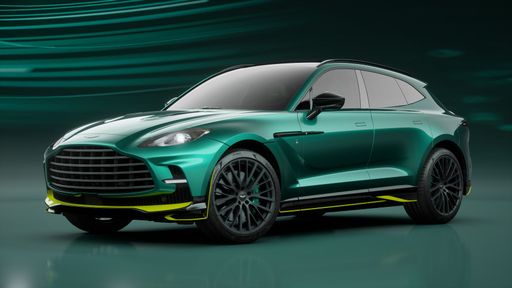
Aston Martin DBX
Aston Martin DBX
Rolls-Royce Cullinan
Costs and Consumption
View detailed analysis
View detailed analysis
Engine and Performance
View detailed analysis
View detailed analysis
Dimensions and Body
View detailed analysis
View detailed analysis
Aston Martin DBX
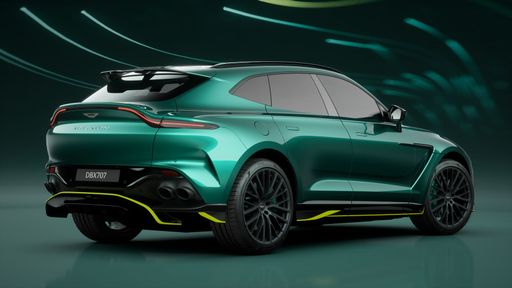
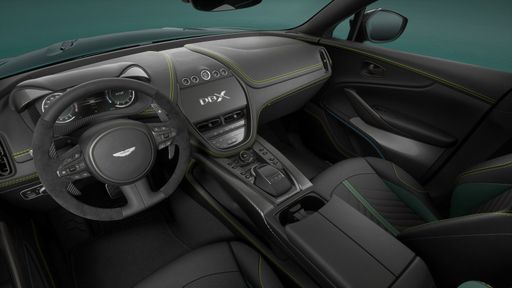
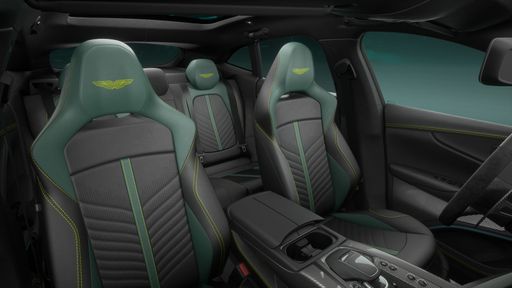
With the DBX, Aston Martin has wrapped its trademark sports-car drama into a high-riding package that looks like it could sprint off the driveway and into a gala, while the cabin pampers occupants with handcrafted leather and theatrical attention to detail. Behind the wheel it feels like a grand tourer that learned how to tackle country roads, serving up surprising agility for such a stately presence and keeping rivals honest with its rarefied blend of performance and luxury.
details
Rolls-Royce Cullinan
The Cullinan seamlessly combines the hallmark luxury of Rolls-Royce with the rugged versatility of an SUV, making it a true standout in the automotive landscape. Its impeccably crafted interior envelops passengers in a serene atmosphere, complemented by advanced technology and unparalleled comfort. With its commanding presence on the road, the Cullinan redefines what it means to travel in style without compromising on capability.
details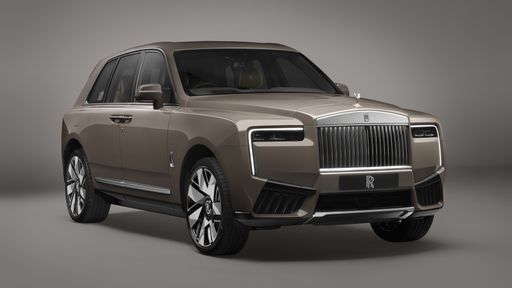
Aston Martin DBX
Rolls-Royce Cullinan
Costs and Consumption |
|
|---|---|
|
Price
204,400 £
|
Price
275,400 - 324,600 £
|
|
Consumption L/100km
14.2 L/100km
|
Consumption L/100km
16 - 16.8 L/100km
|
|
Consumption kWh/100km
-
|
Consumption kWh/100km
-
|
|
Electric Range
-
|
Electric Range
-
|
|
Battery Capacity
-
|
Battery Capacity
-
|
|
co2
323 g/km
|
co2
363 - 380 g/km
|
|
Fuel tank capacity
87 L
|
Fuel tank capacity
-
|
Dimensions and Body |
|
|---|---|
|
Body Type
SUV
|
Body Type
SUV
|
|
Seats
5
|
Seats
5
|
|
Doors
5
|
Doors
-
|
|
Curb weight
2,320 kg
|
Curb weight
2,660 kg
|
|
Trunk capacity
491 L
|
Trunk capacity
555 L
|
|
Length
5,039 mm
|
Length
-
|
|
Width
1,998 mm
|
Width
2,000 mm
|
|
Height
1,680 mm
|
Height
-
|
|
Max trunk capacity
1,530 L
|
Max trunk capacity
-
|
|
Payload
710 kg
|
Payload
840 kg
|
Engine and Performance |
|
|---|---|
|
Engine Type
Petrol
|
Engine Type
Petrol MHEV, Petrol
|
|
Transmission
Automatic
|
Transmission
Automatic
|
|
Transmission Detail
Automatic Gearbox
|
Transmission Detail
Automatic Gearbox
|
|
Drive Type
All-Wheel Drive
|
Drive Type
All-Wheel Drive
|
|
Power HP
707 HP
|
Power HP
571 - 600 HP
|
|
Acceleration 0-100km/h
3.3 s
|
Acceleration 0-100km/h
4.9 - 5.2 s
|
|
Max Speed
310 km/h
|
Max Speed
-
|
|
Torque
900 Nm
|
Torque
850 - 900 Nm
|
|
Number of Cylinders
8
|
Number of Cylinders
12
|
|
Power kW
520 kW
|
Power kW
420 - 441 kW
|
|
Engine capacity
3,982 cm3
|
Engine capacity
6,749 cm3
|
General |
|
|---|---|
|
Model Year
2,022
|
Model Year
2,024
|
|
CO2 Efficiency Class
G
|
CO2 Efficiency Class
G
|
|
Brand
Aston Martin
|
Brand
Rolls-Royce
|
DriveDuel uses data analysis and artificial intelligence to evaluate vehicle data and create content. Content is regularly reviewed and improved.
The displayed prices are estimates based on German list prices, adjusted to the respective country’s VAT. Country-specific registration taxes are not included. This information is not legally binding.