
 Deutschland
 France
 Nederland
 Great Britain
 Sverige
 Danmark
 Suomi
Suomi Italia
 Polska
 Česko
Česko España
VS
Audi A7 vs Lexus ES comparison
Compare performance (630 HP vs 218 HP), boot space and price (55,000 £ vs 46,600 £ ) at a glance. Find out which car is the better choice for you – Audi A7 or Lexus ES?
Audi A7 vs Lexus ES: Key differences
All details on performance, efficiency, range and trunk space can be found in the technical comparison below – including user reviews for both models.
A7
Costs and Efficiency:
Price and efficiency are often the first things buyers look at. Here it becomes clear which model has the long-term edge – whether at the pump, the plug, or in purchase price.
Lexus ES is somewhat cheaper – starting at 46,600 £ , while the Audi A7 costs 55,000 £ . That’s a price difference of around 8,443 £.
Fuel consumption also shows a difference: the Audi A7 uses 1.2 L/100km and is significantly more efficient than the Lexus ES with 5.1 L/100km. The difference is about 3.9 L/100km.
ES
Engine and Performance:
Power, torque and acceleration say a lot about how a car feels on the road. This is where you see which model delivers more driving dynamics.
When it comes to engine power, the Audi A7 offers considerably more power – delivering 630 HP compared to 218 HP. That’s roughly 412 HP more horsepower.
When accelerating from 0 to 100 km/h, the Audi A7 is significantly quicker – completing the sprint in 3.4 s, while the Lexus ES takes 8.9 s. That’s about 5.5 s quicker.
Looking at top speed, the Audi A7 is markedly faster – reaching 280 km/h, while the Lexus ES tops out at 180 km/h. The difference is around 100 km/h.
A7
Space and Everyday Use:
Cabin size, boot volume and payload all play a role in everyday practicality. Here, comfort and flexibility make the difference.
Seats: Lexus ES offers more seats – 5 vs 4.
In terms of curb weight, Lexus ES is only slightly lighter – 1,680 kg compared to 1,770 kg. The difference is around 90 kg.
Looking at boot space, the Audi A7 offers somewhat more boot space – 535 L compared to 454 L. That’s a difference of about 81 L.
When it comes to payload, the Audi A7 carries visibly more – 600 kg compared to 470 kg. That’s a difference of about 130 kg.
Who wins the race in the data check?
The Audi A7 is far ahead overall in the objective data comparison.
This result only shows which model scores more points on paper – not which of the two cars feels right for you.
from £55,000
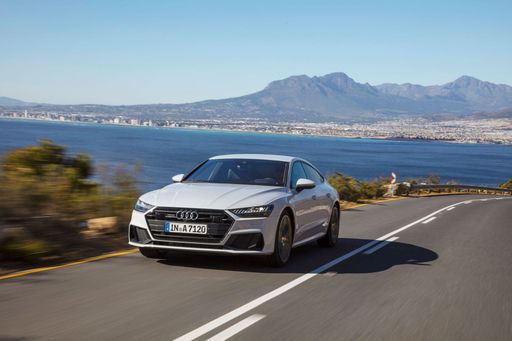
Audi A7
Audi A7
Lexus ES
Costs and Consumption
View detailed analysis
View detailed analysis
Engine and Performance
View detailed analysis
View detailed analysis
Dimensions and Body
View detailed analysis
View detailed analysis
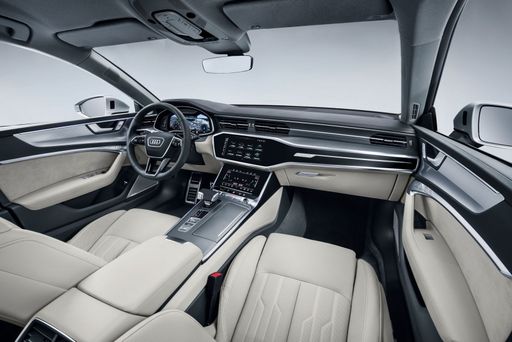
Audi A7
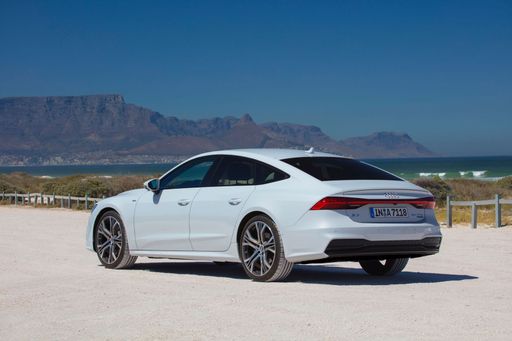
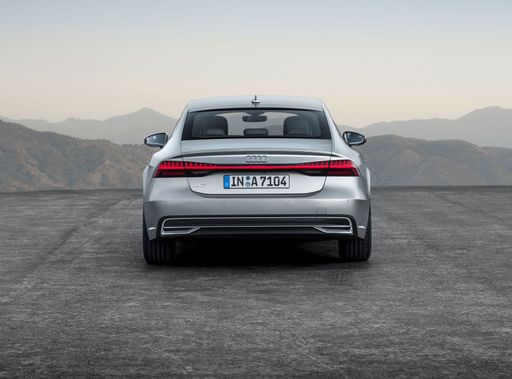
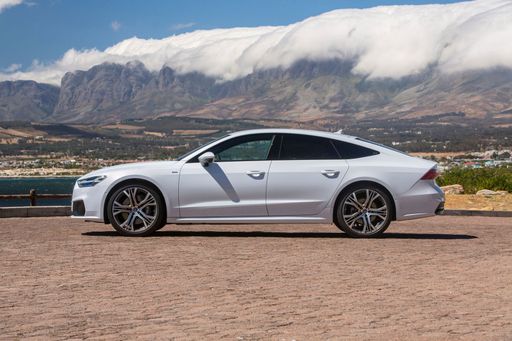
The Audi A7 wraps elegant fastback lines around a sumptuous, tech-packed cabin that turns everyday drives into something a bit more special. It strikes a polished balance between relaxed comfort and engaging poise, so you’ll enjoy long cruises and spirited backroad runs while arriving in unmistakable style.
details
Lexus ES
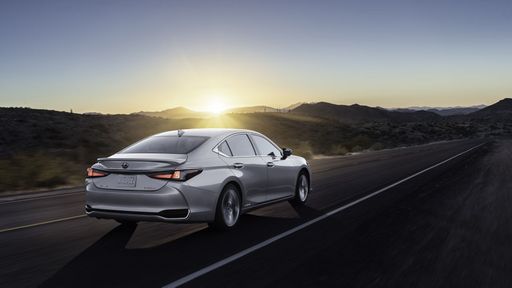
The Lexus ES delivers a supremely comfortable, quietly luxurious experience that favors serene cruising over sporting theatrics. It wraps everyday practicality, top-notch build quality and unimpeachable reliability in a handsome, grown-up package that will appeal to buyers who prize calm refinement over headline-grabbing excitement.
details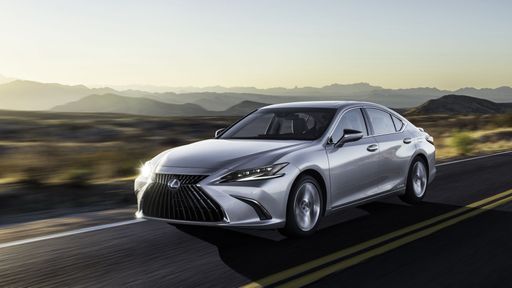

Audi A7
Lexus ES
Costs and Consumption |
|
|---|---|
|
Price
55,000 - 117,900 £
|
Price
46,600 - 59,300 £
|
|
Consumption L/100km
1.2 - 12.2 L/100km
|
Consumption L/100km
5.1 L/100km
|
|
Consumption kWh/100km
-
|
Consumption kWh/100km
-
|
|
Electric Range
67 - 68 km
|
Electric Range
-
|
|
Battery Capacity
14.4 kWh
|
Battery Capacity
-
|
|
co2
28 - 276 g/km
|
co2
115 g/km
|
|
Fuel tank capacity
52 - 73 L
|
Fuel tank capacity
50 L
|
Dimensions and Body |
|
|---|---|
|
Body Type
Hatchback
|
Body Type
Sedan
|
|
Seats
4
|
Seats
5
|
|
Doors
5
|
Doors
4
|
|
Curb weight
1,770 - 2,150 kg
|
Curb weight
1,680 kg
|
|
Trunk capacity
380 - 535 L
|
Trunk capacity
454 L
|
|
Length
4,969 - 5,009 mm
|
Length
4,975 mm
|
|
Width
1,908 - 1,950 mm
|
Width
1,865 mm
|
|
Height
1,422 - 1,424 mm
|
Height
1,445 mm
|
|
Max trunk capacity
1,235 - 1,390 L
|
Max trunk capacity
-
|
|
Payload
510 - 600 kg
|
Payload
470 kg
|
Engine and Performance |
|
|---|---|
|
Engine Type
Diesel MHEV, Petrol MHEV, Plugin Hybrid
|
Engine Type
Full Hybrid
|
|
Transmission
Automatic
|
Transmission
Automatic
|
|
Transmission Detail
Dual-Clutch Automatic, Automatic Gearbox
|
Transmission Detail
CVT
|
|
Drive Type
All-Wheel Drive, Front-Wheel Drive
|
Drive Type
Front-Wheel Drive
|
|
Power HP
204 - 630 HP
|
Power HP
218 HP
|
|
Acceleration 0-100km/h
3.4 - 8.1 s
|
Acceleration 0-100km/h
8.9 s
|
|
Max Speed
245 - 280 km/h
|
Max Speed
180 km/h
|
|
Torque
370 - 850 Nm
|
Torque
-
|
|
Number of Cylinders
4 - 8
|
Number of Cylinders
4
|
|
Power kW
150 - 463 kW
|
Power kW
160 kW
|
|
Engine capacity
1,968 - 3,996 cm3
|
Engine capacity
2,487 cm3
|
General |
|
|---|---|
|
Model Year
2,023 - 2,024
|
Model Year
2024
|
|
CO2 Efficiency Class
E, F, B, G
|
CO2 Efficiency Class
C
|
|
Brand
Audi
|
Brand
Lexus
|
DriveDuel uses data analysis and artificial intelligence to evaluate vehicle data and create content. Content is regularly reviewed and improved.
The displayed prices are estimates based on German list prices, adjusted to the respective country’s VAT. Country-specific registration taxes are not included. This information is not legally binding.