VS

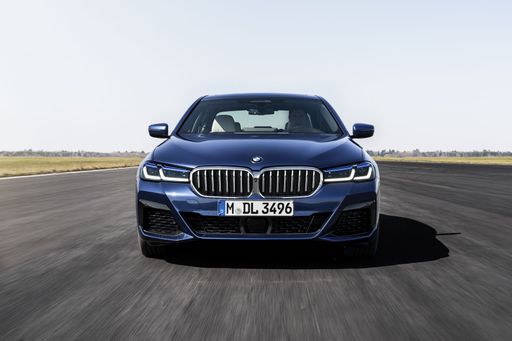
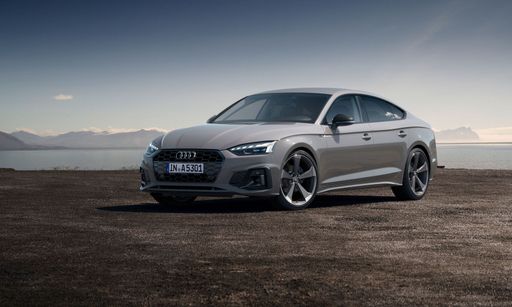
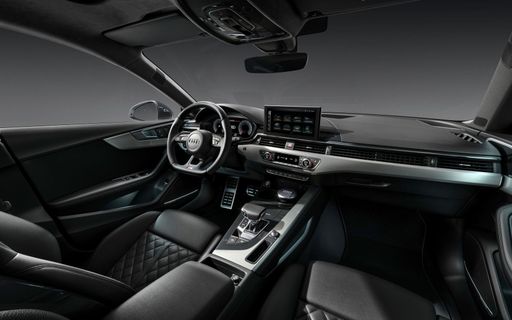
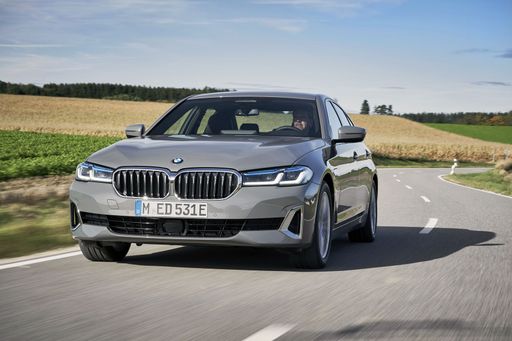
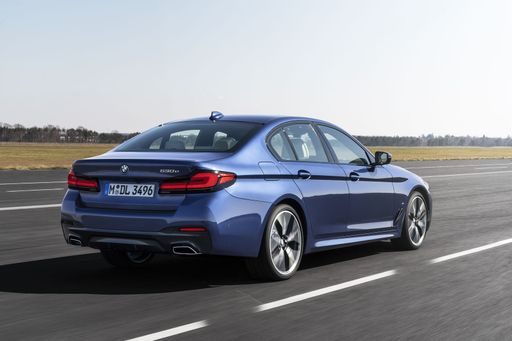
BMW 5 Series Saloon vs Audi A5 Sportback comparison

Compare performance (727 HP vs 639 HP), boot space and price (50,800 £ vs 40,200 £ ) at a glance. Find out which car is the better choice for you – BMW 5 Series Saloon or Audi A5 Sportback?

BMW 5 Series Saloon vs Audi A5 Sportback: Key differences

BMW 5 Series Saloon

  • moderately more power
  • only slightly quicker 0–100 km/h
  • clearly more trunk space

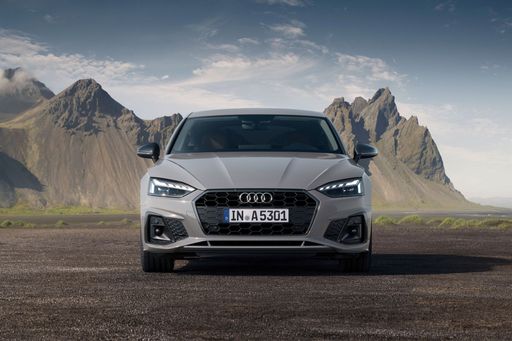
Audi A5 Sportback

  • markedly cheaper
  • only slightly more efficient
  • only slightly more electric range
  • barely lighter
5 Series Saloon

Sleek Designs Meet Sophisticated Engineering

For many automotive enthusiasts, the choice between the Audi A5 Sportback and the BMW 5er Limousine represents more than just a decision between two exceptional vehicles—it's a showdown between elegance and power. In this article, we'll delve into the nuances and distinctions of these models, providing a detailed comparison to help you decide which might be the right fit for your lifestyle.
A5 Sportback

Powertrains and Performance

Under the hood, the Audi A5 Sportback offers a variety of engine options, including Diesel Mild Hybrid Electric Vehicle (MHEV), Petrol, and Petrol MHEV engines. With power ranging from 150 kW to an exhilarating 346 kW, the A5 Sportback provides a robust driving experience. The model boasts acceleration from 0-100 km/h in as little as 3.7 seconds and reaches top speeds of up to 300 km/h. Its efficiency is further reflected in a fuel consumption range starting at just 4.7 L/100km.

Meanwhile, the BMW 5er Limousine presents its own impressive lineup of engine types: Diesel MHEV, Petrol MHEV, and Plug-in Hybrid. Its powerhouse can generate up to 535 kW and speeds from 0-100 km/h in an astonishing 3.5 seconds. Notably, the plug-in hybrid models highlight sustainability with an electric range of up to 103 km, all while sipping fuel at just 0.6 L/100km in hybrid mode.

5 Series Saloon

Design Philosophy and Dimensions

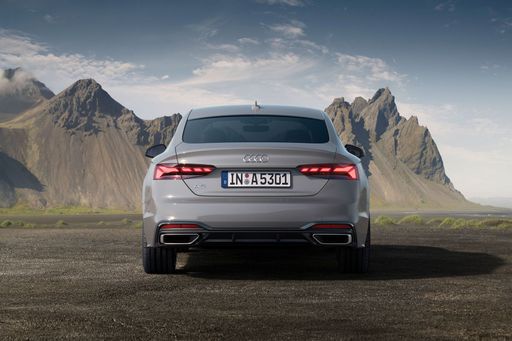
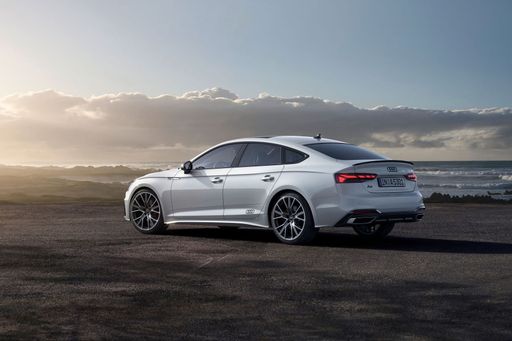
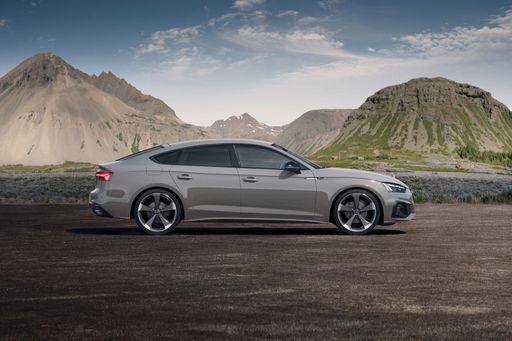
The Audi A5 Sportback, with its sleek hatchback body type, maintains a modern design language marked by an aerodynamic silhouette. It's slightly more compact, with a length of up to 4835 mm, width of 1860 mm, and a height reaching 1429 mm. This design lends itself well to urban environments where agility is key.

Conversely, the BMW 5er Limousine, with its classic sedan form, commands road presence with dimensions maxing out at a length of 5096 mm, width of 1970 mm, and a height of 1515 mm. This larger footprint translates to a spacious interior, emphasizing luxury and comfort for all passengers.

A5 Sportback

Interior Comfort and Trunk Capacity

Audi’s A5 Sportback offers a sophisticated interior that seats four passengers comfortably, making use of high-quality materials and advanced technology. Trunk capacity stands between 417 and 465 liters, providing sufficient room for everyday needs.

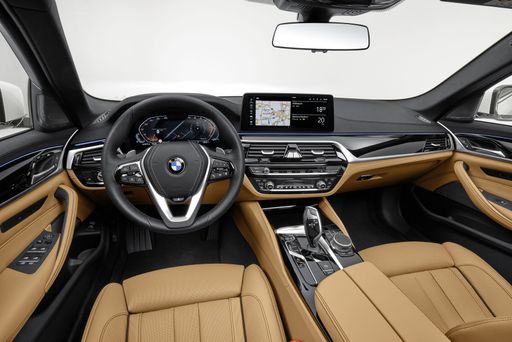
BMW stakes a claim on comfort with seating for five and merges premium materials with cutting-edge technology for an engaging driving experience. Additionally, with trunk capacities reaching 520 liters in some configurations, the 5er Limousine does not compromise on space.

5 Series Saloon

Innovations and Environmental Considerations

The Audi A5 Sportback benefits from innovations like advanced MHEV systems that enhance efficiency without sacrificing performance, aligning itself with an ecological mindset by achieving relatively low CO2 outputs depending on the engine choice.

BMW's commitment to innovation is no less enviable. The 5er Limousine’s Plug-in Hybrid variant showcases significant advancements in electric mobility while maintaining its prowess on the road. With CO2 emissions as low as 13 g/km, it carves a path for luxurious yet eco-friendly driving.

A5 Sportback

Conclusion

Choosing between the Audi A5 Sportback and the BMW 5er Limousine is a question of personal preference and intended use. The A5 offers a dynamic driving experience wrapped in a sleek package, while the 5er Limousine balances performance with an elegant expression of luxury and environmental consideration. Both models exude automotive excellence, and whichever you choose, you are guaranteed a vehicle that matches sophistication with advanced engineering.

Here’s where it gets real: The technical differences in detail

5 Series Saloon

Costs and Efficiency:

Price and efficiency are key factors when choosing a car – and this is often where the real differences emerge.

Audi A5 Sportback is markedly cheaper – starting at 40,200 £ , while the BMW 5 Series Saloon costs 50,800 £ . That’s a price difference of around 10,628 £.

Fuel consumption also shows a difference: the Audi A5 Sportback uses 2 L/100km and is only slightly more efficient than the BMW 5 Series Saloon with 2.1 L/100km. The difference is about 0.1 L/100km.

As for electric range, the Audi A5 Sportback offers only slightly more range – reaching up to 110 km, about 5 km more than the BMW 5 Series Saloon.

A5 Sportback

Engine and Performance:

Under the bonnet, it becomes clear which model is tuned for sportiness and which one takes the lead when you hit the accelerator.

When it comes to engine power, the BMW 5 Series Saloon offers moderately more power – delivering 727 HP compared to 639 HP. That’s roughly 88 HP more horsepower.

When accelerating from 0 to 100 km/h, the BMW 5 Series Saloon is only slightly quicker – completing the sprint in 3.5 s, while the Audi A5 Sportback takes 3.7 s. That’s about 0.2 s quicker.

There’s no difference in top speed – both reach 250 km/h.

There’s also a difference in torque: the BMW 5 Series Saloon delivers somewhat more torque with 1,000 Nm compared to 825 Nm. That’s about 175 Nm more.

5 Series Saloon

Space and Everyday Use:

Whether family car or daily driver – which one offers more room, flexibility and comfort?

Both vehicles offer seating for 5 people.

In terms of curb weight, Audi A5 Sportback is barely lighter – 1,770 kg compared to 1,800 kg. The difference is around 30 kg.

Looking at boot space, the BMW 5 Series Saloon offers clearly more boot space – 520 L compared to 331 L. That’s a difference of about 189 L.

When it comes to payload, the BMW 5 Series Saloon carries moderately more – 600 kg compared to 530 kg. That’s a difference of about 70 kg.

Who wins the race in the data check?

The BMW 5 Series Saloon is decisively ahead in the objective data comparison.
This result only shows which model scores more points on paper – not which of the two cars feels right for you.

from £50,800
5 Series Saloon

BMW 5 Series Saloon

  • Engine Type : Diesel MHEV, Petrol MHEV, Plugin Hybrid
  • Transmission : Automatic
  • Drive Type : Rear-Wheel Drive, All-Wheel Drive
  • Power HP : 197 - 727 HP
  • Consumption L/100km : 2.1 - 5.8 L/100km
  • Electric Range : 67 - 105 km
BMW 5 Series Saloon
Audi A5 Sportback

Costs and Consumption

View detailed analysis

Engine and Performance

View detailed analysis

Dimensions and Body

View detailed analysis

BMW 5 Series Saloon

The BMW 5 Series Saloon blends executive poise with a driver's instinct, delivering a supple, refined cabin and a chassis that prefers composed authority over bravado. For buyers who want a grown-up commuter that still enjoys a twisty road, it’s the kind of car that keeps your colleagues impressed and your weekend grin intact.

details

Audi A5 Sportback

The Audi A5 Sportback dresses up sleek coupe proportions with the everyday sense of a practical hatchback, so you get striking looks without the compromises. Behind the wheel it balances poise and comfort with premium trimmings that make daily driving feel a little bit special — ideal for buyers who want style and substance in equal measure.

details
BMW 5 Series Saloon
Audi A5 Sportback

Costs and Consumption

Price
50,800 - 124,500 £
Price
40,200 - 91,000 £
Consumption L/100km
2.1 - 5.8 L/100km
Consumption L/100km
2 - 7.6 L/100km
Consumption kWh/100km
-
Consumption kWh/100km
-
Electric Range
67 - 105 km
Electric Range
84 - 110 km
Battery Capacity
19 - 19.4 kWh
Battery Capacity
20.7 kWh
co2
48 - 152 g/km
co2
45 - 172 g/km
Fuel tank capacity
60 L
Fuel tank capacity
46 L

Dimensions and Body

Body Type
Sedan
Body Type
Hatchback
Seats
5
Seats
4 - 5
Doors
4
Doors
5
Curb weight
1,800 - 2,515 kg
Curb weight
1,770 - 2,430 kg
Trunk capacity
466 - 520 L
Trunk capacity
331 L
Length
5,060 mm
Length
4,829 mm
Width
1,900 - 1,970 mm
Width
1,860 - 1,952 mm
Height
1,515 mm
Height
1,444 mm
Max trunk capacity
-
Max trunk capacity
1,175 L
Payload
425 - 600 kg
Payload
475 - 530 kg

Engine and Performance

Engine Type
Diesel MHEV, Petrol MHEV, Plugin Hybrid
Engine Type
Plugin Hybrid, Petrol, Diesel MHEV, Petrol MHEV
Transmission
Automatic
Transmission
Automatic
Transmission Detail
Automatic Gearbox
Transmission Detail
Dual-Clutch Automatic, Automatic Gearbox
Drive Type
Rear-Wheel Drive, All-Wheel Drive
Drive Type
All-Wheel Drive, Front-Wheel Drive
Power HP
197 - 727 HP
Power HP
150 - 639 HP
Acceleration 0-100km/h
3.5 - 7.5 s
Acceleration 0-100km/h
3.7 - 9.8 s
Max Speed
225 - 250 km/h
Max Speed
250 km/h
Torque
330 - 1,000 Nm
Torque
280 - 825 Nm
Number of Cylinders
4 - 8
Number of Cylinders
4 - 6
Power kW
145 - 535 kW
Power kW
110 - 470 kW
Engine capacity
1,995 - 4,395 cm3
Engine capacity
1,968 - 2,995 cm3

General

Model Year
2,023 - 2,026
Model Year
2,025 - 2,026
CO2 Efficiency Class
D, E, B, C
CO2 Efficiency Class
B, E, F, D
Brand
BMW
Brand
Audi
DriveDuel uses data analysis and artificial intelligence to evaluate vehicle data and create content. Content is regularly reviewed and improved. The displayed prices are estimates based on German list prices, adjusted to the respective country’s VAT. Country-specific registration taxes are not included. This information is not legally binding.