VS

BMW X1 vs Skoda Octavia Combi comparison

Compare performance (326 HP vs 204 HP), boot space and price (38,200 £ vs 25,600 £ ) at a glance. Find out which car is the better choice for you – BMW X1 or Skoda Octavia Combi?

BMW X1 vs Skoda Octavia Combi: Key differences

BMW X1

4.2 (6 Reviews)
rate
  • markedly more power
  • significantly more efficient
  • visibly quicker 0–100 km/h
details

Skoda Octavia Combi

  • considerably cheaper
  • moderately lighter
  • somewhat more trunk space
details

All details on performance, efficiency, range and trunk space can be found in the technical comparison below – including user reviews for both models.

By Achim Sedelmaier

X1

BMW X1 vs Skoda Octavia Combi: A Comprehensive Comparison

The automotive landscape is evolving, and in the crossover and wagon segments, two contenders have emerged as favorites among enthusiasts and families alike: the BMW X1 and the Skoda Octavia Combi. Each vehicle brings its own strengths, catering to different consumer demands. In this comparison, we'll delve into their technical specifications, innovations, and overall capabilities.
Octavia Combi

Design and Dimensions

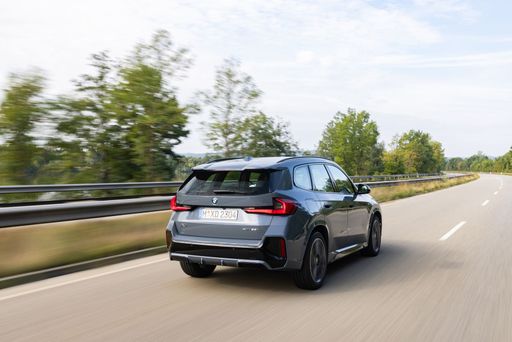
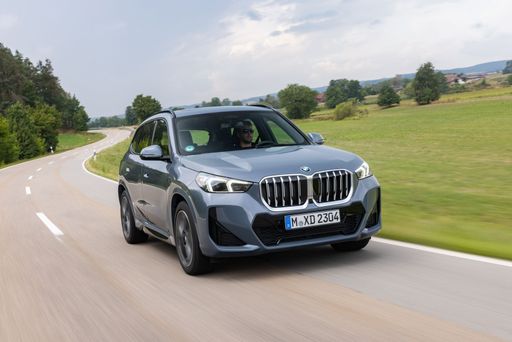
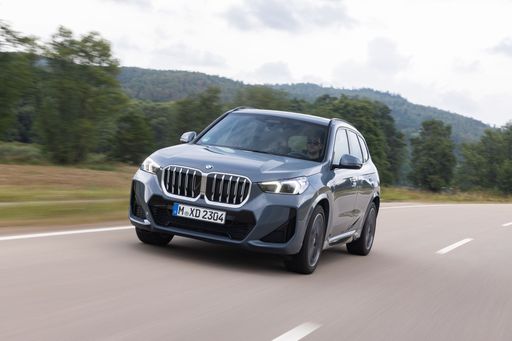
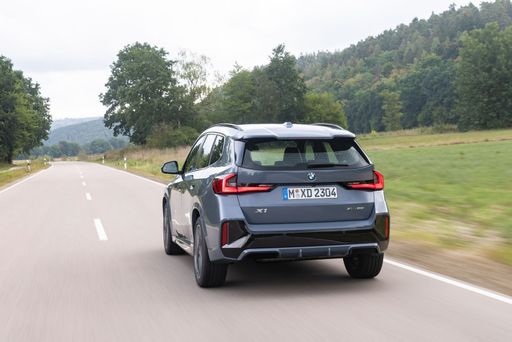
The BMW X1 stands out with its assertive SUV profile, measuring 4,500 mm in length and 1,845 mm in width. This compact SUV's height varies across models, ranging from 1,622 mm to 1,642 mm, giving it a robust presence on the road.

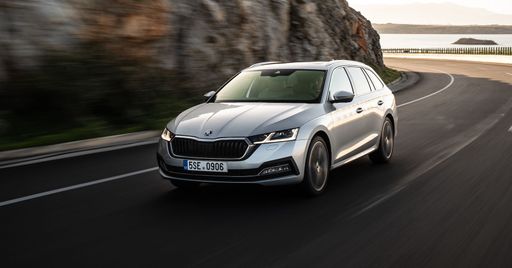
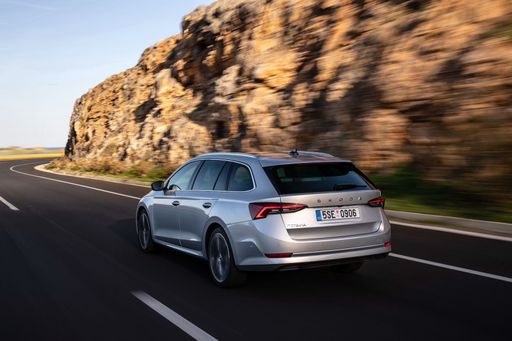
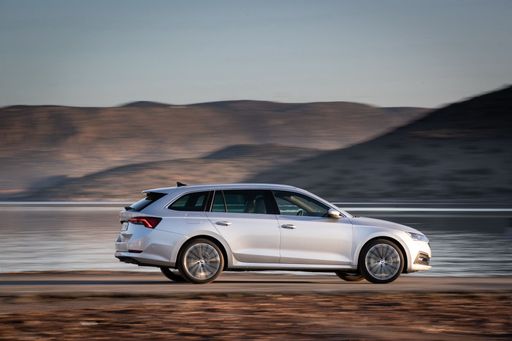
On the other hand, the Skoda Octavia Combi, with a wagon body type, stretches about 4,698 mm to 4,709 mm in length, 1,829 mm in width, and stands at a height of 1,455 mm to 1,491 mm. The Octavia's sleek, elongated design enhances its aerodynamics while maintaining ample trunk capacity and interior space.

X1

Engine Options and Performance

The powertrain options of the BMW X1 are versatile, featuring a range of engine types including petrol, diesel, MHEV, and plug-in hybrid variations. Power output ranges from 136 HP to a whopping 326 HP for the high-performance variants, allowing for impressive acceleration from 0-100 km/h in as little as 5.4 seconds.

Conversely, the Skoda Octavia Combi offers a more modest range of engines, primarily focusing on petrol and diesel options that deliver between 116 HP and 265 HP. Acceleration for the Octavia can reach 0-100 km/h in as little as 6.5 seconds for its most powerful variant. While the Skoda is not as performance-oriented as the BMW, it balances efficiency and capability well.

Octavia Combi

Transmission and Driving Experience

The BMW X1 is equipped with a dual-clutch automatic transmission that ensures smooth shifting and responsiveness, making it enjoyable to drive in various conditions. With options for front-wheel drive and all-wheel drive, it provides versatility for tackling both urban environments and off-road adventures.

The Octavia Combi also offers both manual and dual-clutch automatic transmission options, catering to varying driver preferences. With a front-wheel drive layout and an optional all-wheel drive system, the Octavia maintains a steady and controlled driving experience that is well-suited for family road trips and daily commutes alike.

X1

Fuel Efficiency and Emissions

Fuel efficiency is a strong suit for both models. The BMW X1 boasts consumption figures between 4.6 and 7.7 L/100 km depending on the engine choice, and its hybrid variant can achieve an electric range of 83 km with a battery capacity of 14.2 kWh.

Meanwhile, the Skoda Octavia Combi offers competitive fuel consumption rates ranging from 4.4 to 6.9 L/100 km, making it an economical choice for long-distance travelers. The emissions range from 114 to 157 g/km, providing relatively eco-friendly options in the segment.

Octavia Combi

Interior Comfort and Technology

Both vehicles seat five passengers comfortably, but the BMW X1 edges out slightly with its premium interior materials and tech features, providing an upscale cabin environment. Features like a high-resolution infotainment system, advanced driver-assistance technologies, and customizable ambient lighting are hallmark innovations of the X1.

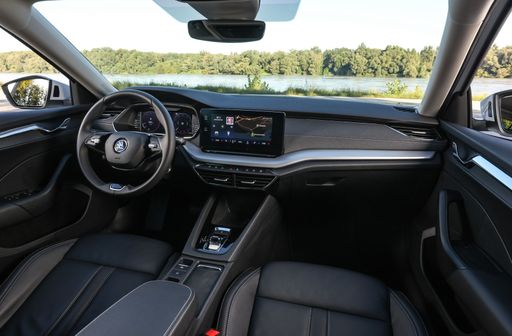
The Skoda Octavia Combi, too, does not disappoint in the technology department. It features a spacious, thoughtfully designed interior with a user-friendly infotainment system, generous boot capacity of 640 liters, and plenty of storage solutions throughout the cabin, making it an ideal option for families and those with active lifestyles.

X1

Conclusion: The Right Choice for You

Choosing between the BMW X1 and the Skoda Octavia Combi ultimately depends on personal preferences and needs. The BMW X1 is perfect for those seeking a performance-oriented, stylish compact SUV with numerous powertrain options and a premium feel. In contrast, the Skoda Octavia Combi excels in practicality with its significant cargo space and fuel efficiency, catering well to everyday usability.

Each model represents a unique facet of modern automotive design and engineering, ensuring that drivers can find a vehicle that suits their lifestyle and values. As both manufacturers continue to innovate, the X1 and Octavia Combi remain strong contenders in their respective categories.

Here’s where it gets real: The technical differences in detail

X1

Costs and Efficiency:

Looking at overall running costs, both models reveal some interesting differences in everyday economy.

Skoda Octavia Combi is considerably cheaper – starting at 25,600 £ , while the BMW X1 costs 38,200 £ . That’s a price difference of around 12,651 £.

Fuel consumption also shows a difference: the BMW X1 uses 2.5 L/100km and is significantly more efficient than the Skoda Octavia Combi with 4.4 L/100km. The difference is about 1.9 L/100km.

Octavia Combi

Engine and Performance:

Power, torque and acceleration are the classic benchmarks for car enthusiasts – and here, some clear differences start to show.

When it comes to engine power, the BMW X1 offers markedly more power – delivering 326 HP compared to 204 HP. That’s roughly 122 HP more horsepower.

When accelerating from 0 to 100 km/h, the BMW X1 is visibly quicker – completing the sprint in 5.4 s, while the Skoda Octavia Combi takes 6.7 s. That’s about 1.3 s quicker.

There’s also a difference in torque: the BMW X1 delivers visibly more torque with 477 Nm compared to 360 Nm. That’s about 117 Nm more.

X1

Space and Everyday Use:

Whether family car or daily driver – which one offers more room, flexibility and comfort?

Both vehicles offer seating for 5 people.

In terms of curb weight, Skoda Octavia Combi is moderately lighter – 1,366 kg compared to 1,575 kg. The difference is around 209 kg.

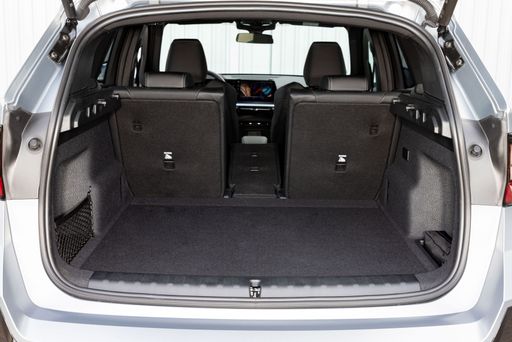
Looking at boot space, the Skoda Octavia Combi offers somewhat more boot space – 640 L compared to 540 L. That’s a difference of about 100 L.

When it comes to payload, the Skoda Octavia Combi carries barely more – 534 kg compared to 500 kg. That’s a difference of about 34 kg.

Who wins the race in the data check?

The BMW X1 stands well ahead of its rival in the objective data comparison.
This result only shows which model scores more points on paper – not which of the two cars feels right for you.

from £38,200
X1

BMW X1

  • Engine Type : Diesel MHEV, Petrol MHEV, Petrol, Diesel, Plugin Hybrid
  • Transmission : Automatic
  • Drive Type : Front-Wheel Drive, All-Wheel Drive
  • Power HP : 136 - 326 HP
  • Consumption L/100km : 2.5 - 7.7 L/100km
  • Electric Range : 81 km
BMW X1
Skoda Octavia Combi

Costs and Consumption

View detailed analysis

Engine and Performance

View detailed analysis

Dimensions and Body

View detailed analysis

BMW X1

The BMW X1 brings a premium feel to compact crossover life, wrapping practical space and agile handling into a tidy, upscale package. It’s ideal for buyers who want BMW driving dynamics without the bulk, offering everyday comfort and a few clever tricks to keep the commute interesting.

details

Skoda Octavia Combi

The Skoda Octavia Combi is the sensible family wagon that somehow turns grocery runs and long trips into a pleasant, unshowy experience — spacious, practical and built like it prefers reliability over flash. With smart touches, clever storage and a cabin that feels grown-up rather than frugal, it’s an easy recommendation for buyers who want maximum utility without sacrificing comfort or style.

details
BMW X1
Skoda Octavia Combi

Costs and Consumption

Price
38,200 - 55,500 £
Price
25,600 - 39,600 £
Consumption L/100km
2.5 - 7.7 L/100km
Consumption L/100km
4.4 - 6.9 L/100km
Consumption kWh/100km
-
Consumption kWh/100km
-
Electric Range
81 km
Electric Range
-
Battery Capacity
-
Battery Capacity
-
co2
57 - 175 g/km
co2
113 - 157 g/km
Fuel tank capacity
-
Fuel tank capacity
-

Dimensions and Body

Body Type
SUV
Body Type
Estate
Seats
5
Seats
5
Doors
-
Doors
-
Curb weight
1,575 - 1,935 kg
Curb weight
1,366 - 1,553 kg
Trunk capacity
490 - 540 L
Trunk capacity
640 L
Length
-
Length
-
Width
1,845 mm
Width
1,829 mm
Height
-
Height
-
Max trunk capacity
-
Max trunk capacity
-
Payload
490 - 500 kg
Payload
502 - 534 kg

Engine and Performance

Engine Type
Diesel MHEV, Petrol MHEV, Petrol, Diesel, Plugin Hybrid
Engine Type
Petrol, Petrol MHEV, Diesel
Transmission
Automatic
Transmission
Automatic, Manuel
Transmission Detail
Dual-Clutch Automatic
Transmission Detail
Dual-Clutch Automatic, Manual Gearbox
Drive Type
Front-Wheel Drive, All-Wheel Drive
Drive Type
All-Wheel Drive, Front-Wheel Drive
Power HP
136 - 326 HP
Power HP
116 - 204 HP
Acceleration 0-100km/h
5.4 - 9.2 s
Acceleration 0-100km/h
6.7 - 10.7 s
Max Speed
-
Max Speed
-
Torque
230 - 477 Nm
Torque
220 - 360 Nm
Number of Cylinders
3 - 4
Number of Cylinders
4
Power kW
100 - 240 kW
Power kW
85 - 150 kW
Engine capacity
1,499 - 1,998 cm3
Engine capacity
1,498 - 1,984 cm3

General

Model Year
2,024 - 2,025
Model Year
2025
CO2 Efficiency Class
D, E, F, B
CO2 Efficiency Class
E, F, D, C
Brand
BMW
Brand
Skoda
DriveDuel uses data analysis and artificial intelligence to evaluate vehicle data and create content. Content is regularly reviewed and improved. The displayed prices are estimates based on German list prices, adjusted to the respective country’s VAT. Country-specific registration taxes are not included. This information is not legally binding.