VS

BYD Han vs Porsche Taycan comparison

Compare performance (517 HP vs 1034 HP), boot space and price (59200 £ vs 87900 £ ) at a glance. Find out which car is the better choice for you – BYD Han or Porsche Taycan?

Han

The automotive landscape is evolving rapidly, with electric vehicles challenging traditional performance benchmarks. This article dives into a head-to-head comparison of two titans in the electric sedan category: the BYD Han and the Porsche Taycan. While these vehicles represent different philosophies in design, engineering, and overall performance, both are engineered to provide exhilarating experiences for drivers. Let’s explore their technical aspects and innovations.
Taycan

Performance Metrics: BYD Han vs. Porsche Taycan

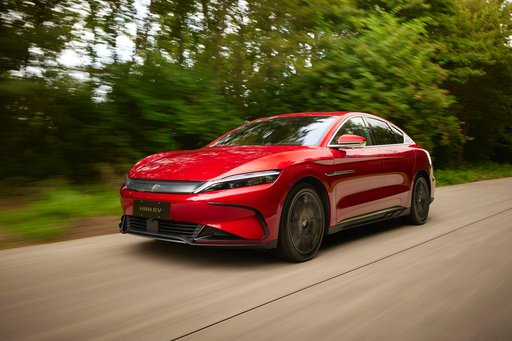
The BYD Han, with its sleek sedan body type, boasts an impressive power output of 517 HP (380 kW) and delivers a torque figure of 700 Nm. This electric vehicle is equipped with an all-wheel drive system and achieves a respectable 0-100 km/h acceleration in just 3.9 seconds, showcasing its sportiness. With a top speed of 180 km/h, it offers a solid performance for daily driving and occasional spirited runs.

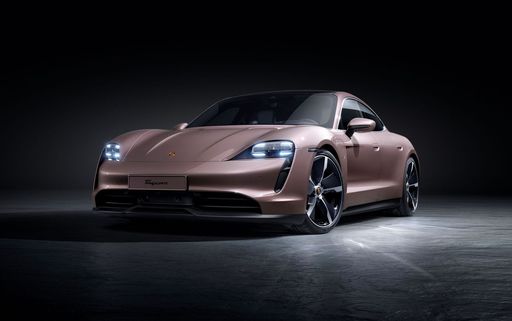
In contrast, the Porsche Taycan comes in various configurations, offering power outputs that vary from 408 HP in the base model to an astonishing 1,034 HP in the Taycan Turbo S. The range of torque available also varies significantly, with the highest spec model producing an impressive 1,340 Nm. Acceleration is equally impressive across the lineup, with the Taycan capable of hitting 0-100 km/h in as little as 2.4 seconds. The top speed can reach as high as 305 km/h in the Turbo S model, appealing to those looking for extreme performance.

Han

Electric Range and Efficiency

The BYD Han offers an electric range of 521 km on a single charge, marking it as a great contender for daily commutes and longer journeys alike, thanks to its efficient consumption of 18.5 kWh/100 km.

On the other hand, the Porsche Taycan flaunts a superior range, with some models capable of covering up to 680 km. Efficiency also varies by model, with the Taycan achieving as low as 16.7 kWh/100 km in its most efficient configuration, making it a smarter choice for endurance-focused drivers.

Taycan

Design and Interior Comfort

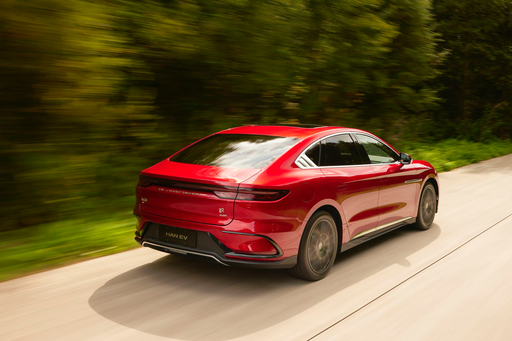
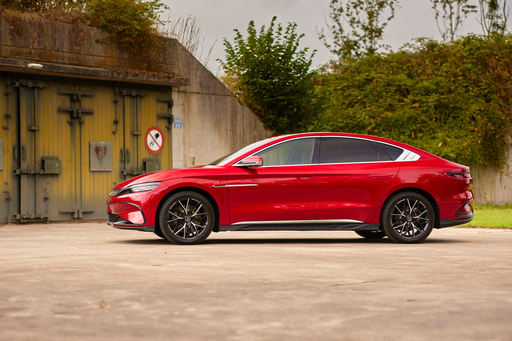
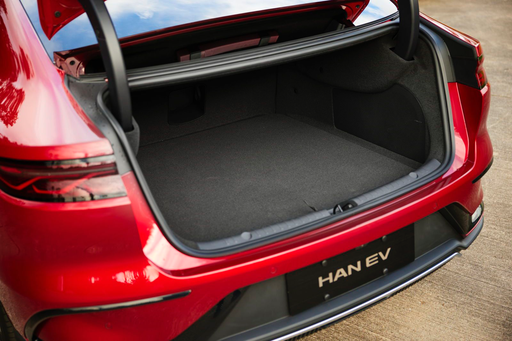
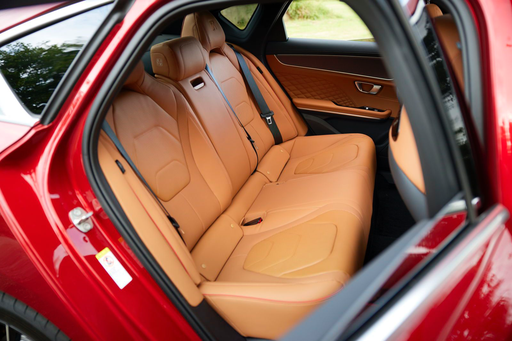
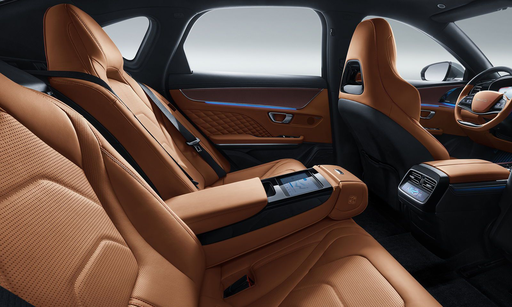
When it comes to design, the BYD Han exudes elegance with its streamlined silhouette, measuring 4,995 mm in length, 1,910 mm in width, and 1,495 mm in height. Inside, it accommodates five passengers comfortably and boasts a trunk capacity of 410 liters.

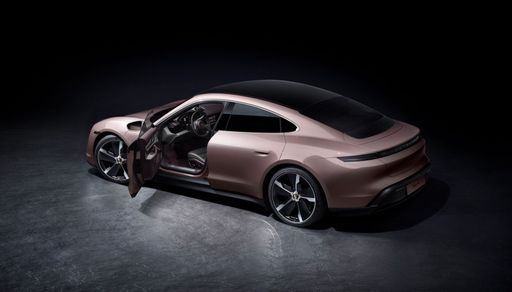
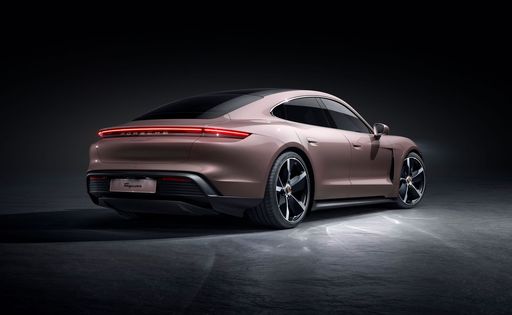
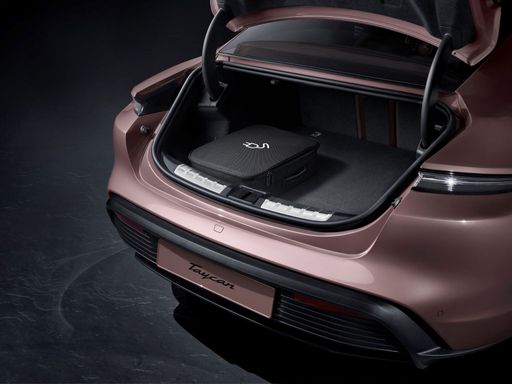
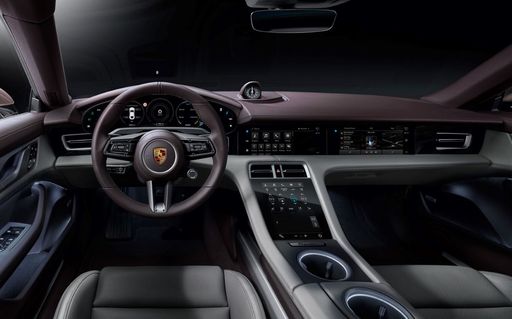
Porsche’s Taycan embodies the sports coupe aesthetic, slightly smaller than the Han at about 4,963 mm to 4,968 mm in length and 1,966 mm to 1,998 mm in width. It’s designed for four passengers, with a trunk capacity that varies from 326 to 407 liters depending on the model variant. The interior features high-quality materials and cutting-edge technology, ensuring both comfort and a driver-focused experience.

Han

Innovative Technologies

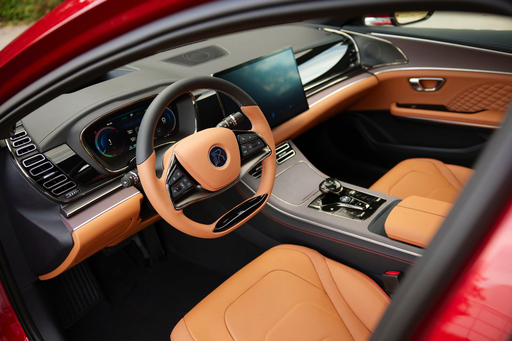
The BYD Han features advanced technology such as an intelligent cockpit, a robust navigation system, and various driving modes tailored for unique driving experiences, from economy to sport.

Porsche has equipped the Taycan with its innovative 800-volt architecture, allowing for ultra-fast charging times and enhancing overall performance efficiency. Additionally, it features an advanced driver assistance system, providing safety without compromising the excitement of driving.

Taycan

The Verdict

In summary, both the BYD Han and Porsche Taycan offer compelling reasons to choose them as your next electric vehicle. The Han is an impressive entry from BYD, offering excellent range, comfort, and value for money. Meanwhile, the Taycan represents the apex of electric performance, with superior speed, luxury finishes, and cutting-edge technology.

The choice ultimately depends on what the driver values more: raw performance and luxury of the Porsche Taycan or the efficiency and practicality that the BYD Han provides. In this electric age, both options pave the way for the future of automotive innovation.

BYD Han vs Porsche Taycan: Key differences

BYD Han

  • clearly cheaper
  • minimal more trunk space

Porsche Taycan

  • convincingly more power
  • a bit more efficient
  • clearly perceptible more electric range
  • decisively quicker from 0–100 km/h
  • slight lighter

Here’s where it gets real: The technical differences in detail

Han

Costs and Efficiency:

Price and efficiency are key factors when choosing a car – and this is often where the real differences emerge.

BYD Han has a clearly advantage in terms of price – it starts at 59200 £ , while the Porsche Taycan costs 87900 £ . That’s a price difference of around 28782 £.

In terms of energy consumption, the advantage goes to the Porsche Taycan: with 16.70 kWh per 100 km, it’s a bit more efficient than the BYD Han with 18.50 kWh. That’s a difference of about 1.80 kWh.

As for electric range, the Porsche Taycan performs clearly perceptible better – achieving up to 680 km, about 159 km more than the BYD Han.

Taycan

Engine and Performance:

Power, torque and acceleration are the classic benchmarks for car enthusiasts – and here, some clear differences start to show.

When it comes to engine power, the Porsche Taycan has a convincingly edge – offering 1034 HP compared to 517 HP. That’s roughly 517 HP more horsepower.

In acceleration from 0 to 100 km/h, the Porsche Taycan is decisively quicker – completing the sprint in 2.20 s, while the BYD Han takes 3.90 s. That’s about 1.70 s faster.

In terms of top speed, the Porsche Taycan performs convincingly better – reaching 305 km/h, while the BYD Han tops out at 180 km/h. The difference is around 125 km/h.

There’s also a difference in torque: Porsche Taycan pulls convincingly stronger with 1340 Nm compared to 700 Nm. That’s about 640 Nm difference.

Han

Space and Everyday Use:

Cabin size, boot volume and payload all play a role in everyday practicality. Here, comfort and flexibility make the difference.

Seats: BYD Han offers a bit more seating capacity – 5 vs 4.

In curb weight, Porsche Taycan is slight lighter – 2165 kg compared to 2325 kg. The difference is around 160 kg.

In terms of boot space, the BYD Han offers minimal more room – 410 L compared to 407 L. That’s a difference of about 3 L.

When it comes to payload, Porsche Taycan convincingly takes the win – 635 kg compared to 335 kg. That’s a difference of about 300 kg.

Who wins the race in the data check?

The Porsche Taycan is clearly superior overall in the objective data comparison.
This result only shows which model scores more points on paper – not which of the two cars feels right for you.

BYD Han
Porsche Taycan

Costs and Consumption

View detailed analysis

Engine and Performance

View detailed analysis

Dimensions and Body

View detailed analysis
from about £87,900
Taycan

Porsche Taycan

  • Engine Type : Electric
  • Transmission : Automatic
  • Drive Type : Rear-Wheel Drive, All-Wheel Drive
  • Power HP : 408 - 1034 HP
  • Consumption kWh/100km : 16.7 - 20.7 kWh
  • Electric Range : 552 - 680 km

BYD Han

The BYD Han is a sleek, cinematic fastback saloon that pairs dramatic styling with a surprisingly plush cabin and a genuinely high-tech feel. It undercuts established rivals on price while delivering composed handling, generous equipment and long-legged electric confidence — a car that will make badge-conscious buyers sit up and take notice.

details

Porsche Taycan

The Porsche Taycan blends Porsche's razor-sharp handling with electric immediacy, delivering an exhilarating, near-silent shove that still feels unmistakably sporty. Inside it's a high-tech cockpit wrapped in premium materials, making it as rewarding to live with day to day as it is thrilling to drive on a twisty road.

details
BYD Han
Porsche Taycan

Costs and Consumption

Price
59200 - 62200 £
Price
87900 - 206700 £
Consumption L/100km
-
Consumption L/100km
-
Consumption kWh/100km
18.50 kWh
Consumption kWh/100km
16.7 - 20.7 kWh
Electric Range
521 km
Electric Range
552 - 680 km
Battery Capacity
-
Battery Capacity
82.3 - 97 kWh
co2
0 g/km
co2
0 g/km
Fuel tank capacity
-
Fuel tank capacity
-

Dimensions and Body

Body Type
Sedan
Body Type
Coupe
Seats
5
Seats
4
Doors
4
Doors
4
Curb weight
2325 kg
Curb weight
2165 - 2370 kg
Trunk capacity
410 L
Trunk capacity
326 - 407 L
Length
4995 mm
Length
4962 - 4968 mm
Width
1910 mm
Width
1966 - 1998 mm
Height
1495 mm
Height
1378 - 1381 mm
Max trunk capacity
-
Max trunk capacity
-
Payload
335 kg
Payload
175 - 635 kg

Engine and Performance

Engine Type
Electric
Engine Type
Electric
Transmission
Automatic
Transmission
Automatic
Transmission Detail
-
Transmission Detail
Reduction Gearbox
Drive Type
All-Wheel Drive
Drive Type
Rear-Wheel Drive, All-Wheel Drive
Power HP
517 HP
Power HP
408 - 1034 HP
Acceleration 0-100km/h
3.90 s
Acceleration 0-100km/h
2.2 - 4.8 s
Max Speed
180 km/h
Max Speed
230 - 305 km/h
Torque
700 Nm
Torque
410 - 1340 Nm
Number of Cylinders
-
Number of Cylinders
-
Power kW
380 kW
Power kW
300 - 760 kW
Engine capacity
-
Engine capacity
-

General

Model Year
2023
Model Year
2024 - 2025
CO2 Efficiency Class
A
CO2 Efficiency Class
A
Brand
BYD
Brand
Porsche
What drivetrain options does the BYD Han have?

Available configurations include All-Wheel Drive.

The prices shown are estimates based on German list prices, adjusted for local VAT. Local registration taxes (e.g. NoVA, BPM or CO2 malus) are not included. This information is not legally binding.