@ Citroën / Stellantis Media
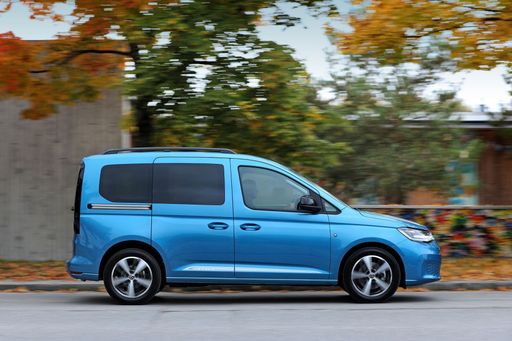
@ Volkswagen AG / VW Media
VS

Citroen Spacetourer vs VW Caddy - Differences and prices compared

Compare performance (180 HP vs 150 HP), boot space and price (34800 £ vs 27800 £) at a glance. Find out which car is the better choice for you – Citroen Spacetourer or VW Caddy?

Citroen Spacetourer

VW Caddy

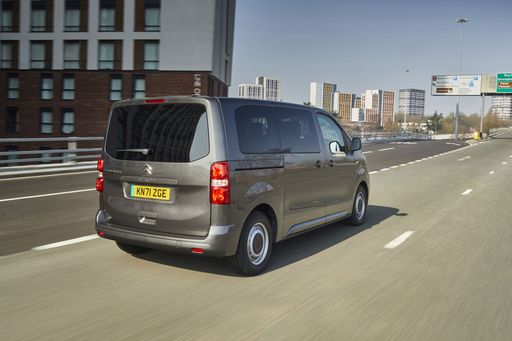
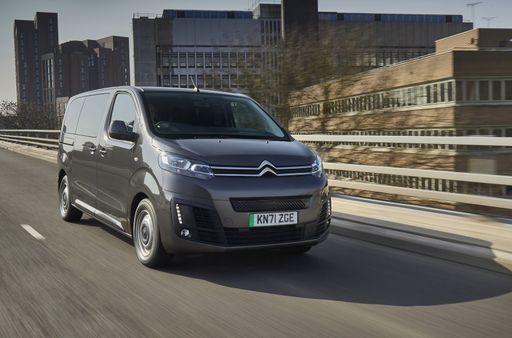
Spacetourer @ Citroën / Stellantis Media

When it comes to choosing the right vehicle for your needs, the versatility and practicality of vans are hard to beat. In this comparison, we closely examine two compelling contenders: the Citroen Spacetourer and the VW Caddy. Both models offer a range of features and innovations aimed at enhancing performance, comfort, and utility, but which one comes out on top? Join us as we delve into the technical aspects and key innovations of each vehicle.
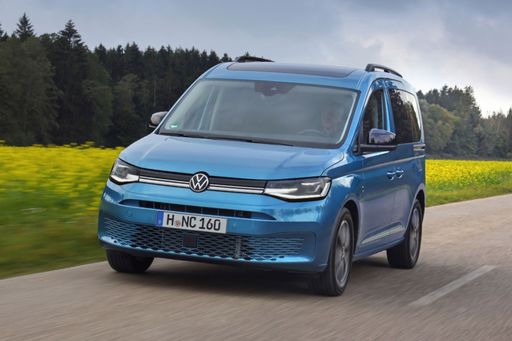
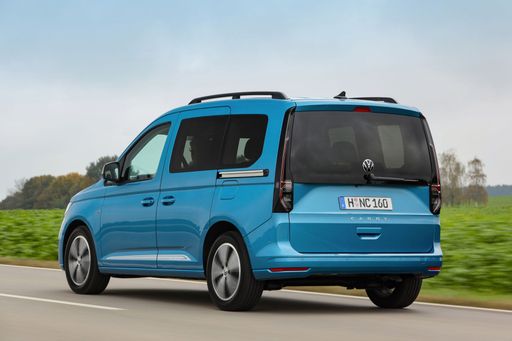
Caddy @ Volkswagen AG / VW Media

Engine Options and Performance

The Citroen Spacetourer boasts a variety of engine options, available in both electric and diesel variants. With power outputs ranging from 136 HP to 177 HP, it provides a decent balance between performance and efficiency. The Spacetourer also features a front-wheel drive system and an automatic transmission, enhancing its driving experience.

In contrast, the VW Caddy presents a wider array of engine choices, including petrol, diesel, and a plugin hybrid option. Its power range spans from 102 HP to 150 HP. Both the front-wheel drive and all-wheel drive configurations ensure optimal traction and handling, making it a flexible choice for various driving conditions.

Spacetourer @ Citroën / Stellantis Media

Fuel Efficiency and Emissions

When considering fuel efficiency, the Citroen Spacetourer achieves consumption figures of approximately 7.3 L/100km for diesel variants, along with an impressive electric range of up to 351 km on certain models. This makes it a great choice for longer journeys, especially for environmentally-conscious drivers.

The VW Caddy, on the other hand, showcases slightly better fuel economy, with figures starting at 5.3 L/100km for the petrol engine and reaching up to 6.9 L/100km for the higher-powered diesel. However, it falls short in terms of electric range, offering a maximum of 121 km for its hybrid model. Both models exhibit varying emissions, with the Spacetourer featuring a wider range of CO2 efficiency classes, making it a more favorable option for low-emission zones.

Caddy @ Volkswagen AG / VW Media

Interior Space and Comfort

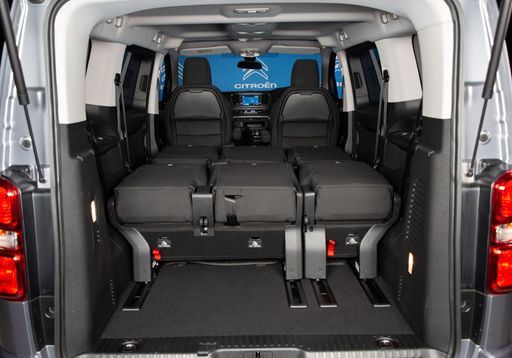
Passenger comfort is paramount in both vehicles. The Citroen Spacetourer can accommodate up to nine passengers in configurations that emphasize spaciousness and comfort. With trunk capacities of 1624L to 2011L, it offers ample space for luggage and other cargo, making it ideal for family road trips or shuttle services.

Conversely, the VW Caddy allows for configurations of up to seven seats. Despite its smaller size, it cleverly utilizes space, with a comprehensive trunk capacity that caters to both personal and commercial use. The interior of the Caddy is designed with functionality in mind, equipped with various storage compartments and modern technology for a ride that is both practical and enjoyable.

Spacetourer @ Citroën / Stellantis Media

Innovations and Technology

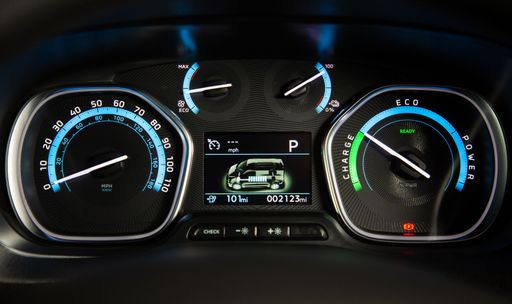
In terms of technology and features, the Citroen Spacetourer shines with its advanced infotainment system compatible with smartphone integration, offering seamless connectivity. The presence of safety features like adaptive cruise control, blind-spot detection, and a rearview camera further enhance its appeal.

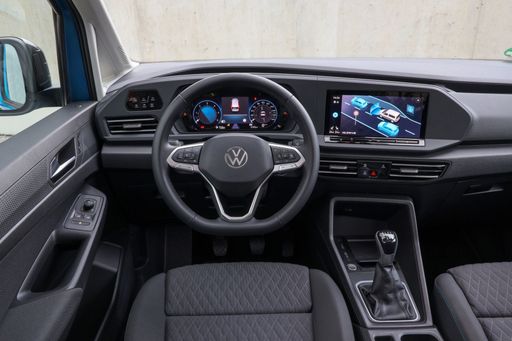
The VW Caddy matches these offerings with its own array of cutting-edge technology. Its infotainment system is known for intuitiveness, while features such as lane-keeping assist and parking sensors add layers of safety and ease of use. The optional digital cockpit is another highlight, providing drivers with customizable displays that convey essential driving information at a glance.

Caddy @ Volkswagen AG / VW Media

Conclusion: Which Van is Right for You?

Choosing between the Citroen Spacetourer and the VW Caddy ultimately comes down to your specific needs and preferences. The Spacetourer stands out with its electric capabilities and spacious interior, making it a great choice for those prioritizing eco-friendliness and passenger comfort. Meanwhile, the VW Caddy offers a more versatile lineup of engines and advanced technology, appealing to individuals seeking a reliable workhorse that excels in both urban and rural environments.

Whichever you choose, both the Citroen Spacetourer and the VW Caddy represent excellent options within the van market, ready to meet the challenges of modern driving.

Here’s where it gets real: The technical differences in detail

Spacetourer @ Citroën / Stellantis Media

Costs and Efficiency:

When it comes to price and running costs, the biggest differences usually appear. This is often where you see which car fits your budget better in the long run.

VW Caddy has a noticeable advantage in terms of price – it starts at 27800 £, while the Citroen Spacetourer costs 34800 £. That’s a price difference of around 7066 £.

Fuel consumption also shows a difference: VW Caddy manages with 0.50 L and is therefore decisively more efficient than the Citroen Spacetourer with 6.80 L. The difference is about 6.30 L per 100 km.

As for range, the Citroen Spacetourer performs significantly better – achieving up to 351 km, about 230 km more than the VW Caddy.

Caddy @ Volkswagen AG / VW Media

Engine and Performance:

Power, torque and acceleration say a lot about how a car feels on the road. This is where you see which model delivers more driving dynamics.

When it comes to engine power, the Citroen Spacetourer has a slightly edge – offering 180 HP compared to 150 HP. That’s roughly 30 HP more horsepower.

In acceleration from 0 to 100 km/h, the Citroen Spacetourer is hardly perceptible quicker – completing the sprint in 11 s, while the VW Caddy takes 11.40 s. That’s about 0.40 s faster.

In terms of top speed, the VW Caddy performs barely noticeable better – reaching 186 km/h, while the Citroen Spacetourer tops out at 185 km/h. The difference is around 1 km/h.

There’s also a difference in torque: Citroen Spacetourer pulls to a small extent stronger with 400 Nm compared to 320 Nm. That’s about 80 Nm difference.

Space and Everyday Use:

Cabin size, boot volume and payload all play a role in everyday practicality. Here, comfort and flexibility make the difference.

Seats: Citroen Spacetourer offers clearly perceptible more seating capacity – 9 vs 7.

In curb weight, VW Caddy is evident lighter – 1575 kg compared to 1953 kg. The difference is around 378 kg.

In maximum load capacity, the VW Caddy performs slightly better – up to 3700 L, which is about 400 L more than the Citroen Spacetourer.

When it comes to payload, Citroen Spacetourer distinct takes the win – 914 kg compared to 710 kg. That’s a difference of about 204 kg.

Who wins the race?

The VW Caddy proves to be is largely superior and therefore becomes our DriveDuel Champion!
VW Caddy is the better all-rounder in this comparison.

from about £27,800
Caddy @ Volkswagen AG / VW Media

VW Caddy

  • Engine Type : Petrol, Diesel, Plugin Hybrid
  • Transmission : Manuel, Automatic
  • Drive Type : Front-Wheel Drive, All-Wheel Drive
  • Power HP : 102 - 150 HP
  • Consumption L/100km : 0.5 - 6.9 L
  • Electric Range : 116 - 121 km
Citroen Spacetourer
VW Caddy

Costs and Consumption

View detailed analysis

Engine and Performance

View detailed analysis

Dimensions and Body

View detailed analysis

Citroen Spacetourer

The Citroën SpaceTourer is a quietly practical people carrier that turns the chaos of family transport into a calm, sensible experience. With clever interior packaging and a relaxed ride it makes long trips surprisingly pleasant — even the backseat critics might stop grumbling.

details

VW Caddy

The VW Caddy is the Swiss-army knife of compact vans — practical, surprisingly refined, and ready to swap a weekend adventure for a grocery run without breaking a sweat. It’s user-friendly, comfortable enough for daily driving, and sensible for buyers who want utility with a dash of style and no drama.

details
Citroen Spacetourer
VW Caddy
Spacetourer @ Citroën / Stellantis Media
Caddy @ Volkswagen AG / VW Media

Costs and Consumption

Price
34800 - 52100 £
Price
27800 - 45900 £
Consumption L/100km
6.80 L
Consumption L/100km
0.5 - 6.9 L
Consumption kWh/100km
23.7 - 24.4 kWh
Consumption kWh/100km
-
Electric Range
217 - 351 km
Electric Range
116 - 121 km
Battery Capacity
-
Battery Capacity
19.70 kWh
co2
0 - 180 g/km
co2
10 - 165 g/km
Fuel tank capacity
70 L
Fuel tank capacity
50 L

Dimensions and Body

Body Type
Bus
Body Type
High Roof Estate
Seats
8 - 9
Seats
5 - 7
Doors
5
Doors
5
Curb weight
1953 - 2240 kg
Curb weight
1575 - 1998 kg
Trunk capacity
1624 - 2011 L
Trunk capacity
-
Length
4983 - 5333 mm
Length
4500 - 4853 mm
Width
1920 mm
Width
1855 mm
Height
1890 mm
Height
1819 - 1860 mm
Max trunk capacity
2700 - 3300 L
Max trunk capacity
2556 - 3700 L
Payload
850 - 914 kg
Payload
501 - 710 kg

Engine and Performance

Engine Type
Electric, Diesel
Engine Type
Petrol, Diesel, Plugin Hybrid
Transmission
Automatic
Transmission
Manuel, Automatic
Transmission Detail
Reduction Gearbox, Automatic Gearbox
Transmission Detail
Manual Gearbox, Dual-Clutch Automatic
Drive Type
Front-Wheel Drive
Drive Type
Front-Wheel Drive, All-Wheel Drive
Power HP
136 - 180 HP
Power HP
102 - 150 HP
Acceleration 0-100km/h
11 - 12.1 s
Acceleration 0-100km/h
11.4 - 14 s
Max Speed
130 - 185 km/h
Max Speed
173 - 186 km/h
Torque
260 - 400 Nm
Torque
220 - 320 Nm
Number of Cylinders
4
Number of Cylinders
4
Power kW
100 - 132 kW
Power kW
75 - 110 kW
Engine capacity
2184 cm3
Engine capacity
1498 - 1968 cm3

General

Model Year
2024 - 2025
Model Year
2024
CO2 Efficiency Class
A, G
CO2 Efficiency Class
E, F, B
Brand
Citroen
Brand
VW
Is the Citroen Spacetourer offered with different drivetrains?

The Citroen Spacetourer is available as Front-Wheel Drive.

The prices and data displayed are estimates based on German list prices and may vary by country. This information is not legally binding.