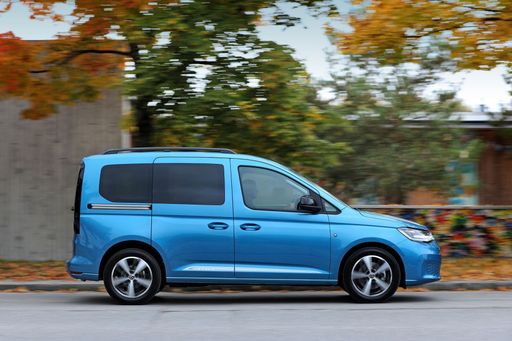
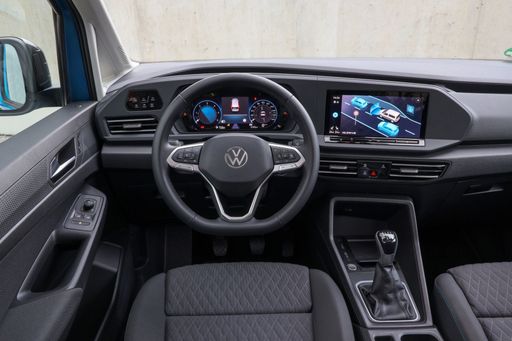
VS

Citroen Spacetourer vs VW Caddy Compact Van comparison

Compare performance (180 HP vs 150 HP), boot space and price (35,100 £ vs 25,800 £ ) at a glance. Find out which car is the better choice for you – Citroen Spacetourer or VW Caddy Compact Van?

Citroen Spacetourer vs VW Caddy Compact Van: Key differences

Citroen Spacetourer

  • slightly more power
  • significantly more electric range
details

VW Caddy Compact Van

  • markedly cheaper
  • considerably more efficient
  • visibly lighter
details

By Achim Sedelmaier

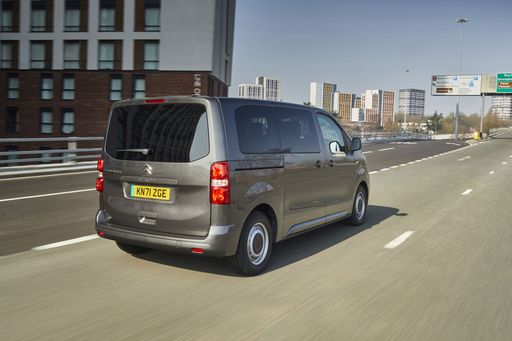
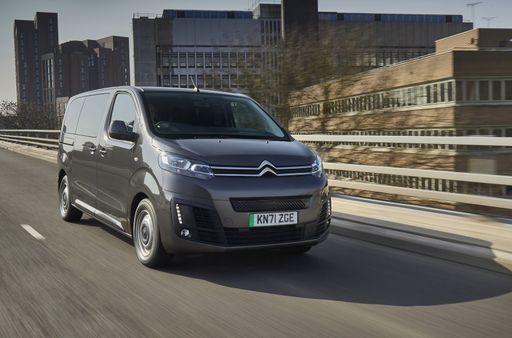
Spacetourer

The Ultimate Van Duel: Citroën Spacetourer vs VW Caddy Kompaktvan

In the automotive world, the perennial quest for the perfect van can often be a tough decision. With the 2024 offerings of the Citroën Spacetourer and the VW Caddy Kompaktvan, drivers are presented with two compelling options. As each family or business has unique requirements, this comparison focuses on technical specifications, innovations, and overall practicality to help you make an informed choice.
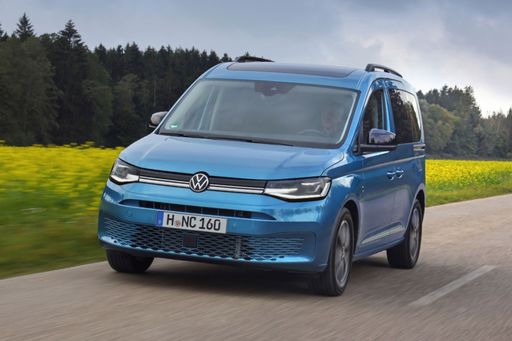
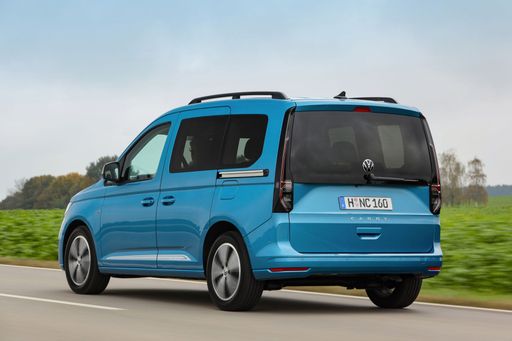
Caddy Compact Van

Performance and Power

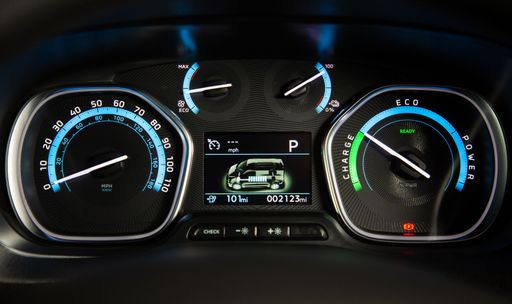
The Citroën Spacetourer and the VW Caddy Kompaktvan both bring their powerhouses to the table, but they cater to different preferences. The Spacetourer offers a choice between an electric engine and a robust diesel variant. The electric version delivers a peak of 136 HP with an electric range up to 351 km, while the diesel version dishes out 177 HP, allowing a satisfying acceleration from 0-100 km/h in just 10.6 seconds.

On the other hand, the VW Caddy Kompaktvan caters to those who prefer a versatile range of engines, including petrol, diesel, and a plug-in hybrid option. With a maximum power output of 150 HP, the Caddy offers a max speed slightly ahead of the Spacetourer, reaching up to 186 km/h. Its plug-in hybrid model further attracts attention with an electric range of approximately 120 km, attributing to eco-friendly commuting.

Spacetourer

Transmission and Drive Type

Modern vans showcase innovation in transmission technology, and these two models do not disappoint. The Spacetourer is available with automatic transmissions, featuring both reduction and automatic gearboxes, designed to provide a smooth driving experience. It maintains a front-wheel drive system that ensures effective power distribution and handling stability.

The Caddy, however, offers a choice between manual and a dual-clutch automatic gearbox, giving drivers the flexibility to select their preferred driving experience. Additionally, the Caddy’s models with an all-wheel-drive option promise enhanced stability and traction, appealing to those driving in varied terrains.

Caddy Compact Van

Seating and Space

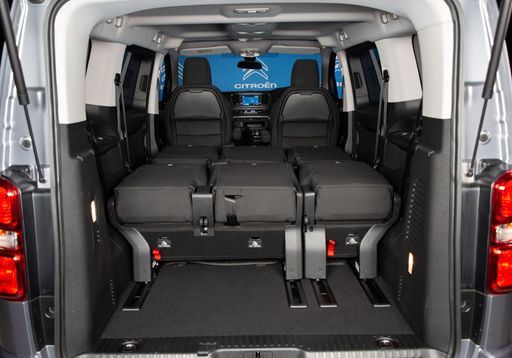
When it comes to practicality, passenger capacity is a significant differentiator. The Citroën Spacetourer can comfortably accommodate up to nine passengers, making it the ideal choice for larger families or passenger-focused business operations. The Caddy, primarily styled as a cargo van, provides seating for two, focusing more on storage capacity than passenger accommodation.

Spacetourer

Dimensions and Design

In terms of size, the Spacetourer is the larger option, with length dimensions ranging from 4983 mm to 5333 mm, offering expansive room for passengers or cargo. Its height of 1890 mm and width of 1920 mm provide a commanding presence on the road.

The Caddy Kompaktvan is more compact with lengths from 4500 mm to 4853 mm, making it suitable for urban environments and tight parking spaces. With a width of 1855 mm and a slightly reduced height of up to 1823 mm, it's perfect for drivers seeking a nimble van.

Caddy Compact Van

Environmental Consideration

Both vehicles are designed with environmental efficiency in mind, but they differ in their execution. The Spacetourer’s electric version produces zero emissions, boasting an impressive CO2 efficiency class of A. The diesel engine, however, sees a higher CO2 emission of up to 194 g/km.

The Caddy prides itself on its hybrid technology, with a CO2 output as low as 11 g/km in its plug-in hybrid iteration, making significant strides towards reducing its environmental footprint.

Spacetourer

The Verdict

Choosing between the Citroën Spacetourer and the VW Caddy Kompaktvan ultimately depends on your needs. The Spacetourer stands out with its passenger capacity, making it suitable for large families or group transportation businesses. Its electric option is ideal for those prioritizing environmental responsibility.

The VW Caddy Kompaktvan, however, offers remarkable flexibility with engine types and a design ideal for urban commuting or businesses requiring cargo transport with occasional passenger needs. Its combination of a hybrid engine and compact design aligns well with eco-conscious drivers seeking versatile performance.

Before deciding, consider your primary use case, whether it’s family travel or business-related transport, to ensure you select the vehicle that best caters to your lifestyle and environmental ethos.

Here’s where it gets real: The technical differences in detail

Spacetourer

Costs and Efficiency:

Price and efficiency are key factors when choosing a car – and this is often where the real differences emerge.

VW Caddy Compact Van is markedly cheaper – starting at 25,800 £ , while the Citroen Spacetourer costs 35,100 £ . That’s a price difference of around 9,261 £.

Fuel consumption also shows a difference: the VW Caddy Compact Van uses 0.5 L/100km and is considerably more efficient than the Citroen Spacetourer with 6.8 L/100km. The difference is about 6.3 L/100km.

As for electric range, the Citroen Spacetourer offers significantly more range – reaching up to 351 km, about 231 km more than the VW Caddy Compact Van.

Caddy Compact Van

Engine and Performance:

Power, torque and acceleration are the classic benchmarks for car enthusiasts – and here, some clear differences start to show.

When it comes to engine power, the Citroen Spacetourer offers slightly more power – delivering 180 HP compared to 150 HP. That’s roughly 30 HP more horsepower.

There’s also a difference in torque: the Citroen Spacetourer delivers moderately more torque with 400 Nm compared to 320 Nm. That’s about 80 Nm more.

Spacetourer

Space and Everyday Use:

Beyond pure performance, interior space and usability matter most in daily life. This is where you see which car is more practical and versatile.

Seats: Citroen Spacetourer offers more seats – 9 vs 2.

In terms of curb weight, VW Caddy Compact Van is visibly lighter – 1,442 kg compared to 1,953 kg. The difference is around 511 kg.

When it comes to payload, the Citroen Spacetourer carries slightly more – 914 kg compared to 759 kg. That’s a difference of about 155 kg.

Who wins the race in the data check?

The VW Caddy Compact Van is clearly superior overall in the objective data comparison.
This result only shows which model scores more points on paper – not which of the two cars feels right for you.

from £25,800
Caddy Compact Van

VW Caddy Compact Van

  • Engine Type : Petrol, Diesel, Plugin Hybrid
  • Transmission : Manuel, Automatic
  • Drive Type : Front-Wheel Drive, All-Wheel Drive
  • Power HP : 102 - 150 HP
  • Consumption L/100km : 0.5 - 6.8 L/100km
  • Electric Range : 117 - 120 km
Citroen Spacetourer
VW Caddy Compact Van

Costs and Consumption

View detailed analysis

Engine and Performance

View detailed analysis

Dimensions and Body

View detailed analysis

Citroen Spacetourer

The Citroën SpaceTourer is a quietly practical people carrier that turns the chaos of family transport into a calm, sensible experience. With clever interior packaging and a relaxed ride it makes long trips surprisingly pleasant — even the backseat critics might stop grumbling.

details

VW Caddy Compact Van

The VW Caddy is a clever compact van that turns urban chores into something almost enjoyable, thanks to smart packaging and a cabin that refuses to feel like punishment. For buyers who want useful practicality without drama, the Caddy is a tidy, dependable choice that quietly gets the job done while remaining surprisingly pleasant to drive.

details
Citroen Spacetourer
VW Caddy Compact Van

Costs and Consumption

Price
35,100 - 44,900 £
Price
25,800 - 42,300 £
Consumption L/100km
6.8 L/100km
Consumption L/100km
0.5 - 6.8 L/100km
Consumption kWh/100km
23.7 - 24 kWh/100km
Consumption kWh/100km
-
Electric Range
219 - 351 km
Electric Range
117 - 120 km
Battery Capacity
-
Battery Capacity
19.7 kWh
co2
0 - 180 g/km
co2
11 - 154 g/km
Fuel tank capacity
-
Fuel tank capacity
50 L

Dimensions and Body

Body Type
Bus
Body Type
Cargo Van
Seats
8 - 9
Seats
2
Doors
-
Doors
4 - 5
Curb weight
1,953 - 2,211 kg
Curb weight
1,442 - 1,818 kg
Trunk capacity
1,624 - 2,011 L
Trunk capacity
-
Length
-
Length
4,500 - 4,853 mm
Width
1,920 mm
Width
1,855 mm
Height
-
Height
1,819 - 1,823 mm
Max trunk capacity
-
Max trunk capacity
3,100 - 3,700 L
Payload
877 - 914 kg
Payload
628 - 759 kg

Engine and Performance

Engine Type
Electric, Diesel
Engine Type
Petrol, Diesel, Plugin Hybrid
Transmission
Automatic
Transmission
Manuel, Automatic
Transmission Detail
Reduction Gearbox, Automatic Gearbox
Transmission Detail
Manual Gearbox, Dual-Clutch Automatic
Drive Type
Front-Wheel Drive
Drive Type
Front-Wheel Drive, All-Wheel Drive
Power HP
136 - 180 HP
Power HP
102 - 150 HP
Acceleration 0-100km/h
11 - 12.1 s
Acceleration 0-100km/h
-
Max Speed
-
Max Speed
175 - 186 km/h
Torque
260 - 400 Nm
Torque
220 - 320 Nm
Number of Cylinders
4
Number of Cylinders
4
Power kW
100 - 132 kW
Power kW
75 - 110 kW
Engine capacity
2,184 cm3
Engine capacity
1,498 - 1,968 cm3

General

Model Year
2,024 - 2,025
Model Year
2024
CO2 Efficiency Class
A, G
CO2 Efficiency Class
E, B
Brand
Citroen
Brand
VW
DriveDuel uses data analysis and artificial intelligence to evaluate vehicle data and create content. Content is regularly reviewed and improved. The displayed prices are estimates based on German list prices, adjusted to the respective country’s VAT. Country-specific registration taxes are not included. This information is not legally binding.