VS

CUPRA Leon vs SEAT Leon comparison

Compare performance (325 HP vs 272 HP), boot space and price (35,200 £ vs 24,800 £ ) at a glance. Find out which car is the better choice for you – CUPRA Leon or SEAT Leon?

CUPRA Leon vs SEAT Leon: Key differences

CUPRA Leon

  • moderately more power
  • considerably quicker 0–100 km/h
details

SEAT Leon

4.4 (2 Reviews)
rate
  • clearly cheaper
  • only slightly more efficient
  • very slightly more electric range
  • only slightly lighter
details

All details on performance, efficiency, range and trunk space can be found in the technical comparison below – including user reviews for both models.

By Achim Sedelmaier

Leon

Head-to-head: CUPRA Leon VS SEAT Leon — which compact hatchback suits you?

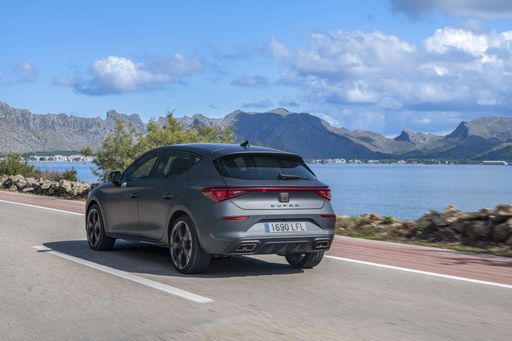
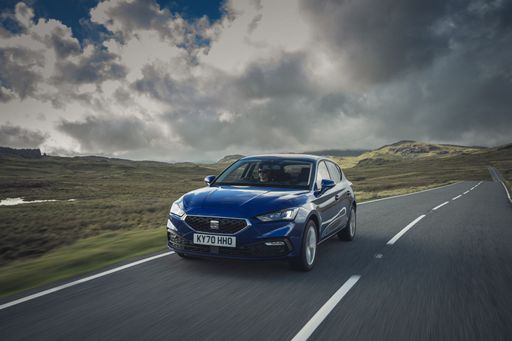
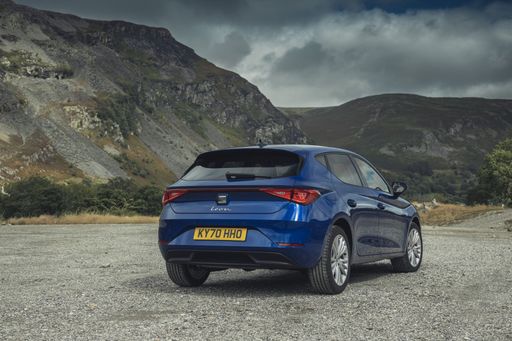
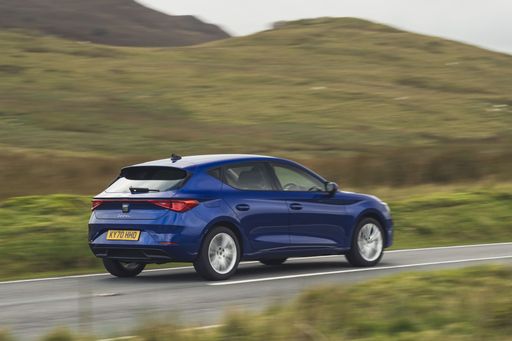
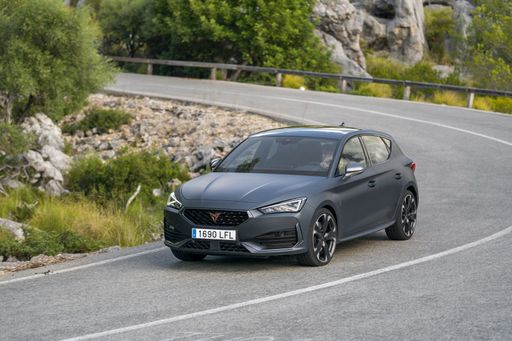
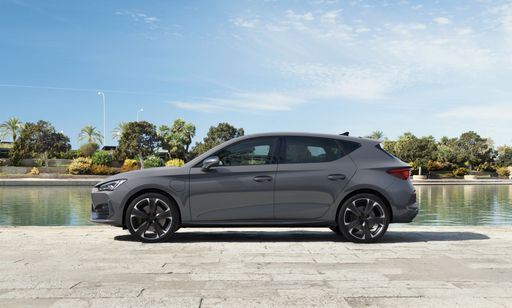
CUPRA Leon VS SEAT Leon is the matchup every buyer considers when choosing a sharp compact hatchback that doubles as a daily driver. The comparison is about more than badges: it’s about whether you want a car that leans into sporting character or one that keeps things sensible and familiar. The CUPRA Leon presents a more aggressive persona, while the SEAT Leon offers a quieter, more value-oriented stance without feeling boring. Read on to understand how those differences play out in everyday use, styling, and buyer fit.
Leon

Personality clash: attitude versus understatement

The CUPRA Leon feels like a compact with attitude — tuned, taut, and styled to be noticed — whereas the SEAT Leon is the restrained alternative that prefers understatement and broad appeal. CUPRA Leon wears its sportiness in its grin and stance, promising a firmer ride and sharper responses, while the SEAT Leon soothes with predictability and a friendlier on-ramp demeanor. If personality matters, the CUPRA Leon is the one that makes a statement; the SEAT Leon quiets friction and blends in. Both have clear identities, so it’s less about which is better and more about which mood you want parked in your driveway.

Leon

Daily life: who handles the commute, school run and motorway miles?

On a daily basis the CUPRA Leon trades a little softness for a more engaging drive, making it fun on country roads and satisfying for drivers who enjoy steering feedback, while the SEAT Leon prioritizes comfort and ease for routine urban and suburban chores. The CUPRA Leon gives a sportier feel that can make long journeys seem livelier, but the SEAT Leon’s calmer ride and gentler manners are easier on passengers after repeated city stops. Both cars offer sensible cabin layouts and familiar controls, yet the SEAT Leon leans slightly toward practicality and lower fuss. Choose the CUPRA Leon if you want to inject some excitement into everyday drives; pick the SEAT Leon if you prefer an unshowy, user-friendly daily companion.

Leon

Buying with your image in mind: what does each choice say about you?

Choosing the CUPRA Leon signals you care about presence and performance cues — that visual and driving edge is part of the purchase justification, not just an optional extra. Opting for the SEAT Leon broadcasts a pragmatic, cost-aware sensibility: comfortable, competent, and less interested in drawing attention. CUPRA Leon buyers are likely to enjoy sharper styling and a stronger emotional payoff; SEAT Leon buyers want sensible value and reliable predictability. Neither choice is shy — they just attract very different kinds of pride behind the wheel.

Leon

Who should choose the CUPRA Leon?

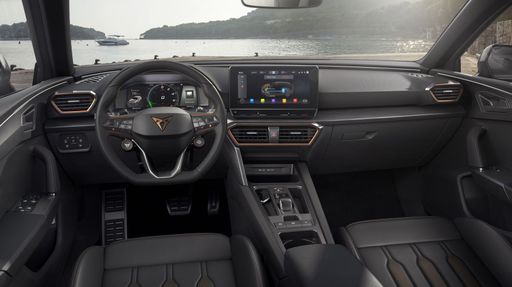
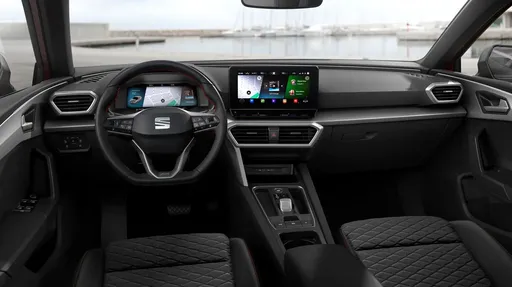
The CUPRA Leon suits drivers who prioritise driving engagement and a stronger visual statement over purely pragmatic concerns, the sort who enjoy spirited stretches of road and want their compact hatchback to reflect that. It’s for buyers who value the sensation of a tighter chassis, more assertive styling, and a cabin that feels a touch more driver-focused than the alternative. If you’re comparing it directly with the SEAT Leon, the CUPRA Leon will appeal when emotion and image are high on your checklist. Expect to trade a bit of everyday softness for personality and sharper responses.

Leon

Who should choose the SEAT Leon?

The SEAT Leon is the pick for buyers who want sensible running costs, easy usability and a relaxed everyday experience rather than headline-grabbing performance, making it ideal for commuters, family duties and urban life. If you’re weighing the SEAT Leon against the CUPRA Leon, you’ll appreciate its understated interior, predictable ride and the sense of getting sensible value without sacrificing modern features. It’s the pragmatic choice for those who want comfort and low fuss over sportiness. For a clear view of how these character differences translate into numbers and spec, read on to the technical breakdown.

Here’s where it gets real: The technical differences in detail

Leon

Costs and Efficiency:

Price and efficiency are often the first things buyers look at. Here it becomes clear which model has the long-term edge – whether at the pump, the plug, or in purchase price.

SEAT Leon is clearly cheaper – starting at 24,800 £ , while the CUPRA Leon costs 35,200 £ . That’s a price difference of around 10,380 £.

Fuel consumption also shows a difference: the SEAT Leon uses 1.2 L/100km and is only slightly more efficient than the CUPRA Leon with 1.3 L/100km. The difference is about 0.1 L/100km.

As for electric range, the SEAT Leon offers very slightly more range – reaching up to 133 km, about 2 km more than the CUPRA Leon.

Leon

Engine and Performance:

Under the bonnet, it becomes clear which model is tuned for sportiness and which one takes the lead when you hit the accelerator.

When it comes to engine power, the CUPRA Leon offers moderately more power – delivering 325 HP compared to 272 HP. That’s roughly 53 HP more horsepower.

When accelerating from 0 to 100 km/h, the CUPRA Leon is considerably quicker – completing the sprint in 5.4 s, while the SEAT Leon takes 7.7 s. That’s about 2.3 s quicker.

There’s also a difference in torque: the CUPRA Leon delivers a bit more torque with 420 Nm compared to 360 Nm. That’s about 60 Nm more.

Leon

Space and Everyday Use:

Whether family car or daily driver – which one offers more room, flexibility and comfort?

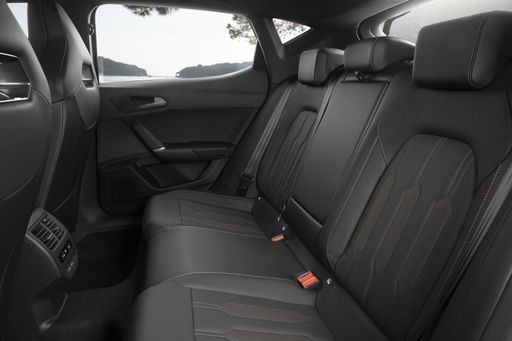
Both vehicles offer seating for 5 people.

In terms of curb weight, SEAT Leon is only slightly lighter – 1,344 kg compared to 1,371 kg. The difference is around 27 kg.

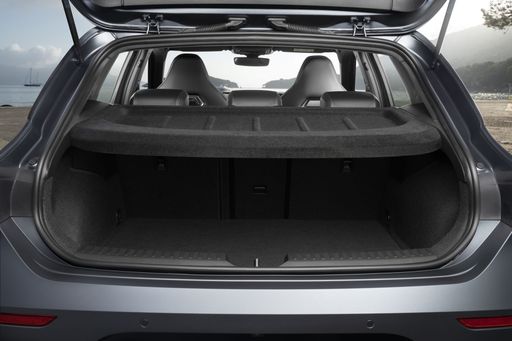
Boot capacity is identical – both offer 380 L of storage.

When it comes to payload, the SEAT Leon carries barely more – 521 kg compared to 493 kg. That’s a difference of about 28 kg.

Who wins the race in the data check?

The CUPRA Leon shows a few small advantages in the objective data comparison.
This result only shows which model scores more points on paper – not which of the two cars feels right for you.

from £35,200
Leon

CUPRA Leon

  • Engine Type : Diesel, Plugin Hybrid, Petrol, Petrol MHEV
  • Transmission : Automatic, Manuel
  • Drive Type : Front-Wheel Drive
  • Power HP : 150 - 325 HP
  • Consumption L/100km : 1.3 - 7.6 L/100km
  • Electric Range : 124 - 131 km
CUPRA Leon
SEAT Leon

Costs and Consumption

View detailed analysis

Engine and Performance

View detailed analysis

Dimensions and Body

View detailed analysis

CUPRA Leon

The Cupra Leon blends sporting intent with everyday practicality, serving up sharp handling and a cabin that feels more premium than its hatchback looks might suggest. It's a driver's car in commuter clothing — lively, distinctive, and clever enough to make daily driving feel a little less routine without screaming for attention.

details

SEAT Leon

SEAT Leon pairs sharp, modern styling with a cabin that's sensible and slightly sporty, making it an appealing choice for buyers who want flair without fuss. It drives with eager composure and offers a neat balance of comfort and agility, so you get everyday usability with a wink of fun.

details
CUPRA Leon
SEAT Leon

Costs and Consumption

Price
35,200 - 50,900 £
Price
24,800 - 36,800 £
Consumption L/100km
1.3 - 7.6 L/100km
Consumption L/100km
1.2 - 5.5 L/100km
Consumption kWh/100km
-
Consumption kWh/100km
-
Electric Range
124 - 131 km
Electric Range
133 km
Battery Capacity
-
Battery Capacity
-
co2
28 - 172 g/km
co2
28 - 126 g/km
Fuel tank capacity
-
Fuel tank capacity
-

Dimensions and Body

Body Type
Hatchback
Body Type
Hatchback
Seats
5
Seats
5
Doors
-
Doors
-
Curb weight
1,371 - 1,708 kg
Curb weight
1,344 - 1,657 kg
Trunk capacity
270 - 380 L
Trunk capacity
270 - 380 L
Length
-
Length
-
Width
1,799 mm
Width
1,799 mm
Height
-
Height
-
Max trunk capacity
-
Max trunk capacity
-
Payload
432 - 493 kg
Payload
473 - 521 kg

Engine and Performance

Engine Type
Diesel, Plugin Hybrid, Petrol, Petrol MHEV
Engine Type
Petrol, Petrol MHEV, Plugin Hybrid, Diesel
Transmission
Automatic, Manuel
Transmission
Manuel, Automatic
Transmission Detail
Dual-Clutch Automatic, Manual Gearbox
Transmission Detail
Manual Gearbox, Dual-Clutch Automatic
Drive Type
Front-Wheel Drive
Drive Type
Front-Wheel Drive
Power HP
150 - 325 HP
Power HP
116 - 272 HP
Acceleration 0-100km/h
5.4 - 8.9 s
Acceleration 0-100km/h
7.7 - 10.5 s
Max Speed
-
Max Speed
-
Torque
250 - 420 Nm
Torque
220 - 360 Nm
Number of Cylinders
4
Number of Cylinders
4
Power kW
110 - 239 kW
Power kW
85 - 200 kW
Engine capacity
1,498 - 1,984 cm3
Engine capacity
1,498 - 1,968 cm3

General

Model Year
2,025 - 2,026
Model Year
2,024 - 2,026
CO2 Efficiency Class
D, B, F
CO2 Efficiency Class
D, B
Brand
CUPRA
Brand
SEAT
DriveDuel uses data analysis and artificial intelligence to evaluate vehicle data and create content. Content is regularly reviewed and improved. The displayed prices are estimates based on German list prices, adjusted to the respective country’s VAT. Country-specific registration taxes are not included. This information is not legally binding.