VS

Fiat Panda vs Fiat Grande Panda comparison

Compare performance (70 HP vs 113 HP), boot space and price (14,100 £ vs 16,300 £ ) at a glance. Find out which car is the better choice for you – Fiat Panda or Fiat Grande Panda?

Fiat Panda vs Fiat Grande Panda: Key differences

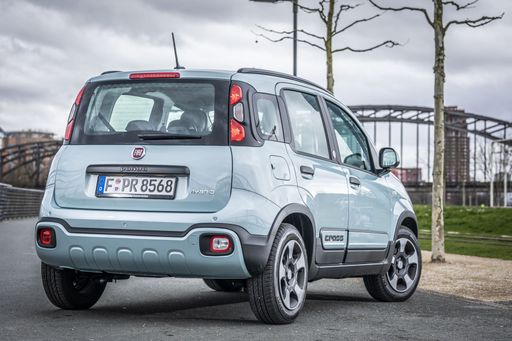
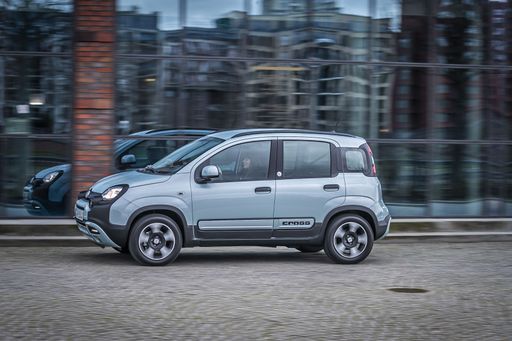
Fiat Panda

4.5 (3 Reviews)
rate
  • slightly cheaper
  • very slightly more efficient
  • markedly lighter
details

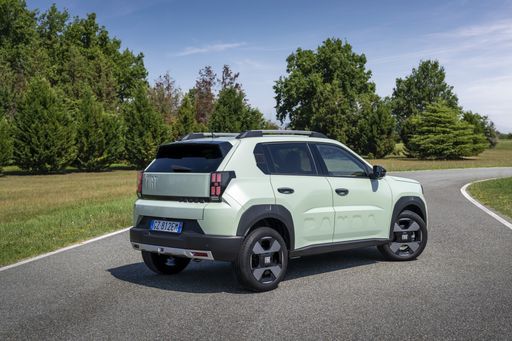
Fiat Grande Panda

3.8 (1 Reviews)
rate
  • clearly more power
  • noticeably quicker 0–100 km/h
  • substantially more trunk space
details

By Achim Sedelmaier

Panda

Fiat Panda VS Fiat Grande Panda — quick buyer snapshot

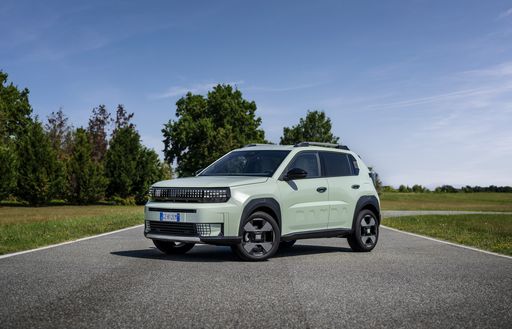
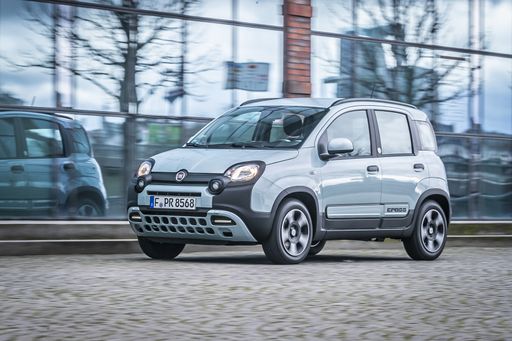
Fiat Panda and Fiat Grande Panda sit next to each other in Fiat’s small-car family, but they answer very different questions for buyers. The Panda is the raw, city-first option: tiny footprint, ultra-simple controls and the kind of cheap-to-run honesty that suits short trips and tight parking. The Grande Panda trades a bit of that city tightness for more usable interior space, a bigger boot and generally smoother manners that make it easier to live with for families. In this matchup the conversation is less about which is objectively better and more about which compromises you’re willing to accept day to day.
Grande Panda

Character and driving feel

Fiat Panda drives like a true microcar — nimble, upright and tuned around low-speed manoeuvres — while Fiat Grande Panda feels like a grown-up small car with more muscle and steadier responses. The Panda rewards slow, urban driving with its tiny turning circle and visibility, but it shows its limits when you ask for brisk acceleration or sustained motorway pace. The Grande Panda brings a stronger shove and a more composed chassis that blunts wind and road noise, so it copes with mixed-use driving better. If you live in the city and rarely leave 30 km/h, the Panda’s personality will charm you; if you need flexibility for weekend trips or carry heavier loads, the Grande Panda will be easier to live with.

Panda

Comfort and long-distance behavior

Fiat Panda’s suspension and three‑cylinder voice make longer runs feel like work — firm seats, sharper jolts from poor surfaces and a tendency to get loud on faster roads. Fiat Grande Panda soaks up town potholes more pleasantly and maintains a calmer cabin at cruising speeds, though it is not a silent grand tourer by any means. The Grande Panda’s extra mass and softer tuning tame highway fatigue better, but electric and hybrid versions can bring different trade-offs in noise and consumption when you push pace. For frequent motorway commuters the Grande Panda is the less wearing choice; for short urban hops the Panda’s compromises are tolerable and reward you with agility.

Grande Panda

Cabin feel, controls and perceived quality

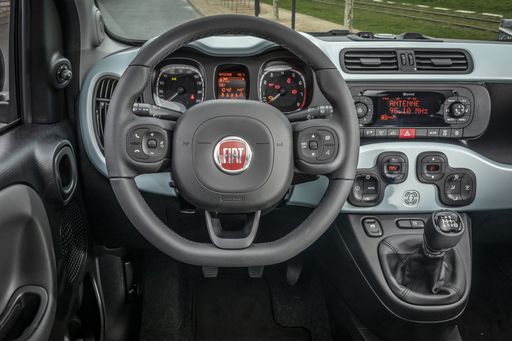
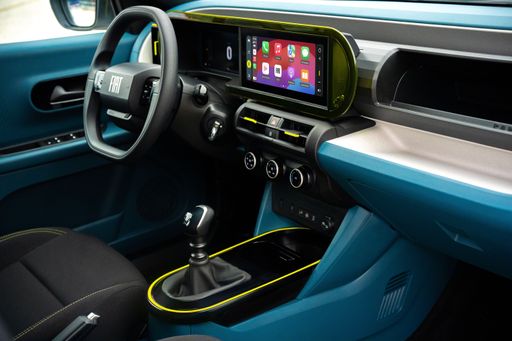
Both cars lean on simple, pragmatic interiors with plenty of hard plastics, but the Fiat Panda feels more utilitarian and deliberately pared back, whereas the Fiat Grande Panda offers a slightly more modern presentation and optional upgrades that lift the ambiance. The Panda’s strengths are physical knobs and an undistracting layout — it’s easy to use without looking — while the Grande Panda gives you roomier ergonomics and the possibility of larger screens and nicer trim in higher trims. Neither is aiming for premium softness; the difference is in how they present the same basic material quality: one as a functional tool, the other as an everyday family companion with nicer touches. If tactile refinement matters, the Grande Panda takes a small step up; if honesty and simplicity matter more, the Panda keeps things straightforward.

Panda

Practicality, space and family usability

Fiat Panda is best thought of as a compact city runabout with a useful but modest boot and tighter rear seats, making it fine for shopping runs and short school trips but less flexible for weekend luggage or taller passengers. Fiat Grande Panda expands that usable space noticeably: more boot room, a true five-seat layout in practice and clever everyday storage that turns the car into a pragmatic small family machine. Isofix access and rear comfort are still not luxury-class in the Grande Panda, but they’re clearly more accommodating than in the Panda. For single urban drivers or couples the Panda’s size is liberating; for parents or people who frequently carry cargo, the Grande Panda is the sensible choice.

Grande Panda

Who should choose which — buyer-fit and next steps

If your life is dominated by tight streets, city parking and a tight budget, the Fiat Panda delivers the lightest touch and lowest running fuss; its simplicity is an advantage when you want reliability and economy without frills. If you need a more versatile daily driver that swallows luggage, more passengers and longer trips with less fatigue, the Fiat Grande Panda is the more flexible all-rounder, accepting slightly higher cost for greater usability. Both cars have clear compromises around noise, materials and tech, so your decision should hinge on how often you leave the city and how much space you regularly need. Read the technical comparison next to see how those differences translate into power, luggage capacity and consumption figures so you can match numbers to the day‑to‑day impressions above.

Here’s where it gets real: The technical differences in detail

Panda

Costs and Efficiency:

When it comes to price and running costs, the biggest differences usually appear. This is often where you see which car fits your budget better in the long run.

Fiat Panda is slightly cheaper – starting at 14,100 £ , while the Fiat Grande Panda costs 16,300 £ . That’s a price difference of around 2,143 £.

Fuel consumption also shows a difference: the Fiat Panda uses 5 L/100km and is very slightly more efficient than the Fiat Grande Panda with 5.1 L/100km. The difference is about 0.1 L/100km.

Grande Panda

Engine and Performance:

Power, torque and acceleration are the classic benchmarks for car enthusiasts – and here, some clear differences start to show.

When it comes to engine power, the Fiat Grande Panda offers clearly more power – delivering 113 HP compared to 70 HP. That’s roughly 43 HP more horsepower.

When accelerating from 0 to 100 km/h, the Fiat Grande Panda is noticeably quicker – completing the sprint in 11.2 s, while the Fiat Panda takes 13.9 s. That’s about 2.7 s quicker.

There’s also a difference in torque: the Fiat Grande Panda delivers substantially more torque with 205 Nm compared to 92 Nm. That’s about 113 Nm more.

Panda

Space and Everyday Use:

Whether family car or daily driver – which one offers more room, flexibility and comfort?

Seats: Fiat Grande Panda offers more seats – 5 vs 4.

In terms of curb weight, Fiat Panda is markedly lighter – 1,055 kg compared to 1,295 kg. The difference is around 240 kg.

Looking at boot space, the Fiat Grande Panda offers substantially more boot space – 412 L compared to 225 L. That’s a difference of about 187 L.

When it comes to payload, the Fiat Grande Panda carries slightly more – 453 kg compared to 365 kg. That’s a difference of about 88 kg.

Who wins the race in the data check?

The Fiat Grande Panda is decisively ahead in the objective data comparison.
This result only shows which model scores more points on paper – not which of the two cars feels right for you.

from £16,300
Grande Panda

Fiat Grande Panda

  • Engine Type : Electric, Petrol MHEV, Petrol
  • Transmission : Automatic, Manuel
  • Drive Type : Front-Wheel Drive
  • Power HP : 100 - 113 HP
  • Consumption L/100km : 5.1 - 5.7 L/100km
  • Consumption kWh/100km : 16.8 kWh/100km
  • Electric Range : 320 km
Fiat Panda
Fiat Grande Panda

Costs and Consumption

View detailed analysis

Engine and Performance

View detailed analysis

Dimensions and Body

View detailed analysis

Fiat Panda

The Panda is a charming, no-nonsense city companion that mixes cheerful Italian flair with genuinely useful practicality, making tight streets and daily errands feel less of a chore. Its honest simplicity, clever packaging and a dash of cheeky character make it a smart, low-stress buy for people who prefer sensible perks over showroom flash.

details

Fiat Grande Panda

The Grande Panda is a delightful blend of practicality and charm, making it a popular choice for urban dwellers and families alike. With its compact design, the car navigates city streets effortlessly while providing ample interior space for passengers and cargo. Its quirky styling and user-friendly features make the Grande Panda not just a mode of transport, but a fun driving experience.

details
Fiat Panda
Fiat Grande Panda

Costs and Consumption

Price
14,100 £
Price
16,300 - 25,700 £
Consumption L/100km
5 L/100km
Consumption L/100km
5.1 - 5.7 L/100km
Consumption kWh/100km
-
Consumption kWh/100km
16.8 kWh/100km
Electric Range
-
Electric Range
320 km
Battery Capacity
-
Battery Capacity
-
co2
113 g/km
co2
0 - 131 g/km
Fuel tank capacity
38 L
Fuel tank capacity
-

Dimensions and Body

Body Type
Hatchback
Body Type
SUV
Seats
4
Seats
5
Doors
5
Doors
-
Curb weight
1,055 kg
Curb weight
1,295 - 1,554 kg
Trunk capacity
225 L
Trunk capacity
361 - 412 L
Length
3,635 mm
Length
-
Width
1,643 mm
Width
1,763 mm
Height
1,551 mm
Height
-
Max trunk capacity
870 L
Max trunk capacity
-
Payload
365 kg
Payload
353 - 453 kg

Engine and Performance

Engine Type
Petrol MHEV
Engine Type
Electric, Petrol MHEV, Petrol
Transmission
Manuel
Transmission
Automatic, Manuel
Transmission Detail
Manual Gearbox
Transmission Detail
Reduction Gearbox, Dual-Clutch Automatic, Manual Gearbox
Drive Type
Front-Wheel Drive
Drive Type
Front-Wheel Drive
Power HP
70 HP
Power HP
100 - 113 HP
Acceleration 0-100km/h
13.9 s
Acceleration 0-100km/h
11.2 - 11.5 s
Max Speed
164 km/h
Max Speed
-
Torque
92 Nm
Torque
122 - 205 Nm
Number of Cylinders
3
Number of Cylinders
3
Power kW
51 kW
Power kW
74 - 83 kW
Engine capacity
999 cm3
Engine capacity
1,199 cm3

General

Model Year
2024
Model Year
2025
CO2 Efficiency Class
C
CO2 Efficiency Class
A, D
Brand
Fiat
Brand
Fiat
DriveDuel uses data analysis and artificial intelligence to evaluate vehicle data and create content. Content is regularly reviewed and improved. The displayed prices are estimates based on German list prices, adjusted to the respective country’s VAT. Country-specific registration taxes are not included. This information is not legally binding.