VS

Fiat Tipo Wagon vs VW Golf Variant comparison

Compare performance (130 HP vs 333 HP), boot space and price (21,000 £ vs 26,100 £ ) at a glance. Find out which car is the better choice for you – Fiat Tipo Wagon or VW Golf Variant?

Fiat Tipo Wagon vs VW Golf Variant: Key differences

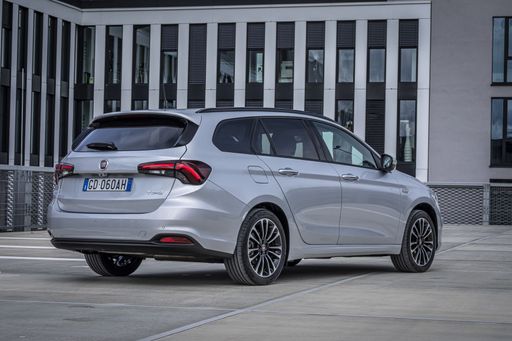
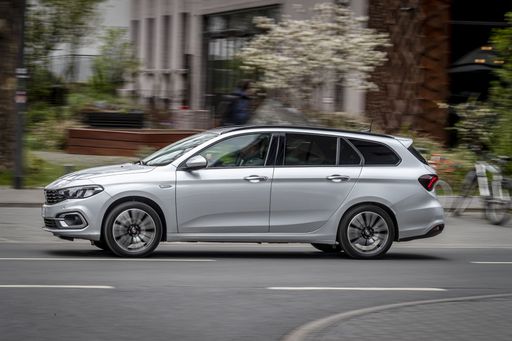
Fiat Tipo Wagon

  • clearly cheaper

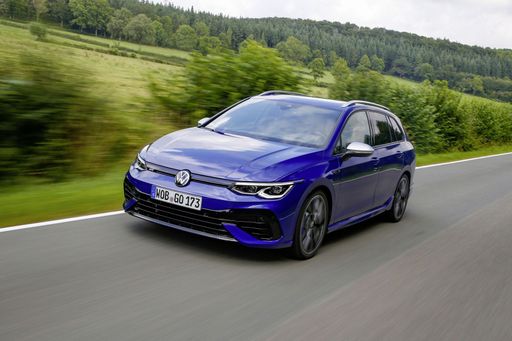
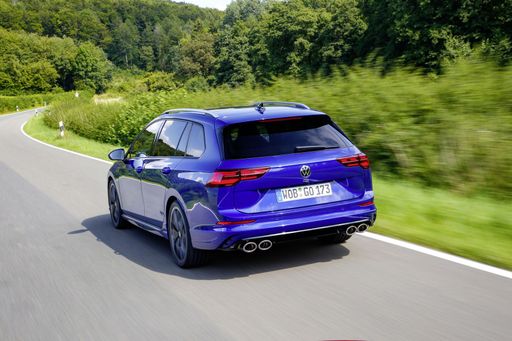
VW Golf Variant

  • clearly more power
  • marginally more efficient
  • substantially quicker 0–100 km/h
  • marginally lighter
  • barely more trunk space
Tipo Wagon

Fiat Tipo Station Wagon vs VW Golf Variant: A Tug of Wagons

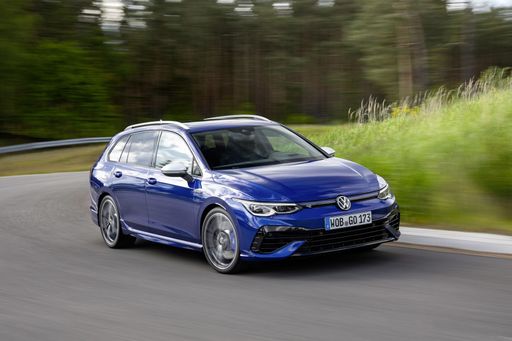
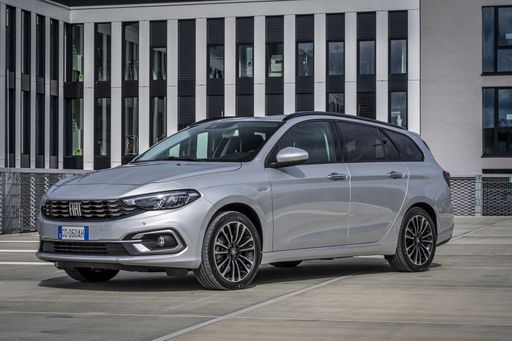
For those who cherish both utility and style, station wagons remain an enduring favorite. Today, we're pitting two contenders against each other: the Fiat Tipo Station Wagon and the VW Golf Variant. Both models from the 2024 line-up promise innovative features and practical design. Let's delve deep into their specifications to help you decide your next drive.
Golf Variant

Under the Hood: Power and Performance

The Fiat Tipo Station Wagon offers two engine variants – a mild-hybrid petrol engine and a diesel engine. These engines deliver a power output of 130 HP (96 kW) and a robust torque ranging between 240 Nm and 320 Nm, allowing for a maximum speed of 206-207 km/h and acceleration from 0 to 100 km/h in just 9.1 to 10.1 seconds. Its engine capacity varies from 1469 cm3 to 1598 cm3, making it a dependable companion whether on city roads or highways.

On the other hand, the VW Golf Variant caters to diverse preferences with its broader selection of engine types, including petrol, mild-hybrid petrol, and diesel. Power output ranges from 116 HP to a hefty 333 HP (85-245 kW), with torque figures peaking at 420 Nm. Although its acceleration spans from 4.8 seconds to 10.5 seconds, the Golf Variant can reach speeds up to 250 km/h, ensuring a thrilling ride when desired.

Tipo Wagon

Driving Dynamics and Efficiency

Both vehicles come equipped with dual-clutch automatic and manual transmission options, providing a flexible driving experience. Front-wheel drive is standard for both, but the Golf Variant adds an all-wheel-drive option for those seeking superior traction in challenging conditions.

Fuel economy remains a central concern for many drivers. The Fiat Tipo consumes between 4.7 and 5.4 L/100km, while the VW Golf Variant boasts a range of 4.4 to 8.5 L/100km, offering slightly better efficiency in some configurations. CO2 emissions are competitive, with the Tipo releasing 122-125 g/km, whereas the Golf Variant spans 115-194 g/km, depending on the model.

Golf Variant

Design and Dimensions

The station wagon ethos blends spaciousness with elegance. The Fiat Tipo Station Wagon stretches to a length of 4571 mm, with a width of 1792 mm and a height of 1514 mm. Its curb weight is between 1455-1470 kg, accommodating a payload of 475 kg. With a fuel tank capacity of 50 L, it promises long journeys without frequent stops.

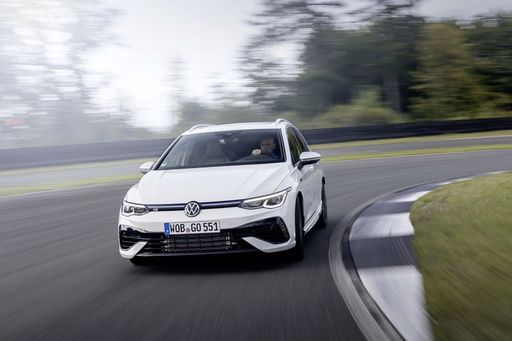
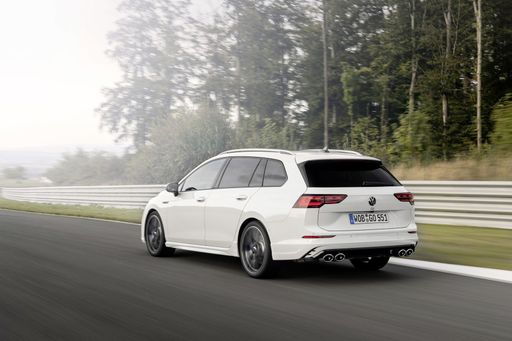
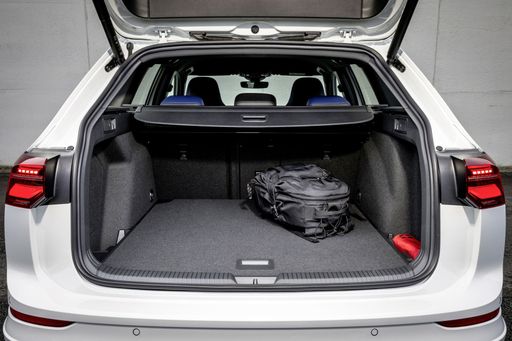
The VW Golf Variant, slightly longer at 4631 mm, is marginally narrower and lower, impacting handling and aesthetics positively. It weighs between 1369-1527 kg, allowing a greater payload capacity up to 544 kg. Its trunk, with a capacity of 611 L, surpasses the Tipo's 550 L, offering more room for luggage and gear.

Tipo Wagon

Innovation and Efficiency

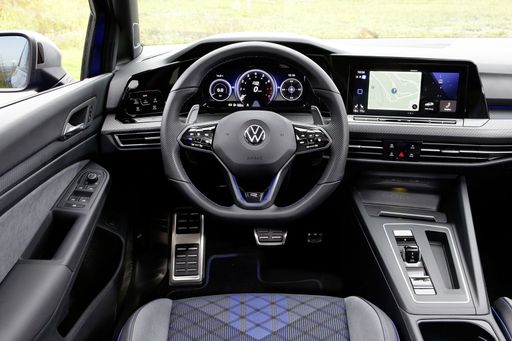
In terms of technology, both vehicles are packed with user-friendly features aimed at enhancing comfort and safety. From the infotainment systems to connectivity options, the Tipo and Golf cater to modern needs with seamless integration of smart devices.

Golf Variant

Conclusion: Choosing Your Wagon

Ultimately, both the Fiat Tipo Station Wagon and VW Golf Variant offer compelling packages. The Tipo is perfect for those seeking a balance of power and efficiency at an attractive price point, whereas the Golf Variant is ideal for drivers who prioritize performance variety and cargo space. Each wagon brings unique strengths to the fore, making your decision a matter of personal preference and lifestyle needs.

Here’s where it gets real: The technical differences in detail

Tipo Wagon

Costs and Efficiency:

Price and efficiency are key factors when choosing a car – and this is often where the real differences emerge.

Fiat Tipo Wagon is clearly cheaper – starting at 21,000 £ , while the VW Golf Variant costs 26,100 £ . That’s a price difference of around 5,147 £.

Fuel consumption also shows a difference: the VW Golf Variant uses 4.3 L/100km and is marginally more efficient than the Fiat Tipo Wagon with 4.7 L/100km. The difference is about 0.4 L/100km.

Golf Variant

Engine and Performance:

Under the bonnet, it becomes clear which model is tuned for sportiness and which one takes the lead when you hit the accelerator.

When it comes to engine power, the VW Golf Variant offers clearly more power – delivering 333 HP compared to 130 HP. That’s roughly 203 HP more horsepower.

When accelerating from 0 to 100 km/h, the VW Golf Variant is substantially quicker – completing the sprint in 4.8 s, while the Fiat Tipo Wagon takes 9.1 s. That’s about 4.3 s quicker.

Looking at top speed, the VW Golf Variant is a bit faster – reaching 250 km/h, while the Fiat Tipo Wagon tops out at 207 km/h. The difference is around 43 km/h.

There’s also a difference in torque: the VW Golf Variant delivers noticeably more torque with 420 Nm compared to 320 Nm. That’s about 100 Nm more.

Tipo Wagon

Space and Everyday Use:

Cabin size, boot volume and payload all play a role in everyday practicality. Here, comfort and flexibility make the difference.

Both vehicles offer seating for 5 people.

In terms of curb weight, VW Golf Variant is marginally lighter – 1,366 kg compared to 1,455 kg. The difference is around 89 kg.

Looking at boot space, the VW Golf Variant offers barely more boot space – 611 L compared to 550 L. That’s a difference of about 61 L.

When it comes to payload, the VW Golf Variant carries slightly more – 547 kg compared to 475 kg. That’s a difference of about 72 kg.

Who wins the race in the data check?

The VW Golf Variant holds a decisive overall lead in the objective data comparison.
This result only shows which model scores more points on paper – not which of the two cars feels right for you.

from £26,100
Golf Variant

VW Golf Variant

  • Engine Type : Petrol MHEV, Petrol, Diesel
  • Transmission : Automatic, Manuel
  • Drive Type : Front-Wheel Drive, All-Wheel Drive
  • Power HP : 116 - 333 HP
  • Consumption L/100km : 4.3 - 8.2 L/100km
Fiat Tipo Wagon
VW Golf Variant

Costs and Consumption

View detailed analysis

Engine and Performance

View detailed analysis

Dimensions and Body

View detailed analysis

Fiat Tipo Wagon

The Fiat Tipo Estate is a no-nonsense family wagon that focuses on practicality and value, with surprisingly generous load space and comfortable seats for long trips. It won't win style awards, but its sensible kit, simple controls and low running costs make it a smart, unfussy choice for buyers who want function over flash.

details

VW Golf Variant

The Golf Estate packs Volkswagen's familiar poise into a practical, grown-up estate that quietly makes everyday life easier without shouting for attention. It's clever, comfortable and roomy enough for weekend kit or family chaos, offering smart packaging and refined manners that make it a sensible and surprisingly stylish choice for buyers who need space but don't want a van.

details
Fiat Tipo Wagon
VW Golf Variant

Costs and Consumption

Price
21,000 - 27,000 £
Price
26,100 - 48,700 £
Consumption L/100km
4.7 - 5.4 L/100km
Consumption L/100km
4.3 - 8.2 L/100km
Consumption kWh/100km
-
Consumption kWh/100km
-
Electric Range
-
Electric Range
-
Battery Capacity
-
Battery Capacity
-
co2
122 - 125 g/km
co2
114 - 185 g/km
Fuel tank capacity
50 L
Fuel tank capacity
45 - 55 L

Dimensions and Body

Body Type
Estate
Body Type
Estate
Seats
5
Seats
5
Doors
5
Doors
5
Curb weight
1,455 - 1,470 kg
Curb weight
1,366 - 1,621 kg
Trunk capacity
550 L
Trunk capacity
611 L
Length
4,571 mm
Length
4,631 - 4,651 mm
Width
1,792 mm
Width
1,789 mm
Height
1,514 mm
Height
1,462 - 1,487 mm
Max trunk capacity
-
Max trunk capacity
1,624 - 1,642 L
Payload
475 kg
Payload
489 - 547 kg

Engine and Performance

Engine Type
Petrol MHEV, Diesel
Engine Type
Petrol MHEV, Petrol, Diesel
Transmission
Automatic, Manuel
Transmission
Automatic, Manuel
Transmission Detail
Dual-Clutch Automatic, Manual Gearbox
Transmission Detail
Dual-Clutch Automatic, Manual Gearbox
Drive Type
Front-Wheel Drive
Drive Type
Front-Wheel Drive, All-Wheel Drive
Power HP
130 HP
Power HP
116 - 333 HP
Acceleration 0-100km/h
9.1 - 10.1 s
Acceleration 0-100km/h
4.8 - 10.5 s
Max Speed
206 - 207 km/h
Max Speed
203 - 250 km/h
Torque
240 - 320 Nm
Torque
220 - 420 Nm
Number of Cylinders
4
Number of Cylinders
4
Power kW
96 kW
Power kW
85 - 245 kW
Engine capacity
1,469 - 1,598 cm3
Engine capacity
1,498 - 1,984 cm3

General

Model Year
2,024
Model Year
2,024 - 2,025
CO2 Efficiency Class
D
CO2 Efficiency Class
D, G, F, C
Brand
Fiat
Brand
VW
DriveDuel uses data analysis and artificial intelligence to evaluate vehicle data and create content. Content is regularly reviewed and improved. The displayed prices are estimates based on German list prices, adjusted to the respective country’s VAT. Country-specific registration taxes are not included. This information is not legally binding.