VS

Ford Mustang Convertible vs Mercedes AMG GT comparison

Compare performance (446 HP vs 816 HP), boot space and price (56,900 £ vs 102,500 £ ) at a glance. Find out which car is the better choice for you – Ford Mustang Convertible or Mercedes AMG GT?

Ford Mustang Convertible vs Mercedes AMG GT: Key differences

Ford Mustang Convertible

  • considerably cheaper
details

Mercedes AMG GT

  • substantially more power
  • moderately more efficient
  • clearly quicker 0–100 km/h
  • barely lighter
details

By Achim Sedelmaier

Mustang Convertible

American Muscle Meets German Precision: Ford Mustang Cabriolet vs. Mercedes AMG GT

In the world of performance cars, the Ford Mustang Cabriolet and the Mercedes AMG GT stand as icons of their respective legacies. Both vehicles offer breathtaking performance wrapped in the allure of luxurious design. But how do these two legends stack up against each other? Let's delve into their technical aspects and innovative features to find out.
AMG GT

Design and Dimensions: American Brawn vs. German Elegance

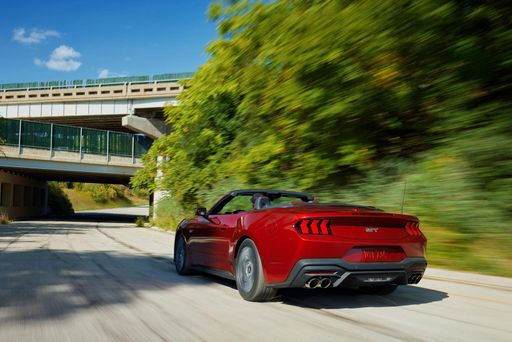
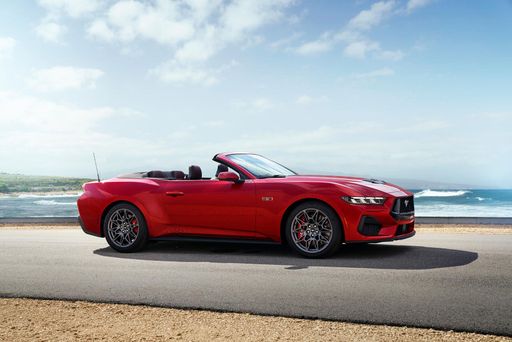
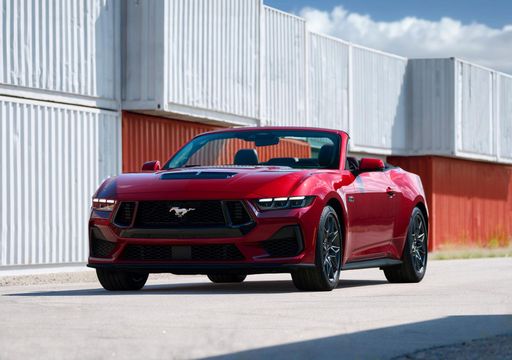
The Ford Mustang Cabriolet, a convertible from Ford’s stable, captures the essence of American muscle with a blend of modern styling cues. It measures 4,810 mm in length, 1,916 mm in width, and 1,408 mm in height. The Mustang's aesthetic is all about aggressive lines and a stout presence, making it instantly recognizable on the road.

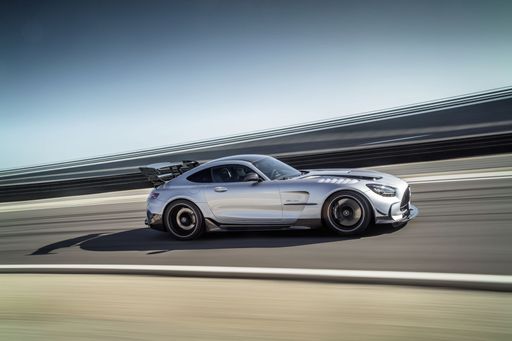
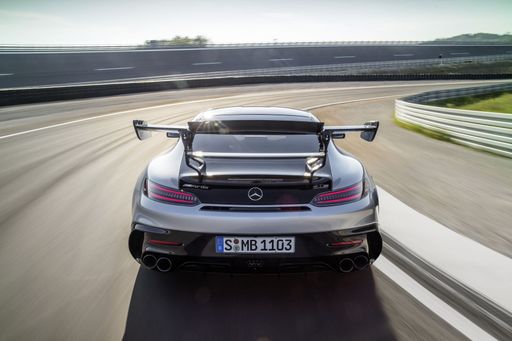
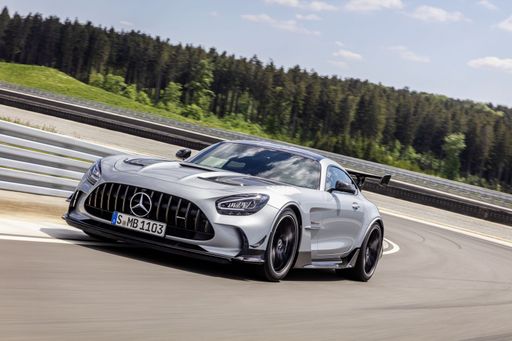
On the other hand, the Mercedes AMG GT exudes German elegance with its sleek coupe silhouette. With dimensions of 4,728 mm in length, 1,929 mm in width, and a height ranging between 1,354 mm to 1,359 mm, it strikes a balance between aggression and sophistication. Mercedes' design philosophy shines through in the AMG GT, offering a visually captivating stance.

Mustang Convertible

Performance: Roaring Horsepower vs. Precision Dynamics

Under the hood, the Mustang Cabriolet houses a robust V8 engine with an engine capacity of 5,038 cm³, delivering 446 HP and 540 Nm of torque. It offers both manual and automatic transmissions with rear-wheel drive and can accelerate from 0 to 100 km/h in just around 5.4 to 5 seconds, hitting a maximum speed of 250 km/h.

Conversely, the AMG GT is offered with a range of engines, from a 4-cylinder hybrid to a potent V8. Power outputs range from 435 HP to an astonishing 816 HP. The AMG GT boasts superior acceleration capabilities, reaching 0 to 100 km/h in an incredible 2.8 seconds and achieving top speeds up to 320 km/h. Its advanced drivetrain includes options for both rear-wheel and all-wheel drive, ensuring unparalleled handling and speed.

AMG GT

Fuel Efficiency and Emissions: Thirsty Powerhouses

Both machines carry the burden of high-performance thirst. The Mustang Cabriolet records a consumption range between 12 to 12.2 L/100km, producing CO2 emissions of 280 to 282 g/km. It comes with a fuel tank capacity of 61 liters, enough for some spirited drives before needing a refill.

The AMG GT offers slightly better efficiency, with consumption figures around 10.3 to 14 L/100km depending on the engine variant and driving conditions. Its CO2 emissions vary from 188 to 319 g/km. This mighty coupe features a large 70-liter fuel tank, accommodating extended journeys without frequent stops.

Mustang Convertible

Interior and Comfort: Four-Seater Joy vs. Exclusive Two-Seater Luxury

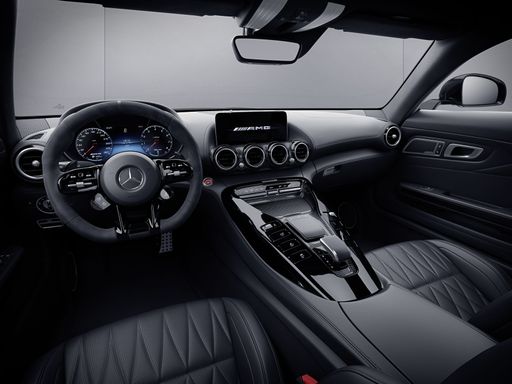
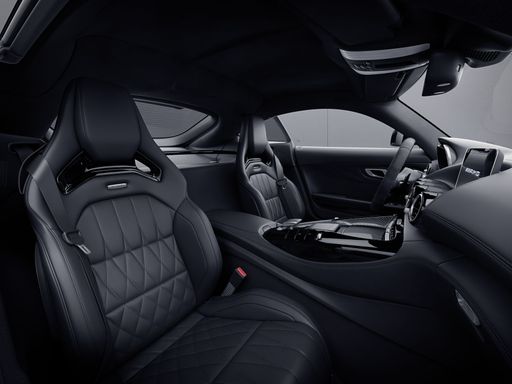
The Mustang Cabriolet stands out with its practicality, providing seating for four passengers, making it a more versatile option for those needing a bit more room. The trunk offers 310 liters of storage, adequate for a convertible.

In contrast, the AMG GT is an intimate two-seater affair, prioritizing an exclusive driving experience with a focus on luxury and performance. Trunk capacity varies with models, offering between 182 to 321 liters, ensuring enough space for weekend getaways.

AMG GT

Conclusion: A Matter of Preference

Ultimately, choosing between the Ford Mustang Cabriolet and the Mercedes AMG GT depends on what you crave in your driving experience. The Mustang Cabriolet appeals to enthusiasts longing for American muscle and an open-air thrill. Meanwhile, the AMG GT satisfies those seeking top-tier speed with precision engineering and luxury, a true testament to German craftsmanship.

Whichever path you choose, both vehicles promise exhilarating rides and memorable journeys.

Here’s where it gets real: The technical differences in detail

Mustang Convertible

Costs and Efficiency:

Price and efficiency are often the first things buyers look at. Here it becomes clear which model has the long-term edge – whether at the pump, the plug, or in purchase price.

Ford Mustang Convertible is considerably cheaper – starting at 56,900 £ , while the Mercedes AMG GT costs 102,500 £ . That’s a price difference of around 45,590 £.

Fuel consumption also shows a difference: the Mercedes AMG GT uses 10.3 L/100km and is moderately more efficient than the Ford Mustang Convertible with 12.3 L/100km. The difference is about 2 L/100km.

AMG GT

Engine and Performance:

Power, torque and acceleration are the classic benchmarks for car enthusiasts – and here, some clear differences start to show.

When it comes to engine power, the Mercedes AMG GT offers substantially more power – delivering 816 HP compared to 446 HP. That’s roughly 370 HP more horsepower.

When accelerating from 0 to 100 km/h, the Mercedes AMG GT is clearly quicker – completing the sprint in 2.8 s, while the Ford Mustang Convertible takes 5 s. That’s about 2.2 s quicker.

There’s also a difference in torque: the Mercedes AMG GT delivers clearly more torque with 1,420 Nm compared to 540 Nm. That’s about 880 Nm more.

Mustang Convertible

Space and Everyday Use:

Beyond pure performance, interior space and usability matter most in daily life. This is where you see which car is more practical and versatile.

Seats: Ford Mustang Convertible offers more seats – 4 vs 2.

In terms of curb weight, Mercedes AMG GT is barely lighter – 1,790 kg compared to 1,876 kg. The difference is around 86 kg.

When it comes to payload, the Ford Mustang Convertible carries markedly more – 324 kg compared to 215 kg. That’s a difference of about 109 kg.

Who wins the race in the data check?

The Mercedes AMG GT holds a decisive overall lead in the objective data comparison.
This result only shows which model scores more points on paper – not which of the two cars feels right for you.

from £102,500
AMG GT

Mercedes AMG GT

  • Engine Type Petrol MHEV, Petrol, Plugin Hybrid
  • Transmission Automatic
  • Drive Type Rear-Wheel Drive, All-Wheel Drive
  • Power HP 435 - 816 HP
  • Consumption L/100km 10.3 - 14 L/100km
  • Electric Range 11 km
Ford Mustang Convertible
Mercedes AMG GT

Costs and Consumption

View detailed analysis

Engine and Performance

View detailed analysis

Dimensions and Body

View detailed analysis

Ford Mustang Convertible

The Ford Mustang Convertible makes every drive feel like a small celebration, its exhaust note and open-air drama turning mundane routes into showstoppers. It’s a car that doubles as a weekend mood lifter and a credible everyday companion, blending swagger with surprising practicality.

details

Mercedes AMG GT

The Mercedes-AMG GT is a theatrical sports car with prowling looks and an aggressive exhaust note that announces its intentions the moment it fires up. It pairs ferocious performance with surprising everyday usability — a taut yet forgiving chassis and a cockpit that feels special — making sensible buyers suddenly very good at justifying indulgence.

details
Ford Mustang Convertible
Mercedes AMG GT

Costs and Consumption

Price
56,900 - 59,900 £
Price
102,500 - 194,400 £
Consumption L/100km
12.3 - 12.4 L/100km
Consumption L/100km
10.3 - 14 L/100km
Consumption kWh/100km
-
Consumption kWh/100km
-
Electric Range
-
Electric Range
11 km
Battery Capacity
-
Battery Capacity
-
co2
280 - 282 g/km
co2
235 - 319 g/km
Fuel tank capacity
-
Fuel tank capacity
-

Dimensions and Body

Body Type
Convertible
Body Type
Coupe
Seats
4
Seats
2
Doors
-
Doors
-
Curb weight
1,876 kg
Curb weight
1,790 - 2,195 kg
Trunk capacity
-
Trunk capacity
182 - 321 L
Length
-
Length
-
Width
1,916 mm
Width
1,929 mm
Height
-
Height
-
Max trunk capacity
-
Max trunk capacity
-
Payload
319 - 324 kg
Payload
170 - 215 kg

Engine and Performance

Engine Type
Petrol
Engine Type
Petrol MHEV, Petrol, Plugin Hybrid
Transmission
Manuel, Automatic
Transmission
Automatic
Transmission Detail
Manual Gearbox, Automatic Gearbox
Transmission Detail
Automatic Gearbox
Drive Type
Rear-Wheel Drive
Drive Type
Rear-Wheel Drive, All-Wheel Drive
Power HP
446 HP
Power HP
435 - 816 HP
Acceleration 0-100km/h
5 - 5.4 s
Acceleration 0-100km/h
2.8 - 4.6 s
Max Speed
-
Max Speed
-
Torque
540 Nm
Torque
500 - 1,420 Nm
Number of Cylinders
8
Number of Cylinders
4 - 8
Power kW
328 kW
Power kW
320 - 600 kW
Engine capacity
5,038 cm3
Engine capacity
1,991 - 3,982 cm3

General

Model Year
2025
Model Year
2025
CO2 Efficiency Class
G
CO2 Efficiency Class
G
Brand
Ford
Brand
Mercedes-Benz
DriveDuel uses data analysis and artificial intelligence to evaluate vehicle data and create content. Content is regularly reviewed and improved. The displayed prices are estimates based on German list prices, adjusted to the respective country’s VAT. Country-specific registration taxes are not included. This information is not legally binding.