
 Deutschland
 France
 Nederland
 Great Britain
 Sverige
 Norge
Norge Danmark
 Suomi
Suomi Italia
 Polska
 España
VS
Genesis GV70 vs Aston Martin Vanquish - Differences and prices compared
Compare performance (490 HP vs 835 HP), boot space and price (59200 £ vs 325700 £ ) at a glance. Find out which car is the better choice for you – Genesis GV70 or Aston Martin Vanquish?
GV70
Costs and Efficiency:
Price and efficiency are often the first things buyers look at. Here it becomes clear which model has the long-term edge – whether at the pump, the plug, or in purchase price.
Genesis GV70 has a clearly advantage in terms of price – it starts at 59200 £ , while the Aston Martin Vanquish costs 325700 £ . That’s a price difference of around 266529 £.
GV70
Engine and Performance:
Power, torque and acceleration are the classic benchmarks for car enthusiasts – and here, some clear differences start to show.
When it comes to engine power, the Aston Martin Vanquish has a decisively edge – offering 835 HP compared to 490 HP. That’s roughly 345 HP more horsepower.
In acceleration from 0 to 100 km/h, the Aston Martin Vanquish is clearly perceptible quicker – completing the sprint in 3.30 s, while the Genesis GV70 takes 4.40 s. That’s about 1.10 s faster.
There’s also a difference in torque: Aston Martin Vanquish pulls evident stronger with 1000 Nm compared to 700 Nm. That’s about 300 Nm difference.
Ad · Affiliate




As an Amazon Associate, we earn from qualifying purchases.
GV70
Space and Everyday Use:
Cabin size, boot volume and payload all play a role in everyday practicality. Here, comfort and flexibility make the difference.
Seats: Genesis GV70 offers significantly more seating capacity – 5 vs 2.
In curb weight, Aston Martin Vanquish is distinct lighter – 1910 kg compared to 2335 kg. The difference is around 425 kg.
In terms of boot space, the Genesis GV70 offers significantly more room – 503 L compared to 248 L. That’s a difference of about 255 L.
Who comes out on top?
Overall, the Genesis GV70 shows itself to be wins the duel decisively and secures the title of DriveDuel Champion.
It convinces with the more balanced overall package and proves to be the more versatile choice for everyday use.
from about £59,200
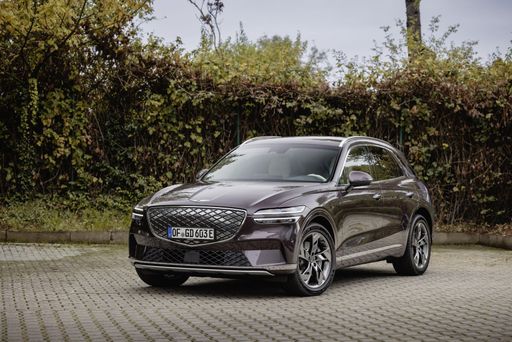
Genesis GV70
Genesis GV70
Aston Martin Vanquish
Costs and Consumption
View detailed analysis
View detailed analysis
Engine and Performance
View detailed analysis
View detailed analysis
Dimensions and Body
View detailed analysis
View detailed analysis
Genesis GV70
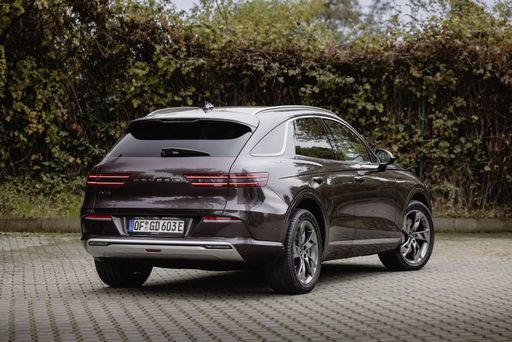
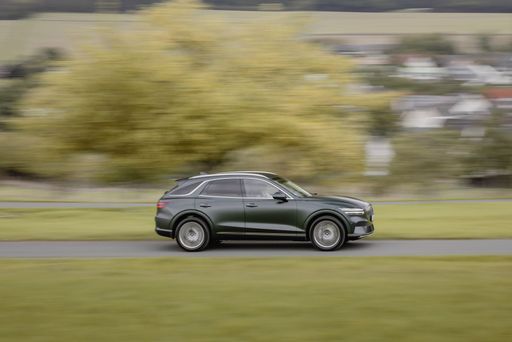
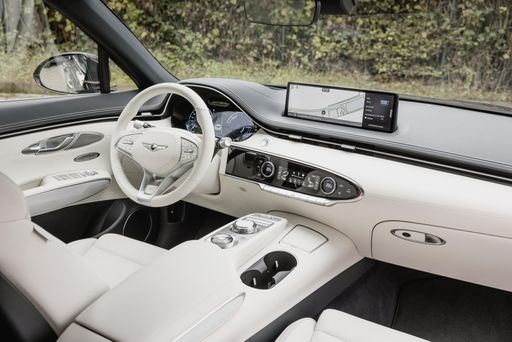
The Genesis GV70 pairs coupe-like styling with a sumptuous, high-quality interior that feels more like a bespoke lounge than a typical compact crossover. It drives with composure and poise, offering a supremely comfortable daily companion that quietly challenges established luxury names while giving buyers plenty of premium kit for the money.
details
Genesis GV70
Aston Martin Vanquish
Costs and Consumption |
|
|---|---|
|
Price
59200 - 64500 £
|
Price
325700 £
|
|
Consumption L/100km
-
|
Consumption L/100km
13.70 L
|
|
Consumption kWh/100km
19.40 kWh
|
Consumption kWh/100km
-
|
|
Electric Range
479 km
|
Electric Range
-
|
|
Battery Capacity
-
|
Battery Capacity
-
|
|
co2
0 g/km
|
co2
312 g/km
|
|
Fuel tank capacity
-
|
Fuel tank capacity
82 L
|
Dimensions and Body |
|
|---|---|
|
Body Type
SUV
|
Body Type
Coupe
|
|
Seats
5
|
Seats
2
|
|
Doors
-
|
Doors
2
|
|
Curb weight
2335 kg
|
Curb weight
1910 kg
|
|
Trunk capacity
503 L
|
Trunk capacity
248 L
|
|
Length
-
|
Length
4850 mm
|
|
Width
1910 mm
|
Width
2044 mm
|
|
Height
-
|
Height
1290 mm
|
|
Max trunk capacity
-
|
Max trunk capacity
-
|
|
Payload
515 kg
|
Payload
-
|
Engine and Performance |
|
|---|---|
|
Engine Type
Electric
|
Engine Type
Petrol
|
|
Transmission
Automatic
|
Transmission
Automatic
|
|
Transmission Detail
Reduction Gearbox
|
Transmission Detail
Automatic Gearbox
|
|
Drive Type
All-Wheel Drive
|
Drive Type
Rear-Wheel Drive
|
|
Power HP
490 HP
|
Power HP
835 HP
|
|
Acceleration 0-100km/h
4.40 s
|
Acceleration 0-100km/h
3.30 s
|
|
Max Speed
-
|
Max Speed
345 km/h
|
|
Torque
700 Nm
|
Torque
1000 Nm
|
|
Number of Cylinders
-
|
Number of Cylinders
12
|
|
Power kW
360 kW
|
Power kW
614 kW
|
|
Engine capacity
-
|
Engine capacity
5204 cm3
|
General |
|
|---|---|
|
Model Year
2025
|
Model Year
2024
|
|
CO2 Efficiency Class
A
|
CO2 Efficiency Class
G
|
|
Brand
Genesis
|
Brand
Aston Martin
|
What drivetrain options does the Genesis GV70 have?
Available configurations include All-Wheel Drive.
The prices shown are estimates based on German list prices, adjusted for local VAT. Local registration taxes (e.g. NoVA, BPM or CO2 malus) are not included. This information is not legally binding.