
 Deutschland
 France
 Nederland
 Great Britain
 Sverige
 Danmark
 Suomi
Suomi Italia
 Polska
 Česko
Česko España
VS
Hyundai IONIQ 6 vs VW Crafter comparison
Compare performance (650 HP vs 177 HP), boot space and price (39,000 £ vs 47,100 £ ) at a glance. Find out which car is the better choice for you – Hyundai IONIQ 6 or VW Crafter?
IONIQ 6
Costs and Efficiency:
Price and efficiency are often the first things buyers look at. Here it becomes clear which model has the long-term edge – whether at the pump, the plug, or in purchase price.
Hyundai IONIQ 6 is clearly cheaper – starting at 39,000 £ , while the VW Crafter costs 47,100 £ . That’s a price difference of around 8,082 £.
Crafter
Engine and Performance:
Under the bonnet, it becomes clear which model is tuned for sportiness and which one takes the lead when you hit the accelerator.
When it comes to engine power, the Hyundai IONIQ 6 offers substantially more power – delivering 650 HP compared to 177 HP. That’s roughly 473 HP more horsepower.
There’s also a difference in torque: the Hyundai IONIQ 6 delivers clearly more torque with 770 Nm compared to 410 Nm. That’s about 360 Nm more.
IONIQ 6
Space and Everyday Use:
Cabin size, boot volume and payload all play a role in everyday practicality. Here, comfort and flexibility make the difference.
Seats: Hyundai IONIQ 6 offers more seats – 5 vs 2.
In terms of curb weight, Hyundai IONIQ 6 is very slightly lighter – 1,892 kg compared to 2,072 kg. The difference is around 180 kg.
When it comes to payload, the VW Crafter carries clearly more – 2,994 kg compared to 438 kg. That’s a difference of about 2,556 kg.
Who wins the race in the data check?
The Hyundai IONIQ 6 is far ahead overall in the objective data comparison.
This result only shows which model scores more points on paper – not which of the two cars feels right for you.
from £39,000
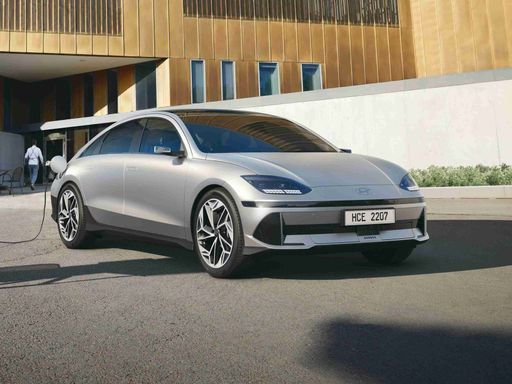
Hyundai IONIQ 6
Hyundai IONIQ 6
VW Crafter
Costs and Consumption
View detailed analysis
View detailed analysis
Engine and Performance
View detailed analysis
View detailed analysis
Dimensions and Body
View detailed analysis
View detailed analysis
Hyundai IONIQ 6
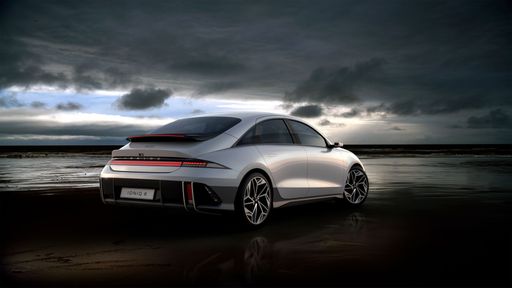
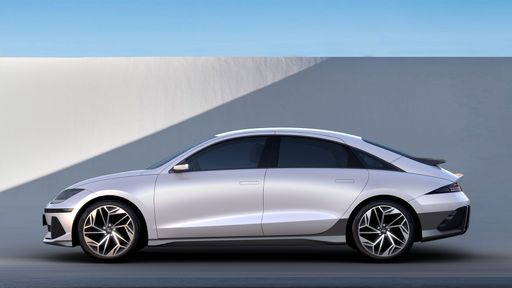
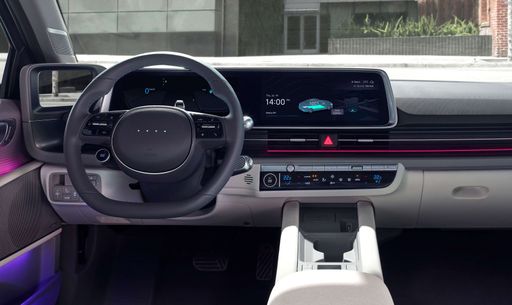
The Hyundai IONIQ 6 glides down the road with a poise that feels more runway model than commuter car, its sleek silhouette promising efficiency without trying too hard. Inside, a calm, minimalist cabin packed with clever, usable tech makes it a compelling choice for buyers who want electric motoring that's smart, stylish and quietly practical.
details
VW Crafter
The VW Crafter is a no-nonsense workhorse that makes hauling and running a mobile business feel almost civilized, with a cabin built for long days and smart storage where you need it. It may not turn heads for glamour, but its sturdy build, straightforward tech and reliable manners mean fewer headaches for owners — a van that prefers to earn your trust rather than demand attention.
details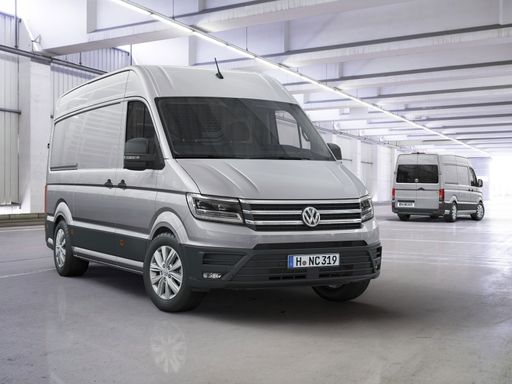
Hyundai IONIQ 6
VW Crafter
Costs and Consumption |
|
|---|---|
|
Price
39,000 - 65,100 £
|
Price
47,100 - 68,800 £
|
|
Consumption L/100km
-
|
Consumption L/100km
8.4 - 13.1 L/100km
|
|
Consumption kWh/100km
13.4 - 18.7 kWh/100km
|
Consumption kWh/100km
-
|
|
Electric Range
487 - 680 km
|
Electric Range
-
|
|
Battery Capacity
-
|
Battery Capacity
-
|
|
co2
0 g/km
|
co2
220 - 342 g/km
|
|
Fuel tank capacity
-
|
Fuel tank capacity
75 L
|
Dimensions and Body |
|
|---|---|
|
Body Type
Hatchback
|
Body Type
Cargo Van
|
|
Seats
5
|
Seats
2
|
|
Doors
-
|
Doors
4
|
|
Curb weight
1,892 - 2,241 kg
|
Curb weight
2,072 - 2,810 kg
|
|
Trunk capacity
371 - 401 L
|
Trunk capacity
-
|
|
Length
-
|
Length
5,986 - 7,391 mm
|
|
Width
1,880 - 1,940 mm
|
Width
2,040 - 2,069 mm
|
|
Height
-
|
Height
2,355 - 2,830 mm
|
|
Max trunk capacity
-
|
Max trunk capacity
9,300 - 18,400 L
|
|
Payload
386 - 438 kg
|
Payload
1,037 - 2,994 kg
|
Engine and Performance |
|
|---|---|
|
Engine Type
Electric
|
Engine Type
Diesel
|
|
Transmission
Automatic
|
Transmission
Manual, Automatic
|
|
Transmission Detail
Reduction Gearbox
|
Transmission Detail
Manual Gearbox, Automatic Gearbox
|
|
Drive Type
All-Wheel Drive, Rear-Wheel Drive
|
Drive Type
Rear-Wheel Drive, Front-Wheel Drive, All-Wheel Drive
|
|
Power HP
170 - 650 HP
|
Power HP
140 - 177 HP
|
|
Acceleration 0-100km/h
3.3 - 8.3 s
|
Acceleration 0-100km/h
-
|
|
Max Speed
-
|
Max Speed
90 - 165 km/h
|
|
Torque
350 - 770 Nm
|
Torque
360 - 410 Nm
|
|
Number of Cylinders
-
|
Number of Cylinders
4
|
|
Power kW
125 - 478 kW
|
Power kW
103 - 130 kW
|
|
Engine capacity
-
|
Engine capacity
1,968 cm3
|
General |
|
|---|---|
|
Model Year
2026
|
Model Year
2,017 - 2,023
|
|
CO2 Efficiency Class
A
|
CO2 Efficiency Class
G
|
|
Brand
Hyundai
|
Brand
VW
|
DriveDuel uses data analysis and artificial intelligence to evaluate vehicle data and create content. Content is regularly reviewed and improved.
The displayed prices are estimates based on German list prices, adjusted to the respective country’s VAT. Country-specific registration taxes are not included. This information is not legally binding.