
 Deutschland
 France
 Nederland
 Great Britain
 Sverige
 Danmark
 Suomi
Suomi Italia
 Polska
 Česko
Česko España
VS
Mazda 6 Estate vs SsangYong Torres comparison
Compare performance (194 HP vs 207 HP), boot space and price (30,000 £ vs 33,800 £ ) at a glance. Find out which car is the better choice for you – Mazda 6 Estate or SsangYong Torres?
Mazda 6 Estate vs SsangYong Torres: Key differences
All details on performance, efficiency, range and trunk space can be found in the technical comparison below – including user reviews for both models.
6 Estate
Costs and Efficiency:
When it comes to price and running costs, the biggest differences usually appear. This is often where you see which car fits your budget better in the long run.
Mazda 6 Estate is moderately cheaper – starting at 30,000 £ , while the SsangYong Torres costs 33,800 £ . That’s a price difference of around 3,848 £.
Fuel consumption also shows a difference: the Mazda 6 Estate uses 6.8 L/100km and is moderately more efficient than the SsangYong Torres with 7.9 L/100km. The difference is about 1.1 L/100km.
Torres
Engine and Performance:
Power, torque and acceleration say a lot about how a car feels on the road. This is where you see which model delivers more driving dynamics.
When it comes to engine power, the SsangYong Torres offers marginally more power – delivering 207 HP compared to 194 HP. That’s roughly 13 HP more horsepower.
Looking at top speed, the Mazda 6 Estate is slightly faster – reaching 223 km/h, while the SsangYong Torres tops out at 194 km/h. The difference is around 29 km/h.
There’s also a difference in torque: the SsangYong Torres delivers markedly more torque with 339 Nm compared to 258 Nm. That’s about 81 Nm more.
6 Estate
Space and Everyday Use:
Whether family car or daily driver – which one offers more room, flexibility and comfort?
Both vehicles offer seating for 5 people.
In terms of curb weight, Mazda 6 Estate is marginally lighter – 1,475 kg compared to 1,498 kg. The difference is around 23 kg.
Looking at boot space, the SsangYong Torres offers markedly more boot space – 703 L compared to 522 L. That’s a difference of about 181 L.
For maximum load capacity, the Mazda 6 Estate offers marginally more capacity – up to 1,664 L, about 2 L more than the SsangYong Torres.
When it comes to payload, the Mazda 6 Estate carries only slightly more – 571 kg compared to 552 kg. That’s a difference of about 19 kg.
Who wins the race in the data check?
The SsangYong Torres holds a solid overall lead in the objective data comparison.
This result only shows which model scores more points on paper – not which of the two cars feels right for you.
from £33,800
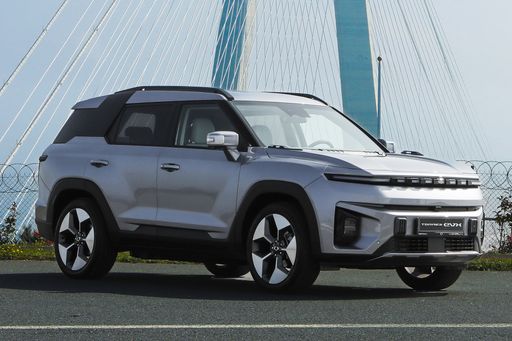
SsangYong Torres
Mazda 6 Estate
SsangYong Torres
Costs and Consumption
View detailed analysis
View detailed analysis
Engine and Performance
View detailed analysis
View detailed analysis
Dimensions and Body
View detailed analysis
View detailed analysis
Mazda 6 Estate
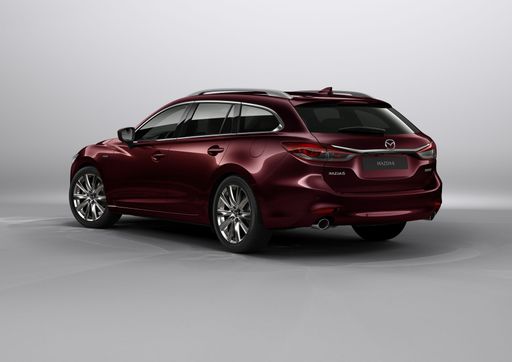
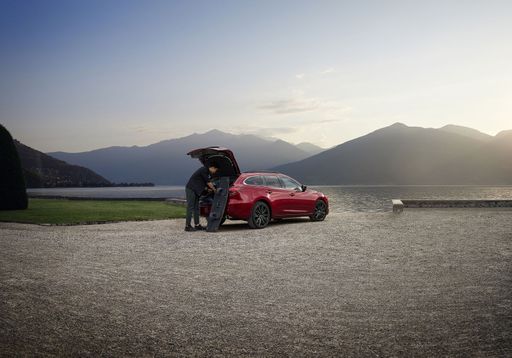
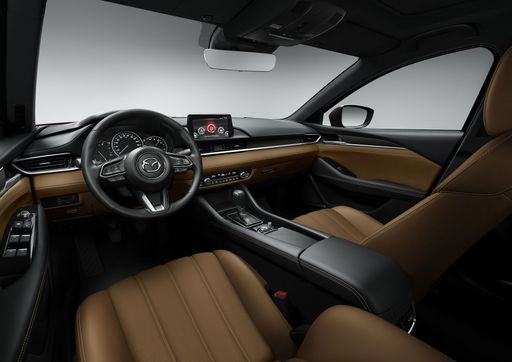
The Mazda 6 Estate marries elegant, flowing design with everyday practicality, so you get a grown-up wagon that still looks the part on a weekend escape. It rewards drivers with poised handling and a nicely finished cabin, proving that sensible family cars can be engaging — and a little bit cheeky — too.
details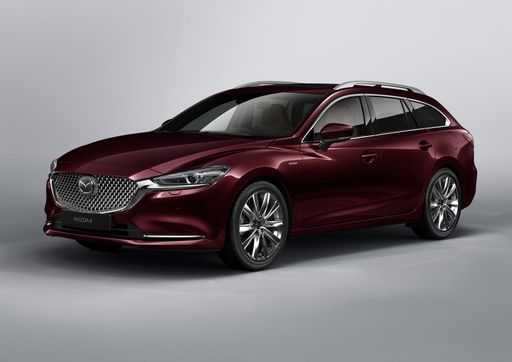
SsangYong Torres
SsangYong Torres cuts a rugged, purposeful silhouette that feels more expensive than its price tag, offering generously practical packaging and a no-nonsense feature set. It drives with surprisingly assured manners and genuine off-road appetite, making it a clever choice for buyers who want real SUV capability without badge snobbery.
details
Mazda 6 Estate
SsangYong Torres
Costs and Consumption |
|
|---|---|
|
Price
30,000 - 43,500 £
|
Price
33,800 - 44,600 £
|
|
Consumption L/100km
6.8 - 7.6 L/100km
|
Consumption L/100km
7.9 - 9.1 L/100km
|
|
Consumption kWh/100km
-
|
Consumption kWh/100km
18.7 kWh/100km
|
|
Electric Range
-
|
Electric Range
462 km
|
|
Battery Capacity
-
|
Battery Capacity
-
|
|
co2
155 - 172 g/km
|
co2
0 - 207 g/km
|
|
Fuel tank capacity
62 L
|
Fuel tank capacity
50 L
|
Dimensions and Body |
|
|---|---|
|
Body Type
Estate
|
Body Type
SUV
|
|
Seats
5
|
Seats
5
|
|
Doors
5
|
Doors
5
|
|
Curb weight
1,475 - 1,598 kg
|
Curb weight
1,498 - 1,618 kg
|
|
Trunk capacity
522 L
|
Trunk capacity
703 L
|
|
Length
4,805 mm
|
Length
4,700 mm
|
|
Width
1,840 mm
|
Width
1,890 mm
|
|
Height
1,480 mm
|
Height
1,710 mm
|
|
Max trunk capacity
1,664 L
|
Max trunk capacity
1,662 L
|
|
Payload
483 - 571 kg
|
Payload
552 kg
|
Engine and Performance |
|
|---|---|
|
Engine Type
Petrol
|
Engine Type
Petrol, Electric
|
|
Transmission
Manuel, Automatic
|
Transmission
Manuel, Automatic
|
|
Transmission Detail
Manual Gearbox, Automatic Gearbox
|
Transmission Detail
Manual Gearbox, Automatic Gearbox, Reduction Gearbox
|
|
Drive Type
Front-Wheel Drive
|
Drive Type
Front-Wheel Drive, All-Wheel Drive
|
|
Power HP
145 - 194 HP
|
Power HP
163 - 207 HP
|
|
Acceleration 0-100km/h
8.1 - 10.7 s
|
Acceleration 0-100km/h
-
|
|
Max Speed
205 - 223 km/h
|
Max Speed
191 - 194 km/h
|
|
Torque
213 - 258 Nm
|
Torque
280 - 339 Nm
|
|
Number of Cylinders
4
|
Number of Cylinders
4
|
|
Power kW
107 - 143 kW
|
Power kW
120 - 152 kW
|
|
Engine capacity
1,998 - 2,488 cm3
|
Engine capacity
1,497 cm3
|
General |
|
|---|---|
|
Model Year
2,021 - 2,022
|
Model Year
2,023 - 2,024
|
|
CO2 Efficiency Class
E, F
|
CO2 Efficiency Class
G, A
|
|
Brand
Mazda
|
Brand
SsangYong
|
DriveDuel uses data analysis and artificial intelligence to evaluate vehicle data and create content. Content is regularly reviewed and improved.
The displayed prices are estimates based on German list prices, adjusted to the respective country’s VAT. Country-specific registration taxes are not included. This information is not legally binding.