
 Deutschland
 France
 Nederland
 Great Britain
 Sverige
 Danmark
 Suomi
Suomi Italia
 Polska
 Česko
Česko España
VS
McLaren Supercar Series Roadster vs Ferrari 296 Roadster comparison
Compare performance (700 HP vs 880 HP), boot space and price (234,000 £ vs 396,000 £ ) at a glance. Find out which car is the better choice for you – McLaren Supercar Series Roadster or Ferrari 296 Roadster?
McLaren Supercar Series Roadster vs Ferrari 296 Roadster: Key differences
Supercar Series Roadster
Costs and Efficiency:
Price and efficiency are key factors when choosing a car – and this is often where the real differences emerge.
McLaren Supercar Series Roadster is substantially cheaper – starting at 234,000 £ , while the Ferrari 296 Roadster costs 396,000 £ . That’s a price difference of around 162,000 £.
Fuel consumption also shows a difference: the McLaren Supercar Series Roadster uses 4.8 L/100km and is substantially more efficient than the Ferrari 296 Roadster with 8.9 L/100km. The difference is about 4.1 L/100km.
As for electric range, the McLaren Supercar Series Roadster offers significantly more range – reaching up to 33 km, about 18 km more than the Ferrari 296 Roadster.
296 Roadster
Engine and Performance:
Under the bonnet, it becomes clear which model is tuned for sportiness and which one takes the lead when you hit the accelerator.
When it comes to engine power, the Ferrari 296 Roadster offers clearly more power – delivering 880 HP compared to 700 HP. That’s roughly 180 HP more horsepower.
When accelerating from 0 to 100 km/h, the Ferrari 296 Roadster is very slightly quicker – completing the sprint in 2.8 s, while the McLaren Supercar Series Roadster takes 3 s. That’s about 0.2 s quicker.
There’s also a difference in torque: the Ferrari 296 Roadster delivers only slightly more torque with 755 Nm compared to 720 Nm. That’s about 35 Nm more.
Space and Everyday Use:
Beyond pure performance, interior space and usability matter most in daily life. This is where you see which car is more practical and versatile.
Both vehicles offer seating for 2 people.
In terms of curb weight, McLaren Supercar Series Roadster is a bit lighter – 1,560 kg compared to 1,760 kg. The difference is around 200 kg.
Who wins the race in the data check?
The McLaren Supercar Series Roadster holds a decisive overall lead in the objective data comparison.
This result only shows which model scores more points on paper – not which of the two cars feels right for you.
£234,000
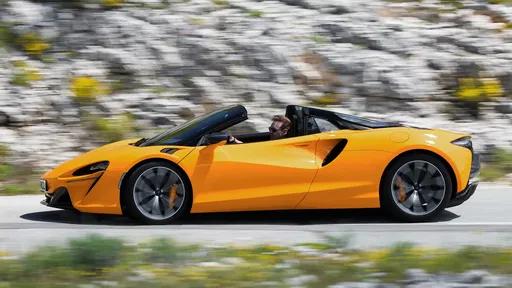
McLaren Supercar Series Roadster
McLaren Supercar Series Roadster
Ferrari 296 Roadster
Costs and Consumption
View detailed analysis
View detailed analysis
Engine and Performance
View detailed analysis
View detailed analysis
Dimensions and Body
View detailed analysis
View detailed analysis
McLaren Supercar Series Roadster
The McLaren Supercar Series Roadster is an open-top masterpiece that turns every drive into a headline, pairing theatrical design with razor-sharp handling so you’ll arrive with a grin and more attention than you bargained for. It feels as much like a race-bred tool as a luxury toy — uncompromising, impeccably made, and utterly addictive for anyone who treats a road as more than just a route.
details
Ferrari 296 Roadster
The Ferrari 296 GTS marries dramatic mid‑engine styling with razor‑sharp handling and a soundtrack that insists you drive it like you stole it. With the roof down it becomes an intoxicating open‑top thoroughbred that somehow also manages to be surprisingly usable day to day — a gorgeous, grin‑inducing reminder of why people fall for Ferraris.
details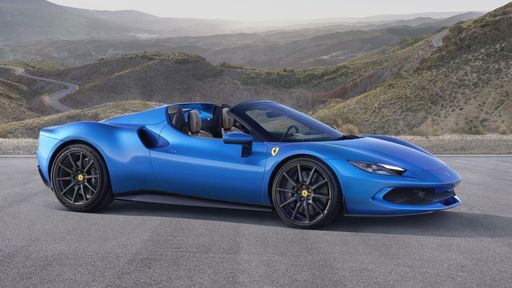
McLaren Supercar Series Roadster
Ferrari 296 Roadster
Costs and Consumption |
|
|---|---|
|
Price
234,000 £
|
Price
396,000 £
|
|
Consumption L/100km
4.8 L/100km
|
Consumption L/100km
8.9 L/100km
|
|
Consumption kWh/100km
-
|
Consumption kWh/100km
-
|
|
Electric Range
33 km
|
Electric Range
15 km
|
|
Battery Capacity
-
|
Battery Capacity
-
|
|
co2
108 g/km
|
co2
218 g/km
|
|
Fuel tank capacity
-
|
Fuel tank capacity
-
|
Dimensions and Body |
|
|---|---|
|
Body Type
Roadster
|
Body Type
Roadster
|
|
Seats
2
|
Seats
2
|
|
Doors
-
|
Doors
-
|
|
Curb weight
1,560 kg
|
Curb weight
1,760 kg
|
|
Trunk capacity
-
|
Trunk capacity
-
|
|
Length
-
|
Length
-
|
|
Width
1,913 mm
|
Width
1,958 mm
|
|
Height
-
|
Height
-
|
|
Max trunk capacity
-
|
Max trunk capacity
-
|
|
Payload
-
|
Payload
220 kg
|
Engine and Performance |
|
|---|---|
|
Engine Type
Plugin Hybrid
|
Engine Type
Plugin Hybrid
|
|
Transmission
Automatic
|
Transmission
Automatic
|
|
Transmission Detail
Dual-Clutch Automatic
|
Transmission Detail
Dual-Clutch Automatic
|
|
Drive Type
Rear-Wheel Drive
|
Drive Type
Rear-Wheel Drive
|
|
Power HP
700 HP
|
Power HP
880 HP
|
|
Acceleration 0-100km/h
3 s
|
Acceleration 0-100km/h
2.8 s
|
|
Max Speed
-
|
Max Speed
-
|
|
Torque
720 Nm
|
Torque
755 Nm
|
|
Number of Cylinders
6
|
Number of Cylinders
6
|
|
Power kW
515 kW
|
Power kW
648 kW
|
|
Engine capacity
2,993 cm3
|
Engine capacity
2,992 cm3
|
General |
|
|---|---|
|
Model Year
2024
|
Model Year
2026
|
|
CO2 Efficiency Class
C
|
CO2 Efficiency Class
G
|
|
Brand
McLaren
|
Brand
Ferrari
|
DriveDuel uses data analysis and artificial intelligence to evaluate vehicle data and create content. Content is regularly reviewed and improved.
The displayed prices are estimates based on German list prices, adjusted to the respective country’s VAT. Country-specific registration taxes are not included. This information is not legally binding.