
 Deutschland
 France
 Nederland
 Great Britain
 Sverige
 Norge
Norge Danmark
 Suomi
Suomi Italia
 Polska
 España
VS
Mercedes GLS vs SERES 3 - Differences and prices compared
GLS
@ Mercedes-Benz Group Media
Costs and Efficiency:
Price and efficiency are key factors when choosing a car – and this is often where the real differences emerge.
SERES 3 has a decisively advantage in terms of price – it starts at 31600 £, while the Mercedes GLS costs 96100 £. That’s a price difference of around 64483 £.
GLS
@ Mercedes-Benz Group Media
Engine and Performance:
Power, torque and acceleration say a lot about how a car feels on the road. This is where you see which model delivers more driving dynamics.
When it comes to engine power, the Mercedes GLS has a significantly edge – offering 634 HP compared to 163 HP. That’s roughly 471 HP more horsepower.
In acceleration from 0 to 100 km/h, the Mercedes GLS is significantly quicker – completing the sprint in 4.20 s, while the SERES 3 takes 9.90 s. That’s about 5.70 s faster.
In terms of top speed, the Mercedes GLS performs decisively better – reaching 280 km/h, while the SERES 3 tops out at 155 km/h. The difference is around 125 km/h.
There’s also a difference in torque: Mercedes GLS pulls decisively stronger with 850 Nm compared to 300 Nm. That’s about 550 Nm difference.
GLS
@ Mercedes-Benz Group Media
Space and Everyday Use:
Whether family car or daily driver – which one offers more room, flexibility and comfort?
Seats: Mercedes GLS offers clearly perceptible more seating capacity – 7 vs 5.
In curb weight, SERES 3 is convincingly lighter – 1765 kg compared to 2550 kg. The difference is around 785 kg.
In terms of boot space, the Mercedes GLS offers decisively more room – 355 L compared to 0 L. That’s a difference of about 355 L.
When it comes to payload, Mercedes GLS significantly takes the win – 695 kg compared to 300 kg. That’s a difference of about 395 kg.
Who wins the race?
The Mercedes GLS proves to be outperforms in nearly all aspects and therefore becomes our DriveDuel Champion!
Mercedes GLS is the better all-rounder in this comparison.
from about £96,100
 @ Mercedes-Benz Group Media
Mercedes GLS
Mercedes GLS
SERES 3
Costs and Consumption
View detailed analysis
View detailed analysis
Engine and Performance
View detailed analysis
View detailed analysis
Dimensions and Body
View detailed analysis
View detailed analysis
Mercedes GLS
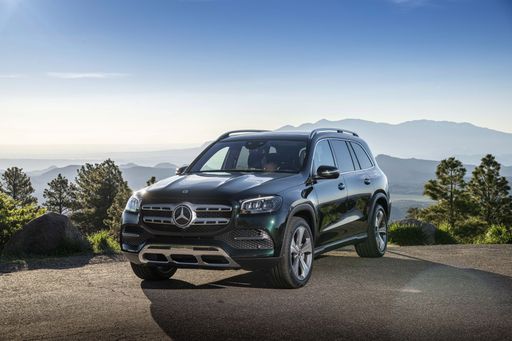
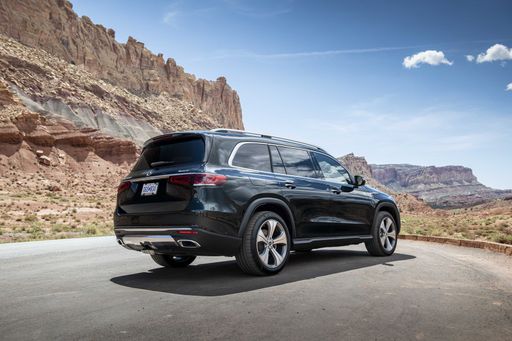
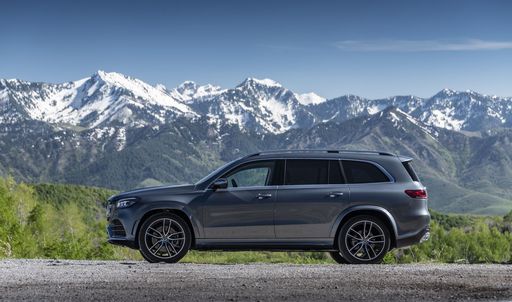
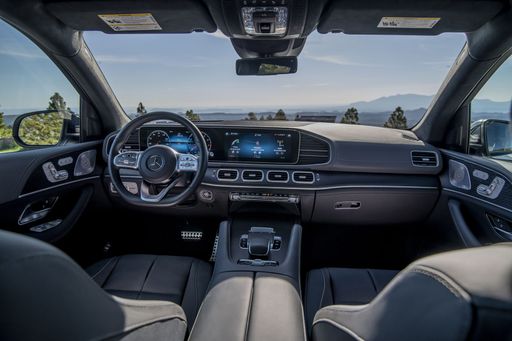
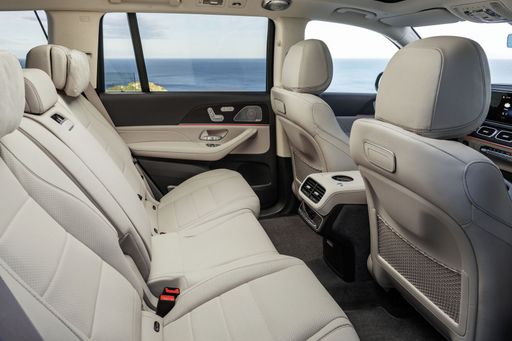
The GLS — usually just called the GLS — is Mercedes' flagship SUV, wrapping limousine-like comfort and commanding road presence into a smart, family-ready package. It pampers occupants with a hushed cabin, premium materials and intuitive tech, while still managing to feel confident and a little indulgent on the daily commute.
details
@ Mercedes-Benz Group Media
 @ Mercedes-Benz Group Media
 @ Mercedes-Benz Group Media
 @ Mercedes-Benz Group Media
 @ Mercedes-Benz Group Media
Mercedes GLS
SERES 3
|
@ Mercedes-Benz Group Media
|
|
|
|
|
Costs and Consumption |
|
|---|---|
|
Price
96100 - 208500 £
|
Price
31600 £
|
|
Consumption L/100km
7.8 - 13.7 L
|
Consumption L/100km
-
|
|
Consumption kWh/100km
-
|
Consumption kWh/100km
18 kWh
|
|
Electric Range
-
|
Electric Range
301 km
|
|
Battery Capacity
-
|
Battery Capacity
-
|
|
co2
204 - 310 g/km
|
co2
0 g/km
|
|
Fuel tank capacity
90 L
|
Fuel tank capacity
-
|
Dimensions and Body |
|
|---|---|
|
Body Type
SUV
|
Body Type
SUV
|
|
Seats
7
|
Seats
5
|
|
Doors
5
|
Doors
5
|
|
Curb weight
2550 - 2825 kg
|
Curb weight
1765 kg
|
|
Trunk capacity
355 L
|
Trunk capacity
0 L
|
|
Length
5208 - 5233 mm
|
Length
4385 mm
|
|
Width
1956 mm
|
Width
1850 mm
|
|
Height
1782 - 1838 mm
|
Height
1650 mm
|
|
Max trunk capacity
2400 L
|
Max trunk capacity
-
|
|
Payload
445 - 695 kg
|
Payload
300 kg
|
Engine and Performance |
|
|---|---|
|
Engine Type
Petrol MHEV, Diesel MHEV
|
Engine Type
Electric
|
|
Transmission
Automatic
|
Transmission
Automatic
|
|
Transmission Detail
Automatic Gearbox
|
Transmission Detail
Reduction Gearbox
|
|
Drive Type
All-Wheel Drive
|
Drive Type
Front-Wheel Drive
|
|
Power HP
333 - 634 HP
|
Power HP
163 HP
|
|
Acceleration 0-100km/h
4.2 - 6.7 s
|
Acceleration 0-100km/h
9.90 s
|
|
Max Speed
238 - 280 km/h
|
Max Speed
155 km/h
|
|
Torque
500 - 850 Nm
|
Torque
300 Nm
|
|
Number of Cylinders
6 - 8
|
Number of Cylinders
-
|
|
Power kW
245 - 466 kW
|
Power kW
120 kW
|
|
Engine capacity
2989 - 3982 cm3
|
Engine capacity
-
|
General |
|
|---|---|
|
Model Year
2024 - 2025
|
Model Year
2020
|
|
CO2 Efficiency Class
G
|
CO2 Efficiency Class
A
|
|
Brand
Mercedes-Benz
|
Brand
SERES
|
Is the Mercedes GLS offered with different drivetrains?
Available configurations include All-Wheel Drive.
The prices and data displayed are estimates based on German list prices and may vary by country. This information is not legally binding.