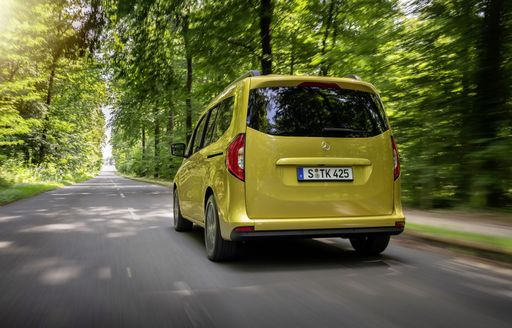
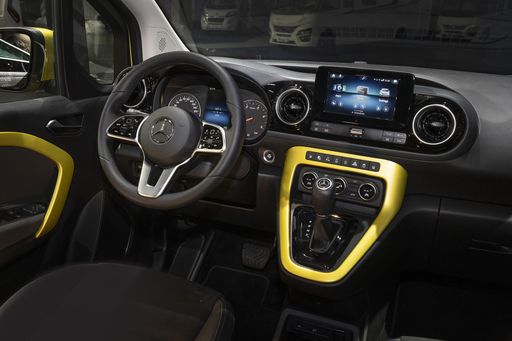
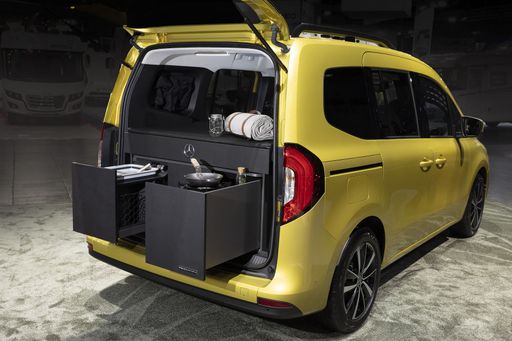
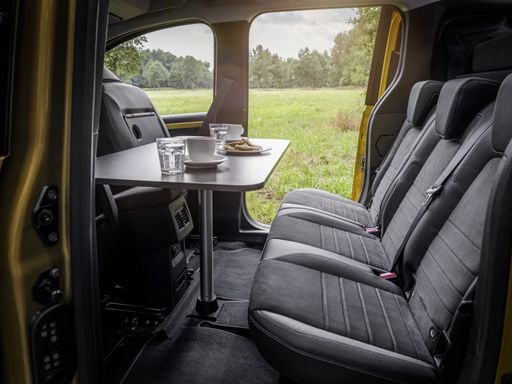
@ Mercedes-Benz Group Media
@ Volkswagen AG / VW Media
VS

Mercedes T-Class vs VW Caddy Compact Van – Which model is better for everyday use?

Both models have their strengths – but which one suits you more?
Compare performance, efficiency, price and space directly: Mercedes T-Class or VW Caddy Compact Van?

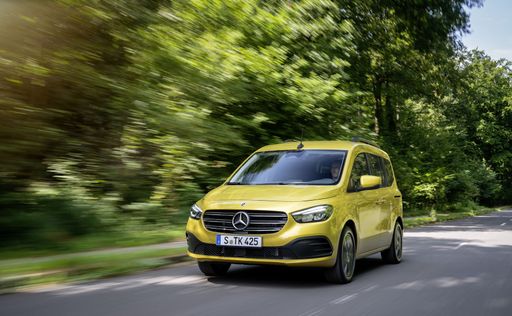
T-Class @ Mercedes-Benz Group Media

Comparative Analysis: Mercedes T-Klasse vs. VW Caddy Kompaktvan

As the demand for versatile, compact vans continues to grow, the competition between the Mercedes T-Klasse and VW Caddy Kompaktvan has become increasingly fierce. Both vehicles offer unique features and capabilities that cater to businesses and families alike, but how do they truly stack up against one another? This article delves into the technical aspects and innovations of both models, providing a thorough comparison to help potential buyers make an informed decision.
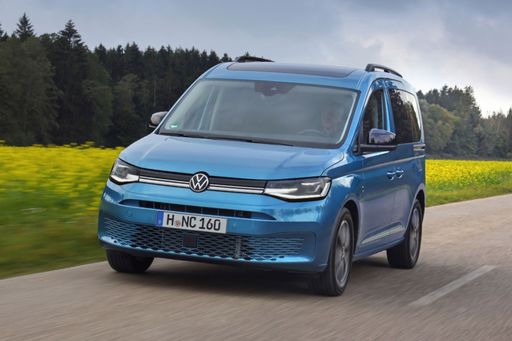
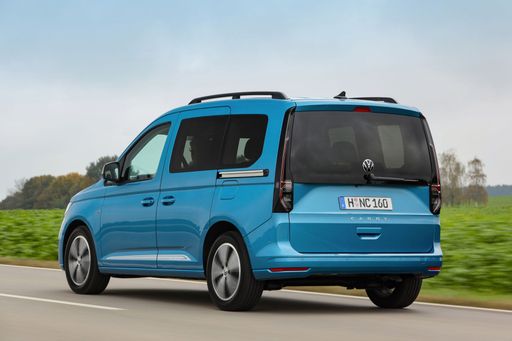
Caddy Compact Van @ Volkswagen AG / VW Media

Engine and Performance

The Mercedes T-Klasse offers a range of engine types, including both diesel and petrol options. Power outputs vary from 95 to 131 horsepower, ensuring there is a variant for diverse driving needs. With a front-wheel-drive configuration and transmission options including a manual gearbox and a dual-clutch automatic, the T-Klasse also impresses with its efficient fuel consumption, ranging from 5.1 to 7.1 L/100 km, depending on the model and driving conditions.

On the other hand, the VW Caddy Kompaktvan brings a similar power range, offering between 102 and 150 horsepower, complemented by petrol, diesel, and even a plug-in hybrid variant. The Caddy's versatility in drive types, including both front-wheel and all-wheel drive options, appeals to those who may navigate diverse terrain. It also boasts competitive fuel efficiency, with consumption figures hovering between 5.3 and 6.7 L/100 km.

T-Class @ Mercedes-Benz Group Media

Interior and Utility

Inside the T-Klasse, comfort and practicality reign supreme. With seating for up to five passengers and a trunk capacity of 520 liters, it expertly balances family needs with cargo space. Qualified for both personal and commercial use, the T-Klasse provides ample room for gear and luggage.

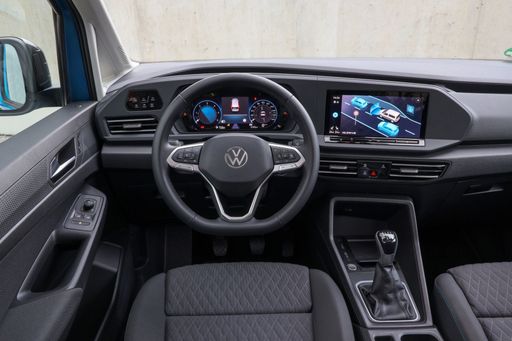
Conversely, the VW Caddy Kompaktvan is designed with functionality in mind, offering space for two, ideal for commercial purposes. Its cargo dimensions vary but allow for a robust payload capacity, making it a practical choice for businesses requiring a durable workhorse. Notably, Caddy's interior is crafted around efficiency, featuring smart storage solutions and technology to maximize utility.

Caddy Compact Van @ Volkswagen AG / VW Media

Driving Experience and Innovations

Mercedes is renowned for its cutting-edge technology, and the T-Klasse is no exception. With features such as advanced driver assistance systems and mercedes' infotainment, the driving experience is heightened significantly. Acceleration from 0 to 100 km/h ranges from 11.6 to 15.3 seconds across the different engine variants.

The VW Caddy Kompaktvan also embraces modern technology, incorporating a suite of safety features and infotainment options. Notably, the Caddy hybrid model offers an electric range of up to 120 km, introducing eco-friendly driving options that appeal to environmentally conscious drivers. The acceleration for the Caddy ranges around similar figures as the T-Klasse but perhaps leans more towards a utilitarian driving style rather than sporty.

T-Class @ Mercedes-Benz Group Media

Dimensions and Practicality

When it comes to dimensions, the T-Klasse measures 4,498 mm in length, with a width of 1,859 mm and a height of 1,811 mm. Its curb weight ranges between 1,556 kg and 1,678 kg, which contributes to a stable and robust driving experience.

The VW Caddy is slightly longer, at 4,500 mm, while maintaining just a narrow edge in width at 1,855 mm and a comparable height between 1,819 mm and 1,823 mm. Its lighter curb weight options—between 1,491 kg and 1,818 kg—ensure nimbleness, an essential trait for city driving and tight spaces. The payload capacity of the Caddy, reaching up to 759 kg, further underlines its business-oriented appeal.

Caddy Compact Van @ Volkswagen AG / VW Media

Conclusion: Which Van Comes Out on Top?

Both the Mercedes T-Klasse and VW Caddy Kompaktvan bring compelling options to the segment of compact vans. The T-Klasse shines through its luxurious interior, advanced tech, and family-oriented design. Conversely, the Caddy impresses with its versatility, practicality, and remarkable payload capacity suited for commercial operations.

Ultimately, your choice will depend on your specific needs—whether you prioritize comfort and advanced features or maximum utility and efficiency in a commercial vehicle. Both models excel in their respective areas, ensuring a tough competition that caters to a wide range of consumers in today's automotive market.

Here’s where it gets real: The technical differences in detail

T-Class @ Mercedes-Benz Group Media

Costs and Efficiency:

Price and efficiency are key factors when choosing a car – and this is often where the real differences emerge.

Mercedes T-Class has a to a small extent advantage in terms of price – it starts at 23000 £, while the VW Caddy Compact Van costs 25800 £. That’s a price difference of around 2854 £.

Fuel consumption also shows a difference: VW Caddy Compact Van manages with 0.50 L and is therefore significantly more efficient than the Mercedes T-Class with 5.10 L. The difference is about 4.60 L per 100 km.

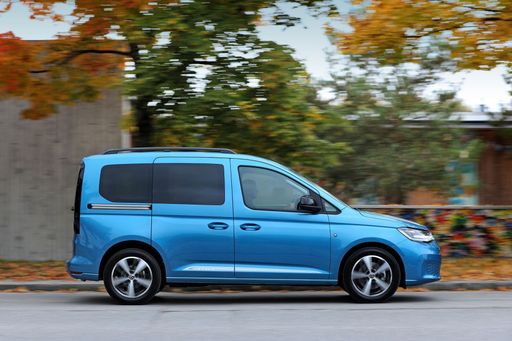
Caddy Compact Van @ Volkswagen AG / VW Media

Engine and Performance:

Power, torque and acceleration are the classic benchmarks for car enthusiasts – and here, some clear differences start to show.

When it comes to engine power, the VW Caddy Compact Van has a a bit edge – offering 150 HP compared to 131 HP. That’s roughly 19 HP more horsepower.

In terms of top speed, the VW Caddy Compact Van performs barely noticeable better – reaching 186 km/h, while the Mercedes T-Class tops out at 184 km/h. The difference is around 2 km/h.

There’s also a difference in torque: VW Caddy Compact Van pulls to a small extent stronger with 320 Nm compared to 270 Nm. That’s about 50 Nm difference.

T-Class @ Mercedes-Benz Group Media

Space and Everyday Use:

Cabin size, boot volume and payload all play a role in everyday practicality. Here, comfort and flexibility make the difference.

Seats: Mercedes T-Class offers convincingly more seating capacity – 5 vs 2.

In curb weight, VW Caddy Compact Van is minimal lighter – 1442 kg compared to 1556 kg. The difference is around 114 kg.

In maximum load capacity, the VW Caddy Compact Van performs slight better – up to 3700 L, which is about 100 L more than the Mercedes T-Class.

When it comes to payload, VW Caddy Compact Van somewhat takes the win – 759 kg compared to 630 kg. That’s a difference of about 129 kg.

Who comes out on top?

Overall, the VW Caddy Compact Van shows itself to be wins the duel decisively and secures the title of DriveDuel Champion.
It convinces with the more balanced overall package and proves to be the more versatile choice for everyday use.

from about £25,800
Caddy Compact Van @ Volkswagen AG / VW Media

VW Caddy Compact Van

  • Engine Type : Petrol, Diesel, Plugin Hybrid
  • Transmission : Manuel, Automatic
  • Drive Type : Front-Wheel Drive, All-Wheel Drive
  • Power HP : 102 - 150 HP
  • Consumption L/100km : 0.5 - 6.8 L
  • Electric Range : 117 - 120 km

Mercedes T-Class

The Mercedes-Benz T-Class redefines practicality and style for families and urban explorers alike. With its sleek design and luxurious interior, it offers both comfort and versatility for daily commuting and weekend adventures. The T-Class combines advanced technology with the brand's renowned build quality, ensuring a sophisticated driving experience.

details

VW Caddy Compact Van

The VW Caddy small van is a versatile option for those seeking a practical and efficient transporter. With its sleek design and innovative features, it caters well to both business needs and everyday convenience. The interior is thoughtfully designed, offering comfort and ample space for cargo or passengers, making it a reliable choice for various tasks.

details
Mercedes T-Class
VW Caddy Compact Van
T-Class @ Mercedes-Benz Group Media
Caddy Compact Van @ Volkswagen AG / VW Media

Costs and Consumption

Price
23000 - 30500 £
Price
25800 - 42300 £
Consumption L/100km
5.1 - 7.4 L
Consumption L/100km
0.5 - 6.8 L
Consumption kWh/100km
-
Consumption kWh/100km
-
Electric Range
-
Electric Range
117 - 120 km
Battery Capacity
-
Battery Capacity
19.70 kWh
co2
135 - 167 g/km
co2
11 - 154 g/km
Fuel tank capacity
54 L
Fuel tank capacity
50 L

Dimensions and Body

Body Type
High Roof Estate
Body Type
Cargo Van
Seats
5
Seats
2
Doors
5
Doors
4 - 5
Curb weight
1556 - 1678 kg
Curb weight
1442 - 1818 kg
Trunk capacity
0 - 520 L
Trunk capacity
-
Length
4498 - 4922 mm
Length
4500 - 4853 mm
Width
1859 mm
Width
1855 mm
Height
1811 mm
Height
1819 - 1823 mm
Max trunk capacity
2127 - 3600 L
Max trunk capacity
3100 - 3700 L
Payload
521 - 630 kg
Payload
628 - 759 kg

Engine and Performance

Engine Type
Petrol, Diesel
Engine Type
Petrol, Diesel, Plugin Hybrid
Transmission
Manuel, Automatic
Transmission
Manuel, Automatic
Transmission Detail
Manual Gearbox, Dual-Clutch Automatic
Transmission Detail
Manual Gearbox, Dual-Clutch Automatic
Drive Type
Front-Wheel Drive
Drive Type
Front-Wheel Drive, All-Wheel Drive
Power HP
95 - 131 HP
Power HP
102 - 150 HP
Acceleration 0-100km/h
11.6 - 15.1 s
Acceleration 0-100km/h
-
Max Speed
164 - 184 km/h
Max Speed
175 - 186 km/h
Torque
200 - 270 Nm
Torque
220 - 320 Nm
Number of Cylinders
4
Number of Cylinders
4
Power kW
70 - 96 kW
Power kW
75 - 110 kW
Engine capacity
1332 - 1461 cm3
Engine capacity
1498 - 1968 cm3

General

Model Year
2025
Model Year
2024
CO2 Efficiency Class
F, D, E
CO2 Efficiency Class
E, B
Brand
Mercedes-Benz
Brand
VW
What drive types are available for the Mercedes T-Class?

The Mercedes T-Class is available as Front-Wheel Drive.

The prices and data displayed are estimates based on German list prices and may vary by country. This information is not legally binding.