VS

Renault Kangoo Compact Van vs Mercedes Citan comparison

Compare performance (122 HP vs 131 HP), boot space and price (25,200 £ vs 22,400 £ ) at a glance. Find out which car is the better choice for you – Renault Kangoo Compact Van or Mercedes Citan?

Renault Kangoo Compact Van vs Mercedes Citan: Key differences

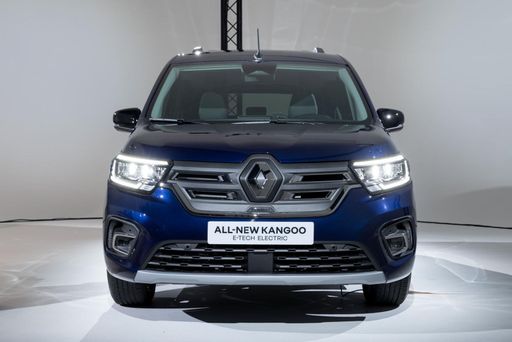
Renault Kangoo Compact Van

  • marginally more electric range
  • marginally quicker 0–100 km/h
details

Mercedes Citan

  • somewhat cheaper
  • only slightly more power
  • barely more efficient
  • marginally more efficient
  • very slightly lighter
details

By Achim Sedelmaier

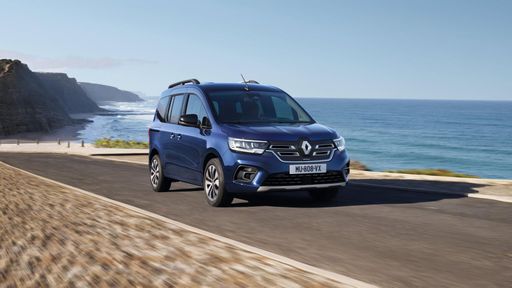
Kangoo Compact Van

A Clash of Compact Titans: Mercedes Citan vs. Renault Kangoo

When it comes to small commercial vehicles, the Mercedes Citan and Renault Kangoo Kleintransporter are two names that often emerge as leaders in the market. These compact yet robust options provide businesses and individuals alike with versatile solutions to various transportation needs. In this article, we will examine the technical aspects, innovations, and overall performance that set these two vehicles apart.
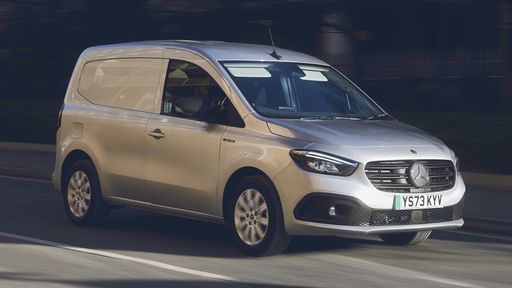
Citan

Design and Exterior Dimensions

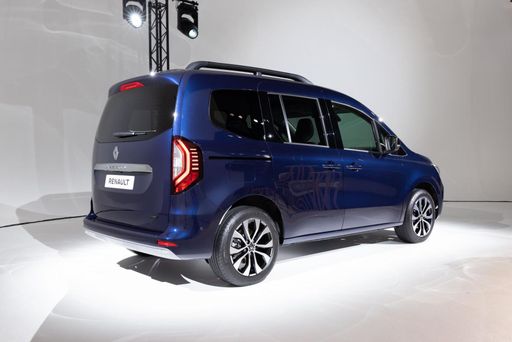
The Mercedes Citan and Renault Kangoo Kleintransporter each offer distinct styles that cater to different tastes and business requirements. The Citan, a high-roof wagon, carries the hallmark elegance of Mercedes-Benz within its 4,498mm length, 1,859mm width, and variable height up to 1,830mm. On the other hand, the Kangoo boasts a more utilitarian cargo van design, slightly longer at 4,910mm, with a width of 1,860mm and a height up to 1,864mm, making it slightly larger and well-suited for transporting larger loads.

Kangoo Compact Van

Powertrain Options and Performance

Under the hood, both models deliver a range of powertrains to suit different driving needs. The Mercedes Citan offers versatility with petrol, diesel, and electric powertrains, with power outputs ranging from 95 to 131 HP. Acceleration figures vary, with the fastest petrol option reaching 100 km/h in 13 seconds, while the fully electric version promises an efficient and smooth ride with a range of up to 280 km.

The Renault Kangoo Kleintransporter, likewise, offers diesel, petrol, and electric engines, boasting power outputs between 75 and 130 HP. Acceleration varies from 11.6 seconds for the petrol engines to a more leisurely 18.9 seconds for some diesel variants, yet its electric variant shines with a slightly longer range of 293 km, ideal for eco-conscious urban commuting.

Transmission and Drive Type

Both vehicles feature manual and automatic transmission options, catering to traditionalists and those seeking the ease of an automatic. The front-wheel drive design is standard across all powertrains, ensuring stability and smooth handling in urban environments. The Citan’s dual-clutch automatic transmission offers seamless gear shifts, providing drivers with an elevated driving experience. In contrast, the Kangoo’s emphasis on efficiency includes a practical manual gearbox tailored for everyday utility.

Efficiency and Eco-friendliness

Efficiency is a key consideration for these vehicles. The Citan reports consumption between 5.3 and 7.1 liters/100 km for internal combustion engines and as low as 19.3 kWh/100 km for electric variants. The Kangoo counters with fuel consumption figures of 4.9 to 7.0 liters/100 km and electric consumption starting at 18.4 kWh/100 km. Both models contribute to reducing carbon footprints, with the Citan achieving CO2 efficiency classes from A to F, similar to the Kangoo.

Interior Comfort and Capacity

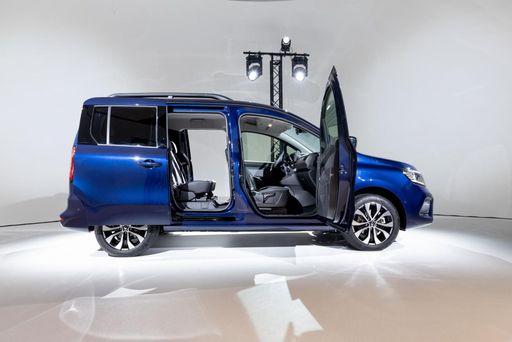
Inside, the Mercedes Citan comfortably seats up to five passengers and offers a generous trunk capacity of up to 551 liters, adequate for both commercial and everyday use. The Renault Kangoo prioritizes cargo space, with a payload capacity ranging from 508 to 767 kg, thanks to its focus on maximizing internal space for goods rather than passengers, typically seating just two.

Conclusion: Picking the Perfect Partner

Choosing between the Mercedes Citan and Renault Kangoo Kleintransporter largely depends on the specific requirements of potential buyers. The Citan excels with its luxury touches and versatility, making it a strong contender for business owners seeking a blend of prestige and functionality. Meanwhile, the Kangoo stands out for businesses focused on logistics and transport, offering larger cargo capacities and robust practicality.

In the end, both these vehicles demonstrate remarkable innovations and capabilities within the compact transport sector, ensuring that regardless of the choice, buyers can expect dependability, efficiency, and modern technology from either option.

Here’s where it gets real: The technical differences in detail

Kangoo Compact Van

Costs and Efficiency:

When it comes to price and running costs, the biggest differences usually appear. This is often where you see which car fits your budget better in the long run.

Mercedes Citan is somewhat cheaper – starting at 22,400 £ , while the Renault Kangoo Compact Van costs 25,200 £ . That’s a price difference of around 2,730 £.

Fuel consumption also shows a difference: the Mercedes Citan uses 5.2 L/100km and is barely more efficient than the Renault Kangoo Compact Van with 5.3 L/100km. The difference is about 0.1 L/100km.

In terms of energy consumption, the Mercedes Citan is marginally more efficient: consuming 19.3 kWh/100km compared to 20.5 kWh/100km for the Renault Kangoo Compact Van. That’s a difference of about 1.2 kWh/100km.

As for electric range, the Renault Kangoo Compact Van offers marginally more range – reaching up to 284 km, about 4 km more than the Mercedes Citan.

Citan

Engine and Performance:

Power, torque and acceleration say a lot about how a car feels on the road. This is where you see which model delivers more driving dynamics.

When it comes to engine power, the Mercedes Citan offers only slightly more power – delivering 131 HP compared to 122 HP. That’s roughly 9 HP more horsepower.

When accelerating from 0 to 100 km/h, the Renault Kangoo Compact Van is marginally quicker – completing the sprint in 12.3 s, while the Mercedes Citan takes 13 s. That’s about 0.7 s quicker.

Both models offer the same torque – 270 Nm.

Kangoo Compact Van

Space and Everyday Use:

Beyond pure performance, interior space and usability matter most in daily life. This is where you see which car is more practical and versatile.

Both vehicles offer seating for 5 people.

In terms of curb weight, Mercedes Citan is very slightly lighter – 1,556 kg compared to 1,639 kg. The difference is around 83 kg.

When it comes to payload, the Renault Kangoo Compact Van carries clearly more – 901 kg compared to 644 kg. That’s a difference of about 257 kg.

Who wins the race in the data check?

The Mercedes Citan sits just ahead overall in the objective data comparison.
This result only shows which model scores more points on paper – not which of the two cars feels right for you.

from £22,400
Citan

Mercedes Citan

  • Engine Type Petrol, Diesel, Electric
  • Transmission Manuel, Automatic
  • Drive Type Front-Wheel Drive
  • Power HP 95 - 131 HP
  • Consumption L/100km 5.2 - 7.4 L/100km
  • Consumption kWh/100km 19.3 - 20.7 kWh/100km
  • Electric Range 265 - 280 km
Renault Kangoo Compact Van
Mercedes Citan

Costs and Consumption

View detailed analysis

Engine and Performance

View detailed analysis

Dimensions and Body

View detailed analysis

Renault Kangoo Compact Van

The Renault Kangoo is a practical, no-nonsense compact van that turns urban deliveries and weekend DIY runs into a surprisingly easy chore. Roomy for its size, comfortable to drive and brimming with smart storage solutions, it’s a sensible pick for anyone who needs honest utility without drama.

details

Mercedes Citan

The Mercedes Citan is a clever urban van that dresses sensible practicality in a surprisingly premium suit, making light work of deliveries and family duties without feeling like a workhorse. With a calm, car-like driving feel, clever interior packaging and the Mercedes badge up front, it’s a smart pick for buyers who want function with a touch of luxury and a wink of personality.

details
Renault Kangoo Compact Van
Mercedes Citan

Costs and Consumption

Price
25,200 - 37,000 £
Price
22,400 - 30,100 £
Consumption L/100km
5.3 - 5.5 L/100km
Consumption L/100km
5.2 - 7.4 L/100km
Consumption kWh/100km
20.5 - 20.6 kWh/100km
Consumption kWh/100km
19.3 - 20.7 kWh/100km
Electric Range
279 - 284 km
Electric Range
265 - 280 km
Battery Capacity
-
Battery Capacity
45 kWh
co2
0 - 151 g/km
co2
0 - 167 g/km
Fuel tank capacity
-
Fuel tank capacity
54 L

Dimensions and Body

Body Type
Cargo Van
Body Type
High Roof Estate
Seats
2 - 5
Seats
5
Doors
-
Doors
5
Curb weight
1,639 - 1,910 kg
Curb weight
1,556 - 2,010 kg
Trunk capacity
-
Trunk capacity
0 - 551 L
Length
-
Length
4,498 - 4,922 mm
Width
1,860 mm
Width
1,859 mm
Height
-
Height
1,811 - 1,830 mm
Max trunk capacity
-
Max trunk capacity
1,979 - 3,660 L
Payload
670 - 901 kg
Payload
485 - 644 kg

Engine and Performance

Engine Type
Diesel, Electric
Engine Type
Petrol, Diesel, Electric
Transmission
Manuel, Automatic
Transmission
Manuel, Automatic
Transmission Detail
Manual Gearbox, Dual-Clutch Automatic, Reduction Gearbox
Transmission Detail
Manual Gearbox, Dual-Clutch Automatic, Reduction Gearbox
Drive Type
Front-Wheel Drive
Drive Type
Front-Wheel Drive
Power HP
95 - 122 HP
Power HP
95 - 131 HP
Acceleration 0-100km/h
12.3 - 14.4 s
Acceleration 0-100km/h
13 - 15.5 s
Max Speed
-
Max Speed
132 - 183 km/h
Torque
245 - 270 Nm
Torque
200 - 270 Nm
Number of Cylinders
4
Number of Cylinders
4
Power kW
70 - 90 kW
Power kW
70 - 96 kW
Engine capacity
1,461 cm3
Engine capacity
1,332 - 1,461 cm3

General

Model Year
2024
Model Year
2,021 - 2,024
CO2 Efficiency Class
E, A
CO2 Efficiency Class
F, E, A
Brand
Renault
Brand
Mercedes-Benz
DriveDuel uses data analysis and artificial intelligence to evaluate vehicle data and create content. Content is regularly reviewed and improved. The displayed prices are estimates based on German list prices, adjusted to the respective country’s VAT. Country-specific registration taxes are not included. This information is not legally binding.