
 Deutschland
 France
 Nederland
 Great Britain
 Sverige
 Danmark
 Suomi
Suomi Italia
 Polska
 Česko
Česko España
VS
Rolls-Royce Phantom vs Hyundai IONIQ 6 comparison
Compare performance (571 HP vs 650 HP), boot space and price (445,700 £ vs 39,000 £ ) at a glance. Find out which car is the better choice for you – Rolls-Royce Phantom or Hyundai IONIQ 6?
Rolls-Royce Phantom vs Hyundai IONIQ 6: Key differences
Phantom
Costs and Efficiency:
Looking at overall running costs, both models reveal some interesting differences in everyday economy.
Hyundai IONIQ 6 is substantially cheaper – starting at 39,000 £ , while the Rolls-Royce Phantom costs 445,700 £ . That’s a price difference of around 406,672 £.
IONIQ 6
Engine and Performance:
Power, torque and acceleration say a lot about how a car feels on the road. This is where you see which model delivers more driving dynamics.
When it comes to engine power, the Hyundai IONIQ 6 offers slightly more power – delivering 650 HP compared to 571 HP. That’s roughly 79 HP more horsepower.
When accelerating from 0 to 100 km/h, the Hyundai IONIQ 6 is substantially quicker – completing the sprint in 3.3 s, while the Rolls-Royce Phantom takes 5.3 s. That’s about 2 s quicker.
There’s also a difference in torque: the Rolls-Royce Phantom delivers moderately more torque with 900 Nm compared to 770 Nm. That’s about 130 Nm more.
Space and Everyday Use:
Cabin size, boot volume and payload all play a role in everyday practicality. Here, comfort and flexibility make the difference.
Both vehicles offer seating for 5 people.
In terms of curb weight, Hyundai IONIQ 6 is markedly lighter – 1,892 kg compared to 2,560 kg. The difference is around 668 kg.
Looking at boot space, the Rolls-Royce Phantom offers noticeably more boot space – 548 L compared to 401 L. That’s a difference of about 147 L.
When it comes to payload, the Rolls-Royce Phantom carries marginally more – 440 kg compared to 438 kg. That’s a difference of about 2 kg.
Who wins the race in the data check?
The Hyundai IONIQ 6 is far ahead overall in the objective data comparison.
This result only shows which model scores more points on paper – not which of the two cars feels right for you.
from £39,000
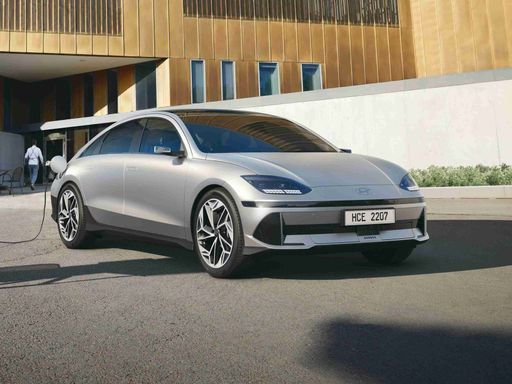
Hyundai IONIQ 6
Rolls-Royce Phantom
Hyundai IONIQ 6
Costs and Consumption
View detailed analysis
View detailed analysis
Engine and Performance
View detailed analysis
View detailed analysis
Dimensions and Body
View detailed analysis
View detailed analysis
Rolls-Royce Phantom
The Phantom stands as the epitome of luxury and craftsmanship, effortlessly merging opulence with unparalleled performance. With its iconic design and attention to detail, this flagship sedan commands respect on the road while cocooning its passengers in sumptuous comfort. Every journey in the Phantom is an experience, where timeless elegance meets cutting-edge technology.
details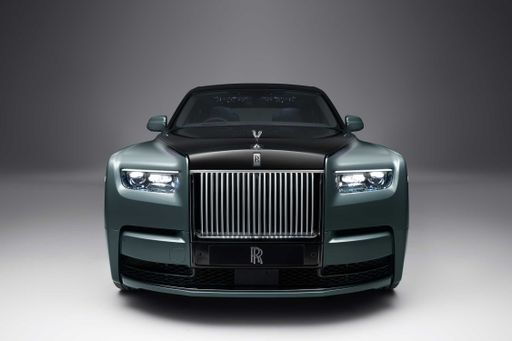
Hyundai IONIQ 6
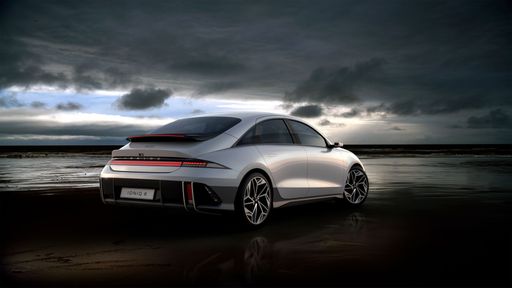
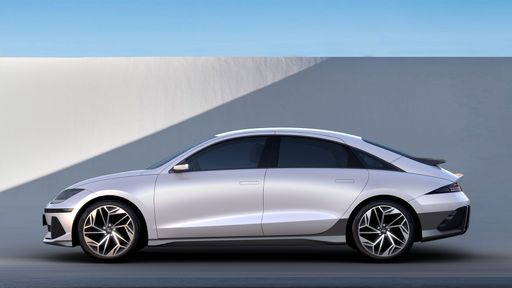
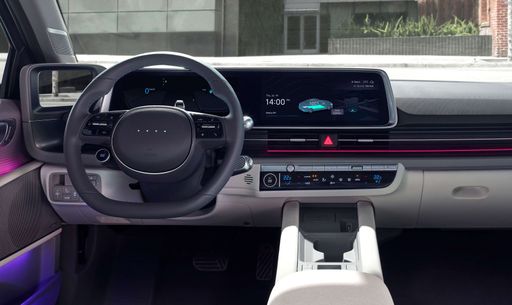
The Hyundai IONIQ 6 glides down the road with a poise that feels more runway model than commuter car, its sleek silhouette promising efficiency without trying too hard. Inside, a calm, minimalist cabin packed with clever, usable tech makes it a compelling choice for buyers who want electric motoring that's smart, stylish and quietly practical.
details
Rolls-Royce Phantom
Hyundai IONIQ 6
Costs and Consumption |
|
|---|---|
|
Price
445,700 - 514,300 £
|
Price
39,000 - 65,100 £
|
|
Consumption L/100km
15.5 - 15.9 L/100km
|
Consumption L/100km
-
|
|
Consumption kWh/100km
-
|
Consumption kWh/100km
13.4 - 18.7 kWh/100km
|
|
Electric Range
-
|
Electric Range
487 - 680 km
|
|
Battery Capacity
-
|
Battery Capacity
-
|
|
co2
351 - 361 g/km
|
co2
0 g/km
|
|
Fuel tank capacity
-
|
Fuel tank capacity
-
|
Dimensions and Body |
|
|---|---|
|
Body Type
Sedan
|
Body Type
Hatchback
|
|
Seats
5
|
Seats
5
|
|
Doors
-
|
Doors
-
|
|
Curb weight
2,560 - 2,610 kg
|
Curb weight
1,892 - 2,241 kg
|
|
Trunk capacity
548 L
|
Trunk capacity
371 - 401 L
|
|
Length
-
|
Length
-
|
|
Width
2,018 mm
|
Width
1,880 - 1,940 mm
|
|
Height
-
|
Height
-
|
|
Max trunk capacity
-
|
Max trunk capacity
-
|
|
Payload
390 - 440 kg
|
Payload
386 - 438 kg
|
Engine and Performance |
|
|---|---|
|
Engine Type
Petrol
|
Engine Type
Electric
|
|
Transmission
Automatic
|
Transmission
Automatic
|
|
Transmission Detail
Automatic Gearbox
|
Transmission Detail
Reduction Gearbox
|
|
Drive Type
Rear-Wheel Drive
|
Drive Type
All-Wheel Drive, Rear-Wheel Drive
|
|
Power HP
571 HP
|
Power HP
170 - 650 HP
|
|
Acceleration 0-100km/h
5.3 - 5.4 s
|
Acceleration 0-100km/h
3.3 - 8.3 s
|
|
Max Speed
-
|
Max Speed
-
|
|
Torque
900 Nm
|
Torque
350 - 770 Nm
|
|
Number of Cylinders
12
|
Number of Cylinders
-
|
|
Power kW
420 kW
|
Power kW
125 - 478 kW
|
|
Engine capacity
6,749 cm3
|
Engine capacity
-
|
General |
|
|---|---|
|
Model Year
2022
|
Model Year
2026
|
|
CO2 Efficiency Class
G
|
CO2 Efficiency Class
A
|
|
Brand
Rolls-Royce
|
Brand
Hyundai
|
DriveDuel uses data analysis and artificial intelligence to evaluate vehicle data and create content. Content is regularly reviewed and improved.
The displayed prices are estimates based on German list prices, adjusted to the respective country’s VAT. Country-specific registration taxes are not included. This information is not legally binding.