
 Deutschland
 France
 Nederland
 Great Britain
 Sverige
 Norge
Norge Danmark
 Suomi
Suomi Italia
 Polska
 España
VS
SsangYong Rexton vs Genesis G70 - Differences and prices compared
Compare performance (202 HP vs 245 HP), boot space and price (41100 £ vs 38600 £ ) at a glance. Find out which car is the better choice for you – SsangYong Rexton or Genesis G70?
Rexton
Costs and Efficiency:
Price and efficiency are often the first things buyers look at. Here it becomes clear which model has the long-term edge – whether at the pump, the plug, or in purchase price.
Genesis G70 has a hardly perceptible advantage in terms of price – it starts at 38600 £ , while the SsangYong Rexton costs 41100 £ . That’s a price difference of around 2580 £.
Fuel consumption also shows a difference: Genesis G70 manages with 6.50 L and is therefore clearly perceptible more efficient than the SsangYong Rexton with 8.20 L. The difference is about 1.70 L per 100 km.
G70
Engine and Performance:
Power, torque and acceleration are the classic benchmarks for car enthusiasts – and here, some clear differences start to show.
When it comes to engine power, the Genesis G70 has a a bit edge – offering 245 HP compared to 202 HP. That’s roughly 43 HP more horsepower.
In acceleration from 0 to 100 km/h, the Genesis G70 is significantly quicker – completing the sprint in 6.10 s, while the SsangYong Rexton takes 10.60 s. That’s about 4.50 s faster.
In terms of top speed, the Genesis G70 performs evident better – reaching 240 km/h, while the SsangYong Rexton tops out at 184 km/h. The difference is around 56 km/h.
There’s also a difference in torque: SsangYong Rexton pulls slight stronger with 441 Nm compared to 440 Nm. That’s about 1 Nm difference.
Ad · Affiliate



As an Amazon Associate, we earn from qualifying purchases.
Rexton
Space and Everyday Use:
Beyond pure performance, interior space and usability matter most in daily life. This is where you see which car is more practical and versatile.
Seats: SsangYong Rexton offers evident more seating capacity – 7 vs 5.
In curb weight, Genesis G70 is distinct lighter – 1727 kg compared to 2145 kg. The difference is around 418 kg.
In terms of boot space, the SsangYong Rexton offers clearly more room – 784 L compared to 330 L. That’s a difference of about 454 L.
When it comes to payload, SsangYong Rexton clearly takes the win – 770 kg compared to 452 kg. That’s a difference of about 318 kg.
Who wins the race?
The Genesis G70 proves to be leaves the rival little chance and therefore becomes our DriveDuel Champion!
Genesis G70 is the better all-rounder in this comparison.
from about £38,600
Genesis G70
SsangYong Rexton
Genesis G70
Costs and Consumption
View detailed analysis
View detailed analysis
Engine and Performance
View detailed analysis
View detailed analysis
Dimensions and Body
View detailed analysis
View detailed analysis
SsangYong Rexton
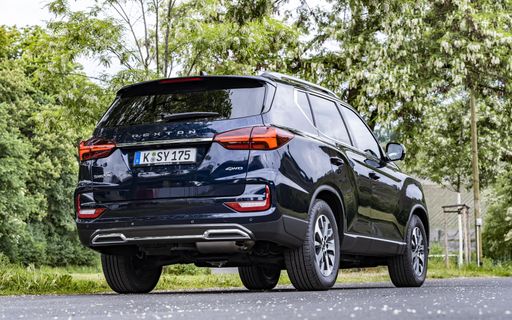
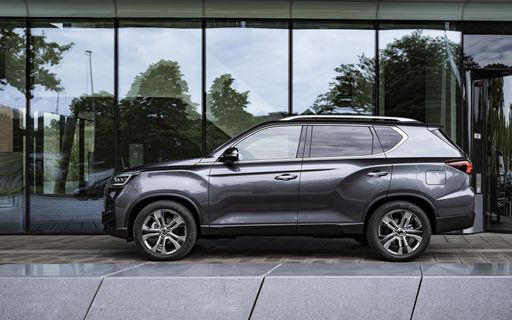
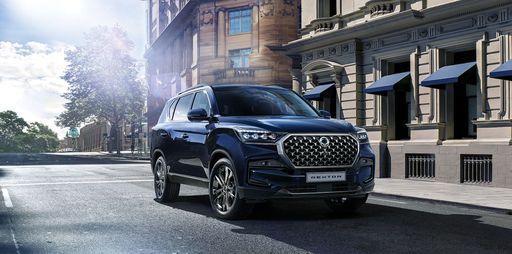
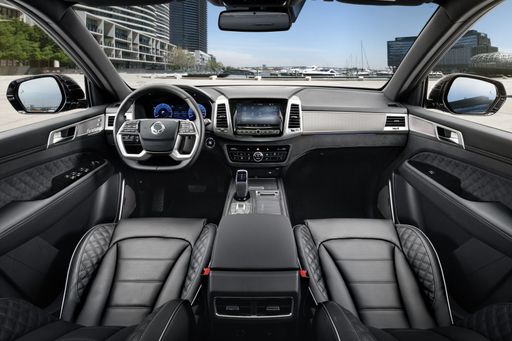
The SsangYong Rexton is a no-nonsense full-size SUV that pairs rugged, go-anywhere bones with a surprisingly plush cabin, making it an appealing choice for buyers who want capability without premium-brand prices. It won’t turn heads like a luxury badge, but its generous space, sensible features and honest practicality make it a smart, down-to-earth family hauler — a savvy pick if you value substance over status.
details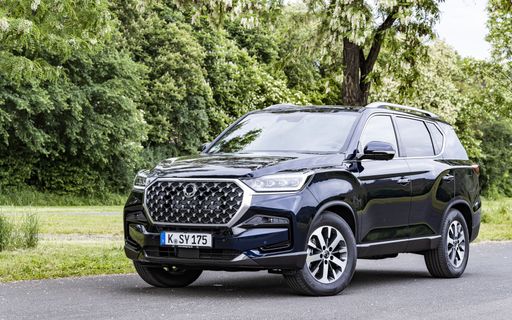
Genesis G70
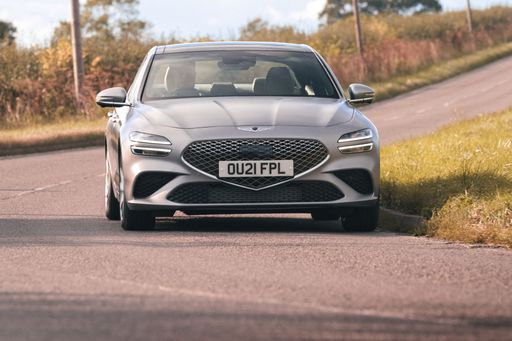
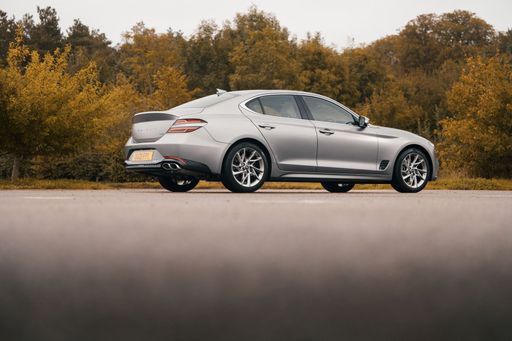
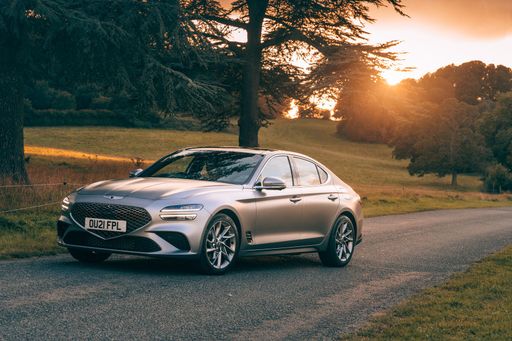
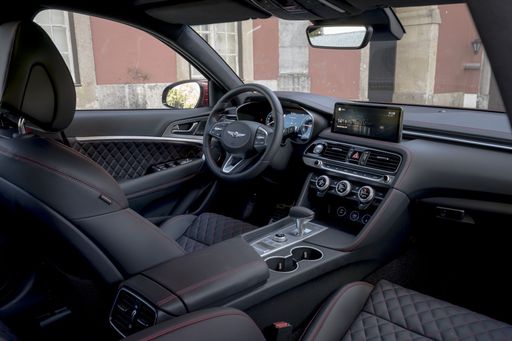
The Genesis G70 blends sleek, low-slung styling with a cabin that feels more bespoke than bargain-bin, delivering driver-focused dynamics that make long runs and twisty roads equally entertaining. With premium materials, thoughtful tech and a value proposition that nudges past its German rivals, it’s the kind of compact executive that feels serious but doesn’t take itself too seriously.
details
SsangYong Rexton
Genesis G70
Costs and Consumption |
|
|---|---|
|
Price
41100 - 51300 £
|
Price
38600 - 44500 £
|
|
Consumption L/100km
8.20 L
|
Consumption L/100km
6.5 - 9.1 L
|
|
Consumption kWh/100km
-
|
Consumption kWh/100km
-
|
|
Electric Range
-
|
Electric Range
-
|
|
Battery Capacity
-
|
Battery Capacity
-
|
|
co2
214 - 216 g/km
|
co2
170 - 206 g/km
|
|
Fuel tank capacity
70 L
|
Fuel tank capacity
60 L
|
Dimensions and Body |
|
|---|---|
|
Body Type
Off-Roader
|
Body Type
Sedan
|
|
Seats
5 - 7
|
Seats
5
|
|
Doors
5
|
Doors
4
|
|
Curb weight
2145 - 2180 kg
|
Curb weight
1727 - 1858 kg
|
|
Trunk capacity
236 - 784 L
|
Trunk capacity
330 L
|
|
Length
4850 mm
|
Length
4685 mm
|
|
Width
1960 mm
|
Width
1850 mm
|
|
Height
1825 mm
|
Height
1400 mm
|
|
Max trunk capacity
1806 - 1977 L
|
Max trunk capacity
-
|
|
Payload
655 - 770 kg
|
Payload
413 - 452 kg
|
Engine and Performance |
|
|---|---|
|
Engine Type
Diesel
|
Engine Type
Petrol, Diesel
|
|
Transmission
Automatic
|
Transmission
Automatic
|
|
Transmission Detail
Automatic Gearbox
|
Transmission Detail
Automatic Gearbox
|
|
Drive Type
All-Wheel Drive
|
Drive Type
Rear-Wheel Drive, All-Wheel Drive
|
|
Power HP
202 HP
|
Power HP
200 - 245 HP
|
|
Acceleration 0-100km/h
10.60 s
|
Acceleration 0-100km/h
6.1 - 7.9 s
|
|
Max Speed
184 km/h
|
Max Speed
230 - 240 km/h
|
|
Torque
441 Nm
|
Torque
353 - 440 Nm
|
|
Number of Cylinders
4
|
Number of Cylinders
4
|
|
Power kW
148 kW
|
Power kW
147 - 180 kW
|
|
Engine capacity
2157 cm3
|
Engine capacity
1998 - 2199 cm3
|
General |
|
|---|---|
|
Model Year
2021 - 2023
|
Model Year
2021 - 2023
|
|
CO2 Efficiency Class
G
|
CO2 Efficiency Class
G, F
|
|
Brand
SsangYong
|
Brand
Genesis
|
Is the SsangYong Rexton offered with different drivetrains?
The SsangYong Rexton is available as All-Wheel Drive.
The prices shown are estimates based on German list prices, adjusted for local VAT. Local registration taxes (e.g. NoVA, BPM or CO2 malus) are not included. This information is not legally binding.