
 Deutschland
 France
 Nederland
 Great Britain
 Sverige
 Norge
Norge Danmark
 Suomi
Suomi Italia
 Polska
 España
VS
SsangYong Torres vs Volvo V60 – Which car suits you better?
Two cars, one duel: SsangYong Torres meets Volvo V60.
Which one wins in performance, efficiency and value for money? Find out now!
V60
@ Volvo Cars
Costs and Efficiency:
Price and efficiency are often the first things buyers look at. Here it becomes clear which model has the long-term edge – whether at the pump, the plug, or in purchase price.
SsangYong Torres has a distinct advantage in terms of price – it starts at 33800 £, while the Volvo V60 costs 41600 £. That’s a price difference of around 7800 £.
Fuel consumption also shows a difference: Volvo V60 manages with 2.40 L and is therefore decisively more efficient than the SsangYong Torres with 7.90 L. The difference is about 5.50 L per 100 km.
As for range, the SsangYong Torres performs clearly better – achieving up to 462 km, about 370 km more than the Volvo V60.
V60
@ Volvo Cars
Engine and Performance:
Power, torque and acceleration are the classic benchmarks for car enthusiasts – and here, some clear differences start to show.
When it comes to engine power, the Volvo V60 has a decisively edge – offering 455 HP compared to 207 HP. That’s roughly 248 HP more horsepower.
In terms of top speed, the SsangYong Torres performs slight better – reaching 194 km/h, while the Volvo V60 tops out at 180 km/h. The difference is around 14 km/h.
There’s also a difference in torque: Volvo V60 pulls significantly stronger with 709 Nm compared to 339 Nm. That’s about 370 Nm difference.
V60
@ Volvo Cars
Space and Everyday Use:
Whether family car or daily driver – which one offers more room, flexibility and comfort?
Both vehicles offer seating for 5 people.
In curb weight, SsangYong Torres is somewhat lighter – 1498 kg compared to 1734 kg. The difference is around 236 kg.
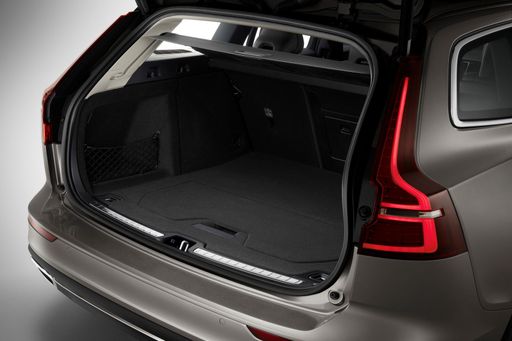
In terms of boot space, the SsangYong Torres offers noticeable more room – 703 L compared to 519 L. That’s a difference of about 184 L.
In maximum load capacity, the SsangYong Torres performs a bit better – up to 1662 L, which is about 231 L more than the Volvo V60.
When it comes to payload, SsangYong Torres slight takes the win – 552 kg compared to 506 kg. That’s a difference of about 46 kg.
Who comes out on top?
Overall, the Volvo V60 shows itself to be wins the duel decisively and secures the title of DriveDuel Champion.
It convinces with the more balanced overall package and proves to be the more versatile choice for everyday use.
from about £41,600
 @ Volvo Cars
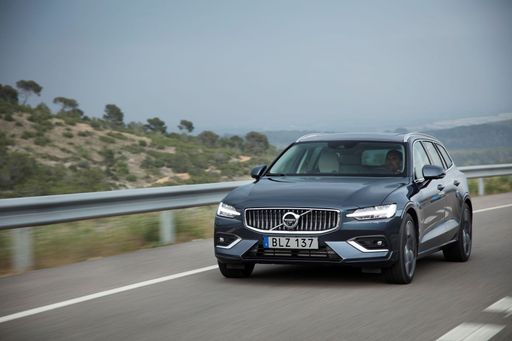
Volvo V60
SsangYong Torres
The SsangYong Torres stands out with its rugged design and robust stance, ideal for adventure enthusiasts seeking a reliable companion for off-road escapades. Inside, the vehicle offers a spacious and comfortable cabin equipped with modern features to enhance the driving experience. Its performance is geared towards delivering a smooth ride, making it versatile for both city driving and rural trails.
detailsVolvo V60
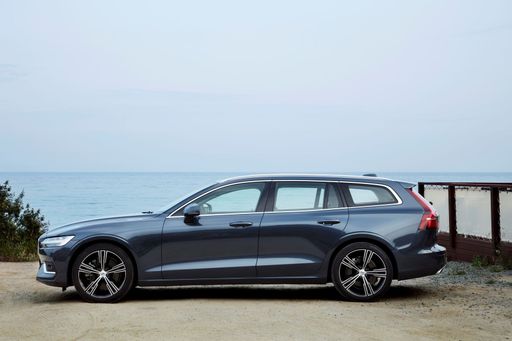
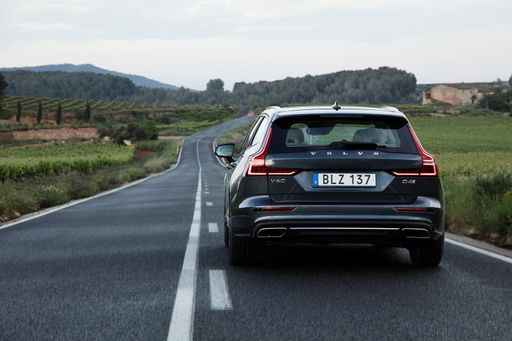
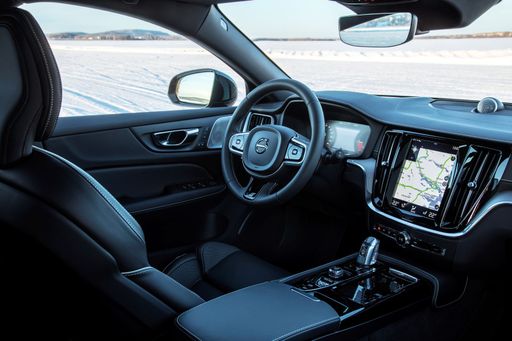
The Volvo V60 blends elegant Scandinavian design with a practical estate layout, making it a composed and sensible choice for buyers who want style without sacrifice. Inside, a serene cabin, clever safety features and a supple ride turn daily commutes and weekend getaways into effortless, grown-up motoring.
details
@ Volvo Cars
 @ Volvo Cars
 @ Volvo Cars
 @ Volvo Cars
 @ Volvo Cars
SsangYong Torres
Volvo V60
|
@ Volvo Cars
|
|
|
|
|
Costs and Consumption |
|
|---|---|
|
Price
33800 - 44600 £
|
Price
41600 - 64200 £
|
|
Consumption L/100km
7.9 - 9.1 L
|
Consumption L/100km
2.4 - 6.2 L
|
|
Consumption kWh/100km
18.70 kWh
|
Consumption kWh/100km
-
|
|
Electric Range
462 km
|
Electric Range
92 km
|
|
Battery Capacity
-
|
Battery Capacity
14.70 kWh
|
|
co2
0 - 207 g/km
|
co2
54 - 140 g/km
|
|
Fuel tank capacity
50 L
|
Fuel tank capacity
60 L
|
Dimensions and Body |
|
|---|---|
|
Body Type
SUV
|
Body Type
Estate
|
|
Seats
5
|
Seats
5
|
|
Doors
5
|
Doors
5
|
|
Curb weight
1498 - 1618 kg
|
Curb weight
1734 - 2064 kg
|
|
Trunk capacity
703 L
|
Trunk capacity
519 L
|
|
Length
4700 mm
|
Length
4778 mm
|
|
Width
1890 mm
|
Width
1850 mm
|
|
Height
1710 mm
|
Height
1432 mm
|
|
Max trunk capacity
1662 L
|
Max trunk capacity
1431 L
|
|
Payload
552 kg
|
Payload
466 - 506 kg
|
Engine and Performance |
|
|---|---|
|
Engine Type
Petrol, Electric
|
Engine Type
Petrol MHEV, Plugin Hybrid
|
|
Transmission
Manuel, Automatic
|
Transmission
Automatic
|
|
Transmission Detail
Manual Gearbox, Automatic Gearbox, Reduction Gearbox
|
Transmission Detail
Dual-Clutch Automatic, Automatic Gearbox
|
|
Drive Type
Front-Wheel Drive, All-Wheel Drive
|
Drive Type
Front-Wheel Drive, All-Wheel Drive
|
|
Power HP
163 - 207 HP
|
Power HP
197 - 455 HP
|
|
Acceleration 0-100km/h
-
|
Acceleration 0-100km/h
4.6 - 7.6 s
|
|
Max Speed
191 - 194 km/h
|
Max Speed
180 km/h
|
|
Torque
280 - 339 Nm
|
Torque
300 - 709 Nm
|
|
Number of Cylinders
4
|
Number of Cylinders
4
|
|
Power kW
120 - 152 kW
|
Power kW
145 - 335 kW
|
|
Engine capacity
1497 cm3
|
Engine capacity
1969 cm3
|
General |
|
|---|---|
|
Model Year
2023 - 2024
|
Model Year
2024 - 2025
|
|
CO2 Efficiency Class
G, A
|
CO2 Efficiency Class
E, B
|
|
Brand
SsangYong
|
Brand
Volvo
|
Is the SsangYong Torres offered with different drivetrains?
Available configurations include Front-Wheel Drive or All-Wheel Drive.
The prices and data displayed are estimates based on German list prices and may vary by country. This information is not legally binding.