VS

Volvo S60 vs Volvo V60 comparison

Compare performance (455 HP vs 455 HP), boot space and price (42,500 £ vs 41,600 £ ) at a glance. Find out which car is the better choice for you – Volvo S60 or Volvo V60?

Volvo S60 vs Volvo V60: Key differences

Volvo S60

  • considerably more efficient
  • barely more electric range
  • only slightly lighter

Volvo V60

5 (1 Reviews)
rate
  • marginally cheaper
  • moderately more trunk space

All details on performance, efficiency, range and trunk space can be found in the technical comparison below – including user reviews for both models.

S60

The Volvo S60 and V60 are two remarkable offerings from the Swedish automaker, combining safety, performance, and Scandinavian design. Though both models share the same platform and many technical specifications, they cater to different lifestyles and preferences. In this article, we will delve into a comprehensive comparison of the S60 sedan and the V60 wagon, shedding light on their technical features, innovations, and practicality.
V60

Design and Dimensions

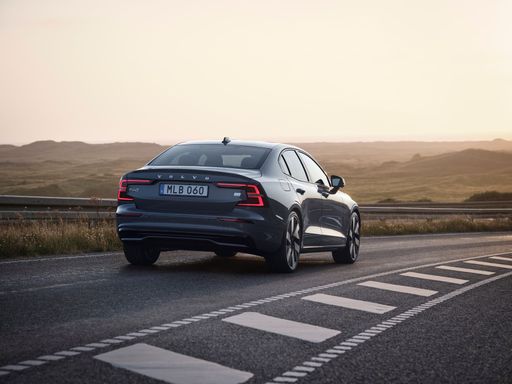
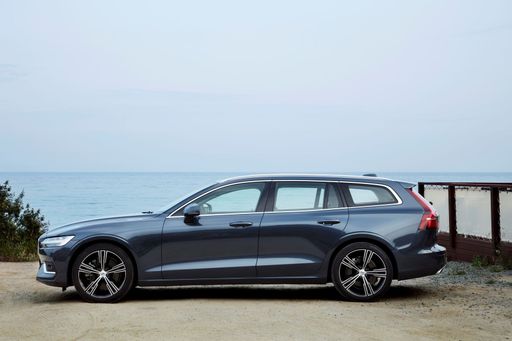
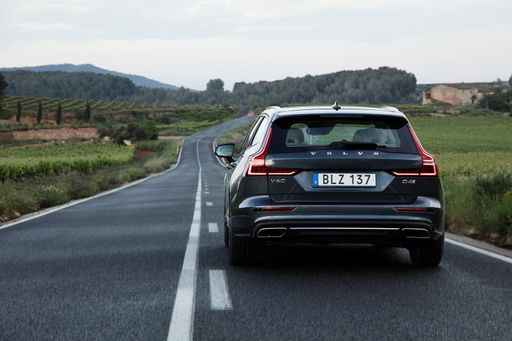
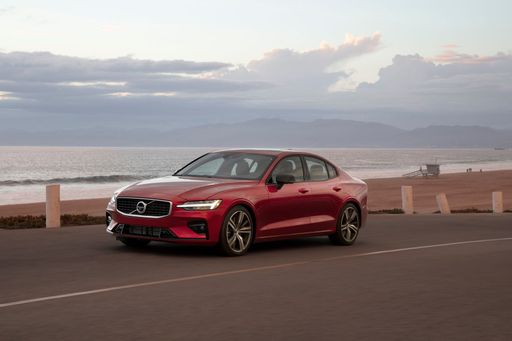
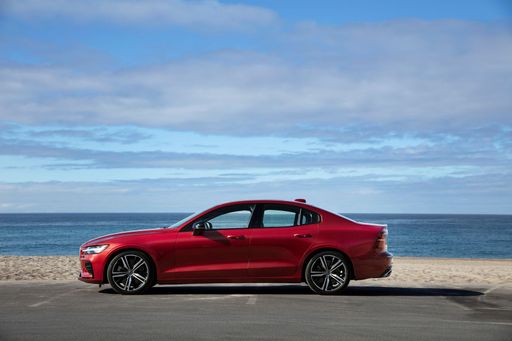
At first glance, the differences in body type between the S60 and V60 are apparent. The S60 is a sleek sedan with a length of 4778 mm and a height of 1431 mm, while the V60 is a versatile wagon measuring 4787 mm in length and 1499 mm in height. Both models share a width of 1850 mm, striking a balance between style and functionality.

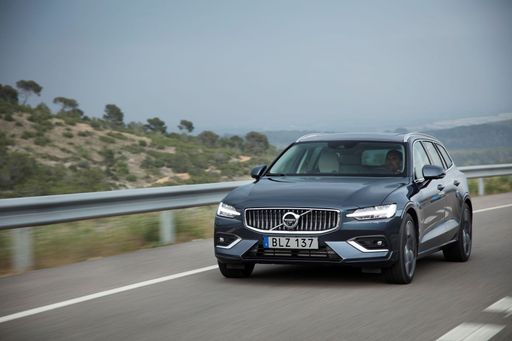
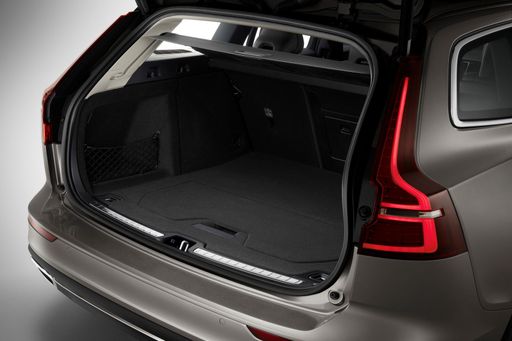
While the S60’s elegant silhouette appeals to those prioritizing aesthetics, the V60’s practicality shines through with its additional cargo space and rear hatch access. The V60 offers a trunk capacity of 519 liters compared to the S60's 427 liters, making it ideal for families or individuals requiring extra storage.

S60

Engine Options and Performance

The powertrains of the S60 and V60 reflect a modern approach to performance and efficiency. Both models are available with an array of engine options including petrol mild-hybrid, plug-in hybrid, and the V60 also offers a diesel mild-hybrid. The S60 presents outputs ranging from 197 HP to a top figure of 455 HP, while the V60 mirrors this range but includes an additional 398 HP option.

Acceleration figures speak volumes about their performance capabilities. The S60 boasts an impressive 0-100 km/h time as fast as 4.6 seconds, while the V60 also achieves a remarkable time of 4.6 seconds for its top-tier variant. However, the S60 maintains slightly quicker acceleration with diverse powertrains.

V60

Fuel Efficiency and Emissions

Both the S60 and V60 excel in terms of fuel efficiency, with consumption figures ranging from 5.9 to 7.4 L/100 km for the V60 and 6.1 to 7.1 L/100 km for the S60. The integration of hybrid technology in both models further enhances their eco-friendliness, with CO2 emissions ranging from 138 g/km in the S60 to up to 168 g/km in the V60.

Notably, both vehicles are equipped with a battery capacity of 14.7 kWh, allowing for an electric-only range of approximately 94 km for the S60 and 92 km for the V60. This innovation ensures that both Volvo models contribute to reduced emissions during everyday commutes.

S60

Interior Features and Technology

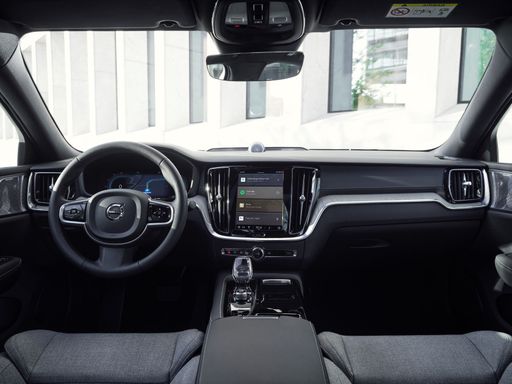
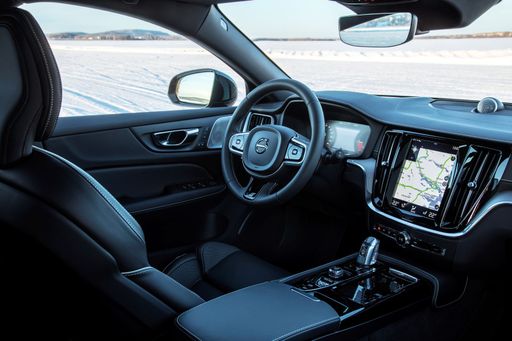
The interior of both the S60 and V60 is a testament to Volvo's commitment to driver and passenger comfort. Offering space for five occupants, both models feature high-quality materials and an intuitive layout. The S60 is designed for a more focused driving experience, while the V60 emphasizes convenience and versatile space utilization.

Advanced technology in both vehicles includes Volvo's cutting-edge infotainment systems, driver assistance features, and high-quality sound systems. The user interface is modern and intuitive, ensuring that connectivity and entertainment are at the driver’s fingertips, regardless of which model is chosen.

V60

Safety Innovations

Where both models truly shine is in safety. Volvo has a long-standing reputation for prioritizing safety, and the S60 and V60 are no exceptions. Equipped with the latest safety innovations, both vehicles include advanced driver assistance systems, adaptive cruise control, collision avoidance technology, and better structural integrity to protect occupants.

Volvo's dedication to safety continues with features like a semi-autonomous driving system, which enhances the driving experience while keeping occupants safe on the road.

S60

Conclusion

In summary, the choice between the Volvo S60 and V60 ultimately comes down to personal preference and lifestyle needs. The S60 offers an elegant sedan profile suitable for individuals who favor style and performance, while the V60 presents a practical and spacious option for those who need added versatility without compromising on performance. Both vehicles exemplify Volvo's commitment to safety, efficiency, and innovation, making them standout choices in the competitive automotive landscape.

Here’s where it gets real: The technical differences in detail

S60

Costs and Efficiency:

Price and efficiency are key factors when choosing a car – and this is often where the real differences emerge.

Volvo V60 is marginally cheaper – starting at 41,600 £ , while the Volvo S60 costs 42,500 £ . That’s a price difference of around 866 £.

Fuel consumption also shows a difference: the Volvo S60 uses 0.7 L/100km and is considerably more efficient than the Volvo V60 with 2.4 L/100km. The difference is about 1.7 L/100km.

As for electric range, the Volvo S60 offers barely more range – reaching up to 94 km, about 1 km more than the Volvo V60.

V60

Engine and Performance:

Under the bonnet, it becomes clear which model is tuned for sportiness and which one takes the lead when you hit the accelerator.

Both models deliver identical power – 455 HP each.

Both models accelerate almost equally fast – 4.6 s from 0 to 100 km/h.

There’s no difference in top speed – both reach 180 km/h.

Both models offer the same torque – 709 Nm.

S60

Space and Everyday Use:

Cabin size, boot volume and payload all play a role in everyday practicality. Here, comfort and flexibility make the difference.

Both vehicles offer seating for 5 people.

In terms of curb weight, Volvo S60 is only slightly lighter – 1,715 kg compared to 1,734 kg. The difference is around 19 kg.

Looking at boot space, the Volvo V60 offers moderately more boot space – 519 L compared to 427 L. That’s a difference of about 92 L.

When it comes to payload, the Volvo V60 carries very slightly more – 506 kg compared to 475 kg. That’s a difference of about 31 kg.

Who wins the race in the data check?

The Volvo S60 holds a decisive overall lead in the objective data comparison.
This result only shows which model scores more points on paper – not which of the two cars feels right for you.

from £42,500
S60

Volvo S60

  • Engine Type : Petrol MHEV, Plugin Hybrid
  • Transmission : Automatic
  • Drive Type : Front-Wheel Drive, All-Wheel Drive
  • Power HP : 197 - 455 HP
  • Consumption L/100km : 0.7 - 7.1 L/100km
  • Electric Range : 94 km
Volvo S60
Volvo V60

Costs and Consumption

View detailed analysis

Engine and Performance

View detailed analysis

Dimensions and Body

View detailed analysis

Volvo S60

The Volvo S60 wears Scandinavian understatement like a tailored suit, pairing a serene cabin with composed handling that makes the daily commute feel unexpectedly civilized. For buyers after executive looks, rock‑solid safety and practical versatility — with a dash of discreet luxury — it's a persuasive pick that doesn't need to shout for attention.

details

Volvo V60

The Volvo V60 blends elegant Scandinavian design with a practical estate layout, making it a composed and sensible choice for buyers who want style without sacrifice. Inside, a serene cabin, clever safety features and a supple ride turn daily commutes and weekend getaways into effortless, grown-up motoring.

details
Volvo S60
Volvo V60

Costs and Consumption

Price
42,500 - 65,100 £
Price
41,600 - 65,000 £
Consumption L/100km
0.7 - 7.1 L/100km
Consumption L/100km
2.4 - 6.2 L/100km
Consumption kWh/100km
-
Consumption kWh/100km
-
Electric Range
94 km
Electric Range
93 km
Battery Capacity
14.7 kWh
Battery Capacity
-
co2
16 - 161 g/km
co2
54 - 140 g/km
Fuel tank capacity
60 L
Fuel tank capacity
60 L

Dimensions and Body

Body Type
Sedan
Body Type
Estate
Seats
5
Seats
5
Doors
4
Doors
5
Curb weight
1,715 - 2,039 kg
Curb weight
1,734 - 2,064 kg
Trunk capacity
390 - 427 L
Trunk capacity
519 L
Length
4,778 mm
Length
4,778 mm
Width
1,850 mm
Width
1,850 mm
Height
1,431 mm
Height
1,432 mm
Max trunk capacity
-
Max trunk capacity
1,431 L
Payload
461 - 475 kg
Payload
466 - 506 kg

Engine and Performance

Engine Type
Petrol MHEV, Plugin Hybrid
Engine Type
Petrol MHEV, Plugin Hybrid
Transmission
Automatic
Transmission
Automatic
Transmission Detail
Automatic Gearbox
Transmission Detail
Dual-Clutch Automatic, Automatic Gearbox
Drive Type
Front-Wheel Drive, All-Wheel Drive
Drive Type
Front-Wheel Drive, All-Wheel Drive
Power HP
197 - 455 HP
Power HP
197 - 455 HP
Acceleration 0-100km/h
4.6 - 7.9 s
Acceleration 0-100km/h
4.6 - 7.6 s
Max Speed
180 km/h
Max Speed
180 km/h
Torque
300 - 709 Nm
Torque
300 - 709 Nm
Number of Cylinders
4
Number of Cylinders
4
Power kW
145 - 335 kW
Power kW
145 - 335 kW
Engine capacity
1,969 cm3
Engine capacity
1,969 cm3

General

Model Year
2,022 - 2,024
Model Year
2,024 - 2,025
CO2 Efficiency Class
E, F, B
CO2 Efficiency Class
E, B
Brand
Volvo
Brand
Volvo
DriveDuel uses data analysis and artificial intelligence to evaluate vehicle data and create content. Content is regularly reviewed and improved. The displayed prices are estimates based on German list prices, adjusted to the respective country’s VAT. Country-specific registration taxes are not included. This information is not legally binding.