VS

VW Touareg vs BMW X7 comparison

Compare performance (462 HP vs 530 HP), boot space and price (64,300 £ vs 90,800 £ ) at a glance. Find out which car is the better choice for you – VW Touareg or BMW X7?

VW Touareg vs BMW X7: Key differences

VW Touareg

4.9 (3 Reviews)
rate
  • considerably cheaper
  • clearly more efficient
  • visibly lighter
  • very slightly more trunk space

BMW X7

5 (1 Reviews)
rate
  • somewhat more power
  • only slightly quicker 0–100 km/h

All details on performance, efficiency, range and trunk space can be found in the technical comparison below – including user reviews for both models.

Touareg

Battle of the Titans: BMW X7 vs. VW Touareg

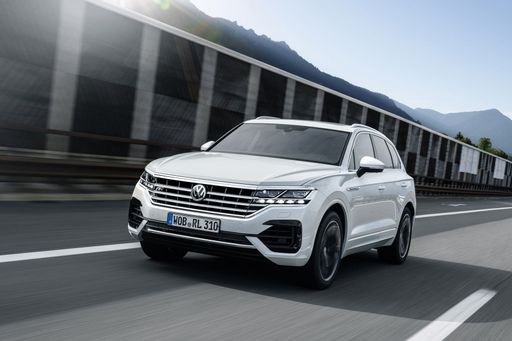
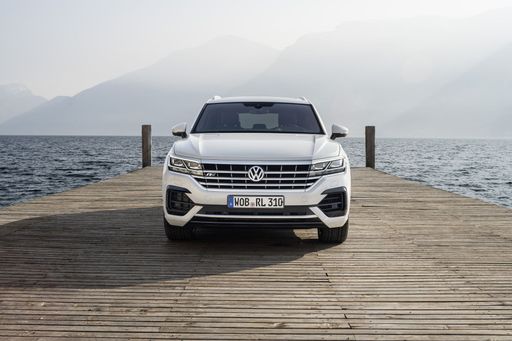
When it comes to luxury SUVs, the BMW X7 and VW Touareg both make a compelling case for themselves. Diving into technical aspects and innovations, this comparison seeks to highlight the strengths and areas of distinction between these two automotive marvels.
X7

Engine and Performance Dynamics

Both the BMW X7 and VW Touareg offer a range of engine options that cater to diverse driving styles, underscoring their commitment to performance. The X7 comes with diesel MHEV, petrol MHEV, and standard petrol engines, providing power outputs ranging from 352 HP to an impressive 530 HP. It boasts a top speed of up to 250 km/h, and depending on the variant, accelerates from 0-100 km/h in as little as 4.7 seconds.

On the other hand, the VW Touareg offers diesel, petrol, and plug-in hybrid options, with power outputs ranging from 231 HP to 462 HP, and a top speed that reaches up to 250 km/h. Acceleration to 100 km/h is achieved in as fast as 5.1 seconds. The plug-in hybrid versions even offer up to 51 km of electric range, showcasing VW’s strides in embracing green technology.

Touareg

Efficiency and Sustainability

Fuel consumption for these SUVs varies based on engine choices. The BMW X7 records consumption figures from 7.9 to 12.1 L/100 km, whereas the VW Touareg ranges from 2.2 L/100 km in hybrid mode to 11 L/100 km. The Touareg’s plug-in hybrid shines with an electric efficiency, reiterating Volkswagen's emphasis on CO2 efficiency, where it achieves a significant contrast with a CO2 rating as low as 48 g/km.

X7

Dimensions and Practicality

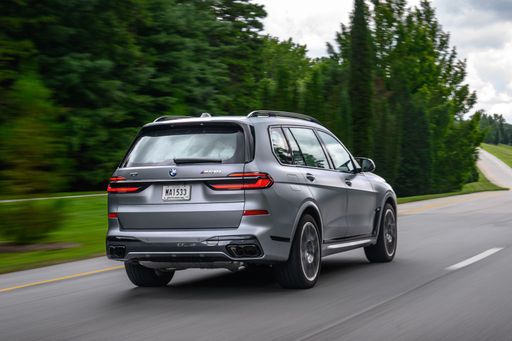
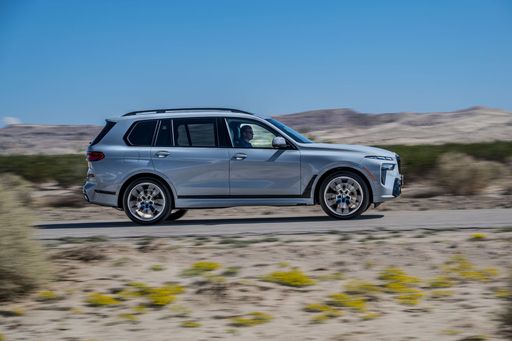
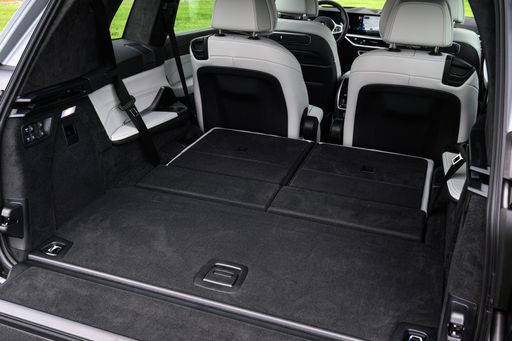
Considering size and space, the BMW X7 stands longer at 5181 mm with a wider profile of 2000 mm, and height of 1835 mm, allowing substantial interior space for its 7-seat configuration. With a trunk capacity of 750 liters, it caters well to those requiring ample storage.

The VW Touareg, slightly more compact at 4902 mm in length, accommodates 5 seats, making it perfect for families who value comfort without the extra row. It offers a larger trunk capacity of up to 810 liters, catering to practical storage needs. Its curb weight ranges from 2118 kg to 2470 kg, making it generally lighter than the X7’s range of 2490 kg to 2675 kg.

Touareg

Technical Innovations and Features

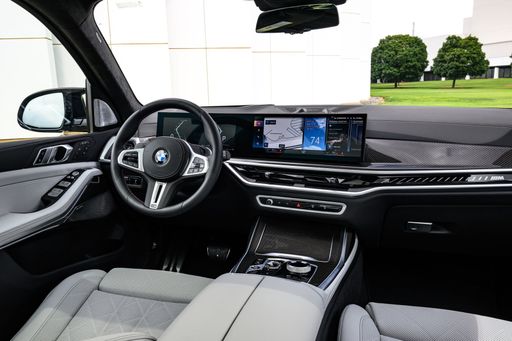
Both SUVs come packed with state-of-the-art technologies. The BMW X7 integrates high-tech features including automatic gearboxes across all models, along with the renowned xDrive all-wheel-drive system enhancing its formidable landscape navigation capabilities.

Similarly, the VW Touareg does not fall behind with its innovative driver-assist features and a versatile all-wheel-drive system that maintains stability across diverse terrains. With a hybrid in the lineup, its technology not only provides enhanced efficiency but also a glimpse into Volkswagen's future-proofing strategies.

X7

Conclusion

In conclusion, both the BMW X7 and VW Touareg offer compelling features for any SUV enthusiast. The choice between the two might ultimately come down to personal preference concerning performance, space, and technological features. With the VW Touareg offering hybrid technology and practical efficiency, and the BMW X7 providing robust performance and passenger capacity, either SUV represents a smart and luxurious choice.

Here’s where it gets real: The technical differences in detail

Touareg

Costs and Efficiency:

When it comes to price and running costs, the biggest differences usually appear. This is often where you see which car fits your budget better in the long run.

VW Touareg is considerably cheaper – starting at 64,300 £ , while the BMW X7 costs 90,800 £ . That’s a price difference of around 26,464 £.

Fuel consumption also shows a difference: the VW Touareg uses 5.2 L/100km and is clearly more efficient than the BMW X7 with 8 L/100km. The difference is about 2.8 L/100km.

X7

Engine and Performance:

Power, torque and acceleration say a lot about how a car feels on the road. This is where you see which model delivers more driving dynamics.

When it comes to engine power, the BMW X7 offers somewhat more power – delivering 530 HP compared to 462 HP. That’s roughly 68 HP more horsepower.

When accelerating from 0 to 100 km/h, the BMW X7 is only slightly quicker – completing the sprint in 4.7 s, while the VW Touareg takes 5.1 s. That’s about 0.4 s quicker.

There’s no difference in top speed – both reach 250 km/h.

There’s also a difference in torque: the BMW X7 delivers marginally more torque with 750 Nm compared to 700 Nm. That’s about 50 Nm more.

Touareg

Space and Everyday Use:

Cabin size, boot volume and payload all play a role in everyday practicality. Here, comfort and flexibility make the difference.

Seats: BMW X7 offers more seats – 7 vs 5.

In terms of curb weight, VW Touareg is visibly lighter – 2,059 kg compared to 2,490 kg. The difference is around 431 kg.

Looking at boot space, the VW Touareg offers very slightly more boot space – 810 L compared to 750 L. That’s a difference of about 60 L.

For maximum load capacity, the BMW X7 offers somewhat more capacity – up to 2,120 L, about 320 L more than the VW Touareg.

When it comes to payload, the BMW X7 carries very slightly more – 760 kg compared to 751 kg. That’s a difference of about 9 kg.

Who wins the race in the data check?

The VW Touareg is clearly ahead overall in the objective data comparison.
This result only shows which model scores more points on paper – not which of the two cars feels right for you.

from £64,300
Touareg

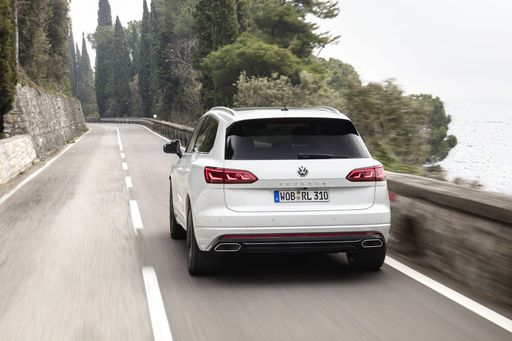
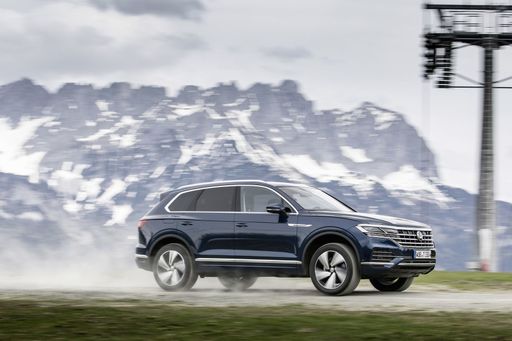
VW Touareg

  • Engine Type : Petrol, Plugin Hybrid, Diesel
  • Transmission : Automatic
  • Drive Type : All-Wheel Drive
  • Power HP : 231 - 462 HP
  • Consumption L/100km : 5.2 - 10.5 L/100km
  • Electric Range : 47 - 49 km
VW Touareg
BMW X7

Costs and Consumption

View detailed analysis

Engine and Performance

View detailed analysis

Dimensions and Body

View detailed analysis

VW Touareg

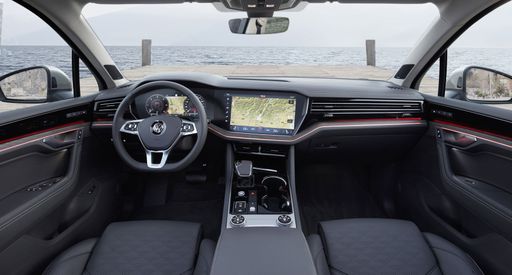
Volkswagen Touareg wraps a grown-up presence in a classy, well-appointed cabin that feels more like a premium saloon than an SUV. It glides with quiet composure, devours long journeys and tucks away clever tech that makes life easier whether you’re stuck in town or nipping off the beaten track.

details

BMW X7

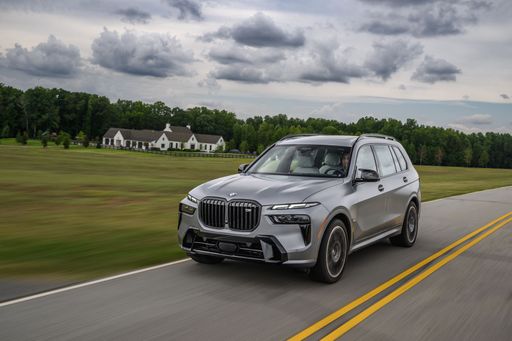
The BMW X7 sits at the top of BMW’s SUV range, wrapping executive-level luxury and a cavernous cabin in a bold, road-commanding package. It’s ideal for buyers who want first-class comfort and presence on the road — think chauffeur-level refinement without hiring one, though you’ll need a confident approach to parking.

details
VW Touareg
BMW X7

Costs and Consumption

Price
64,300 - 88,300 £
Price
90,800 - 117,500 £
Consumption L/100km
5.2 - 10.5 L/100km
Consumption L/100km
8 - 12.1 L/100km
Consumption kWh/100km
-
Consumption kWh/100km
-
Electric Range
47 - 49 km
Electric Range
-
Battery Capacity
14.3 kWh
Battery Capacity
-
co2
119 - 239 g/km
co2
210 - 274 g/km
Fuel tank capacity
75 L
Fuel tank capacity
80 - 83 L

Dimensions and Body

Body Type
SUV
Body Type
SUV
Seats
5
Seats
7
Doors
5
Doors
5
Curb weight
2,059 - 2,470 kg
Curb weight
2,490 - 2,675 kg
Trunk capacity
665 - 810 L
Trunk capacity
750 L
Length
4,878 - 4,902 mm
Length
5,181 mm
Width
1,984 mm
Width
2,000 mm
Height
1,693 - 1,712 mm
Height
1,835 mm
Max trunk capacity
1,675 - 1,800 L
Max trunk capacity
2,120 L
Payload
550 - 751 kg
Payload
680 - 760 kg

Engine and Performance

Engine Type
Petrol, Plugin Hybrid, Diesel
Engine Type
Petrol MHEV, Diesel MHEV
Transmission
Automatic
Transmission
Automatic
Transmission Detail
Automatic Gearbox
Transmission Detail
Automatic Gearbox
Drive Type
All-Wheel Drive
Drive Type
All-Wheel Drive
Power HP
231 - 462 HP
Power HP
352 - 530 HP
Acceleration 0-100km/h
5.1 - 7.7 s
Acceleration 0-100km/h
4.7 - 5.9 s
Max Speed
222 - 250 km/h
Max Speed
245 - 250 km/h
Torque
450 - 700 Nm
Torque
520 - 750 Nm
Number of Cylinders
6
Number of Cylinders
6 - 8
Power kW
170 - 340 kW
Power kW
259 - 390 kW
Engine capacity
2,967 - 2,995 cm3
Engine capacity
2,993 - 4,395 cm3

General

Model Year
2,025
Model Year
2,025
CO2 Efficiency Class
G, D
CO2 Efficiency Class
G
Brand
VW
Brand
BMW
DriveDuel uses data analysis and artificial intelligence to evaluate vehicle data and create content. Content is regularly reviewed and improved. The displayed prices are estimates based on German list prices, adjusted to the respective country’s VAT. Country-specific registration taxes are not included. This information is not legally binding.