VS

Alpine A290 vs CUPRA Born comparison

Compare performance (218 HP vs 326 HP), boot space and price (33,200 £ vs 34,300 £ ) at a glance. Find out which car is the better choice for you – Alpine A290 or CUPRA Born?

Alpine A290 vs CUPRA Born: Key differences

Alpine A290

4.6 (3 Reviews)
rate
  • marginally cheaper
  • clearly lighter
details

CUPRA Born

3.9 (3 Reviews)
rate
  • markedly more power
  • moderately more efficient
  • clearly more electric range
  • slightly quicker 0–100 km/h
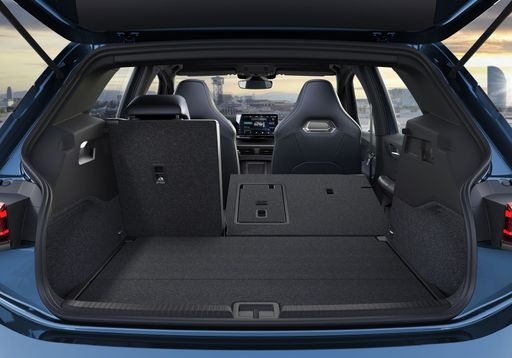
  • somewhat more trunk space
details

All details on performance, efficiency, range and trunk space can be found in the technical comparison below – including user reviews for both models.

By Achim Sedelmaier

A290

Alpine A290 VS CUPRA Born — quick take for shoppers

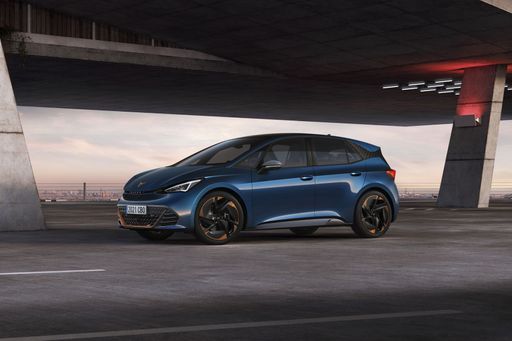
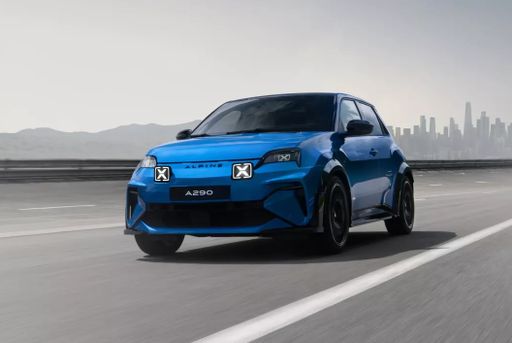
The Alpine A290 and the CUPRA Born sit on the same compact‑EV stage but offer very different answers to what “sporty” should mean in an electric hatch. The Alpine A290 is an urban‑minded hot‑hatch in electric clothing, built around crisp chassis responses and a brake setup that invites confident driving on twisty roads. The CUPRA Born pitches itself as the more rounded performance‑oriented compact EV, trading some of the A290’s raw playfulness for better range, composure and everyday usability. If you’re comparing them, think less about headline figures and more about how and where you plan to drive most days.
Born

Driving character: playful sharpness vs. planted precision

The Alpine A290 feels like a cheeky little sports car: lively turn‑in, a playful rear end and very direct brakes that reward committed driving on B‑roads. That character comes with telltale hot‑hatch quirks — sharper responses over bumps, strong front‑end torque reactions under hard throttle, and a chassis that prefers a spirited line. The CUPRA Born aims for a more neutral, communicative balance; steering is precise, the rear stays composed, and optional setup choices widen the comfort‑to‑sport spectrum. Put simply, choose the Alpine A290 if you want to feel connected and amused on every twist; pick the CUPRA Born if you want sportiness that scales better to daily traffic and faster stretches.

Comfort and long‑distance behaviour

On short runs and city commutes the Alpine A290’s firm setup feels energetic and engaging, but that same tuning becomes noticeable on long motorway stints where road and wind noise also rise. The CUPRA Born is the more relaxed long‑distance companion: suspension choices and a calmer acoustic package make prolonged drives less tiring and its real‑world range/charging behaviour is friendlier for longer trips. If you expect frequent motorway time or multi‑leg journeys, the CUPRA Born’s package reduces travel stress and charging stops. The Alpine A290 is better thought of as a lively etappen‑car with clear limits when the trip extends into sustained high‑speed territory.

Cabin feel, tech and daily usability

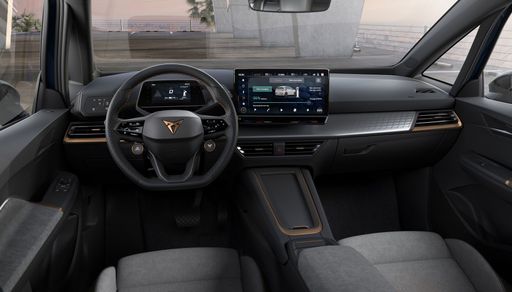
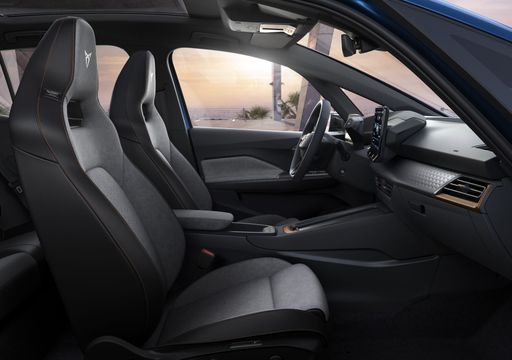
Inside, the Alpine A290 leans into a bespoke, slightly premium feel with tactile controls for core functions and a modern, driver‑focused layout, though it’s guilty of a few oddities like scant cupholders and narrow storage niches. The CUPRA Born presents a sportier, mainstream‑premium cabin with supportive seats and a larger display ecosystem, but its touch‑slider controls and sensitive surfaces frustrate some users over time. Both cabins are thoughtfully finished in places, but the Alpine A290 trades some everyday conveniences for character while the CUPRA Born trades simplicity for a more polished, if occasionally fiddly, interface. Ergonomically, the Born will suit longer drivers better; the A290 rewards those who prioritise driver engagement and a tactile cockpit.

Practicality and family usability

Practical differences are clear in everyday use: the CUPRA Born offers more usable luggage space and generally easier loading for weekend gear, while the Alpine A290 makes clever use of its compact footprint with five doors and a surprisingly usable boot for its size. Rear seats in the Alpine A290 are tighter and best viewed as 2+2 or short‑haul useful, whereas the CUPRA Born gives actual rear‑seat room that’s kinder to passengers and child seats. Both cars have high load sills and limited under‑bonnet storage, so neither is ideal for heavy duty utility, but the Born’s packaging handles weekly family needs with fewer compromises. If you regularly carry passengers or kit, the CUPRA Born will reduce everyday friction; if you prioritise agility and flair over cargo flexibility, the Alpine A290 still delivers.

Who should choose which — trade‑offs and buyer fit

Think of the Alpine A290 as the choice for buyers who put driver engagement and hot‑hatch personality ahead of range and motorway ease: ideal as a spirited city‑to‑country plaything and a compact commuter that makes corners feel alive. The CUPRA Born fits buyers who want a sporty‑feeling compact EV that is sensible for longer trips, kinder to passengers, and more forgiving in daily use — it’s the better all‑rounder for mixed‑duty drivers. Your decision comes down to where you spend most miles and how much practicality you compromise for charisma: both cars do sportiness differently and both have clear strengths depending on that balance. Below you’ll find the technical comparison so you can match those real‑world trade‑offs to the numbers that matter to you.

Here’s where it gets real: The technical differences in detail

A290

Costs and Efficiency:

Looking at overall running costs, both models reveal some interesting differences in everyday economy.

Alpine A290 is marginally cheaper – starting at 33,200 £ , while the CUPRA Born costs 34,300 £ . That’s a price difference of around 1,106 £.

In terms of energy consumption, the CUPRA Born is moderately more efficient: consuming 14.1 kWh/100km compared to 15.8 kWh/100km for the Alpine A290. That’s a difference of about 1.7 kWh/100km.

As for electric range, the CUPRA Born offers clearly more range – reaching up to 630 km, about 250 km more than the Alpine A290.

Born

Engine and Performance:

Power, torque and acceleration are the classic benchmarks for car enthusiasts – and here, some clear differences start to show.

When it comes to engine power, the CUPRA Born offers markedly more power – delivering 326 HP compared to 218 HP. That’s roughly 108 HP more horsepower.

When accelerating from 0 to 100 km/h, the CUPRA Born is slightly quicker – completing the sprint in 5.6 s, while the Alpine A290 takes 6.4 s. That’s about 0.8 s quicker.

There’s also a difference in torque: the CUPRA Born delivers substantially more torque with 545 Nm compared to 300 Nm. That’s about 245 Nm more.

Space and Everyday Use:

Beyond pure performance, interior space and usability matter most in daily life. This is where you see which car is more practical and versatile.

Both vehicles offer seating for 5 people.

In terms of curb weight, Alpine A290 is clearly lighter – 1,554 kg compared to 1,899 kg. The difference is around 345 kg.

Looking at boot space, the CUPRA Born offers somewhat more boot space – 385 L compared to 326 L. That’s a difference of about 59 L.

When it comes to payload, the CUPRA Born carries a bit more – 461 kg compared to 396 kg. That’s a difference of about 65 kg.

Who wins the race in the data check?

The CUPRA Born stands well ahead of its rival in the objective data comparison.
This result only shows which model scores more points on paper – not which of the two cars feels right for you.

from £34,300
Born

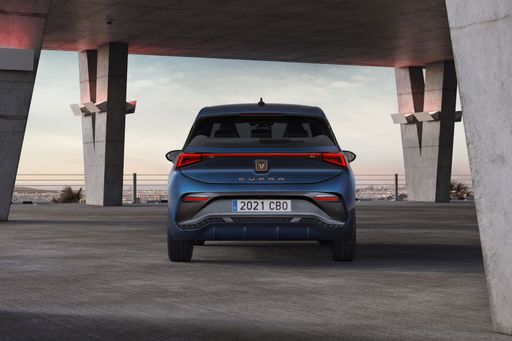
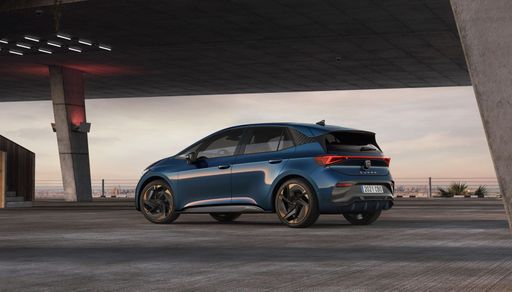
CUPRA Born

  • Engine Type Electric
  • Transmission Automatic
  • Drive Type Rear-Wheel Drive
  • Power HP 190 - 326 HP
  • Consumption kWh/100km 14.1 - 14.4 kWh/100km
  • Electric Range 484 - 630 km
Alpine A290
CUPRA Born

Costs and Consumption

View detailed analysis

Engine and Performance

View detailed analysis

Dimensions and Body

View detailed analysis

Alpine A290

The Alpine A290 brings Alpine's racing-bred spirit to the road with taut handling, razor-sharp steering and a compact, cheeky silhouette that's impossible to ignore. It's a car for drivers who want pure fun rather than family practicality — a playful, stylish pocket rocket that makes every back road feel like a racetrack and hands out smiles with the key.

details

CUPRA Born

The CUPRA Born blends sharp, athletic styling with a playful electric character, delivering hatchback agility and hot-hatch attitude whether you're darting through the city or cruising the open road. Inside, the cabin punches above its weight with smart materials and practical space, making it a compelling pick for buyers who want electric motoring without surrendering the grin.

details
Alpine A290
CUPRA Born

Costs and Consumption

Price
33,200 - 39,600 £
Price
34,300 - 43,700 £
Consumption L/100km
-
Consumption L/100km
-
Consumption kWh/100km
15.8 - 16.5 kWh/100km
Consumption kWh/100km
14.1 - 14.4 kWh/100km
Electric Range
364 - 380 km
Electric Range
484 - 630 km
Battery Capacity
-
Battery Capacity
-
co2
0 g/km
co2
0 g/km
Fuel tank capacity
-
Fuel tank capacity
-

Dimensions and Body

Body Type
Hatchback
Body Type
Hatchback
Seats
5
Seats
5
Doors
-
Doors
-
Curb weight
1,554 kg
Curb weight
1,899 - 2,004 kg
Trunk capacity
326 L
Trunk capacity
385 L
Length
-
Length
-
Width
1,820 mm
Width
1,809 mm
Height
-
Height
-
Max trunk capacity
-
Max trunk capacity
-
Payload
396 kg
Payload
426 - 461 kg

Engine and Performance

Engine Type
Electric
Engine Type
Electric
Transmission
Automatic
Transmission
Automatic
Transmission Detail
Reduction Gearbox
Transmission Detail
Reduction Gearbox
Drive Type
Front-Wheel Drive
Drive Type
Rear-Wheel Drive
Power HP
177 - 218 HP
Power HP
190 - 326 HP
Acceleration 0-100km/h
6.4 - 7.4 s
Acceleration 0-100km/h
5.6 - 8 s
Max Speed
-
Max Speed
-
Torque
285 - 300 Nm
Torque
350 - 545 Nm
Number of Cylinders
-
Number of Cylinders
-
Power kW
130 - 160 kW
Power kW
140 - 240 kW
Engine capacity
-
Engine capacity
-

General

Model Year
2024
Model Year
2026
CO2 Efficiency Class
A
CO2 Efficiency Class
A
Brand
Alpine
Brand
CUPRA
DriveDuel uses data analysis and artificial intelligence to evaluate vehicle data and create content. Content is regularly reviewed and improved. The displayed prices are estimates based on German list prices, adjusted to the respective country’s VAT. Country-specific registration taxes are not included. This information is not legally binding.