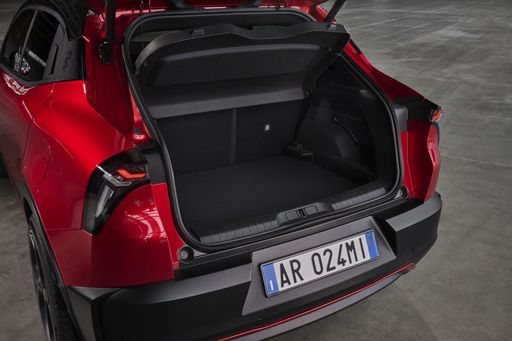
@ Alfa Romeo / Stellantis Media
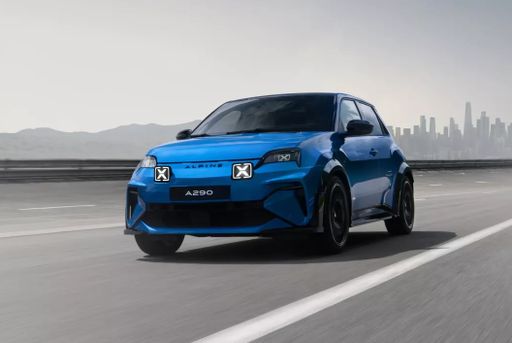
@ Alpine / Renault Group Media
VS

Alfa Romeo Junior vs Alpine A290 – Performance, range & efficiency compared

Everyday use, family trips or long-distance drives – here’s where the differences show.
Discover whether Alfa Romeo Junior or Alpine A290 fits your lifestyle better.

Junior @ Alfa Romeo / Stellantis Media

The Battle of the New Age Rides: Alfa Romeo Junior vs. Alpine A290

The automotive industry is witnessing a spirited duel between two stalwarts, the Alfa Romeo Junior and the Alpine A290. These two vehicles epitomize modernity, swathed in innovation both in design and performance. As the demand for electric and hybrid technologies escalates, the Junior and A290 present themselves as compelling options. Let's delve deeper into their unique attributes, technical specifications, and innovations that set them apart in the modern automotive arena.
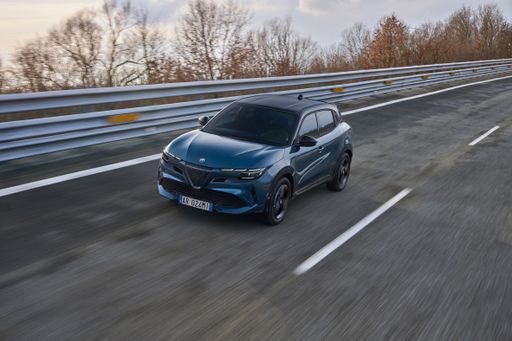
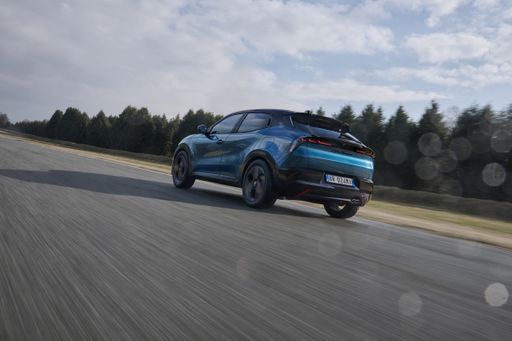
A290 @ Alpine / Renault Group Media

Design and Dimensions: The Balance of Elegance and Compactness

Alfa Romeo's offering, the Junior, encases the boldness typical of an SUV within its adaptive body. With a length of 4173 mm, a width of 1781 mm, and a height ranging from 1533 to 1538 mm, it exudes a mix of spaciousness and commanding road presence. The Alpine A290, on the other hand, captures the spirit of a hatchback with a length of 3997 mm, width of 1823 mm, and a more compact height of 1512 mm. Despite the differences in size, both vehicles maintain a blend of form and functionality.

Junior @ Alfa Romeo / Stellantis Media

Powertrain and Efficiency: Future-Ready Engines

The Alfa Romeo Junior offers a choice between electric and hybrid engine types, complemented by either a reduction gearbox or a dual-clutch automatic transmission. Power outputs range from 136 HP to 280 HP, with front-wheel and all-wheel drive options. The electric variant impresses with a range of up to 410 km, while boasting an economy of 15.2-19 kWh/100km, affirming its efficiency credentials.

Comparatively, the Alpine A290 stands strong with its electric-only powertrain, delivering a range between 361 and 378 km. Its propulsion system provides up to 218 HP, setting a high standard in performance. The A290 is efficient too, with consumption figures between 15.9-16.6 kWh/100km, positioning it as an eco-friendly alternative in the hatchback segment.

Performance and Driving Dynamics

The Junior SUV is an adept performer with 0-100 km/h acceleration ranging from 5.9 to 9.1 seconds, depending on the variant and style. It strikes a fine balance between everyday usability and dynamic driving. Its maximum speed peaks at 206 km/h, underlining its capabilities on highways.

The Alpine A290 does not shy away from delivering exhilarating rides either. With a faster 0-100 km/h acceleration, taking between 6.4 and 7.4 seconds, coupled with a top speed of 170 km/h, it’s built for spirited drive enthusiasts who value agility and swift performance.

Interior Space and Practicality

In terms of interior space, the Alfa Romeo Junior enhances the SUV's reputation for practicality, boasting a trunk capacity of up to 415 liters, making it ideal for those with substantial cargo needs. Its design allows for a comfortable seating arrangement for five passengers, ensuring a pleasant journey regardless of distance.

The A290 features a 326-liter trunk, fitting neatly into the compact car category while still providing adequate storage for daily necessities. Its seating configuration matches the Junior's, making it perfect for small families and urban commuters who appreciate efficient design without sacrificing passenger comfort.

Conclusion: Choosing the Right Companion

In this showdown of souped-up rivals, choosing between the Alfa Romeo Junior and the Alpine A290 boils down to individual preferences and priorities. The Junior's versatility and powerful hybrid options make it a superb pick for those looking for diversity in powertrains and practicality in design. Conversely, the Alpine A290 embodies future-focused electric mobility with a flair for performance, attracting those who seek an exciting drive wrapped up in sustainability.

Ultimately, both cars symbolize the evolution of automobile design and technology, carving a path for the future of the industry. Their distinct attributes make them frontrunners in their respective segments, promising a seamless blend of style, performance, and innovation.

Here’s where it gets real: The technical differences in detail

Costs and Efficiency:

Price and efficiency are key factors when choosing a car – and this is often where the real differences emerge.

Alfa Romeo Junior has a clearly perceptible advantage in terms of price – it starts at 26100 £, while the Alpine A290 costs 33200 £. That’s a price difference of around 7071 £.

In terms of energy consumption, the advantage goes to the Alfa Romeo Junior: with 15.10 kWh per 100 km, it’s minimal more efficient than the Alpine A290 with 15.80 kWh. That’s a difference of about 0.70 kWh.

As for range, the Alfa Romeo Junior performs slight better – achieving up to 410 km, about 30 km more than the Alpine A290.

Engine and Performance:

Power, torque and acceleration are the classic benchmarks for car enthusiasts – and here, some clear differences start to show.

When it comes to engine power, the Alfa Romeo Junior has a distinct edge – offering 280 HP compared to 218 HP. That’s roughly 62 HP more horsepower.

In acceleration from 0 to 100 km/h, the Alfa Romeo Junior is hardly perceptible quicker – completing the sprint in 5.90 s, while the Alpine A290 takes 6.40 s. That’s about 0.50 s faster.

In terms of top speed, the Alfa Romeo Junior performs to a small extent better – reaching 206 km/h, while the Alpine A290 tops out at 170 km/h. The difference is around 36 km/h.

There’s also a difference in torque: Alfa Romeo Junior pulls somewhat stronger with 345 Nm compared to 300 Nm. That’s about 45 Nm difference.

Space and Everyday Use:

Cabin size, boot volume and payload all play a role in everyday practicality. Here, comfort and flexibility make the difference.

Both vehicles offer seating for 5 people.

In curb weight, Alfa Romeo Junior is a bit lighter – 1380 kg compared to 1554 kg. The difference is around 174 kg.

In terms of boot space, the Alfa Romeo Junior offers evident more room – 415 L compared to 326 L. That’s a difference of about 89 L.

In maximum load capacity, the Alfa Romeo Junior performs a bit better – up to 1280 L, which is about 174 L more than the Alpine A290.

When it comes to payload, Alfa Romeo Junior hardly perceptible takes the win – 420 kg compared to 396 kg. That’s a difference of about 24 kg.

Who comes out on top?

Overall, the Alfa Romeo Junior shows itself to be wins the duel decisively and secures the title of DriveDuel Champion.
It convinces with the more balanced overall package and proves to be the more versatile choice for everyday use.

from about £26,100
Junior @ Alfa Romeo / Stellantis Media

Alfa Romeo Junior

  • Engine Type : Electric, Petrol MHEV
  • Transmission : Automatic
  • Drive Type : Front-Wheel Drive, All-Wheel Drive
  • Power HP : 136 - 280 HP
  • Consumption L/100km : 4.8 - 5.4 L
  • Consumption kWh/100km : 15.1 - 17.5 kWh
  • Electric Range : 344 - 410 km

Alfa Romeo Junior

5 (1)
rate

The Alfa Romeo Junior captures the essence of Italian design with its sleek lines and compact dimensions, making it an icon of elegance and performance. With a spirited driving experience and a charming retro aesthetic, it appeals to enthusiasts and casual drivers alike. This delightful car embodies the brand's rich heritage while remaining a fun and engaging option for those seeking a unique automotive experience.

details

Alpine A290

5 (1)
rate

The Alpine A290 embodies a thrilling blend of modern design and exhilarating performance, capturing the spirit of the brand's racing heritage. With its agile handling and responsive drive, this compact vehicle promises an engaging experience both on the road and the track. Inside, it features a driver-focused cockpit that seamlessly integrates technology and comfort, making every journey an adventure.

details
Alfa Romeo Junior
Alpine A290
Junior @ Alfa Romeo / Stellantis Media
A290 @ Alpine / Renault Group Media

Costs and Consumption

Price
26100 - 41600 £
Price
33200 - 39600 £
Consumption L/100km
4.8 - 5.4 L
Consumption L/100km
-
Consumption kWh/100km
15.1 - 17.5 kWh
Consumption kWh/100km
15.8 - 16.5 kWh
Electric Range
344 - 410 km
Electric Range
364 - 380 km
Battery Capacity
0.4 - 51 kWh
Battery Capacity
-
co2
0 - 119 g/km
co2
0 g/km
Fuel tank capacity
44 - 45 L
Fuel tank capacity
-

Dimensions and Body

Body Type
SUV
Body Type
Hatchback
Seats
5
Seats
5
Doors
5
Doors
5
Curb weight
1380 - 1689 kg
Curb weight
1554 kg
Trunk capacity
340 - 415 L
Trunk capacity
326 L
Length
4173 mm
Length
3990 mm
Width
1781 mm
Width
1820 mm
Height
1505 - 1538 mm
Height
1520 mm
Max trunk capacity
1205 - 1280 L
Max trunk capacity
1106 L
Payload
390 - 420 kg
Payload
396 kg

Engine and Performance

Engine Type
Electric, Petrol MHEV
Engine Type
Electric
Transmission
Automatic
Transmission
Automatic
Transmission Detail
Reduction Gearbox, Dual-Clutch Automatic
Transmission Detail
Reduction Gearbox
Drive Type
Front-Wheel Drive, All-Wheel Drive
Drive Type
Front-Wheel Drive
Power HP
136 - 280 HP
Power HP
177 - 218 HP
Acceleration 0-100km/h
5.9 - 9.1 s
Acceleration 0-100km/h
6.4 - 7.4 s
Max Speed
150 - 206 km/h
Max Speed
160 - 170 km/h
Torque
230 - 345 Nm
Torque
285 - 300 Nm
Number of Cylinders
3
Number of Cylinders
-
Power kW
107 - 207 kW
Power kW
130 - 160 kW
Engine capacity
1199 cm3
Engine capacity
-

General

Model Year
2024 - 2025
Model Year
2024
CO2 Efficiency Class
A, C, D
CO2 Efficiency Class
A
Brand
Alfa Romeo
Brand
Alpine
What drive types are available for the Alfa Romeo Junior?

Available configurations include Front-Wheel Drive or All-Wheel Drive.

The prices and data displayed are estimates based on German list prices and may vary by country. This information is not legally binding.