VS

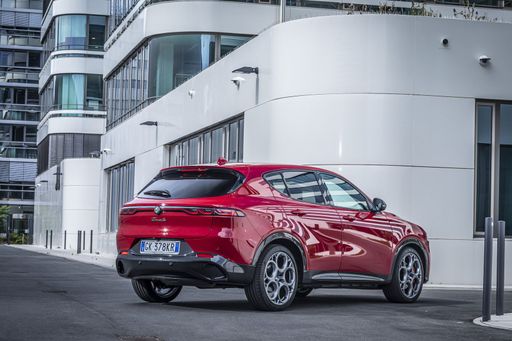
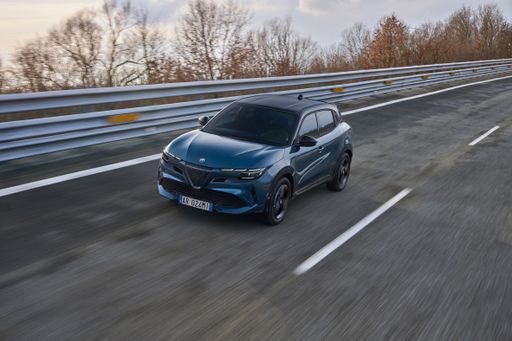
Alfa Romeo Junior vs Alfa Romeo Tonale comparison

Compare performance (280 HP vs 268 HP), boot space and price (26,100 £ vs 35,500 £ ) at a glance. Find out which car is the better choice for you – Alfa Romeo Junior or Alfa Romeo Tonale?

Alfa Romeo Junior vs Alfa Romeo Tonale: Key differences

Alfa Romeo Junior

4.9 (7 Reviews)
rate
  • clearly cheaper
  • barely more power
  • clearly more electric range
  • substantially quicker 0–100 km/h
  • slightly lighter
details

Alfa Romeo Tonale

5 (1 Reviews)
rate
  • significantly more efficient
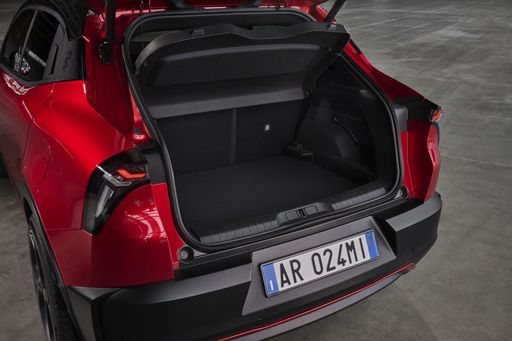
  • moderately more trunk space
details

All details on performance, efficiency, range and trunk space can be found in the technical comparison below – including user reviews for both models.

By Achim Sedelmaier

Junior

Alfa Romeo Junior vs Alfa Romeo Tonale: A Comprehensive Comparison

The automotive world is buzzing with excitement as Alfa Romeo introduces its latest models, the Junior and the Tonale. Both SUVs showcase the brand's signature Italian flair, but they also bring unique features and technological advancements to the table. This article will delve into their technical aspects and innovations, helping you decide which of these two formidable contenders suits your driving needs.
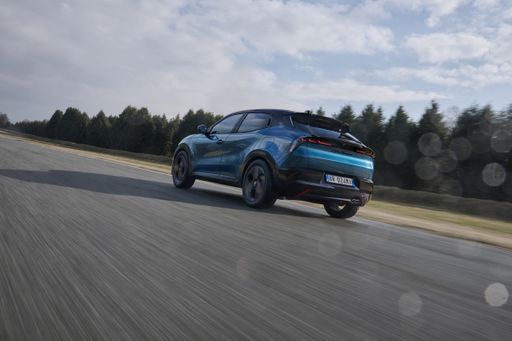
Tonale

Design and Dimensions

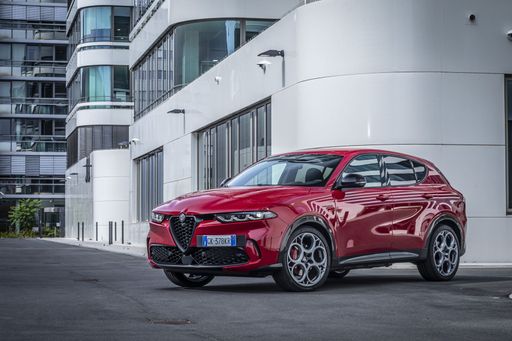
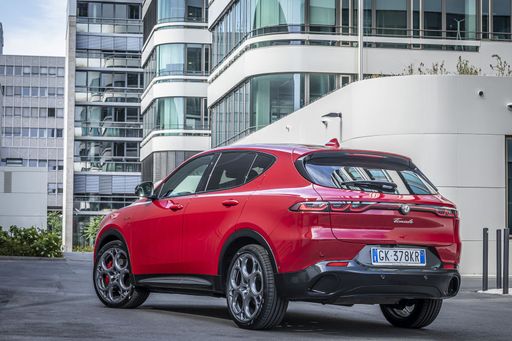
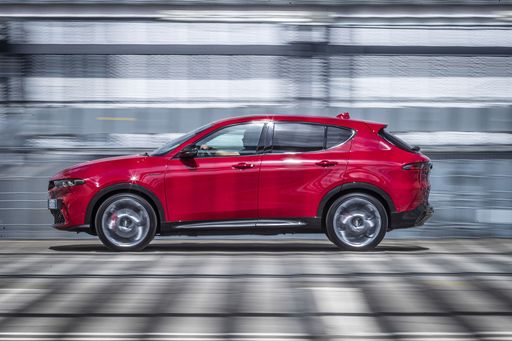
Starting with the fundamentals, the Alfa Romeo Junior stretches to 4173 mm in length, 1781 mm in width, and 1533 mm in height. Meanwhile, the Tonale is slightly larger, measuring 4528 mm in length, 1835 mm in width, and 1614 mm in height. The Junior's compact size lends itself to nimble city driving, while the Tonale’s dimensions provide a commanding presence and ample interior space.

Junior

Powertrains and Performance

Powering the Junior is a range of options featuring both petrol MHEV and electric engines. The power range varies from 136 HP to a robust 280 HP, with torque peaks reaching up to 345 Nm. For those seeking efficiency, the electric range reaches an impressive 410 km, with consumption figures as low as 4.5 L/100km and 15.2 kWh/100km for the electric variant.

On the other hand, the Tonale offers a diverse lineup that includes a Plug-in Hybrid variant alongside petrol and diesel options. With power outputs ranging from 130 HP to 280 HP, the Tonale provides compelling performance with an acceleration from 0-100 km/h in just 6.2 seconds, emphasizing its sporty characteristics. However, its diesel variant is slightly less responsive, with a 0-100 time around 10.9 seconds.

Tonale

Transmission and Drivetrain

Both vehicles come equipped with automatic transmissions, but the Junior utilizes a dual-clutch system that enhances gear shifts and driving dynamics. It is predominantly a front-wheel-drive vehicle, ensuring efficient handling and lower weight.

The Tonale, however, offers more versatility with options for both all-wheel drive and front-wheel drive configurations, appealing to a broader range of driving preferences and conditions. This makes the Tonale apt for off-road adventures while maintaining an efficient urban experience.

Junior

Interior and Technology Features

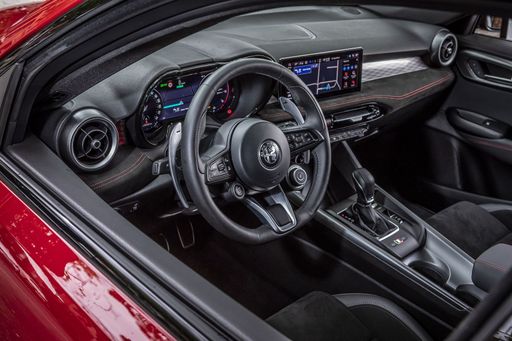
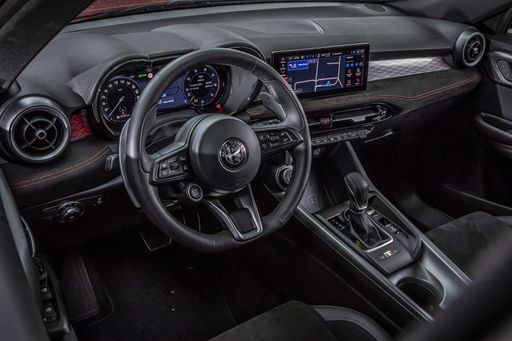
Inside, both models feature high-quality materials and cutting-edge technology. The Junior is designed with a focus on connectivity, offering advanced infotainment systems and driver assistance features. The spacious cabin allows for comfortable seating for five, underscoring its family-friendly nature.

Similarly, the Tonale emphasizes technology, providing a comprehensive display that integrates seamlessly with smartphone connectivity, navigation, and safety systems. With a slightly larger trunk capacity of up to 500 L, it offers practical advantages for families and travelers alike.

Tonale

Efficiency and Environmental Impact

When it comes to efficiency, the Junior stands out with its electric and hybrid options, meeting various consumer demands for sustainability. Its CO2 emissions can go as low as 0 g/km for the electric variant, while the petrol options maintain a respectable 103 g/km.

The Tonale, while slightly higher in emissions, especially in its diesel variants, still upholds competitiveness with CO2 emissions starting at 30 g/km for the Plug-in Hybrid model. This focus on low emissions highlights Alfa Romeo's commitment to environmentally friendly driving without compromising performance.

Conclusion: Which SUV Should You Choose?

In conclusion, both the Alfa Romeo Junior and Tonale offer exceptional vehicles with distinctive characteristics. The Junior is ideal for those who prioritize efficiency, compactness, and innovative electric technology. On the other hand, the Tonale appeals to those seeking versatility, performance, and a more spacious interior.

Your choice ultimately depends on your specific needs—whether you're looking for an electric-first option or a hybrid powerhouse that delivers thrilling performance. Either way, Alfa Romeo continues to push the boundaries of automotive design and engineering, ensuring that both models are excellent choices in the competitive SUV market.

Here’s where it gets real: The technical differences in detail

Junior

Costs and Efficiency:

Price and efficiency are often the first things buyers look at. Here it becomes clear which model has the long-term edge – whether at the pump, the plug, or in purchase price.

Alfa Romeo Junior is clearly cheaper – starting at 26,100 £ , while the Alfa Romeo Tonale costs 35,500 £ . That’s a price difference of around 9,385 £.

Fuel consumption also shows a difference: the Alfa Romeo Tonale uses 3.4 L/100km and is significantly more efficient than the Alfa Romeo Junior with 4.8 L/100km. The difference is about 1.4 L/100km.

As for electric range, the Alfa Romeo Junior offers clearly more range – reaching up to 410 km, about 348 km more than the Alfa Romeo Tonale.

Tonale

Engine and Performance:

Under the bonnet, it becomes clear which model is tuned for sportiness and which one takes the lead when you hit the accelerator.

When it comes to engine power, the Alfa Romeo Junior offers barely more power – delivering 280 HP compared to 268 HP. That’s roughly 12 HP more horsepower.

When accelerating from 0 to 100 km/h, the Alfa Romeo Junior is substantially quicker – completing the sprint in 5.9 s, while the Alfa Romeo Tonale takes 10.9 s. That’s about 5 s quicker.

There’s also a difference in torque: the Alfa Romeo Junior delivers barely more torque with 345 Nm compared to 320 Nm. That’s about 25 Nm more.

Junior

Space and Everyday Use:

Whether family car or daily driver – which one offers more room, flexibility and comfort?

Both vehicles offer seating for 5 people.

In terms of curb weight, Alfa Romeo Junior is slightly lighter – 1,380 kg compared to 1,600 kg. The difference is around 220 kg.

Looking at boot space, the Alfa Romeo Tonale offers moderately more boot space – 500 L compared to 415 L. That’s a difference of about 85 L.

When it comes to payload, the Alfa Romeo Tonale carries noticeably more – 535 kg compared to 420 kg. That’s a difference of about 115 kg.

Who wins the race in the data check?

The Alfa Romeo Junior is far ahead overall in the objective data comparison.
This result only shows which model scores more points on paper – not which of the two cars feels right for you.

from £26,100
Junior

Alfa Romeo Junior

  • Engine Type : Electric, Petrol MHEV
  • Transmission : Automatic
  • Drive Type : Front-Wheel Drive, All-Wheel Drive
  • Power HP : 136 - 280 HP
  • Consumption L/100km : 4.8 - 5.4 L/100km
  • Consumption kWh/100km : 15.1 - 17.5 kWh/100km
  • Electric Range : 344 - 410 km
Alfa Romeo Junior
Alfa Romeo Tonale

Costs and Consumption

View detailed analysis

Engine and Performance

View detailed analysis

Dimensions and Body

View detailed analysis

Alfa Romeo Junior

The Alfa Romeo Junior captures the essence of Italian design with its sleek lines and compact dimensions, making it an icon of elegance and performance. With a spirited driving experience and a charming retro aesthetic, it appeals to enthusiasts and casual drivers alike. This delightful car embodies the brand's rich heritage while remaining a fun and engaging option for those seeking a unique automotive experience.

details

Alfa Romeo Tonale

The Alfa Romeo Tonale embodies the brand's timeless elegance and sporty DNA, captivating drivers with its bold design and dynamic presence on the road. Inside, the Tonale impresses with a perfect blend of luxury and cutting-edge technology, offering a sophisticated driving experience that remains true to the Alfa Romeo spirit. With its agile performance and distinctive character, the Tonale stands out in the competitive SUV market, appealing to those who seek both style and substance.

details
Alfa Romeo Junior
Alfa Romeo Tonale

Costs and Consumption

Price
26,100 - 41,600 £
Price
35,500 - 53,200 £
Consumption L/100km
4.8 - 5.4 L/100km
Consumption L/100km
3.4 - 5.6 L/100km
Consumption kWh/100km
15.1 - 17.5 kWh/100km
Consumption kWh/100km
-
Electric Range
344 - 410 km
Electric Range
62 km
Battery Capacity
-
Battery Capacity
-
co2
0 - 119 g/km
co2
77 - 138 g/km
Fuel tank capacity
-
Fuel tank capacity
-

Dimensions and Body

Body Type
SUV
Body Type
SUV
Seats
5
Seats
5
Doors
-
Doors
-
Curb weight
1,380 - 1,689 kg
Curb weight
1,600 - 1,910 kg
Trunk capacity
340 - 415 L
Trunk capacity
385 - 500 L
Length
-
Length
-
Width
1,781 mm
Width
1,835 mm
Height
-
Height
-
Max trunk capacity
-
Max trunk capacity
-
Payload
390 - 420 kg
Payload
510 - 535 kg

Engine and Performance

Engine Type
Electric, Petrol MHEV
Engine Type
Petrol MHEV, Plugin Hybrid, Diesel
Transmission
Automatic
Transmission
Automatic
Transmission Detail
Reduction Gearbox, Dual-Clutch Automatic
Transmission Detail
Dual-Clutch Automatic, Automatic Gearbox
Drive Type
Front-Wheel Drive, All-Wheel Drive
Drive Type
Front-Wheel Drive, All-Wheel Drive
Power HP
136 - 280 HP
Power HP
130 - 268 HP
Acceleration 0-100km/h
5.9 - 9.1 s
Acceleration 0-100km/h
10.9 s
Max Speed
-
Max Speed
-
Torque
230 - 345 Nm
Torque
320 Nm
Number of Cylinders
3
Number of Cylinders
4
Power kW
107 - 207 kW
Power kW
96 - 197 kW
Engine capacity
1,199 cm3
Engine capacity
1,332 - 1,598 cm3

General

Model Year
2,024 - 2,025
Model Year
2,025 - 2,026
CO2 Efficiency Class
A, C, D
CO2 Efficiency Class
D, B, E
Brand
Alfa Romeo
Brand
Alfa Romeo
DriveDuel uses data analysis and artificial intelligence to evaluate vehicle data and create content. Content is regularly reviewed and improved. The displayed prices are estimates based on German list prices, adjusted to the respective country’s VAT. Country-specific registration taxes are not included. This information is not legally binding.