
 Deutschland
 France
 Nederland
 Great Britain
 Sverige
 Danmark
 Suomi
Suomi Italia
 Polska
 España
VS
Aston Martin DBX vs Porsche Panamera - Differences and prices compared
Compare performance (707 HP vs 782 HP), boot space and price (204400 £ vs 99800 £ ) at a glance. Find out which car is the better choice for you – Aston Martin DBX or Porsche Panamera?
DBX
Costs and Efficiency:
Price and efficiency are often the first things buyers look at. Here it becomes clear which model has the long-term edge – whether at the pump, the plug, or in purchase price.
Porsche Panamera has a clearly advantage in terms of price – it starts at 99800 £ , while the Aston Martin DBX costs 204400 £ . That’s a price difference of around 104657 £.
Fuel consumption also shows a difference: Porsche Panamera manages with 3 L and is therefore convincingly more efficient than the Aston Martin DBX with 14.20 L. The difference is about 11.20 L per 100 km.
Panamera
Engine and Performance:
Power, torque and acceleration are the classic benchmarks for car enthusiasts – and here, some clear differences start to show.
When it comes to engine power, the Porsche Panamera has a hardly perceptible edge – offering 782 HP compared to 707 HP. That’s roughly 75 HP more horsepower.
In acceleration from 0 to 100 km/h, the Porsche Panamera is to a small extent quicker – completing the sprint in 2.90 s, while the Aston Martin DBX takes 3.30 s. That’s about 0.40 s faster.
In terms of top speed, the Porsche Panamera performs barely noticeable better – reaching 325 km/h, while the Aston Martin DBX tops out at 310 km/h. The difference is around 15 km/h.
There’s also a difference in torque: Porsche Panamera pulls slight stronger with 1000 Nm compared to 900 Nm. That’s about 100 Nm difference.
DBX
Space and Everyday Use:
Whether family car or daily driver – which one offers more room, flexibility and comfort?
Seats: Aston Martin DBX offers somewhat more seating capacity – 5 vs 4.
In curb weight, Porsche Panamera is somewhat lighter – 1960 kg compared to 2320 kg. The difference is around 360 kg.
In terms of boot space, the Porsche Panamera offers minimal more room – 494 L compared to 491 L. That’s a difference of about 3 L.
In maximum load capacity, the Aston Martin DBX performs slight better – up to 1530 L, which is about 145 L more than the Porsche Panamera.
When it comes to payload, Aston Martin DBX evident takes the win – 710 kg compared to 545 kg. That’s a difference of about 165 kg.
Who wins the race in the data check?
The Porsche Panamera is decisively ahead in the objective data comparison.
This result only shows which model scores more points on paper – not which of the two cars feels right for you.
Aston Martin DBX
Porsche Panamera
Costs and Consumption
View detailed analysis
View detailed analysis
Engine and Performance
View detailed analysis
View detailed analysis
Dimensions and Body
View detailed analysis
View detailed analysis
from about £99,800
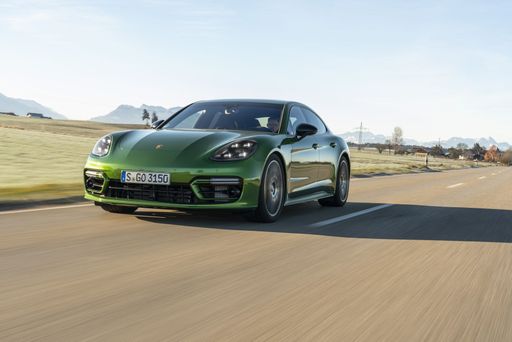
Porsche Panamera
Aston Martin DBX
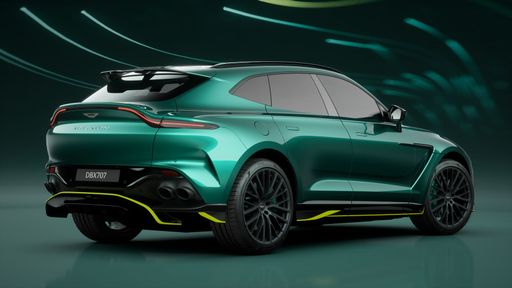
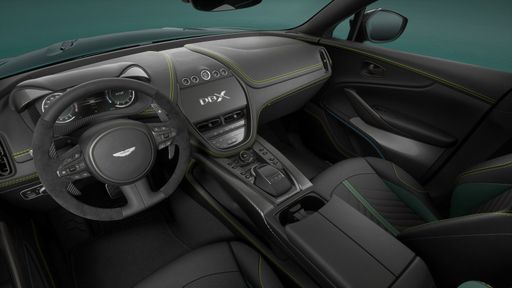
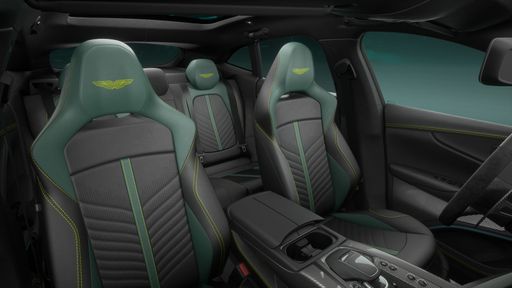
With the DBX, Aston Martin has wrapped its trademark sports-car drama into a high-riding package that looks like it could sprint off the driveway and into a gala, while the cabin pampers occupants with handcrafted leather and theatrical attention to detail. Behind the wheel it feels like a grand tourer that learned how to tackle country roads, serving up surprising agility for such a stately presence and keeping rivals honest with its rarefied blend of performance and luxury.
details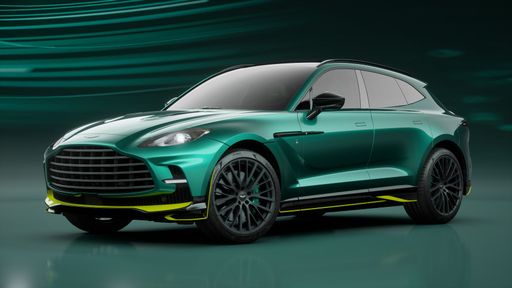
Porsche Panamera
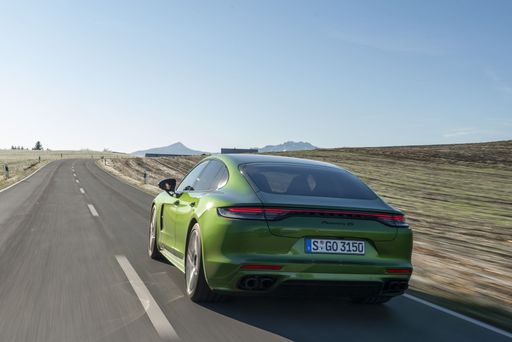
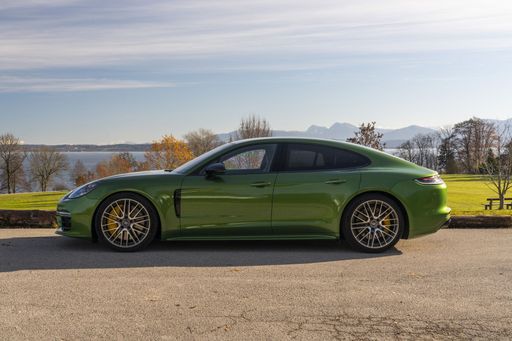
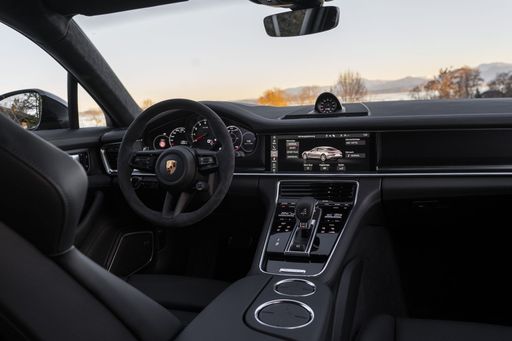
The Porsche Panamera blends sports-car sharpness with luxury-sedan refinement, serving driving thrills up front while pampering passengers in the back. Poised, polished and mischievously quick, it’s the car for buyers who want exotic performance without losing everyday comfort.
details
Aston Martin DBX
Porsche Panamera
Costs and Consumption |
|
|---|---|
|
Price
204400 £
|
Price
99800 - 212100 £
|
|
Consumption L/100km
14.20 L
|
Consumption L/100km
3 - 12 L
|
|
Consumption kWh/100km
-
|
Consumption kWh/100km
-
|
|
Electric Range
-
|
Electric Range
83 - 97 km
|
|
Battery Capacity
-
|
Battery Capacity
21.80 kWh
|
|
co2
323 g/km
|
co2
69 - 274 g/km
|
|
Fuel tank capacity
87 L
|
Fuel tank capacity
75 - 90 L
|
Dimensions and Body |
|
|---|---|
|
Body Type
SUV
|
Body Type
Hatchback
|
|
Seats
5
|
Seats
4
|
|
Doors
5
|
Doors
5
|
|
Curb weight
2320 kg
|
Curb weight
1960 - 2535 kg
|
|
Trunk capacity
491 L
|
Trunk capacity
421 - 494 L
|
|
Length
5039 mm
|
Length
5052 - 5204 mm
|
|
Width
1998 mm
|
Width
1937 mm
|
|
Height
1680 mm
|
Height
1415 - 1428 mm
|
|
Max trunk capacity
1530 L
|
Max trunk capacity
1255 - 1385 L
|
|
Payload
710 kg
|
Payload
340 - 545 kg
|
Engine and Performance |
|
|---|---|
|
Engine Type
Petrol
|
Engine Type
Petrol, Plugin Hybrid
|
|
Transmission
Automatic
|
Transmission
Automatic
|
|
Transmission Detail
Automatic Gearbox
|
Transmission Detail
Dual-Clutch Automatic
|
|
Drive Type
All-Wheel Drive
|
Drive Type
Rear-Wheel Drive, All-Wheel Drive
|
|
Power HP
707 HP
|
Power HP
353 - 782 HP
|
|
Acceleration 0-100km/h
3.30 s
|
Acceleration 0-100km/h
2.9 - 5.3 s
|
|
Max Speed
310 km/h
|
Max Speed
270 - 325 km/h
|
|
Torque
900 Nm
|
Torque
500 - 1000 Nm
|
|
Number of Cylinders
8
|
Number of Cylinders
6 - 8
|
|
Power kW
520 kW
|
Power kW
260 - 575 kW
|
|
Engine capacity
3982 cm3
|
Engine capacity
2894 - 3996 cm3
|
General |
|
|---|---|
|
Model Year
2022
|
Model Year
2025
|
|
CO2 Efficiency Class
G
|
CO2 Efficiency Class
G, B, C
|
|
Brand
Aston Martin
|
Brand
Porsche
|
What drivetrain options does the Aston Martin DBX have?
Available configurations include All-Wheel Drive.
The prices shown are estimates based on German list prices, adjusted for local VAT. Local registration taxes (e.g. NoVA, BPM or CO2 malus) are not included. This information is not legally binding.