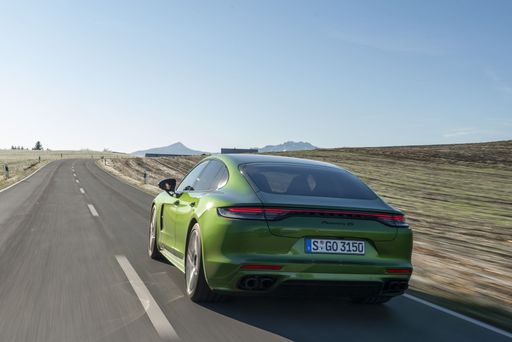
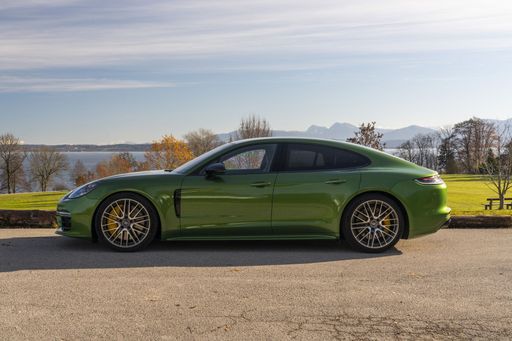
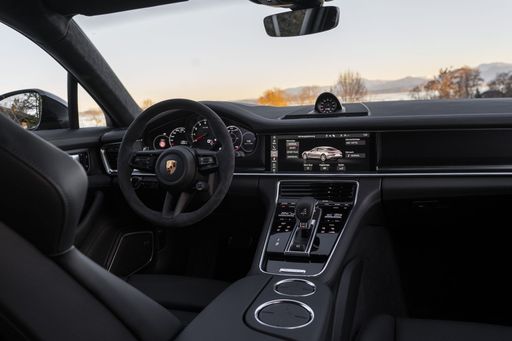
VS

Porsche Cayenne vs Porsche Panamera comparison

Compare performance (1,156 HP vs 782 HP), boot space and price (90,200 £ vs 99,800 £ ) at a glance. Find out which car is the better choice for you – Porsche Cayenne or Porsche Panamera?

Porsche Cayenne vs Porsche Panamera: Key differences

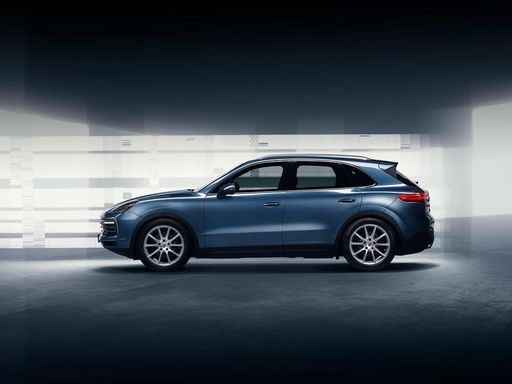
Porsche Cayenne

3.3 (2 Reviews)
rate
  • moderately cheaper
  • clearly more power
  • significantly more electric range
  • moderately quicker 0–100 km/h
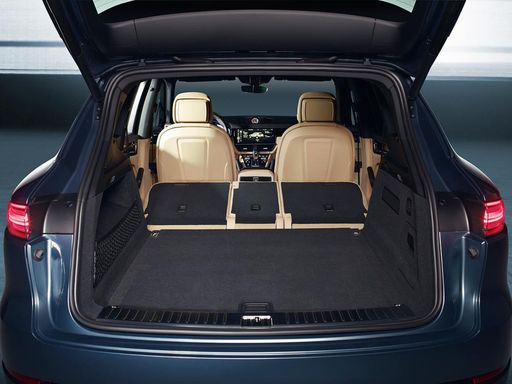
  • visibly more trunk space
details

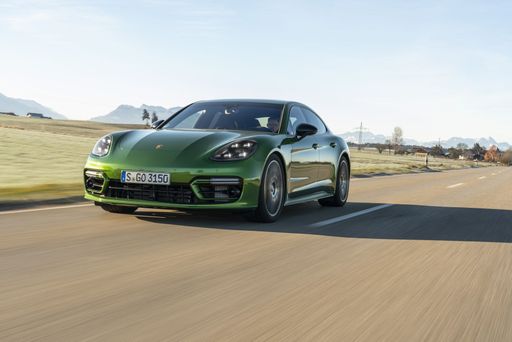
Porsche Panamera

  • visibly more efficient
  • only slightly lighter
details

By Achim Sedelmaier

Cayenne

An In-Depth Comparison: Porsche Cayenne vs. Porsche Panamera

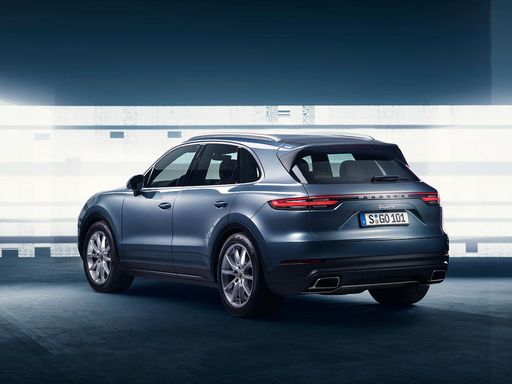
When it comes to luxury and performance, few automotive brands can match the prowess of Porsche. Among its stunning lineup, the Porsche Cayenne and Porsche Panamera stand out as iconic models that beautifully marry power, style, and innovation. Both models share some common ground, yet they cater to different driving experiences and preferences. This article explores the technical marvels and distinctive designs of these two flagships to help you decide your perfect Porsche companion.
Panamera

Performance and Power: Engine Variants and Capabilities

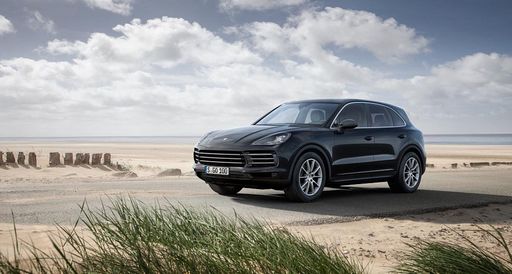
The Porsche Cayenne and Panamera both offer a variety of engine options that cater to different driving needs. The Cayenne, dressed as an SUV, is available with a powerful range of engines from 470 HP to a staggering 739 HP, with CO2 emissions ranging from a low 31 g/km up to 287 g/km, and impressively efficient hybrid models consuming as little as 1.4 L/100km.

On the other hand, the Panamera, a sleek hatchback, features an equally fascinating engine lineup that ranges from 470 HP to a monstrous 782 HP. Its CO2 emissions are slightly more efficient in certain models, starting at 23 g/km, and the hybrid variants sip fuel at an impressive rate of just 1.0 L/100km.

Cayenne

Drivetrains and Transmission Technologies

Both models embrace advanced transmission technologies, underscoring Porsche's commitment to performance. The Cayenne utilizes an automatic gearbox that distributes power seamlessly through its all-wheel-drive system, enhancing its capability across various terrains.

In contrast, the Panamera offers both all-wheel and rear-wheel drive options, featuring a dual-clutch automatic transmission that allows for incredibly quick gear changes, ensuring an exhilarating driving experience worthy of the Porsche name.

Panamera

Acceleration and Speed: The Need for Speed

When it comes to acceleration and top speed, both models are engineered for thrills. The Cayenne can dart from 0 to 100 km/h in as quick as 3.6 seconds, with a top speed reaching up to 305 km/h, perfect for those who desire SUV capability matched with sports car performance.

Meanwhile, the Panamera takes its place as a benchmark in the sedan category, rocketing from 0 to 100 km/h in just 2.9 seconds for its top variant, and achieving a top speed of 325 km/h. The Panamera's performance is designed for those who prefer speed in a sleek and luxurious package.

Cayenne

Design and Practicality: Spacious Interiors and Cargo

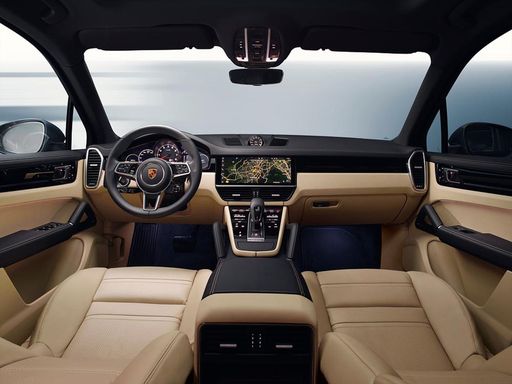
The design language of both models reflects Porsche's commitment to luxury and functionality. The Cayenne's SUV architecture offers a spacious interior with seating for up to five passengers and a trunk capacity reaching 772 liters, making it ideal for families or those who require extra cargo space.

The Panamera, being a luxurious hatchback, offers seating for four comfortably and provides a trunk capacity of up to 494 liters. This model blends elegance with versatility, making it suitable for business and pleasure trips alike.

Panamera

Advanced Features and Innovations

Porsche ensures that both models integrate the latest technological advancements. Both the Cayenne and Panamera come equipped with cutting-edge infotainment systems, comprehensive driver-assist features, and innovative hybrid technologies that promote efficiency without compromising performance.

Additionally, the electric ranges of the plug-in hybrid variants reflect Porsche's commitment to sustainability, with the Cayenne covering up to 78 km and the Panamera advancing with up to 92 km on electric power alone.

Cayenne

Conclusion: Choosing Your Perfect Porsche

The choice between the Porsche Cayenne and Panamera ultimately depends on driving style and personal preferences. The Cayenne is perfect for those needing an SUV that delivers power and function, whereas the Panamera caters to enthusiasts who crave sheer speed and luxury in a sedan format. Both models encapsulate Porsche's legendary performance and unrivaled luxury, setting standards in their respective classes.

Whichever model you choose, the Porsche badge ensures a sublime driving experience, backed by exceptional engineering and innovative design. Whether you explore mountainous terrains or cruise through urban landscapes, the Cayenne and Panamera are ready to meet your needs with unmatched style.

Here’s where it gets real: The technical differences in detail

Cayenne

Costs and Efficiency:

When it comes to price and running costs, the biggest differences usually appear. This is often where you see which car fits your budget better in the long run.

Porsche Cayenne is moderately cheaper – starting at 90,200 £ , while the Porsche Panamera costs 99,800 £ . That’s a price difference of around 9,600 £.

Fuel consumption also shows a difference: the Porsche Panamera uses 3 L/100km and is visibly more efficient than the Porsche Cayenne with 4 L/100km. The difference is about 1 L/100km.

As for electric range, the Porsche Cayenne offers significantly more range – reaching up to 651 km, about 554 km more than the Porsche Panamera.

Panamera

Engine and Performance:

Power, torque and acceleration say a lot about how a car feels on the road. This is where you see which model delivers more driving dynamics.

When it comes to engine power, the Porsche Cayenne offers clearly more power – delivering 1,156 HP compared to 782 HP. That’s roughly 374 HP more horsepower.

When accelerating from 0 to 100 km/h, the Porsche Cayenne is moderately quicker – completing the sprint in 2.5 s, while the Porsche Panamera takes 2.9 s. That’s about 0.4 s quicker.

There’s also a difference in torque: the Porsche Cayenne delivers visibly more torque with 1,500 Nm compared to 1,000 Nm. That’s about 500 Nm more.

Cayenne

Space and Everyday Use:

Cabin size, boot volume and payload all play a role in everyday practicality. Here, comfort and flexibility make the difference.

Seats: Porsche Cayenne offers more seats – 5 vs 4.

In terms of curb weight, Porsche Panamera is only slightly lighter – 1,960 kg compared to 2,130 kg. The difference is around 170 kg.

Looking at boot space, the Porsche Cayenne offers visibly more boot space – 781 L compared to 494 L. That’s a difference of about 287 L.

When it comes to payload, the Porsche Cayenne carries noticeably more – 705 kg compared to 545 kg. That’s a difference of about 160 kg.

Who wins the race in the data check?

The Porsche Cayenne stands well ahead of its rival in the objective data comparison.
This result only shows which model scores more points on paper – not which of the two cars feels right for you.

from £90,200
Cayenne

Porsche Cayenne

  • Engine Type : Petrol, Plugin Hybrid, Electric
  • Transmission : Automatic
  • Drive Type : All-Wheel Drive
  • Power HP : 353 - 1,156 HP
  • Consumption L/100km : 4 - 11 L/100km
  • Consumption kWh/100km : 19.5 - 20.6 kWh/100km
  • Electric Range : 74 - 651 km
Porsche Cayenne
Porsche Panamera

Costs and Consumption

View detailed analysis

Engine and Performance

View detailed analysis

Dimensions and Body

View detailed analysis

Porsche Cayenne

Few SUVs blend athletic poise and Teutonic precision like the Porsche Cayenne, putting genuine sports‑car feeling into a roomy, everyday package. If you want a practical family hauler that still makes you grin every time you merge, the Cayenne delivers — turning errands into an excuse for a spirited drive.

details

Porsche Panamera

The Porsche Panamera blends sports-car sharpness with luxury-sedan refinement, serving driving thrills up front while pampering passengers in the back. Poised, polished and mischievously quick, it’s the car for buyers who want exotic performance without losing everyday comfort.

details
Porsche Cayenne
Porsche Panamera

Costs and Consumption

Price
90,200 - 141,900 £
Price
99,800 - 212,100 £
Consumption L/100km
4 - 11 L/100km
Consumption L/100km
3 - 12 L/100km
Consumption kWh/100km
19.5 - 20.6 kWh/100km
Consumption kWh/100km
-
Electric Range
74 - 651 km
Electric Range
83 - 97 km
Battery Capacity
-
Battery Capacity
21.8 kWh
co2
0 - 249 g/km
co2
69 - 274 g/km
Fuel tank capacity
-
Fuel tank capacity
75 - 90 L

Dimensions and Body

Body Type
SUV
Body Type
Hatchback
Seats
4 - 5
Seats
4
Doors
-
Doors
5
Curb weight
2,130 - 2,720 kg
Curb weight
1,960 - 2,535 kg
Trunk capacity
434 - 781 L
Trunk capacity
421 - 494 L
Length
-
Length
5,052 - 5,204 mm
Width
1,980 - 1,983 mm
Width
1,937 mm
Height
-
Height
1,415 - 1,428 mm
Max trunk capacity
-
Max trunk capacity
1,255 - 1,385 L
Payload
550 - 705 kg
Payload
340 - 545 kg

Engine and Performance

Engine Type
Petrol, Plugin Hybrid, Electric
Engine Type
Petrol, Plugin Hybrid
Transmission
Automatic
Transmission
Automatic
Transmission Detail
Automatic Gearbox, Reduction Gearbox
Transmission Detail
Dual-Clutch Automatic
Drive Type
All-Wheel Drive
Drive Type
Rear-Wheel Drive, All-Wheel Drive
Power HP
353 - 1,156 HP
Power HP
353 - 782 HP
Acceleration 0-100km/h
2.5 - 6 s
Acceleration 0-100km/h
2.9 - 5.3 s
Max Speed
-
Max Speed
270 - 325 km/h
Torque
500 - 1,500 Nm
Torque
500 - 1,000 Nm
Number of Cylinders
6
Number of Cylinders
6 - 8
Power kW
260 - 850 kW
Power kW
260 - 575 kW
Engine capacity
2,995 cm3
Engine capacity
2,894 - 3,996 cm3

General

Model Year
2,025 - 2,026
Model Year
2025
CO2 Efficiency Class
G, B, A
CO2 Efficiency Class
G, B, C
Brand
Porsche
Brand
Porsche
DriveDuel uses data analysis and artificial intelligence to evaluate vehicle data and create content. Content is regularly reviewed and improved. The displayed prices are estimates based on German list prices, adjusted to the respective country’s VAT. Country-specific registration taxes are not included. This information is not legally binding.