@ Mercedes-Benz Group Media
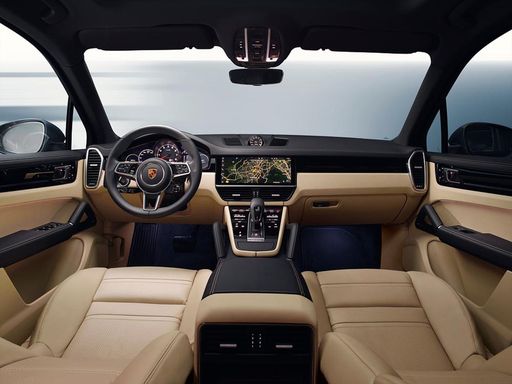
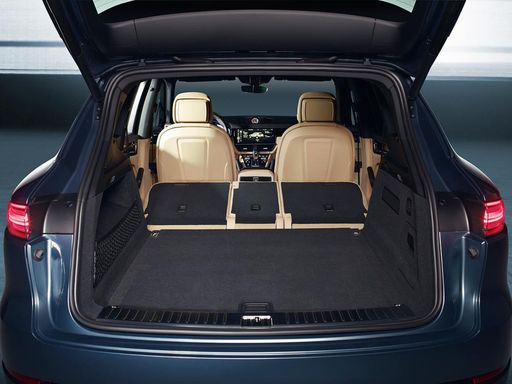
@ Dr. Ing. h.c. F. Porsche AG
VS

Mercedes G Class vs Porsche Cayenne – Performance, range & efficiency compared

Both models have their strengths – but which one suits you more?
Compare performance, efficiency, price and space directly: Mercedes G Class or Porsche Cayenne?

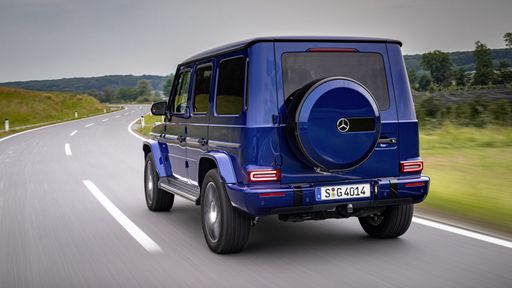
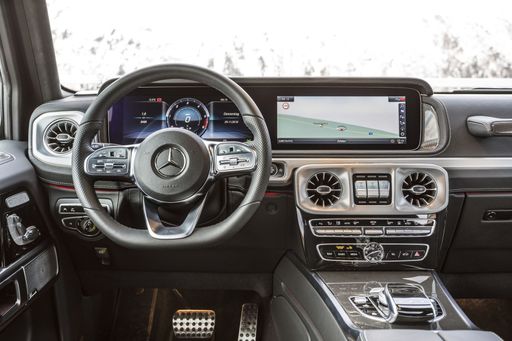
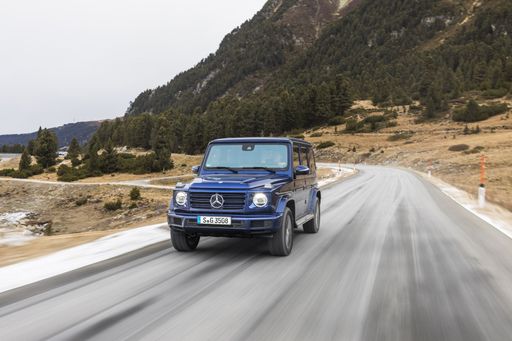
G Class @ Mercedes-Benz Group Media

True Legends: Mercedes G-Klasse vs. Porsche Cayenne

When it comes to top-tier luxury vehicles, two names often come to mind: the Mercedes G-Klasse and the Porsche Cayenne. Both are unique in their own right, yet they are worthy contenders in the realm of powerful, luxury off-road and sports utility vehicles. Let's delve into the details and see how these icons stack up against each other.
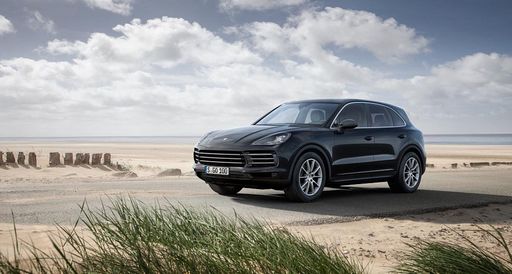
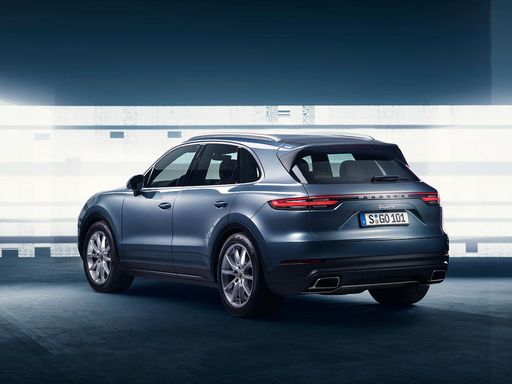
Cayenne @ Dr. Ing. h.c. F. Porsche AG

Engine Options and Performance

The Mercedes G-Klasse, colloquially known as the "G-Wagon," offers an impressive lineup of engines, ranging from petrol mild-hybrid electric vehicles (MHEV) to fully electric and diesel MHEVs. The petrol variant can produce between 387 to 605 HP, with torque measurements as high as 1050 Nm, making it a beast on any terrain. Acceleration is equally impressive, with some models rocketing from 0-100 km/h in just 4.4 seconds.

On the other hand, the Porsche Cayenne, with its line-up that includes both plugin hybrid and petrol engines, produces peak power ranging from 353 to an exhilarating 739 HP. Torque figures reach up to 950 Nm depending on the variant. Particularly notable is the Cayenne's superior top speed, reaching up to 305 km/h in certain models, and accelerating from 0-100 km/h in a mere 3.6 seconds.

G Class @ Mercedes-Benz Group Media

Fuel Efficiency and Range

The G-Klasse's fuel consumption stands between 8.7 to 14.7 L/100km for its combustion engines, while its electric configurations consume between 28 to 28.9 kWh/100km. The electric G-Wagon promises an impressive range up to 468 km on a full charge, thanks to its substantial 116 kWh battery capacity.

In stark contrast, the Cayenne shines in fuel efficiency, particularly with its plugin hybrid variants, consuming as little as 1.4 to 1.8 L/100km. Its electric range extends up to 78 km, with a significantly smaller battery capacity of 21.8 kWh, showcasing Porsche's engineering marvel. Traditional petrol engines consume between 10.8 to 12.6 L/100km, seated firmly within the high-performance SUV category.

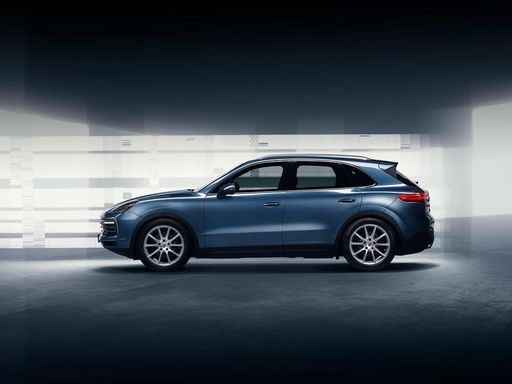
Cayenne @ Dr. Ing. h.c. F. Porsche AG

Design, Comfort, and Practicality

The G-Klasse is an off-road archetype. Its rugged design with a boxy silhouette exudes a sense of adventure and endurance. There's ample space inside for five passengers, and a trunk capacity reaching up to 640 liters, suitable for both adventurous getaways and urban exploits. It stands tall at a height reaching up to 1983 mm, depending on the model.

Meanwhile, the Porsche Cayenne pushes the boundaries of modern SUV aesthetics. With a sleek, aerodynamic body, the Cayenne maximizes both luxury and athletic prowess. The cargo space is competitive, ranging from 434 to 772 liters, catering to families and individual enthusiasts alike. The vehicle's height is notably lower, reinforcing its sporty stance.

G Class @ Mercedes-Benz Group Media

Driving Experience

The Mercedes G-Klasse, equipped with a reduction gearbox and all-wheel drive, thrives on rugged terrains and challenging conditions. It's the quintessential off-roader that instills confidence in any expedition.

The Porsche Cayenne, optimized for speed and finesse, captures the essence of sports car performance within an SUV chassis. Its precise handling and agile maneuverability make it an absolute pleasure on both highways and winding roads, balancing luxury with thrill.

Cayenne @ Dr. Ing. h.c. F. Porsche AG

Conclusion

Choosing between the Mercedes G-Klasse and the Porsche Cayenne is a matter of preference dictated by lifestyle. The G-Klasse appeals to those who revel in iconic durability and adventure, while the Cayenne caters to the need for a luxurious speed demon that commands attention and delivers high-octane performance. Both vehicles encapsulate innovation and engineering prowess that keep them at the zenith of the automobile world.

Here’s where it gets real: The technical differences in detail

Costs and Efficiency:

Looking at overall running costs, both models reveal some interesting differences in everyday economy.

Porsche Cayenne has a clearly perceptible advantage in terms of price – it starts at 87000 £, while the Mercedes G Class costs 106600 £. That’s a price difference of around 19590 £.

Fuel consumption also shows a difference: Porsche Cayenne manages with 4 L and is therefore convincingly more efficient than the Mercedes G Class with 8.70 L. The difference is about 4.70 L per 100 km.

As for range, the Mercedes G Class performs decisively better – achieving up to 468 km, about 385 km more than the Porsche Cayenne.

Engine and Performance:

Under the bonnet, it becomes clear which model is tuned for sportiness and which one takes the lead when you hit the accelerator.

When it comes to engine power, the Porsche Cayenne has a a bit edge – offering 739 HP compared to 605 HP. That’s roughly 134 HP more horsepower.

In acceleration from 0 to 100 km/h, the Porsche Cayenne is distinct quicker – completing the sprint in 3.60 s, while the Mercedes G Class takes 4.40 s. That’s about 0.80 s faster.

In terms of top speed, the Porsche Cayenne performs distinct better – reaching 305 km/h, while the Mercedes G Class tops out at 220 km/h. The difference is around 85 km/h.

There’s also a difference in torque: Mercedes G Class pulls slightly stronger with 1164 Nm compared to 950 Nm. That’s about 214 Nm difference.

Space and Everyday Use:

Cabin size, boot volume and payload all play a role in everyday practicality. Here, comfort and flexibility make the difference.

Both vehicles offer seating for 5 people.

In curb weight, Porsche Cayenne is somewhat lighter – 2130 kg compared to 2485 kg. The difference is around 355 kg.

In terms of boot space, the Porsche Cayenne offers to a small extent more room – 772 L compared to 640 L. That’s a difference of about 132 L.

In maximum load capacity, the Mercedes G Class performs somewhat better – up to 2010 L, which is about 302 L more than the Porsche Cayenne.

When it comes to payload, Mercedes G Class minimal takes the win – 715 kg compared to 705 kg. That’s a difference of about 10 kg.

Who comes out on top?

Overall, the Porsche Cayenne shows itself to be offers a more balanced package and secures the title of DriveDuel Champion.
It convinces with the more balanced overall package and proves to be the more versatile choice for everyday use.

from about £87,000
Cayenne @ Dr. Ing. h.c. F. Porsche AG

Porsche Cayenne

  • Engine Type : Petrol, Plugin Hybrid
  • Transmission : Automatic
  • Drive Type : All-Wheel Drive
  • Power HP : 353 - 739 HP
  • Consumption L/100km : 4 - 12.2 L
  • Electric Range : 74 - 83 km

Mercedes G Class

The Mercedes-Benz G-Class stands as a symbol of rugged luxury, combining robust off-road capabilities with sophisticated design. Its iconic boxy shape and imposing presence are complemented by a lavish interior that offers a blend of comfort and cutting-edge technology. Despite its longstanding heritage, the G-Class continues to evolve, maintaining its status as a premier choice for those seeking both adventure and opulence.

details

Porsche Cayenne

Few SUVs blend athletic poise and Teutonic precision like the Porsche Cayenne, putting genuine sports‑car feeling into a roomy, everyday package. If you want a practical family hauler that still makes you grin every time you merge, the Cayenne delivers — turning errands into an excuse for a spirited drive.

details
Mercedes G Class
Porsche Cayenne
G Class @ Mercedes-Benz Group Media
Cayenne @ Dr. Ing. h.c. F. Porsche AG

Costs and Consumption

Price
106600 - 171000 £
Price
87000 - 186400 £
Consumption L/100km
8.7 - 14.7 L
Consumption L/100km
4 - 12.2 L
Consumption kWh/100km
28 kWh
Consumption kWh/100km
-
Electric Range
468 km
Electric Range
74 - 83 km
Battery Capacity
116 kWh
Battery Capacity
21.80 kWh
co2
0 - 336 g/km
co2
90 - 277 g/km
Fuel tank capacity
100 L
Fuel tank capacity
70 - 90 L

Dimensions and Body

Body Type
Off-Roader
Body Type
SUV
Seats
5
Seats
4 - 5
Doors
5
Doors
5
Curb weight
2485 - 3085 kg
Curb weight
2130 - 2670 kg
Trunk capacity
620 - 640 L
Trunk capacity
434 - 772 L
Length
4624 - 4873 mm
Length
4930 mm
Width
1931 - 1984 mm
Width
1983 - 1989 mm
Height
1973 - 1983 mm
Height
1652 - 1698 mm
Max trunk capacity
1990 - 2010 L
Max trunk capacity
1344 - 1708 L
Payload
415 - 715 kg
Payload
365 - 705 kg

Engine and Performance

Engine Type
Electric, Petrol MHEV, Diesel MHEV
Engine Type
Petrol, Plugin Hybrid
Transmission
Automatic
Transmission
Automatic
Transmission Detail
Reduction Gearbox, Automatic Gearbox
Transmission Detail
Automatic Gearbox
Drive Type
All-Wheel Drive
Drive Type
All-Wheel Drive
Power HP
387 - 605 HP
Power HP
353 - 739 HP
Acceleration 0-100km/h
4.4 - 5.8 s
Acceleration 0-100km/h
3.6 - 6 s
Max Speed
180 - 220 km/h
Max Speed
248 - 305 km/h
Torque
760 - 1164 Nm
Torque
500 - 950 Nm
Number of Cylinders
6 - 8
Number of Cylinders
6 - 8
Power kW
285 - 445 kW
Power kW
260 - 544 kW
Engine capacity
2989 - 3982 cm3
Engine capacity
2995 - 3996 cm3

General

Model Year
2024 - 2025
Model Year
2025
CO2 Efficiency Class
A, G
CO2 Efficiency Class
G, B, C
Brand
Mercedes-Benz
Brand
Porsche
What drive types are available for the Mercedes G Class?

Available configurations include All-Wheel Drive.

The prices and data displayed are estimates based on German list prices and may vary by country. This information is not legally binding.