@ Mercedes-Benz Group Media
@ Dr. Ing. h.c. F. Porsche AG
VS

Mercedes GLE vs Porsche Cayenne – Which car suits you better?

Both models have their strengths – but which one suits you more?
Compare performance, efficiency, price and space directly: Mercedes GLE or Porsche Cayenne?

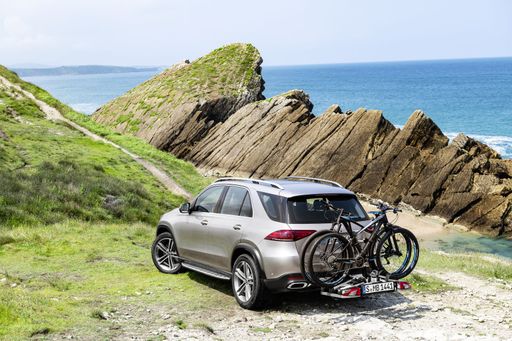
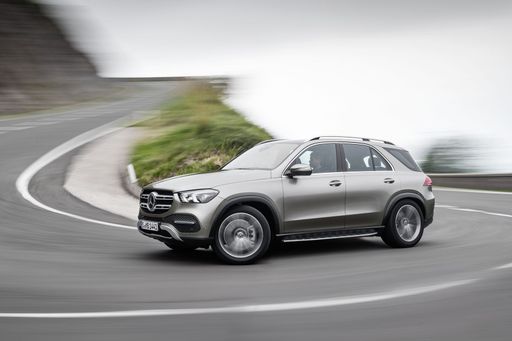
GLE @ Mercedes-Benz Group Media

The automotive world is always abuzz with competition, and few matchups generate as much excitement as the Mercedes GLE versus the Porsche Cayenne. Both SUVs offer luxury, performance, and advanced technology that make them standout choices in their segment. This article dives into a detailed comparison, analyzing technical specifications, innovations, and what makes each of these vehicles a compelling choice.
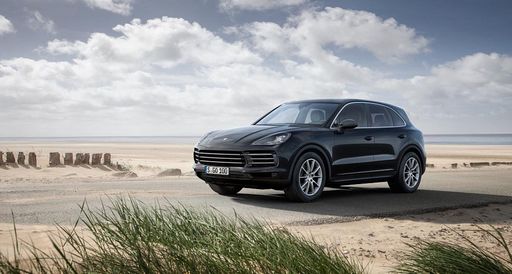
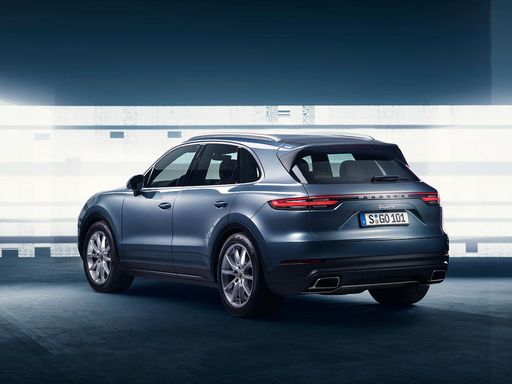
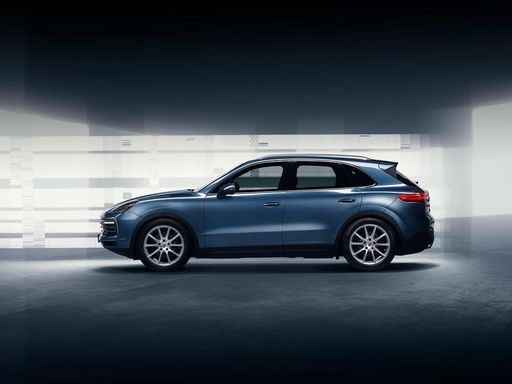
Cayenne @ Dr. Ing. h.c. F. Porsche AG

Powertrain and Performance

When it comes to performance, both the Mercedes GLE and the Porsche Cayenne provide an impressive array of engine options. The GLE boasts a variety of powertrains, including diesel, petrol, and hybrid variants. With power outputs ranging from 289 to 634 HP, the GLE can accelerate from 0-100 km/h in as little as 3.9 seconds, showcasing its robust performance capabilities.

The Cayenne, on the other hand, shines with its powerful engines, offering a choice of petrol and hybrid configurations. The Cayenne's top variant delivers a staggering 739 HP, enabling it to reach 0-100 km/h in just 3.6 seconds. Such performance is indicative of Porsche’s storied racing pedigree and commitment to pushing the boundaries of automotive engineering.

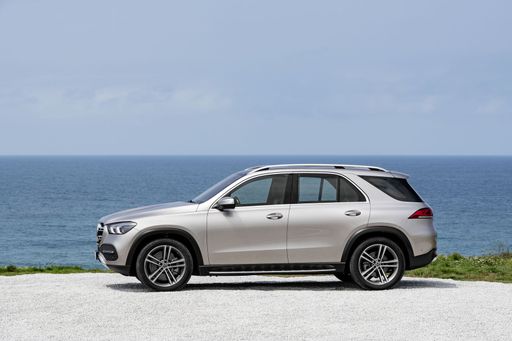
GLE @ Mercedes-Benz Group Media

Efficiency and Sustainability

In today’s automotive landscape, efficiency is paramount, and both vehicles incorporate innovations to enhance fuel economy. The GLE provides impressive consumption figures, with some hybrid models consuming as little as 0.5 L/100 km. This allows for electric-only ranges of up to 114 km, making it a strong contender for environmentally-conscious drivers.

The Cayenne also embraces hybrid technology, offering a remarkable electric range of up to 78 km with a battery capacity of 21.8 kWh. It achieves low CO2 emissions, making both vehicles relatively green choices for luxury SUVs.

Cayenne @ Dr. Ing. h.c. F. Porsche AG

Interior and Technology

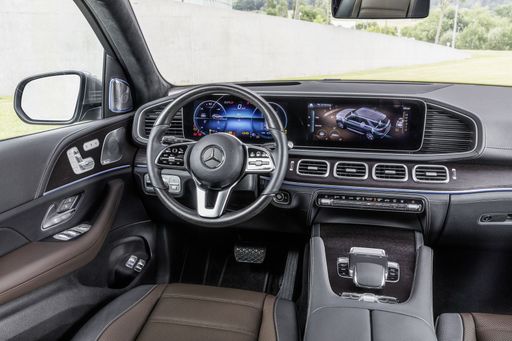
Entering the cabin of the GLE, one is enveloped in luxurious materials and cutting-edge technology. The dashboard features a dual-screen setup with the MBUX infotainment system, providing an intuitive user experience. The GLE comfortably seats five and offers a trunk capacity ranging from 490 to 655 liters, depending on the variant.

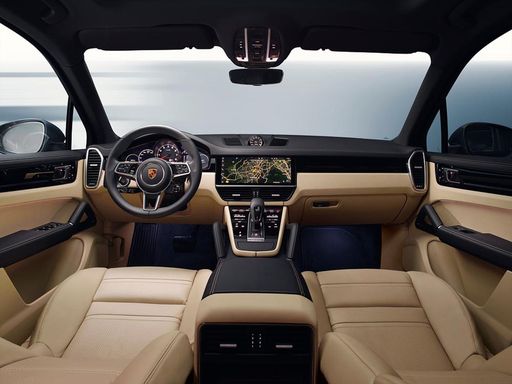
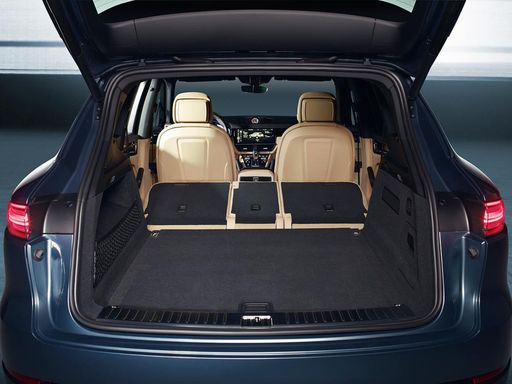
Meanwhile, the Porsche Cayenne emphasizes athlete-oriented luxury. Its interior is sophisticated, with premium materials and an advanced infotainment system that rivals that of the GLE. The Cayenne can also be configured for four or five passengers, with trunk space that varies but can extend up to 772 liters, demonstrating its practicality alongside luxury.

GLE @ Mercedes-Benz Group Media

Driving Dynamics

Driving dynamics are where the GLE and Cayenne truly differentiate themselves. The GLE sports an adaptive air suspension system that adjusts based on driving conditions, offering a smooth ride and excellent handling. Its all-wheel-drive system enhances both performance and stability, making it a joy to drive in diverse conditions.

The Cayenne, in contrast, is engineered for agility, with a lightweight chassis and responsive steering that deliver a sportier driving experience. This SUV feels almost like a performance car, providing outstanding grip and handling that make winding roads and tight turns exhilarating. Porsche's focus on performance is evident in the Cayenne's driving dynamics, setting a high bar for competitors.

Cayenne @ Dr. Ing. h.c. F. Porsche AG

Conclusion: Which SUV Reigns Supreme?

Choosing between the Mercedes GLE and the Porsche Cayenne ultimately hinges on personal preference. The GLE excels in versatility, comfort, and fuel efficiency, making it an excellent choice for families and eco-conscious buyers. The Cayenne, however, caters to performance enthusiasts who prioritize driving pleasure and luxury.

Both vehicles are impressive in their own right, and whether you lean towards the luxury and comfort of the GLE or the sporty performance of the Cayenne, you'll find that each model offers a unique experience in the luxury SUV market.

Here’s where it gets real: The technical differences in detail

GLE @ Mercedes-Benz Group Media

Costs and Efficiency:

Price and efficiency are key factors when choosing a car – and this is often where the real differences emerge.

Mercedes GLE has a to a small extent advantage in terms of price – it starts at 76300 £, while the Porsche Cayenne costs 87000 £. That’s a price difference of around 10730 £.

Fuel consumption also shows a difference: Mercedes GLE manages with 2 L and is therefore clearly more efficient than the Porsche Cayenne with 4 L. The difference is about 2 L per 100 km.

As for range, the Mercedes GLE performs noticeable better – achieving up to 114 km, about 31 km more than the Porsche Cayenne.

Cayenne @ Dr. Ing. h.c. F. Porsche AG

Engine and Performance:

Under the bonnet, it becomes clear which model is tuned for sportiness and which one takes the lead when you hit the accelerator.

When it comes to engine power, the Porsche Cayenne has a slightly edge – offering 739 HP compared to 634 HP. That’s roughly 105 HP more horsepower.

In acceleration from 0 to 100 km/h, the Porsche Cayenne is hardly perceptible quicker – completing the sprint in 3.60 s, while the Mercedes GLE takes 3.90 s. That’s about 0.30 s faster.

In terms of top speed, the Porsche Cayenne performs barely noticeable better – reaching 305 km/h, while the Mercedes GLE tops out at 280 km/h. The difference is around 25 km/h.

There’s also a difference in torque: Porsche Cayenne pulls slightly stronger with 950 Nm compared to 850 Nm. That’s about 100 Nm difference.

Space and Everyday Use:

Whether family car or daily driver – which one offers more room, flexibility and comfort?

Both vehicles offer seating for 5 people.

In curb weight, Porsche Cayenne is slight lighter – 2130 kg compared to 2310 kg. The difference is around 180 kg.

In terms of boot space, the Porsche Cayenne offers slightly more room – 772 L compared to 655 L. That’s a difference of about 117 L.

In maximum load capacity, the Mercedes GLE performs somewhat better – up to 2055 L, which is about 347 L more than the Porsche Cayenne.

Maximum payload is identical – both can carry up to 705 kg.

Who comes out on top?

Overall, the Mercedes GLE shows itself to be wins the duel decisively and secures the title of DriveDuel Champion.
It convinces with the more balanced overall package and proves to be the more versatile choice for everyday use.

from about £76,300
GLE @ Mercedes-Benz Group Media

Mercedes GLE

  • Engine Type : Petrol MHEV, Plugin Hybrid, Diesel MHEV
  • Transmission : Automatic
  • Drive Type : All-Wheel Drive
  • Power HP : 289 - 634 HP
  • Consumption L/100km : 2 - 12.5 L
  • Electric Range : 89 - 114 km

Mercedes GLE

The Mercedes GLE blends luxurious comfort with a confident road presence, wrapping tech and refinement in an SUV shape that still knows how to behave on a twisty back road. Inside it's plush and quiet, with clever storage and driver aids that make long trips effortless — plus the badge gives it that easy-to-respect curb appeal.

details

Porsche Cayenne

Few SUVs blend athletic poise and Teutonic precision like the Porsche Cayenne, putting genuine sports‑car feeling into a roomy, everyday package. If you want a practical family hauler that still makes you grin every time you merge, the Cayenne delivers — turning errands into an excuse for a spirited drive.

details
Mercedes GLE
Porsche Cayenne
GLE @ Mercedes-Benz Group Media
Cayenne @ Dr. Ing. h.c. F. Porsche AG

Costs and Consumption

Price
76300 - 175800 £
Price
87000 - 186400 £
Consumption L/100km
2 - 12.5 L
Consumption L/100km
4 - 12.2 L
Consumption kWh/100km
-
Consumption kWh/100km
-
Electric Range
89 - 114 km
Electric Range
74 - 83 km
Battery Capacity
24.8 - 25 kWh
Battery Capacity
21.80 kWh
co2
53 - 284 g/km
co2
90 - 277 g/km
Fuel tank capacity
65 - 85 L
Fuel tank capacity
70 - 90 L

Dimensions and Body

Body Type
SUV
Body Type
SUV
Seats
5
Seats
4 - 5
Doors
5
Doors
5
Curb weight
2310 - 2800 kg
Curb weight
2130 - 2670 kg
Trunk capacity
490 - 655 L
Trunk capacity
434 - 772 L
Length
4924 - 4961 mm
Length
4930 mm
Width
1947 mm
Width
1983 - 1989 mm
Height
1716 - 1797 mm
Height
1652 - 1698 mm
Max trunk capacity
1645 - 2055 L
Max trunk capacity
1344 - 1708 L
Payload
460 - 705 kg
Payload
365 - 705 kg

Engine and Performance

Engine Type
Petrol MHEV, Plugin Hybrid, Diesel MHEV
Engine Type
Petrol, Plugin Hybrid
Transmission
Automatic
Transmission
Automatic
Transmission Detail
Automatic Gearbox
Transmission Detail
Automatic Gearbox
Drive Type
All-Wheel Drive
Drive Type
All-Wheel Drive
Power HP
289 - 634 HP
Power HP
353 - 739 HP
Acceleration 0-100km/h
3.9 - 6.9 s
Acceleration 0-100km/h
3.6 - 6 s
Max Speed
210 - 280 km/h
Max Speed
248 - 305 km/h
Torque
500 - 850 Nm
Torque
500 - 950 Nm
Number of Cylinders
4 - 8
Number of Cylinders
6 - 8
Power kW
213 - 466 kW
Power kW
260 - 544 kW
Engine capacity
1993 - 3982 cm3
Engine capacity
2995 - 3996 cm3

General

Model Year
2024 - 2025
Model Year
2025
CO2 Efficiency Class
G, B, F
CO2 Efficiency Class
G, B, C
Brand
Mercedes-Benz
Brand
Porsche
What drive types are available for the Mercedes GLE?

Available configurations include All-Wheel Drive.

The prices and data displayed are estimates based on German list prices and may vary by country. This information is not legally binding.