VS

Mercedes GLE vs Volvo XC90 comparison

Compare performance (634 HP vs 406 HP), boot space and price (136,500 £ vs 74,300 £ ) at a glance. Find out which car is the better choice for you – Mercedes GLE or Volvo XC90?

Mercedes GLE vs Volvo XC90: Key differences

Mercedes GLE

4.1 (1 Reviews)
rate
  • noticeably more power
  • clearly more electric range
  • visibly quicker 0–100 km/h
details

Volvo XC90

5 (1 Reviews)
rate
  • significantly cheaper
  • moderately more efficient
  • moderately lighter
details

All details on performance, efficiency, range and trunk space can be found in the technical comparison below – including user reviews for both models.

By Achim Sedelmaier

GLE

The battle of the luxury SUVs continues as we put the Mercedes GLE and the Volvo XC90 side by side. Both vehicles have carved out their niches in the premium segment, offering innovative technologies, delightful performance, and luxurious comforts. But how do they stack up against each other? This comparison will delve into various aspects of each model to help you determine which one deserves a spot in your driveway.
XC90

Design and Aesthetics

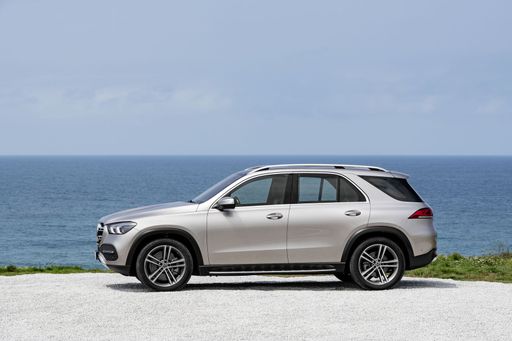
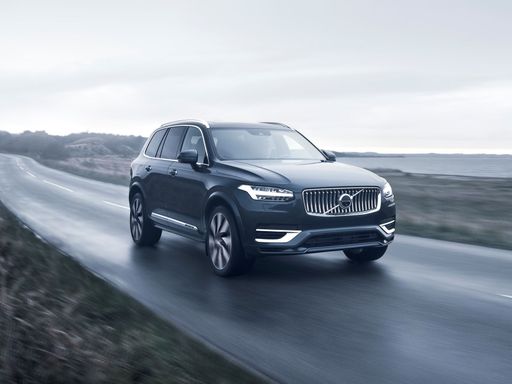
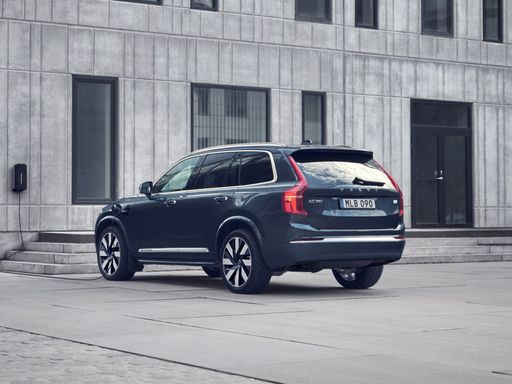
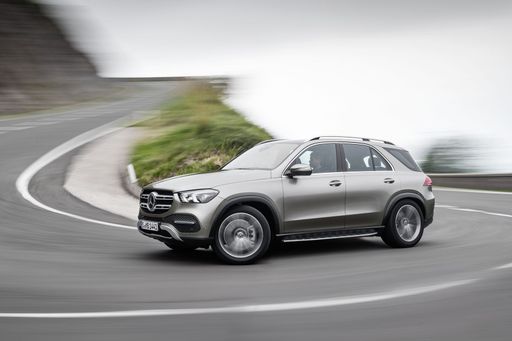
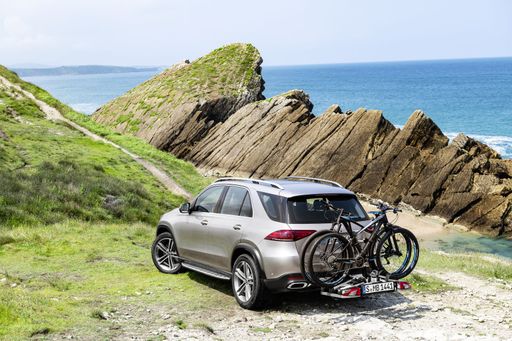
When it comes to design, both the Mercedes GLE and the Volvo XC90 showcase distinct yet appealing styles. The GLE boasts a muscular stance with its bold lines and signature Mercedes-Benz grille, giving off a powerful presence on the road. Meanwhile, Volvo’s XC90 exhibits Scandinavian elegance, characterized by clean lines and a minimalist approach that highlights its modern yet timeless appeal.

GLE

Performance and Engine Options

The Mercedes GLE offers a diverse range of engine options, including diesel MHEV, petrol MHEV, and plugin hybrid variants. Engine outputs span from 289 to a remarkable 634 HP, ensuring there’s a powertrain that meets every driver’s needs. The GLE can accelerate from 0 to 100 km/h in as little as 3.9 seconds, depending on the specific variant, and offers an impressive top speed of up to 280 km/h.

On the other hand, the Volvo XC90 comes with petrol MHEV and plugin hybrid options, with power outputs reaching up to 455 HP. Its acceleration performance lags slightly behind the GLE, with a 0 to 100 km/h time of 5.4 seconds. The XC90 is capped at a top speed of 180 km/h, which may be a consideration for those seeking an exhilarating driving experience.

XC90

Efficiency and Fuel Consumption

In the realm of fuel efficiency, the GLE demonstrates impressive figures, particularly with its MHEV and plugin hybrid options. It boasts consumption figures as low as 0.5 L/100km, offering an electric range of up to 114 km. This combination is particularly appealing for urban drivers concerned about fuel costs and emissions.

Conversely, the XC90’s efficiency figures show it consuming around 8.5 L/100km, with a modest electric range of 71 km. This makes the XC90 less efficient than the GLE overall, especially for those prioritizing fuel savings.

GLE

Interior and Comfort

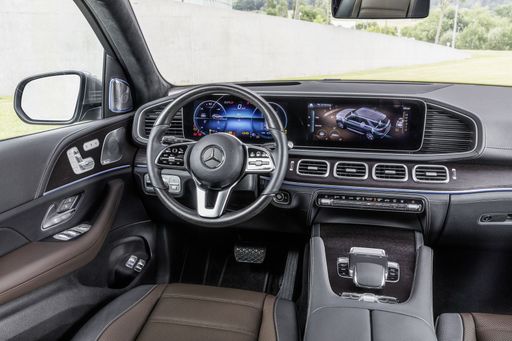
Luxury takes center stage in both vehicles, but they execute it in distinct ways. The Mercedes GLE features a lavish interior space with high-quality materials and advanced technology, including a dual-display MBUX infotainment system. The cabin is spacious with ample legroom, particularly for front and rear passengers.

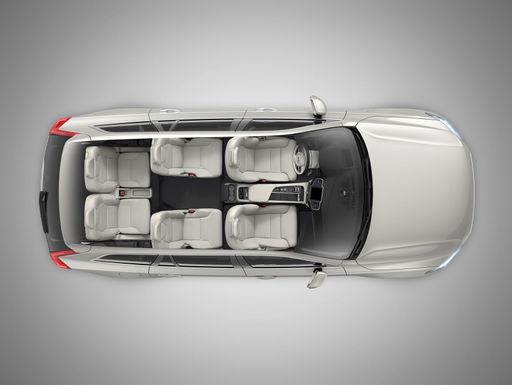
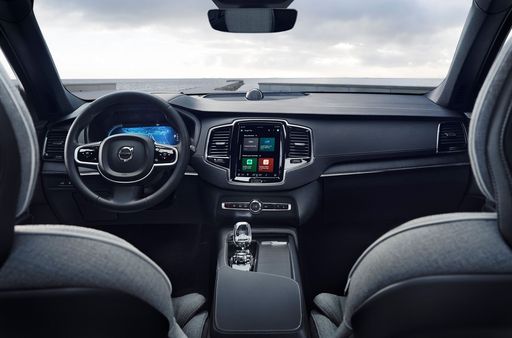
The Volvo XC90, on the other hand, emphasizes a clean and airy atmosphere, integrating natural materials and a simplistic layout that contributes to a feeling of tranquility. With seating for seven, the XC90 is practical for families, though it does have smaller trunk capacity compared to the GLE, which can hold up to 655 liters.

XC90

Innovations and Technology

Both the GLE and XC90 come equipped with cutting-edge technologies. The GLE boasts innovations like adaptive cruise control, augmented reality navigation, and advanced driver assistance systems, making it a leader in auto safety and convenience. Mercedes-Benz’s commitment to technology translates into a superior driving experience.

The XC90 also excels in technology, incorporating its own set of sophisticated safety features and a user-friendly infotainment system, powered by a responsive touchscreen interface. Its semi-autonomous driving capabilities and Pilot Assist enhance convenience on longer journeys, solidifying its stance as a safe family SUV.

GLE

Conclusion

In conclusion, both the Mercedes GLE and the Volvo XC90 are exceptional luxury SUVs, but they cater to different types of drivers. The GLE excels in performance, efficiency, and technological innovations, making it an ideal choice for those who prioritize power and cutting-edge features. Meanwhile, the XC90 highlights comfort, safety, and practicality, especially for families who need space and functionality.

Ultimately, the right choice will depend on your personal preferences and lifestyle. Whether you crave the thrill of the GLE or the serene comfort of the XC90, both models promise to deliver a luxurious driving experience.

Here’s where it gets real: The technical differences in detail

GLE

Costs and Efficiency:

Looking at overall running costs, both models reveal some interesting differences in everyday economy.

Volvo XC90 is significantly cheaper – starting at 74,300 £ , while the Mercedes GLE costs 136,500 £ . That’s a price difference of around 62,181 £.

Fuel consumption also shows a difference: the Volvo XC90 uses 3.4 L/100km and is moderately more efficient than the Mercedes GLE with 3.8 L/100km. The difference is about 0.4 L/100km.

As for electric range, the Mercedes GLE offers clearly more range – reaching up to 92 km, about 23 km more than the Volvo XC90.

XC90

Engine and Performance:

Power, torque and acceleration are the classic benchmarks for car enthusiasts – and here, some clear differences start to show.

When it comes to engine power, the Mercedes GLE offers noticeably more power – delivering 634 HP compared to 406 HP. That’s roughly 228 HP more horsepower.

When accelerating from 0 to 100 km/h, the Mercedes GLE is visibly quicker – completing the sprint in 3.9 s, while the Volvo XC90 takes 5.4 s. That’s about 1.5 s quicker.

There’s also a difference in torque: the Mercedes GLE delivers clearly more torque with 850 Nm compared to 669 Nm. That’s about 181 Nm more.

GLE

Space and Everyday Use:

Whether family car or daily driver – which one offers more room, flexibility and comfort?

Seats: Volvo XC90 offers more seats – 7 vs 5.

In terms of curb weight, Volvo XC90 is moderately lighter – 2,080 kg compared to 2,375 kg. The difference is around 295 kg.

When it comes to payload, the Volvo XC90 carries marginally more – 710 kg compared to 675 kg. That’s a difference of about 35 kg.

Who wins the race in the data check?

The Mercedes GLE stands well ahead of its rival in the objective data comparison.
This result only shows which model scores more points on paper – not which of the two cars feels right for you.

from £136,500
GLE

Mercedes GLE

  • Engine Type : Petrol MHEV, Plugin Hybrid
  • Transmission : Automatic
  • Drive Type : All-Wheel Drive
  • Power HP : 457 - 634 HP
  • Consumption L/100km : 3.8 - 12.5 L/100km
  • Electric Range : 89 - 92 km
Mercedes GLE
Volvo XC90

Costs and Consumption

View detailed analysis

Engine and Performance

View detailed analysis

Dimensions and Body

View detailed analysis

Mercedes GLE

The Mercedes GLE blends luxurious comfort with a confident road presence, wrapping tech and refinement in an SUV shape that still knows how to behave on a twisty back road. Inside it's plush and quiet, with clever storage and driver aids that make long trips effortless — plus the badge gives it that easy-to-respect curb appeal.

details

Volvo XC90

The Volvo XC90 is a serene Scandinavian SUV that mixes minimalist luxury with a composed, confidence-inspiring presence — ideal for buyers who want family practicality without sacrificing style. Inside it serves up a calm, well-crafted cabin and user-friendly tech that keeps long journeys pleasant and tantrums to a minimum, making the XC90 a smart, stylish pick for sensible drivers.

details
Mercedes GLE
Volvo XC90

Costs and Consumption

Price
136,500 - 175,800 £
Price
74,300 - 84,600 £
Consumption L/100km
3.8 - 12.5 L/100km
Consumption L/100km
3.4 - 8.3 L/100km
Consumption kWh/100km
-
Consumption kWh/100km
-
Electric Range
89 - 92 km
Electric Range
69 km
Battery Capacity
-
Battery Capacity
-
co2
86 - 284 g/km
co2
71 - 188 g/km
Fuel tank capacity
-
Fuel tank capacity
-

Dimensions and Body

Body Type
SUV
Body Type
SUV
Seats
5
Seats
7
Doors
-
Doors
-
Curb weight
2,375 - 2,800 kg
Curb weight
2,080 - 2,350 kg
Trunk capacity
490 - 655 L
Trunk capacity
-
Length
-
Length
-
Width
1,947 mm
Width
1,923 mm
Height
-
Height
-
Max trunk capacity
-
Max trunk capacity
-
Payload
470 - 675 kg
Payload
600 - 710 kg

Engine and Performance

Engine Type
Petrol MHEV, Plugin Hybrid
Engine Type
Petrol MHEV, Plugin Hybrid
Transmission
Automatic
Transmission
Automatic
Transmission Detail
Automatic Gearbox
Transmission Detail
Automatic Gearbox
Drive Type
All-Wheel Drive
Drive Type
All-Wheel Drive
Power HP
457 - 634 HP
Power HP
250 - 406 HP
Acceleration 0-100km/h
3.9 - 5 s
Acceleration 0-100km/h
5.4 - 7.7 s
Max Speed
-
Max Speed
-
Torque
520 - 850 Nm
Torque
360 - 669 Nm
Number of Cylinders
6 - 8
Number of Cylinders
4
Power kW
336 - 466 kW
Power kW
184 - 299 kW
Engine capacity
2,999 - 3,982 cm3
Engine capacity
1,969 cm3

General

Model Year
2025
Model Year
2,025 - 2,026
CO2 Efficiency Class
G, B
CO2 Efficiency Class
G, B
Brand
Mercedes-Benz
Brand
Volvo
DriveDuel uses data analysis and artificial intelligence to evaluate vehicle data and create content. Content is regularly reviewed and improved. The displayed prices are estimates based on German list prices, adjusted to the respective country’s VAT. Country-specific registration taxes are not included. This information is not legally binding.