@ Mercedes-Benz Group Media
@ Volvo Cars
VS

Mercedes E-Class Wagon vs Volvo XC90 – Differences & prices compared

Compare performance, boot capacity, efficiency and price at a glance.
Find out which car is the better choice for you – Mercedes E-Class Wagon or Volvo XC90?

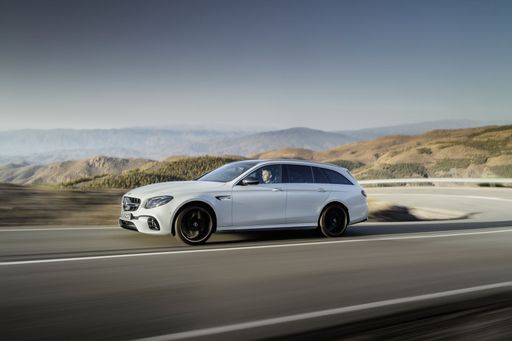
E-Class Wagon @ Mercedes-Benz Group Media

In the realm of luxury automobiles, the choice between the Mercedes E-Klass T-Modell and the Volvo XC90 presents a compelling conundrum for consumers seeking the perfect blend of performance, comfort, and innovative technology. Both vehicles cater to a discerning clientele, but they shine in different aspects. This article aims to provide a comprehensive comparison of these two titans in the automotive world.
XC90 @ Volvo Cars

Design and Dimensions

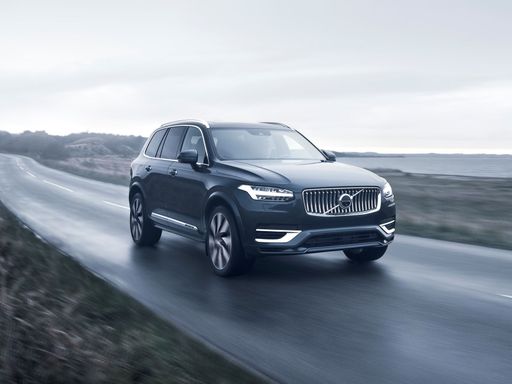
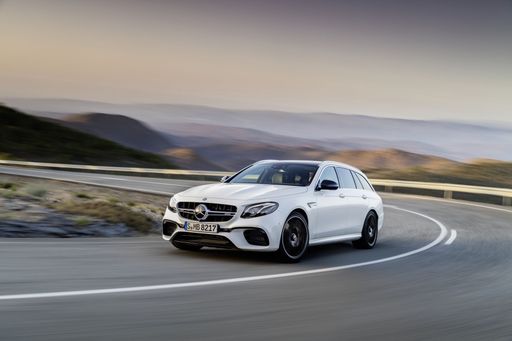
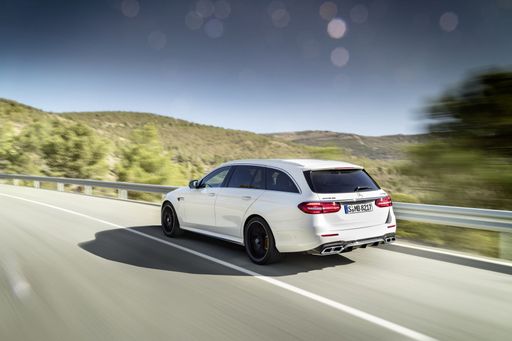
The Mercedes E-Klass T-Modell, a stylish wagon, showcases a sophisticated and elegant design. Its dimensions span lengthwise from 4949 mm to 4959 mm, with a width of 1880 mm and a height ranging from 1469 mm to 1497 mm. In contrast, the Volvo XC90, an SUV, measures 4953 mm in length, 1923 mm in width, and stands tall at 1771 mm. This height gives the XC90 a commanding presence on the road.

E-Class Wagon @ Mercedes-Benz Group Media

Engine Performance and Efficiency

Under the hood, the E-Klass T-Modell offers a variety of engine options, including Diesel MHEV, Petrol MHEV, and Plugin Hybrid variants, with power outputs ranging from 186 HP to an impressive 585 HP. Fuel efficiency is also noteworthy, with consumption figures between 4.9 L/100km and 7.9 L/100km, and an electric range reaching up to 110 km on hybrid models.

The Volvo XC90, with its 4-cylinder engines and power outputs between 250 HP and 455 HP, also delivers reliable performance. Its fuel consumption stands at around 8.5 L/100km for petrol variants, and the electric range peaks at 71 km with a battery capacity of 14.7 kWh. While not as efficient in fuel consumption as the E-Klass, it still holds a competitive edge with its Plugin Hybrid capabilities.

XC90 @ Volvo Cars

Acceleration and Handling

When it comes to performance, both vehicles offer impressive acceleration capabilities. The E-Klass T-Modell boasts a rapid 0-100 km/h time ranging from 4.1 seconds for the high-performance variants to 8.8 seconds for the entry-level models. The XC90, on the other hand, reaches 100 km/h in 5.4 seconds at best, providing a solid yet slightly less exhilarating driving experience.

E-Class Wagon @ Mercedes-Benz Group Media

Interior Comfort and Cargo Space

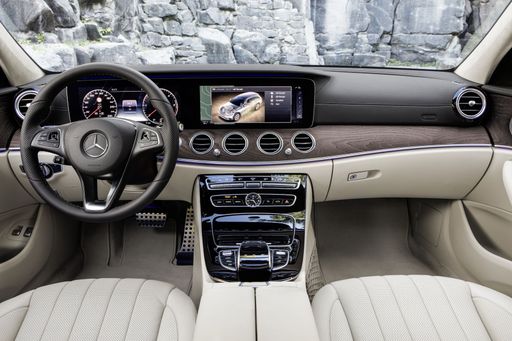
Inside, the E-Klass T-Modell is designed for luxury and comfort, accommodating five passengers with ample space and high-quality materials throughout. Its spacious trunk capacity of 615 liters outperforms the XC90's maximum of 302 liters, making it the better choice for transporting larger loads.

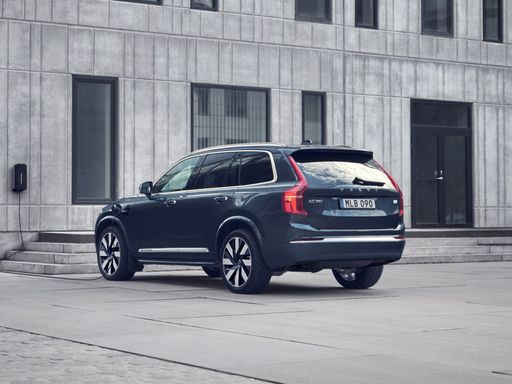
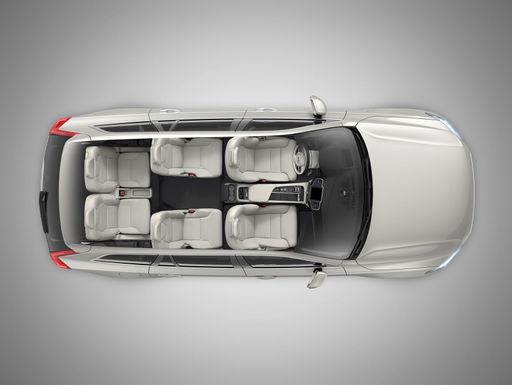
The XC90, with seating for up to seven, excels in family-friendly features, boasting a versatile interior. Although its trunk space is lesser, the foldable seating arrangement offers significant adaptability for storage needs.

XC90 @ Volvo Cars

Technological Innovations

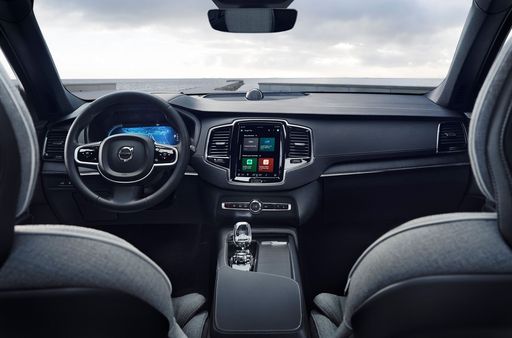
Both models incorporate advanced technology and driver-assistance features. The E-Klass T-Modell is equipped with the latest MBUX infotainment system, offering voice control, navigation, and seamless smartphone integration. Its array of safety features includes advanced adaptive cruise control and lane-keeping assist.

The XC90 features an equally sophisticated infotainment setup with a focus on user-friendliness. Volvo’s emphasis on safety is evident, with comprehensive standard features like collision avoidance and pedestrian detection systems, ensuring peace of mind for all occupants.

E-Class Wagon @ Mercedes-Benz Group Media

Conclusion: Which One to Choose?

The choice between the Mercedes E-Klass T-Modell and the Volvo XC90 hinges on individual preferences and needs. For those desiring a luxurious ride with superior performance, cargo capacity, and innovative technology, the E-Klass T-Modell is hard to beat. However, for families needing practicality, seating flexibility, and a strong focus on safety, the XC90 stands out as a sterling option.

Ultimately, both vehicles represent the pinnacle of automotive engineering in their respective categories, making either choice a wise investment in luxury and driving pleasure.

Here’s where it gets real: The technical differences in detail

XC90 @ Volvo Cars

Costs and Efficiency:

Price and efficiency are often the first things buyers look at. Here it becomes clear which model has the long-term edge – whether at the pump, the plug, or in purchase price.

Mercedes E-Class Wagon has a distinct advantage in terms of price – it starts at 52600 £, while the Volvo XC90 costs 69800 £. That’s a price difference of around 17130 £.

Fuel consumption also shows a difference: Mercedes E-Class Wagon manages with 1.70 L and is therefore decisively more efficient than the Volvo XC90 with 3.50 L. The difference is about 1.80 L per 100 km.

As for range, the Mercedes E-Class Wagon performs noticeable better – achieving up to 109 km, about 38 km more than the Volvo XC90.

Engine and Performance:

Under the bonnet, it becomes clear which model is tuned for sportiness and which one takes the lead when you hit the accelerator.

When it comes to engine power, the Mercedes E-Class Wagon has a evident edge – offering 585 HP compared to 455 HP. That’s roughly 130 HP more horsepower.

In acceleration from 0 to 100 km/h, the Mercedes E-Class Wagon is noticeable quicker – completing the sprint in 4.10 s, while the Volvo XC90 takes 5.40 s. That’s about 1.30 s faster.

In terms of top speed, the Mercedes E-Class Wagon performs distinct better – reaching 250 km/h, while the Volvo XC90 tops out at 180 km/h. The difference is around 70 km/h.

There’s also a difference in torque: Mercedes E-Class Wagon pulls hardly perceptible stronger with 750 Nm compared to 709 Nm. That’s about 41 Nm difference.

Space and Everyday Use:

Beyond pure performance, interior space and usability matter most in daily life. This is where you see which car is more practical and versatile.

Seats: Volvo XC90 offers evident more seating capacity – 7 vs 5.

In curb weight, Mercedes E-Class Wagon is slight lighter – 1900 kg compared to 2080 kg. The difference is around 180 kg.

In terms of boot space, the Mercedes E-Class Wagon offers clearly more room – 615 L compared to 302 L. That’s a difference of about 313 L.

In maximum load capacity, the Volvo XC90 performs barely noticeable better – up to 1856 L, which is about 26 L more than the Mercedes E-Class Wagon.

When it comes to payload, Volvo XC90 hardly perceptible takes the win – 710 kg compared to 645 kg. That’s a difference of about 65 kg.

Who wins the race?

The Mercedes E-Class Wagon proves to be dominates this comparison and therefore becomes our DriveDuel Champion!
Mercedes E-Class Wagon is the better all-rounder in this comparison.

from about £52,600
E-Class Wagon @ Mercedes-Benz Group Media

Mercedes E-Class Wagon

  • Engine Type : Petrol MHEV, Plugin Hybrid, Diesel MHEV
  • Transmission : Automatic
  • Drive Type : All-Wheel Drive, Rear-Wheel Drive
  • Power HP : 186 - 585 HP
  • Consumption L/100km : 1.7 - 7.9 L
  • Electric Range : 97 - 109 km

Mercedes E-Class Wagon

The Mercedes-Benz E-Class Wagon offers a harmonious blend of luxury and practicality, making it a favourite for those who value both style and functionality. Its sleek exterior design is matched by a sophisticated interior that provides a comfortable and spacious environment for both driver and passengers. This vehicle also boasts advanced technology features, ensuring a smooth and connected driving experience.

details

Volvo XC90

5 (1)
rate

The Volvo XC90 is a serene Scandinavian SUV that mixes minimalist luxury with a composed, confidence-inspiring presence — ideal for buyers who want family practicality without sacrificing style. Inside it serves up a calm, well-crafted cabin and user-friendly tech that keeps long journeys pleasant and tantrums to a minimum, making the XC90 a smart, stylish pick for sensible drivers.

details
Mercedes E-Class Wagon
Volvo XC90
E-Class Wagon @ Mercedes-Benz Group Media
XC90 @ Volvo Cars

Costs and Consumption

Price
52600 - 121800 £
Price
69800 - 84600 £
Consumption L/100km
1.7 - 7.9 L
Consumption L/100km
3.5 - 8.5 L
Consumption kWh/100km
-
Consumption kWh/100km
-
Electric Range
97 - 109 km
Electric Range
71 km
Battery Capacity
21.20 kWh
Battery Capacity
14.70 kWh
co2
44 - 181 g/km
co2
79 - 191 g/km
Fuel tank capacity
50 - 66 L
Fuel tank capacity
71 L

Dimensions and Body

Body Type
Estate
Body Type
SUV
Seats
5
Seats
7
Doors
5
Doors
5
Curb weight
1900 - 2435 kg
Curb weight
2080 - 2297 kg
Trunk capacity
460 - 615 L
Trunk capacity
262 - 302 L
Length
4949 - 4959 mm
Length
4953 mm
Width
1880 mm
Width
1923 mm
Height
1469 - 1497 mm
Height
1771 mm
Max trunk capacity
1675 - 1830 L
Max trunk capacity
1816 - 1856 L
Payload
540 - 645 kg
Payload
653 - 710 kg

Engine and Performance

Engine Type
Petrol MHEV, Plugin Hybrid, Diesel MHEV
Engine Type
Petrol MHEV, Plugin Hybrid
Transmission
Automatic
Transmission
Automatic
Transmission Detail
Automatic Gearbox
Transmission Detail
Automatic Gearbox
Drive Type
All-Wheel Drive, Rear-Wheel Drive
Drive Type
All-Wheel Drive
Power HP
186 - 585 HP
Power HP
250 - 455 HP
Acceleration 0-100km/h
4.1 - 8.8 s
Acceleration 0-100km/h
5.4 - 7.7 s
Max Speed
213 - 250 km/h
Max Speed
180 km/h
Torque
320 - 750 Nm
Torque
360 - 709 Nm
Number of Cylinders
4 - 6
Number of Cylinders
4
Power kW
137 - 430 kW
Power kW
184 - 335 kW
Engine capacity
1993 - 2999 cm3
Engine capacity
1969 cm3

General

Model Year
2024 - 2025
Model Year
2024 - 2025
CO2 Efficiency Class
G, E, F, B, D
CO2 Efficiency Class
G, B
Brand
Mercedes-Benz
Brand
Volvo
What drivetrain options does the Mercedes E-Class Wagon have?

The Mercedes E-Class Wagon is offered with All-Wheel Drive or Rear-Wheel Drive.

The prices and data displayed are estimates based on German list prices and may vary by country. This information is not legally binding.