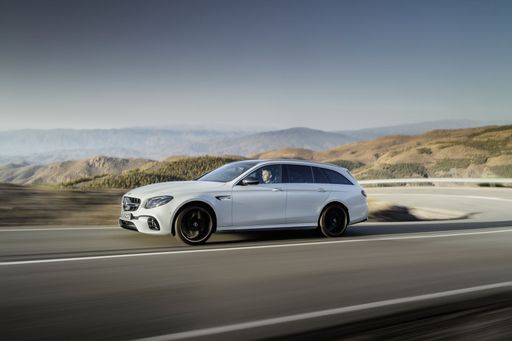
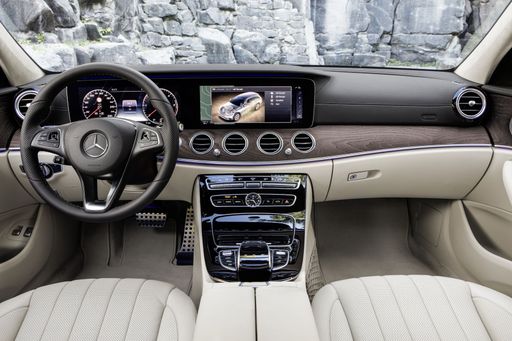
VS

Mercedes GLC vs Mercedes E Class Wagon comparison

Compare performance (680 HP vs 585 HP), boot space and price (50,300 £ vs 52,600 £ ) at a glance. Find out which car is the better choice for you – Mercedes GLC or Mercedes E Class Wagon?

Mercedes GLC vs Mercedes E Class Wagon: Key differences

Mercedes GLC

4.4 (11 Reviews)
rate
  • very slightly cheaper
  • moderately more power
  • marginally more efficient
  • considerably more electric range
  • a bit quicker 0–100 km/h
  • very slightly more trunk space

Mercedes E Class Wagon

  • very slightly lighter

All details on performance, efficiency, range and trunk space can be found in the technical comparison below – including user reviews for both models.

GLC

The Ultimate Decision: Mercedes GLC vs. E-Klass T-Modell

In the world of premium automobiles, Mercedes-Benz stands as a beacon of luxury and performance. Yet, for those looking to invest in a new vehicle, the choice between the versatile Mercedes GLC and the sophisticated E-Klass T-Modell isn't always straightforward. Let's delve into the details and see how these two luxury vehicles measure up against each other in terms of technical specifications and innovations.
E Class Wagon

Design and Body Type: SUV vs. Wagon

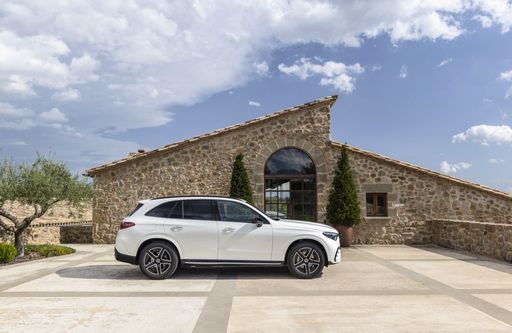
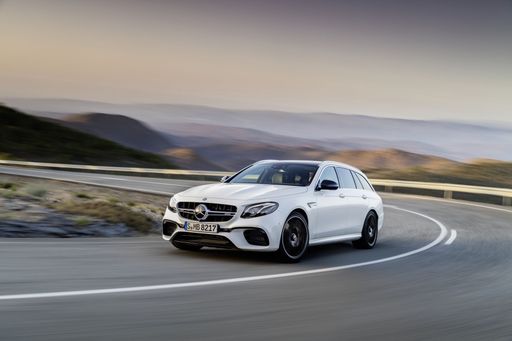
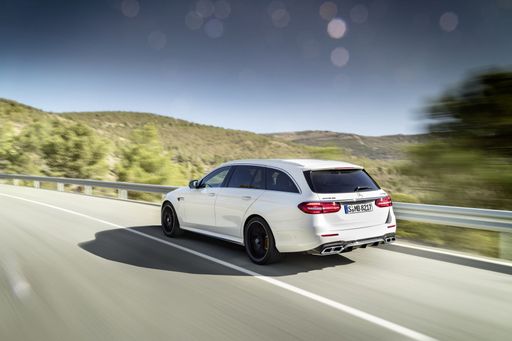
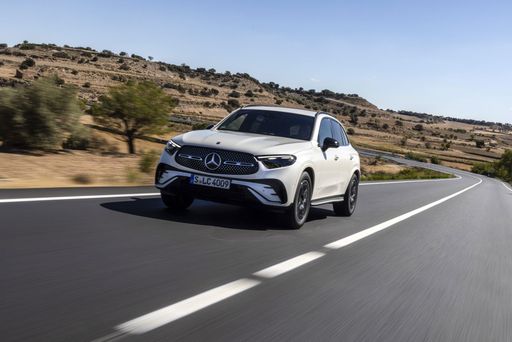
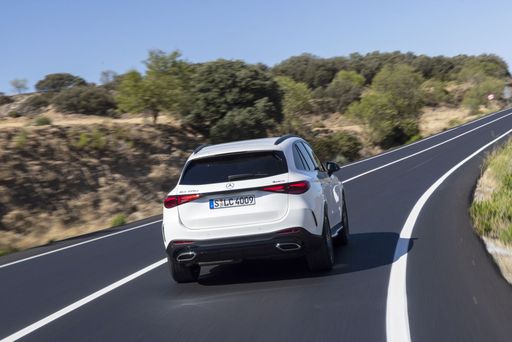
The Mercedes GLC is crafted as an SUV, offering a robust stance and higher ground clearance typical for off-road adventures. Meanwhile, the E-Klass T-Modell is a wagon, providing a sleek, elongated body designed for comfort and spacious interiors. Both vehicles boast the iconic Mercedes-Benz design language, marked by elegance and attention to detail.

GLC

Under the Hood: Engine Types and Performance

Both models offer a variety of engine options. The GLC features Petrol and Diesel Mild Hybrid Electric Vehicles (MHEV) alongside a Plugin Hybrid option, delivering power from 186 HP to a more aggressive 680 HP. It’s paired with automatic transmission and an all-wheel-drive system suitable for varying terrains.

The E-Klass T-Modell comes with Diesel MHEV, Plugin Hybrid, and Petrol MHEV engines, producing power between 186 HP and 585 HP. It also features an automatic gearbox, with both all-wheel and rear-wheel drive configurations available, catering to different driving preferences. Each vehicle has been meticulously engineered by Mercedes to offer both power and efficiency.

E Class Wagon

Efficiency and Innovation: Consumption and Electric Range

The integration of hybrid technologies in both models marks a significant leap towards sustainable mobility. The GLC's Plugin Hybrid variant impresses with an electric range of up to 130 km, with fuel consumption as low as 0.4 L/100 km—massively beneficial for eco-conscious users.

Similarly, the E-Klass T-Modell boasts an electric range of up to 110 km and fuel consumption as low as 0.5 L/100 km. Its battery capacity stands at 21.2 kWh, supporting extended electric driving experiences without compromising on power.

GLC

Interior: Space and Comfort

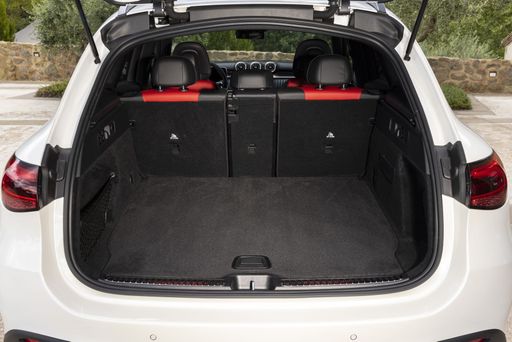
Inside, both models prioritize luxury and comfort with seating for five. The GLC offers a trunk capacity ranging from 390 to 620 liters, emphasizing versatility with substantial storage space for long journeys or family trips.

The E-Klass T-Modell, with a trunk capacity of up to 615 liters, maximizes its wagon design’s potential. It provides ample space for luggage or sports gear, making it desirable for families and those with active lifestyles.

E Class Wagon

Safety and Technology

Both the GLC and the E-Klass T-Modell integrate the latest safety features and driver assistance technologies that Mercedes-Benz is known for. From advanced navigation systems to adaptive cruise control, each model reinforces Mercedes' commitment to a seamless and secure driving experience.

GLC

Conclusion: Personal Preference and Lifestyle

Ultimately, the choice between the GLC and the E-Klass T-Modell depends on individual needs and lifestyle. The GLC stands out for those who crave a dynamic, elevated driving experience found in SUVs, with potent off-road capabilities. On the other hand, the E-Klass T-Modell is ideal for those who appreciate the spaciousness and elegance of a traditional wagon, combined with cutting-edge hybrid technology.

Both vehicles represent the pinnacle of design, engineering, and luxury that Mercedes-Benz consistently delivers, ensuring you can't go wrong with either choice.

Here’s where it gets real: The technical differences in detail

GLC

Costs and Efficiency:

When it comes to price and running costs, the biggest differences usually appear. This is often where you see which car fits your budget better in the long run.

Mercedes GLC is very slightly cheaper – starting at 50,300 £ , while the Mercedes E Class Wagon costs 52,600 £ . That’s a price difference of around 2,305 £.

Fuel consumption also shows a difference: the Mercedes GLC uses 1.6 L/100km and is marginally more efficient than the Mercedes E Class Wagon with 1.7 L/100km. The difference is about 0.1 L/100km.

As for electric range, the Mercedes GLC offers considerably more range – reaching up to 714 km, about 605 km more than the Mercedes E Class Wagon.

E Class Wagon

Engine and Performance:

Power, torque and acceleration are the classic benchmarks for car enthusiasts – and here, some clear differences start to show.

When it comes to engine power, the Mercedes GLC offers moderately more power – delivering 680 HP compared to 585 HP. That’s roughly 95 HP more horsepower.

When accelerating from 0 to 100 km/h, the Mercedes GLC is a bit quicker – completing the sprint in 3.5 s, while the Mercedes E Class Wagon takes 4.1 s. That’s about 0.6 s quicker.

There’s also a difference in torque: the Mercedes GLC delivers visibly more torque with 1,020 Nm compared to 750 Nm. That’s about 270 Nm more.

GLC

Space and Everyday Use:

Cabin size, boot volume and payload all play a role in everyday practicality. Here, comfort and flexibility make the difference.

Both vehicles offer seating for 5 people.

In terms of curb weight, Mercedes E Class Wagon is very slightly lighter – 1,900 kg compared to 1,910 kg. The difference is around 10 kg.

Looking at boot space, the Mercedes GLC offers very slightly more boot space – 620 L compared to 615 L. That’s a difference of about 5 L.

When it comes to payload, the Mercedes E Class Wagon carries only slightly more – 645 kg compared to 600 kg. That’s a difference of about 45 kg.

Who wins the race in the data check?

The Mercedes GLC stands well ahead of its rival in the objective data comparison.
This result only shows which model scores more points on paper – not which of the two cars feels right for you.

from £50,300
GLC

Mercedes GLC

  • Engine Type : Petrol MHEV, Plugin Hybrid, Diesel MHEV, Electric
  • Transmission : Automatic
  • Drive Type : All-Wheel Drive
  • Power HP : 186 - 680 HP
  • Consumption L/100km : 1.6 - 9.7 L/100km
  • Consumption kWh/100km : 14.9 - 16.6 kWh/100km
  • Electric Range : 12 - 714 km
Mercedes GLC
Mercedes E Class Wagon

Costs and Consumption

View detailed analysis

Engine and Performance

View detailed analysis

Dimensions and Body

View detailed analysis

Mercedes GLC

The Mercedes GLC blends plush cabin comfort and composed road manners into an SUV that feels more grown-up than it looks. It won’t shout for attention, but will quietly please buyers who want refinement, usable space and a touch of luxury without the drama.

details

Mercedes E Class Wagon

The E‑Class Estate blends executive elegance with genuine everyday practicality, wrapping luxury materials and a serene ride in a wagon silhouette that never looks apologetic. It’s the perfect choice for buyers who need grown-up luggage space without sacrificing comfort, refinement or a touch of driving enjoyment.

details
Mercedes GLC
Mercedes E Class Wagon

Costs and Consumption

Price
50,300 - 126,600 £
Price
52,600 - 121,800 £
Consumption L/100km
1.6 - 9.7 L/100km
Consumption L/100km
1.7 - 7.9 L/100km
Consumption kWh/100km
14.9 - 16.6 kWh/100km
Consumption kWh/100km
-
Electric Range
12 - 714 km
Electric Range
97 - 109 km
Battery Capacity
94 kWh
Battery Capacity
-
co2
0 - 221 g/km
co2
44 - 181 g/km
Fuel tank capacity
62 - 65 L
Fuel tank capacity
-

Dimensions and Body

Body Type
SUV
Body Type
Estate
Seats
5
Seats
5
Doors
5
Doors
-
Curb weight
1,910 - 2,535 kg
Curb weight
1,900 - 2,435 kg
Trunk capacity
390 - 620 L
Trunk capacity
460 - 615 L
Length
4,716 - 4,845 mm
Length
-
Width
1,890 - 1,913 mm
Width
1,880 mm
Height
1,603 - 1,644 mm
Height
-
Max trunk capacity
1,490 - 1,740 L
Max trunk capacity
-
Payload
475 - 600 kg
Payload
540 - 645 kg

Engine and Performance

Engine Type
Petrol MHEV, Plugin Hybrid, Diesel MHEV, Electric
Engine Type
Petrol MHEV, Plugin Hybrid, Diesel MHEV
Transmission
Automatic
Transmission
Automatic
Transmission Detail
Automatic Gearbox, Reduction Gearbox
Transmission Detail
Automatic Gearbox
Drive Type
All-Wheel Drive
Drive Type
All-Wheel Drive, Rear-Wheel Drive
Power HP
186 - 680 HP
Power HP
186 - 585 HP
Acceleration 0-100km/h
3.5 - 9 s
Acceleration 0-100km/h
4.1 - 8.8 s
Max Speed
210 - 275 km/h
Max Speed
-
Torque
320 - 1,020 Nm
Torque
320 - 750 Nm
Number of Cylinders
4 - 6
Number of Cylinders
4 - 6
Power kW
137 - 500 kW
Power kW
137 - 430 kW
Engine capacity
1,991 - 2,989 cm3
Engine capacity
1,993 - 2,999 cm3

General

Model Year
2,025 - 2,026
Model Year
2,024 - 2,025
CO2 Efficiency Class
F, G, D, B, E, A
CO2 Efficiency Class
G, E, F, B, D
Brand
Mercedes-Benz
Brand
Mercedes-Benz
DriveDuel uses data analysis and artificial intelligence to evaluate vehicle data and create content. Content is regularly reviewed and improved. The displayed prices are estimates based on German list prices, adjusted to the respective country’s VAT. Country-specific registration taxes are not included. This information is not legally binding.