@ Mercedes-Benz Group Media
@ Dr. Ing. h.c. F. Porsche AG
VS

Mercedes GLC vs Porsche Macan – Which car suits you better?

Everyday use, family trips or long-distance drives – here’s where the differences show.
Discover whether Mercedes GLC or Porsche Macan fits your lifestyle better.

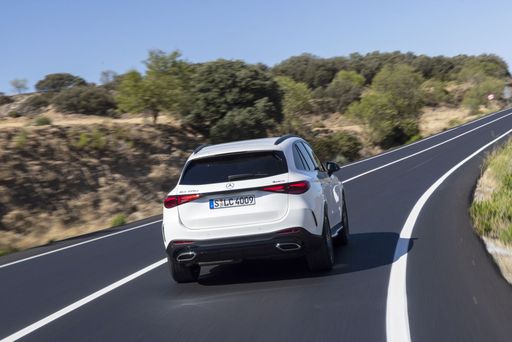
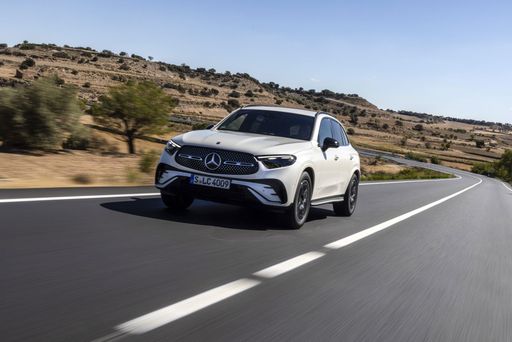
GLC @ Mercedes-Benz Group Media

The Battle of Luxury SUVs: Mercedes GLC vs Porsche Macan

In the realm of luxury SUVs, the clash between the Mercedes GLC and the Porsche Macan is nothing short of a titanic standoff. Both vehicles represent the epitome of opulence and cutting-edge technology, but they cater to slightly different needs and tastes. Let's delve into the technical specifications and innovations that define these two automotive giants.
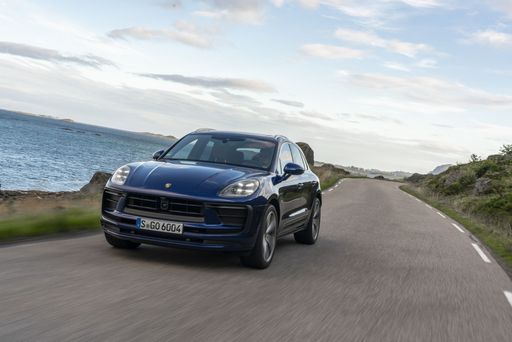
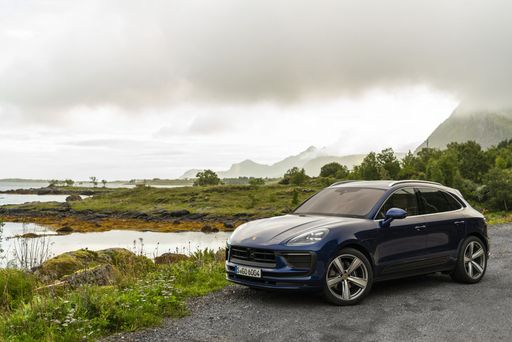
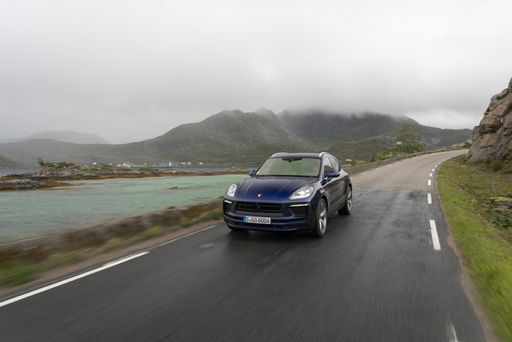
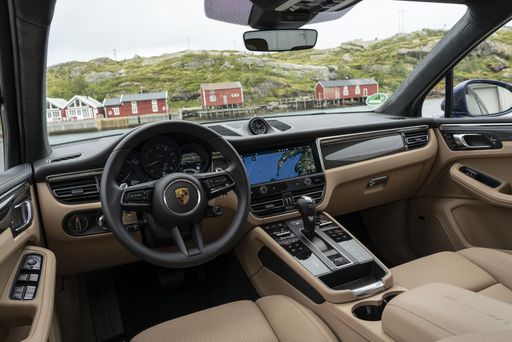
Macan @ Dr. Ing. h.c. F. Porsche AG

Power and Performance: A Comparative Analysis

The Mercedes GLC offers a diverse range of engine types, including Petrol MHEV, Diesel MHEV, and Plugin Hybrid, with power outputs ranging from 186 HP to an impressive 680 HP. Its all-wheel-drive system, paired with an automatic gearbox, ensures a stable and versatile driving experience. The GLC's acceleration varies between 3.5 seconds to 9 seconds from 0-100 km/h, making it a worthy contender for performance enthusiasts.

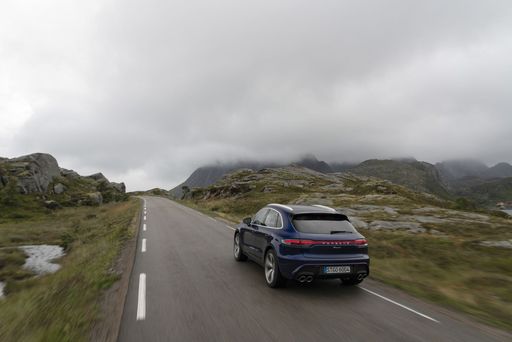
On the other hand, the Porsche Macan flaunts its prowess as an electric SUV. With an output ranging from 360 HP to a robust 639 HP, the Macan is equipped with a reduction gearbox and offers both rear-wheel and all-wheel drive options. The Porsche accelerates from 0-100 km/h in an exhilarating 3.3 to 5.7 seconds, a feat that underscores its sporty DNA.

GLC @ Mercedes-Benz Group Media

Efficiency and Sustainability

The GLC's fuel consumption varies between 0.4 L/100km for the Plugin Hybrid model and up to 10.3 L/100km for other variants, while also offering an electric range of up to 130 km. This makes the GLC a compelling choice for those mindful of efficiency without sacrificing performance.

The Macan shines in the realm of sustainability with zero CO2 emissions, thanks to its fully electric powertrain. Its consumption stands between 17 kWh/100km to 18.8 kWh/100km, and with a battery capacity of 96 kWh, it promises an impressive range of up to 644 km on a single charge.

Macan @ Dr. Ing. h.c. F. Porsche AG

Design and Comfort

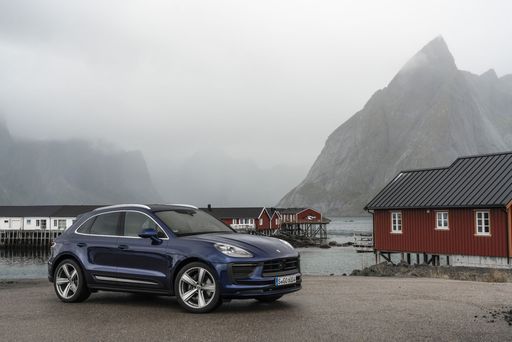
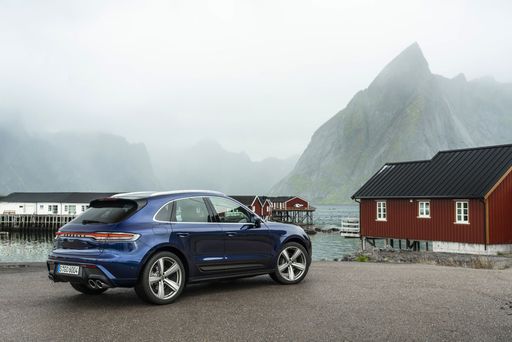
Both SUVs offer spacious interiors with seating for five and five doors for easy access. The Mercedes GLC is slightly more compact with lengths ranging from 4716 mm to 4792 mm, while the Macan is a tad longer at 4784 mm. The wider stance of the Macan (1938 mm) compared to the GLC (1890 mm) grants it a more imposing presence on the road.

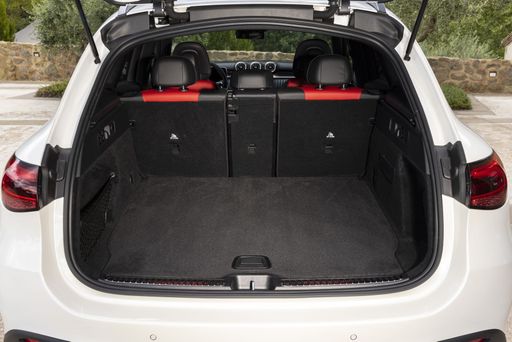
Cargo space in the GLC varies between 390 L to 620 L, offering ample room for luggage. The Macan offers comparable trunk capacity, ranging from 480 L to 540 L, ensuring that your luxury journey remains practical.

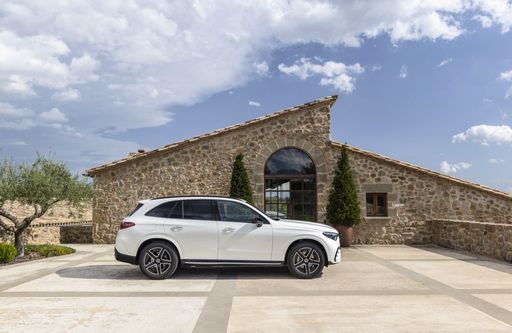
GLC @ Mercedes-Benz Group Media

Innovations and Technology

Mercedes-Benz integrates the latest tech features into the GLC, including advanced MBUX infotainment, hybrid drive technology, and numerous driver assistance systems designed to enhance comfort and safety.

Porsche steps up with its innovative electric technology, setting benchmarks in power management and driving dynamics. The Macan includes the latest in electric vehicle technology, emphasized by its efficiency and connectivity features, which make every drive a futuristic experience.

Macan @ Dr. Ing. h.c. F. Porsche AG

Conclusion: Deciding Your Luxury Experience

Choosing between the Mercedes GLC and the Porsche Macan ultimately boils down to personal preference. If you desire a wide range of powertrains and a more traditional SUV experience with advanced hybrid options, the GLC is your go-to luxury companion. However, for those keen on electric innovation paired with Porsche's signature sportiness, the Macan takes the lead.

Both vehicles are marvels of their own, each offering a unique interpretation of luxury and performance. Whatever your choice, rest assured that both the GLC and Macan promise an exquisite journey on every drive.

Here’s where it gets real: The technical differences in detail

GLC @ Mercedes-Benz Group Media

Costs and Efficiency:

Price and efficiency are often the first things buyers look at. Here it becomes clear which model has the long-term edge – whether at the pump, the plug, or in purchase price.

Mercedes GLC has a distinct advantage in terms of price – it starts at 50300 £, while the Porsche Macan costs 69200 £. That’s a price difference of around 18844 £.

In terms of energy consumption, the advantage goes to the Mercedes GLC: with 14.90 kWh per 100 km, it’s a bit more efficient than the Porsche Macan with 17 kWh. That’s a difference of about 2.10 kWh.

As for range, the Mercedes GLC performs slight better – achieving up to 714 km, about 70 km more than the Porsche Macan.

Macan @ Dr. Ing. h.c. F. Porsche AG

Engine and Performance:

Power, torque and acceleration are the classic benchmarks for car enthusiasts – and here, some clear differences start to show.

When it comes to engine power, the Mercedes GLC has a minimal edge – offering 680 HP compared to 639 HP. That’s roughly 41 HP more horsepower.

In acceleration from 0 to 100 km/h, the Porsche Macan is slight quicker – completing the sprint in 3.30 s, while the Mercedes GLC takes 3.50 s. That’s about 0.20 s faster.

In terms of top speed, the Mercedes GLC performs barely noticeable better – reaching 275 km/h, while the Porsche Macan tops out at 260 km/h. The difference is around 15 km/h.

There’s also a difference in torque: Porsche Macan pulls minimal stronger with 1130 Nm compared to 1020 Nm. That’s about 110 Nm difference.

GLC @ Mercedes-Benz Group Media

Space and Everyday Use:

Beyond pure performance, interior space and usability matter most in daily life. This is where you see which car is more practical and versatile.

Both vehicles offer seating for 5 people.

In curb weight, Mercedes GLC is clearly perceptible lighter – 1910 kg compared to 2295 kg. The difference is around 385 kg.

In terms of boot space, the Mercedes GLC offers a bit more room – 620 L compared to 540 L. That’s a difference of about 80 L.

In maximum load capacity, the Mercedes GLC performs noticeable better – up to 1740 L, which is about 392 L more than the Porsche Macan.

When it comes to payload, Mercedes GLC minimal takes the win – 600 kg compared to 545 kg. That’s a difference of about 55 kg.

Who wins the race?

The Mercedes GLC proves to be leaves the rival little chance and therefore becomes our DriveDuel Champion!
Mercedes GLC is the better all-rounder in this comparison.

from about £50,300
GLC @ Mercedes-Benz Group Media

Mercedes GLC

  • Engine Type : Petrol MHEV, Plugin Hybrid, Diesel MHEV, Electric
  • Transmission : Automatic
  • Drive Type : All-Wheel Drive
  • Power HP : 186 - 680 HP
  • Consumption L/100km : 1.6 - 9.9 L
  • Consumption kWh/100km : 14.9 - 16.6 kWh
  • Electric Range : 12 - 714 km

Mercedes GLC

4 (2)
rate

The Mercedes GLC blends plush cabin comfort and composed road manners into an SUV that feels more grown-up than it looks. It won’t shout for attention, but will quietly please buyers who want refinement, usable space and a touch of luxury without the drama.

details

Porsche Macan

The Porsche Macan feels like a compact sports car dressed in SUV clothes, delivering razor-sharp handling and a cabin that somehow mixes luxury with everyday practicality. For buyers who crave driving thrills without sacrificing usability, the Macan is a rare breed that makes running errands feel like a weekend blast and manages to look smugly good in the process.

details
Mercedes GLC
Porsche Macan
GLC @ Mercedes-Benz Group Media
Macan @ Dr. Ing. h.c. F. Porsche AG

Costs and Consumption

Price
50300 - 126600 £
Price
69200 - 99000 £
Consumption L/100km
1.6 - 9.9 L
Consumption L/100km
-
Consumption kWh/100km
14.9 - 16.6 kWh
Consumption kWh/100km
17 - 18.5 kWh
Electric Range
12 - 714 km
Electric Range
585 - 644 km
Battery Capacity
94 kWh
Battery Capacity
95 kWh
co2
0 - 225 g/km
co2
0 g/km
Fuel tank capacity
49 - 65 L
Fuel tank capacity
-

Dimensions and Body

Body Type
SUV
Body Type
SUV
Seats
5
Seats
5
Doors
5
Doors
5
Curb weight
1910 - 2535 kg
Curb weight
2295 - 2470 kg
Trunk capacity
390 - 620 L
Trunk capacity
476 - 540 L
Length
4716 - 4845 mm
Length
4784 - 4805 mm
Width
1890 - 1913 mm
Width
1938 - 1952 mm
Height
1603 - 1647 mm
Height
1613 - 1623 mm
Max trunk capacity
1335 - 1740 L
Max trunk capacity
1288 - 1348 L
Payload
475 - 600 kg
Payload
470 - 545 kg

Engine and Performance

Engine Type
Petrol MHEV, Plugin Hybrid, Diesel MHEV, Electric
Engine Type
Electric
Transmission
Automatic
Transmission
Automatic
Transmission Detail
Automatic Gearbox, Reduction Gearbox
Transmission Detail
Reduction Gearbox
Drive Type
All-Wheel Drive
Drive Type
Rear-Wheel Drive, All-Wheel Drive
Power HP
186 - 680 HP
Power HP
360 - 639 HP
Acceleration 0-100km/h
3.5 - 9 s
Acceleration 0-100km/h
3.3 - 5.7 s
Max Speed
208 - 275 km/h
Max Speed
220 - 260 km/h
Torque
320 - 1020 Nm
Torque
563 - 1130 Nm
Number of Cylinders
4 - 6
Number of Cylinders
-
Power kW
137 - 500 kW
Power kW
265 - 470 kW
Engine capacity
1991 - 2989 cm3
Engine capacity
-

General

Model Year
2025 - 2026
Model Year
2024 - 2025
CO2 Efficiency Class
F, G, B, A
CO2 Efficiency Class
A
Brand
Mercedes-Benz
Brand
Porsche
What drive types are available for the Mercedes GLC?

The Mercedes GLC is offered with All-Wheel Drive.

The prices and data displayed are estimates based on German list prices and may vary by country. This information is not legally binding.