VS

Porsche Macan vs Volvo EX60 comparison

Compare performance (571 HP vs 680 HP), boot space and price (89,300 £ vs 54,000 £ ) at a glance. Find out which car is the better choice for you – Porsche Macan or Volvo EX60?

Porsche Macan vs Volvo EX60: Key differences

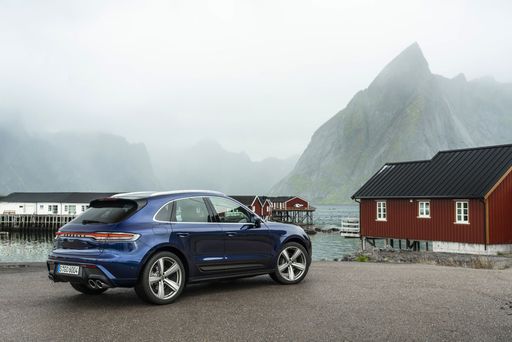
Porsche Macan

  • very slightly quicker 0–100 km/h
details

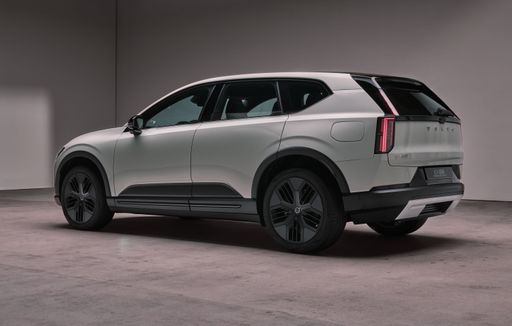
Volvo EX60

  • significantly cheaper
  • moderately more power
  • clearly more efficient
  • markedly more electric range
  • somewhat lighter
  • marginally more trunk space
details

By Achim Sedelmaier

Macan

Overview: Porsche Macan vs Volvo EX60

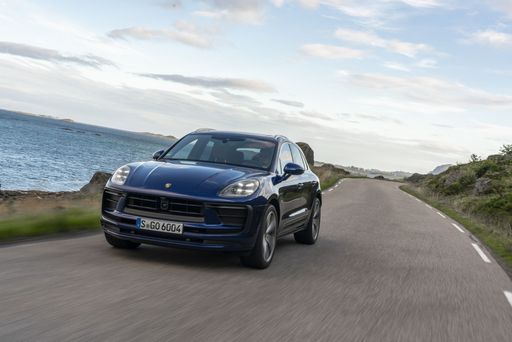
Porsche Macan and Volvo EX60 represent two distinct answers to what a premium electric SUV should be: the Macan leans into driver engagement and a performance‑led cockpit, while the EX60 emphasises rear‑seat comfort, calm refinement and day‑to‑day practicality. The Porsche Macan feels like a compact performance machine translated into electric form, designed for people who want connection and composure at speed. The Volvo EX60, by contrast, trades some of that immediacy for a quieter cabin, more usable space and features that simplify family life. That split in intentions — involvement versus insulation — is the single biggest decision point between the two cars.
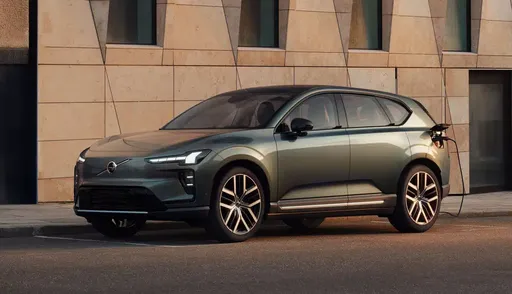
EX60

Driving character and engagement

On road the Porsche Macan is the more involving choice: steering is sharper, chassis responses are quicker and it rewards an active driving style in corners. The Volvo EX60 deliberately calms the experience, with steering and suspension tuned for predictability and comfort rather than sporting feedback. That means the Porsche Macan will feel alive on B‑roads and during spirited overtakes, while the Volvo EX60 will feel steadier and less tiring over long, straight stretches. Choose the Porsche Macan if steering feel and chassis balance are priorities; pick the Volvo EX60 if you prefer an unflappable, composed drive.

Macan

Cabin comfort and perceived quality

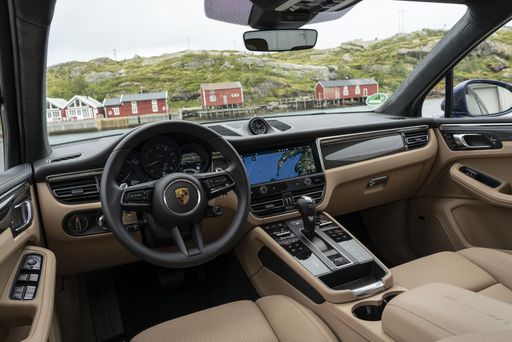
The Porsche Macan’s cabin reads as driver‑centric, with premium surfaces and tightly bolstered seats that make you feel connected to the car. The Volvo EX60 presents a more Scandinavian, airy interior that sprawls generously toward rear passengers and emphasises soft touchpoints and a relaxed mood. Perceived quality is high in both, but the Porsche Macan signals sport and craftsmanship while the Volvo EX60 signals space and serenity. If you spend most time behind the wheel the Porsche Macan’s cockpit rewards you; if rear passenger comfort and a tranquil ambience matter more, the Volvo EX60 has the edge.

EX60

Practicality and city usability

Practical differences are practical: the Volvo EX60 maximises usable rear room and a flat floor that genuinely improves family life and luggage carrying, whereas the Porsche Macan is more compact in the back and prioritises form and fit for the front occupants. In tight city situations the Porsche Macan surprises with nimble manners and optional rear‑axle steering that makes urban manoeuvres easier. The Volvo EX60’s greater width and higher glassline cost some out‑the‑shoulder visibility but are mitigated by comprehensive cameras and parking aids. If you tow or need a more rugged, driver‑focused load carrier, the Porsche Macan leans useful; for everyday family practicality the Volvo EX60 typically wins.

Macan

Long‑distance behavior and charging mindset

Both cars are built for long trips, but they pursue endurance differently: the Porsche Macan shortens charging stops and keeps the driver engaged between them, delivering a planted, confident feel at motorway speeds. The Volvo EX60 aims to make long runs less intrusive, with architecture that yields calm cruising, quieter cabins and fewer range worries for typical users. That results in the Porsche Macan suiting drivers who plan aggressive, performance‑oriented legs and appreciate quick top‑up sessions, while the Volvo EX60 suits those who value longer, quieter stages and more passenger comfort on multi‑day journeys. Your route planning and tolerance for stop cadence will determine which approach fits you better.

Buyer fit: who should choose which car

Decision time comes down to priorities: the Porsche Macan is aimed at buyers who want a premium, sporty electric SUV that still behaves like a performance car and can pull a trailer when needed. The Volvo EX60 is aimed at buyers who prioritise passenger space, a silent cabin, comprehensive safety and a more comfort‑first ownership experience. If you value steering precision, a tight cockpit and performance‑oriented packaging, the Porsche Macan will feel right; if you value family usability, quiet cruising and a softer ride, the Volvo EX60 will likely suit you better. Below we turn to the technical comparison so you can see how those real‑world differences map onto charging, range, power delivery and interior dimensions.

Here’s where it gets real: The technical differences in detail

Macan

Costs and Efficiency:

Looking at overall running costs, both models reveal some interesting differences in everyday economy.

Volvo EX60 is significantly cheaper – starting at 54,000 £ , while the Porsche Macan costs 89,300 £ . That’s a price difference of around 35,323 £.

In terms of energy consumption, the Volvo EX60 is clearly more efficient: consuming 14.9 kWh/100km compared to 18.5 kWh/100km for the Porsche Macan. That’s a difference of about 3.6 kWh/100km.

As for electric range, the Volvo EX60 offers markedly more range – reaching up to 810 km, about 225 km more than the Porsche Macan.

EX60

Engine and Performance:

Power, torque and acceleration say a lot about how a car feels on the road. This is where you see which model delivers more driving dynamics.

When it comes to engine power, the Volvo EX60 offers moderately more power – delivering 680 HP compared to 571 HP. That’s roughly 109 HP more horsepower.

When accelerating from 0 to 100 km/h, the Porsche Macan is very slightly quicker – completing the sprint in 3.8 s, while the Volvo EX60 takes 3.9 s. That’s about 0.1 s quicker.

There’s also a difference in torque: the Porsche Macan delivers somewhat more torque with 955 Nm compared to 790 Nm. That’s about 165 Nm more.

Macan

Space and Everyday Use:

Cabin size, boot volume and payload all play a role in everyday practicality. Here, comfort and flexibility make the difference.

Both vehicles offer seating for 5 people.

In terms of curb weight, Volvo EX60 is somewhat lighter – 2,189 kg compared to 2,470 kg. The difference is around 281 kg.

Looking at boot space, the Volvo EX60 offers marginally more boot space – 523 L compared to 476 L. That’s a difference of about 47 L.

When it comes to payload, the Porsche Macan carries very slightly more – 470 kg compared to 461 kg. That’s a difference of about 9 kg.

Who wins the race in the data check?

The Volvo EX60 holds a decisive overall lead in the objective data comparison.
This result only shows which model scores more points on paper – not which of the two cars feels right for you.

from £54,000
EX60

Volvo EX60

  • Engine Type Electric
  • Transmission Automatic
  • Drive Type Rear-Wheel Drive, All-Wheel Drive
  • Power HP 374 - 680 HP
  • Consumption kWh/100km 14.9 - 16.2 kWh/100km
  • Electric Range 611 - 810 km
Porsche Macan
Volvo EX60

Costs and Consumption

View detailed analysis

Engine and Performance

View detailed analysis

Dimensions and Body

View detailed analysis

Porsche Macan

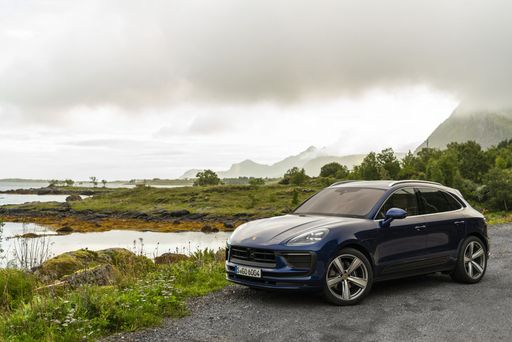
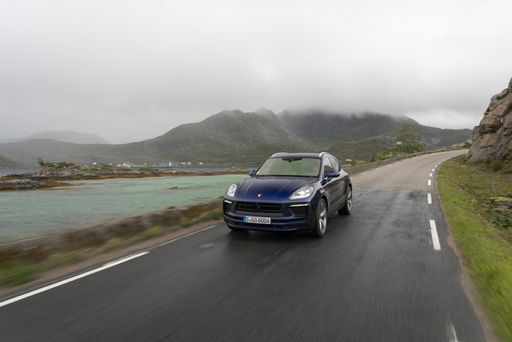
The Porsche Macan feels like a compact sports car dressed in SUV clothes, delivering razor-sharp handling and a cabin that somehow mixes luxury with everyday practicality. For buyers who crave driving thrills without sacrificing usability, the Macan is a rare breed that makes running errands feel like a weekend blast and manages to look smugly good in the process.

details

Volvo EX60

The Volvo EX60 is a stylish electric SUV that pairs Scandinavian minimalism with a high-quality, comfortable cabin and an intuitive infotainment experience. It delivers a composed, refined ride with advanced safety and driver-assist systems that make daily driving relaxed and confident.

details
Porsche Macan
Volvo EX60

Costs and Consumption

Price
89,300 £
Price
54,000 - 67,500 £
Consumption L/100km
-
Consumption L/100km
-
Consumption kWh/100km
18.5 kWh/100km
Consumption kWh/100km
14.9 - 16.2 kWh/100km
Electric Range
585 km
Electric Range
611 - 810 km
Battery Capacity
-
Battery Capacity
-
co2
0 g/km
co2
0 g/km
Fuel tank capacity
-
Fuel tank capacity
-

Dimensions and Body

Body Type
SUV
Body Type
SUV
Seats
5
Seats
5
Doors
-
Doors
-
Curb weight
2,470 kg
Curb weight
2,189 - 2,405 kg
Trunk capacity
476 L
Trunk capacity
523 L
Length
-
Length
-
Width
1,952 mm
Width
1,899 mm
Height
-
Height
-
Max trunk capacity
-
Max trunk capacity
-
Payload
470 kg
Payload
455 - 461 kg

Engine and Performance

Engine Type
Electric
Engine Type
Electric
Transmission
Automatic
Transmission
Automatic
Transmission Detail
Reduction Gearbox
Transmission Detail
Reduction Gearbox
Drive Type
All-Wheel Drive
Drive Type
Rear-Wheel Drive, All-Wheel Drive
Power HP
571 HP
Power HP
374 - 680 HP
Acceleration 0-100km/h
3.8 s
Acceleration 0-100km/h
3.9 - 5.9 s
Max Speed
-
Max Speed
-
Torque
955 Nm
Torque
480 - 790 Nm
Number of Cylinders
-
Number of Cylinders
-
Power kW
420 kW
Power kW
275 - 500 kW
Engine capacity
-
Engine capacity
-

General

Model Year
2025
Model Year
2,026 - 2,027
CO2 Efficiency Class
A
CO2 Efficiency Class
A
Brand
Porsche
Brand
Volvo
DriveDuel uses data analysis and artificial intelligence to evaluate vehicle data and create content. Content is regularly reviewed and improved. The displayed prices are estimates based on German list prices, adjusted to the respective country’s VAT. Country-specific registration taxes are not included. This information is not legally binding.