VS

Volvo EX90 vs Volvo EX60 comparison

Compare performance (680 HP vs 680 HP), boot space and price (72,200 £ vs 54,000 £ ) at a glance. Find out which car is the better choice for you – Volvo EX90 or Volvo EX60?

Volvo EX90 vs Volvo EX60: Key differences

Volvo EX90

2.6 (1 Reviews)
rate
details

Volvo EX60

  • markedly cheaper
  • somewhat more efficient
  • noticeably more electric range
  • very slightly quicker 0–100 km/h
  • slightly lighter
details

All details on performance, efficiency, range and trunk space can be found in the technical comparison below – including user reviews for both models.

By Achim Sedelmaier

EX90

Volvo EX90 vs Volvo EX60: the everyday differences that matter

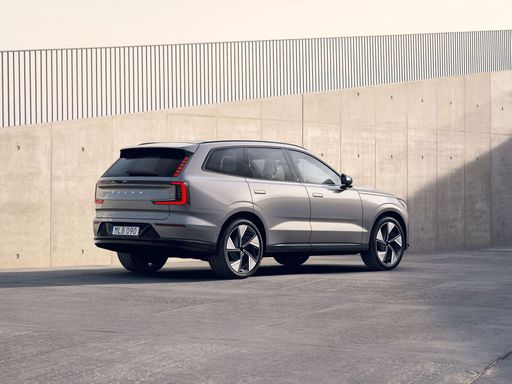
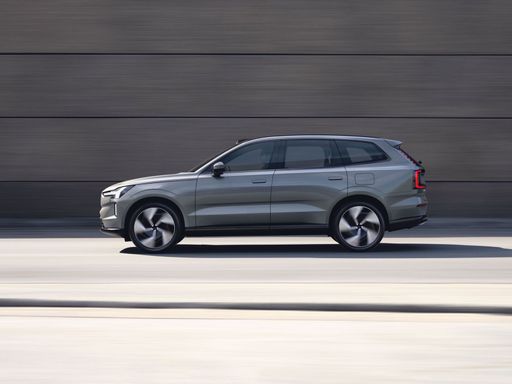
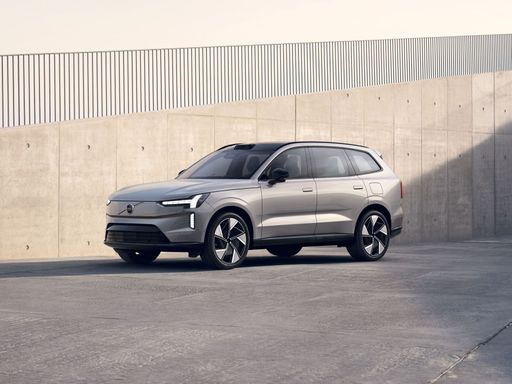
The Volvo EX90 and Volvo EX60 aim for the same calm, safety-first vibe, but they serve different lives. The EX90 is the full-size, seven-seat flagship that majors on silence and long-haul serenity, while the EX60 is a slightly smaller, five-seat SUV that leans into efficiency and quick charging. Both feel instantly premium and relaxed, yet the EX90’s sheer size and weight give it a stately character the EX60 counters with easier day-to-day agility. Price, efficiency and seating layout are the real separators here. If you’re juggling space for kids and kit versus running costs and urban usability, this matchup makes the trade-offs very clear.
EX60

Ride and refinement: hushed cruiser vs hushed glider

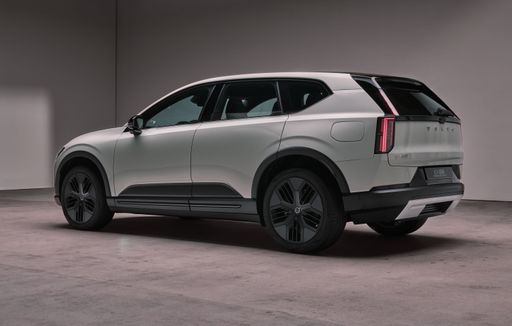
The Volvo EX90 is exceptionally quiet at speed and feels anchored on the motorway, with superb front seats that make hours disappear. On big wheels it can patter over sharp city edges, a reminder of its mass, but out of town it’s a cocoon. The Volvo EX60 is also strikingly quiet and focuses even more on a cushioned, unhurried flow, with adaptive damping that smooths the daily grind. It doesn’t chase sportiness, and that’s precisely its charm: calm, predictable, and easy to place. If you live on the motorway the EX90 feels like a rolling lounge; if you mix town and commute miles, the EX60’s gentler, lighter touch is the less tiring companion.

EX90

Cabin feel and controls: minimalist polish or modern clarity

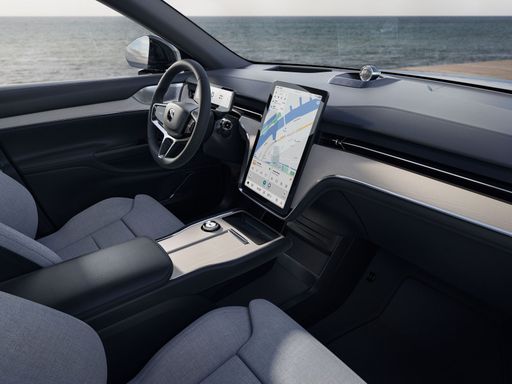
Inside the Volvo EX90 you get a clean, Scandinavian lounge with rich materials and a tech-forward minimalism that sometimes hides simple tasks in the touchscreen. The atmosphere is premium and substantial, but occasional software sluggishness can grate in stop‑start life. The Volvo EX60 goes for similarly airy design, adds proper steering‑wheel buttons and Google/Gemini plus Apple CarPlay, and aims for quicker, clearer interactions. Its curved central display is striking, though the lower part of the driver’s cluster can be masked depending on wheel position. Net effect: EX90 feels the most luxurious, EX60 feels the most hassle-free to operate.

EX60

Space and practicality: flexible seven vs generous five

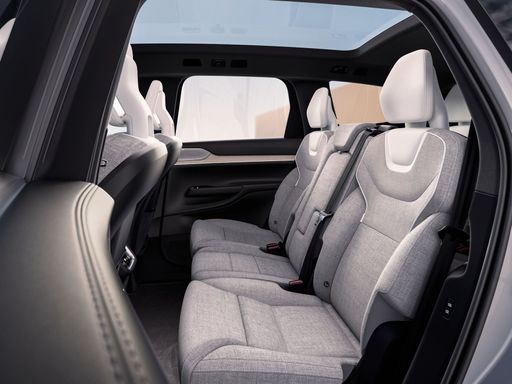
The Volvo EX90’s calling card is its three-row layout: a flexible second row and a usable third row for kids or short adult hops, plus a big, square load area with handy underfloor space. It’s the pick if carpool duty, grandparents and bulky pushchairs are a weekly routine. The Volvo EX60 sticks to two rows but gives rear passengers excellent legroom and a flat floor, so five-up travel still feels grown-up. It also benefits from smart storage touches, including a useful front compartment for cables. Choose EX90 for maximum versatility, EX60 for the simpler, roomier-feeling five-seat life.

EX90

Range, charging and city manners: fewer stops or bigger presence

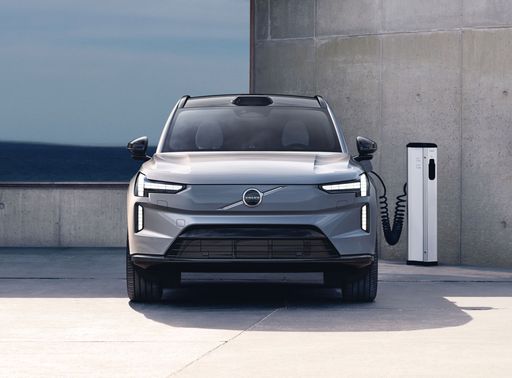
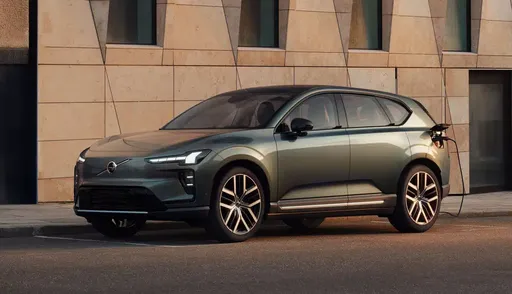
The Volvo EX60 runs more efficiently in the real world and pairs that with very fast, modern rapid charging, so long trips mean shorter, less frequent stops. The Volvo EX90 plans routes well and charges quickly on DC, but its appetite at speed means you’ll visit chargers more often; home AC charging also takes longer due to its on-board setup. In town, the EX60’s smaller footprint and softer low‑speed demeanor make parking and threading traffic less stressful, despite a so‑so over‑shoulder view. The EX90’s width and weight are always present, though excellent cameras and sensors help you place it. If range confidence and quick top‑ups matter most, lean EX60; if your priority is quiet cruising with family space, the EX90 still charms.

Ownership feel and buyer fit: matching the Volvo to your life

For safety‑minded families who genuinely use three rows, the Volvo EX90 earns its keep with calm road manners, top‑tier seats and flexible seating that simplifies chaotic school runs. Company‑car drivers and frequent travellers who value swift charging, lower energy use and an easier urban life will feel better served by the Volvo EX60. The EX60 also lands at a friendlier price point while preserving that premium Volvo ambience, making it an appealing everyday upgrade. The EX90 counters with a richer, more flagship feel and the ability to carry extra people when the occasion demands. With those priorities clear, the technical comparison that follows will help confirm which Volvo best fits your routines and running costs.

Here’s where it gets real: The technical differences in detail

EX90

Costs and Efficiency:

Looking at overall running costs, both models reveal some interesting differences in everyday economy.

Volvo EX60 is markedly cheaper – starting at 54,000 £ , while the Volvo EX90 costs 72,200 £ . That’s a price difference of around 18,171 £.

In terms of energy consumption, the Volvo EX60 is somewhat more efficient: consuming 14.9 kWh/100km compared to 17.8 kWh/100km for the Volvo EX90. That’s a difference of about 2.9 kWh/100km.

As for electric range, the Volvo EX60 offers noticeably more range – reaching up to 810 km, about 190 km more than the Volvo EX90.

EX60

Engine and Performance:

Power, torque and acceleration say a lot about how a car feels on the road. This is where you see which model delivers more driving dynamics.

Both models deliver identical power – 680 HP each.

When accelerating from 0 to 100 km/h, the Volvo EX60 is very slightly quicker – completing the sprint in 3.9 s, while the Volvo EX90 takes 4.2 s. That’s about 0.3 s quicker.

There’s also a difference in torque: the Volvo EX90 delivers barely more torque with 870 Nm compared to 790 Nm. That’s about 80 Nm more.

EX90

Space and Everyday Use:

Whether family car or daily driver – which one offers more room, flexibility and comfort?

Seats: Volvo EX90 offers more seats – 7 vs 5.

In terms of curb weight, Volvo EX60 is slightly lighter – 2,189 kg compared to 2,555 kg. The difference is around 366 kg.

When it comes to payload, the Volvo EX90 carries markedly more – 605 kg compared to 461 kg. That’s a difference of about 144 kg.

Who wins the race in the data check?

The Volvo EX60 comes out modestly ahead in the objective data comparison.
This result only shows which model scores more points on paper – not which of the two cars feels right for you.

from £54,000
EX60

Volvo EX60

  • Engine Type Electric
  • Transmission Automatic
  • Drive Type Rear-Wheel Drive, All-Wheel Drive
  • Power HP 374 - 680 HP
  • Consumption kWh/100km 14.9 - 16.2 kWh/100km
  • Electric Range 611 - 810 km
Volvo EX90
Volvo EX60

Costs and Consumption

View detailed analysis

Engine and Performance

View detailed analysis

Dimensions and Body

View detailed analysis

Volvo EX90

The Volvo EX90 feels like a Scandinavian fortress on wheels, combining serene luxury with smart safety features that make everyday driving remarkably calm and confident. It dresses cutting-edge electric technology in understated elegance, so buyers who want peace of mind without shouting about it will find it hard to resist.

details

Volvo EX60

The Volvo EX60 is a stylish electric SUV that pairs Scandinavian minimalism with a high-quality, comfortable cabin and an intuitive infotainment experience. It delivers a composed, refined ride with advanced safety and driver-assist systems that make daily driving relaxed and confident.

details
Volvo EX90
Volvo EX60

Costs and Consumption

Price
72,200 - 91,700 £
Price
54,000 - 67,500 £
Consumption L/100km
-
Consumption L/100km
-
Consumption kWh/100km
17.8 - 19.3 kWh/100km
Consumption kWh/100km
14.9 - 16.2 kWh/100km
Electric Range
570 - 620 km
Electric Range
611 - 810 km
Battery Capacity
-
Battery Capacity
-
co2
0 g/km
co2
0 g/km
Fuel tank capacity
-
Fuel tank capacity
-

Dimensions and Body

Body Type
SUV
Body Type
SUV
Seats
6 - 7
Seats
5
Doors
-
Doors
-
Curb weight
2,555 - 2,765 kg
Curb weight
2,189 - 2,405 kg
Trunk capacity
-
Trunk capacity
523 L
Length
-
Length
-
Width
1,964 mm
Width
1,899 mm
Height
-
Height
-
Max trunk capacity
-
Max trunk capacity
-
Payload
545 - 605 kg
Payload
455 - 461 kg

Engine and Performance

Engine Type
Electric
Engine Type
Electric
Transmission
Automatic
Transmission
Automatic
Transmission Detail
Reduction Gearbox
Transmission Detail
Reduction Gearbox
Drive Type
Rear-Wheel Drive, All-Wheel Drive
Drive Type
Rear-Wheel Drive, All-Wheel Drive
Power HP
333 - 680 HP
Power HP
374 - 680 HP
Acceleration 0-100km/h
4.2 - 6.8 s
Acceleration 0-100km/h
3.9 - 5.9 s
Max Speed
-
Max Speed
-
Torque
480 - 870 Nm
Torque
480 - 790 Nm
Number of Cylinders
-
Number of Cylinders
-
Power kW
245 - 500 kW
Power kW
275 - 500 kW
Engine capacity
-
Engine capacity
-

General

Model Year
2,025 - 2,026
Model Year
2,026 - 2,027
CO2 Efficiency Class
A
CO2 Efficiency Class
A
Brand
Volvo
Brand
Volvo
DriveDuel uses data analysis and artificial intelligence to evaluate vehicle data and create content. Content is regularly reviewed and improved. The displayed prices are estimates based on German list prices, adjusted to the respective country’s VAT. Country-specific registration taxes are not included. This information is not legally binding.