VS

Volvo EX40 vs Volvo EX60 comparison

Compare performance (442 HP vs 680 HP), boot space and price (42,800 £ vs 54,000 £ ) at a glance. Find out which car is the better choice for you – Volvo EX40 or Volvo EX60?

Volvo EX40 vs Volvo EX60: Key differences

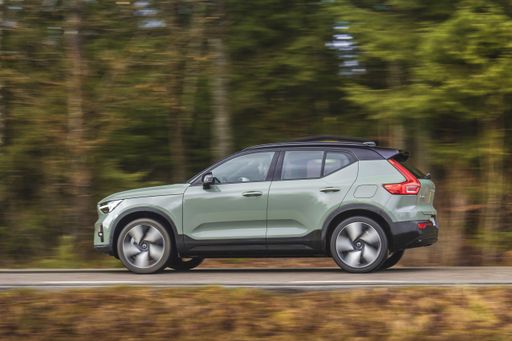
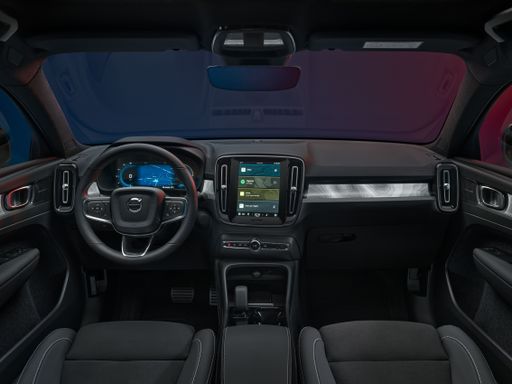
Volvo EX40

5 (1 Reviews)
rate
  • markedly cheaper
  • marginally lighter

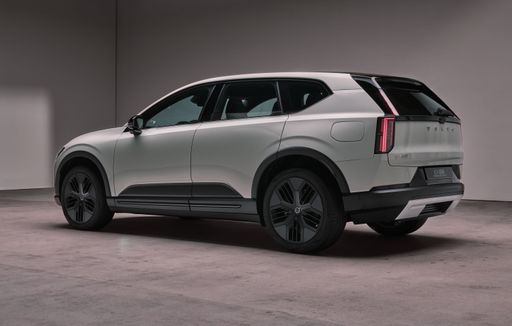
Volvo EX60

  • clearly more power
  • somewhat more efficient
  • clearly more electric range
  • moderately quicker 0–100 km/h
  • markedly more trunk space
EX40

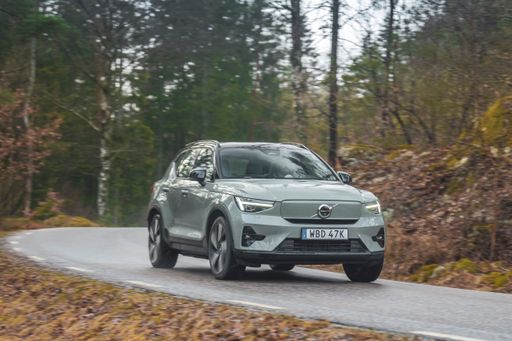
Face-off: Volvo EX40 vs Volvo EX60 — a compact crossover goes up against a larger sibling

The Volvo EX40 and the Volvo EX60 are booked into the same ring as electric crossovers, and this is the page where their differences get unpacked. This comparison lays out how the two models diverge in character, space, and everyday use so you can cut through marketing speak. Think of it as a short, sharp brief: one is the nimble city type, the other aims higher on comfort and presence. Read on if you want to know which one suits your life rather than which one wins a spreadsheet.
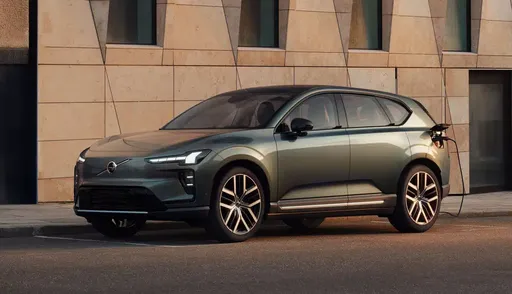
EX60

Vibes and positioning — understatement versus statement

The Volvo EX40 feels like the understated urbanist: sharper in town, easy to park, and modestly assertive in its design choices. The Volvo EX60 leans toward statement-making — bigger stance, more composed road manners and an aura that reads as more premium at a glance. One wears practicality like a well-cut jacket; the other prefers a roomier, more confident silhouette that announces itself. That difference isn’t just style — it’s the tone each car sets for daily life.

EX40

Day-to-day reality — city runs, school runs and long stretches

Put the Volvo EX40 through rush-hour traffic and it rewards with agility and easy handling in tight spaces, ideal for short hops and city errands. The Volvo EX60 is kinder on long drives and family luggage missions, trading some urban nimbleness for a calmer, more planted ride on the motorway. If you live in the city and value fuss-free parking, the EX40 will fit more naturally into mornings; if your calendar includes long-distance commutes or regular family trips, the EX60’s composure shows up when the miles stack up. Both cars aim for comfort, but they do it with different priorities: compact responsiveness versus relaxed stability.

EX60

How each car lets you justify the purchase

Buyers who choose the Volvo EX40 will often point to sensible ownership and a “fits-my-life” argument — it’s easy to live with and doesn’t overpromise. The Volvo EX60 provides a clearer case for those who want presence, extra space and a more accomplished long-distance experience, making it easier to rationalize the higher price tag in social or family terms. If you justify purchases with practical spreadsheets and daily usability you’ll nod at the EX40, while the EX60 offers an emotional plus — more room, more comfort and that premium feel that helps the decision land. Neither choice is vanity alone; they just appeal to different sorts of convincing arguments.

EX40

Who should take the Volvo EX40 home?

If your shopping list reads “efficient city commuter” and “practical daily driver” you’ll find the Volvo EX40 speaks your language, pairing compact agility with user-friendly ergonomics. It’s a good fit for one- or two-person households, buyers who prize sensible running costs, and anyone who lives where streets and parking spaces are at a premium. The EX40 is the kind of car that makes weekdays easier without demanding theatrical reasons for the purchase. It’s also a solid fallback for younger families who value smart packaging over expansive cabin space.

Who should opt for the Volvo EX60 — and where the Volvo EX40 still makes sense

The Volvo EX60 suits buyers who want a smoother long-distance experience and a stronger presence on the driveway — think comfort-minded couples, growing families and image-conscious drivers who like to travel in calm. It’s the choice for those who prioritize cabin serenity, extra load flexibility and a more premium feel when doors close. That said, the Volvo EX40 remains the smarter urban pick for commuters and pragmatic buyers who want easy daily usability without unnecessary bulk. Keep reading for the spec-by-spec breakdown to see how these real-world impressions map onto the numbers and detailed trade-offs.

Here’s where it gets real: The technical differences in detail

EX40

Costs and Efficiency:

When it comes to price and running costs, the biggest differences usually appear. This is often where you see which car fits your budget better in the long run.

Volvo EX40 is markedly cheaper – starting at 42,800 £ , while the Volvo EX60 costs 54,000 £ . That’s a price difference of around 11,143 £.

In terms of energy consumption, the Volvo EX60 is somewhat more efficient: consuming 14.7 kWh/100km compared to 16.6 kWh/100km for the Volvo EX40. That’s a difference of about 1.9 kWh/100km.

As for electric range, the Volvo EX60 offers clearly more range – reaching up to 810 km, about 234 km more than the Volvo EX40.

EX60

Engine and Performance:

Under the bonnet, it becomes clear which model is tuned for sportiness and which one takes the lead when you hit the accelerator.

When it comes to engine power, the Volvo EX60 offers clearly more power – delivering 680 HP compared to 442 HP. That’s roughly 238 HP more horsepower.

When accelerating from 0 to 100 km/h, the Volvo EX60 is moderately quicker – completing the sprint in 3.9 s, while the Volvo EX40 takes 4.6 s. That’s about 0.7 s quicker.

There’s also a difference in torque: the Volvo EX60 delivers slightly more torque with 790 Nm compared to 670 Nm. That’s about 120 Nm more.

EX40

Space and Everyday Use:

Cabin size, boot volume and payload all play a role in everyday practicality. Here, comfort and flexibility make the difference.

Both vehicles offer seating for 5 people.

In terms of curb weight, Volvo EX40 is marginally lighter – 2,040 kg compared to 2,190 kg. The difference is around 150 kg.

Looking at boot space, the Volvo EX60 offers markedly more boot space – 523 L compared to 410 L. That’s a difference of about 113 L.

When it comes to payload, the Volvo EX40 carries only slightly more – 480 kg compared to 460 kg. That’s a difference of about 20 kg.

Who wins the race in the data check?

The Volvo EX60 is far ahead overall in the objective data comparison.
This result only shows which model scores more points on paper – not which of the two cars feels right for you.

from £54,000
EX60

Volvo EX60

  • Engine Type : Electric
  • Transmission : Automatic
  • Drive Type : Rear-Wheel Drive, All-Wheel Drive
  • Power HP : 374 - 680 HP
  • Consumption kWh/100km : 14.7 - 16.2 kWh/100km
  • Electric Range : 620 - 810 km
Volvo EX40
Volvo EX60

Costs and Consumption

View detailed analysis

Engine and Performance

View detailed analysis

Dimensions and Body

View detailed analysis

Volvo EX40

The Volvo EX40 wraps Scandinavian calm and clever practicality into a compact electric package that feels both premium and refreshingly uncomplicated. It's the grown-up answer to flashier rivals — a safe, comfy, and city-friendly EV with thoughtful tech that makes everyday driving quietly satisfying.

details

Volvo EX60

The Volvo EX60 arrives as a sleek, family-friendly electric SUV that blends Scandinavian restraint with a surprising dash of personality, wrapping a calm, premium cabin around practical everyday usability. It’s aimed at buyers who prize safety and comfort but still want a car that rewards an enthusiastic drive, proving that sensible can be quietly fun.

details
Volvo EX40
Volvo EX60

Costs and Consumption

Price
42,800 - 58,200 £
Price
54,000 - 70,100 £
Consumption L/100km
-
Consumption L/100km
-
Consumption kWh/100km
16.6 - 17.6 kWh/100km
Consumption kWh/100km
14.7 - 16.2 kWh/100km
Electric Range
480 - 576 km
Electric Range
620 - 810 km
Battery Capacity
67 - 79 kWh
Battery Capacity
-
co2
0 g/km
co2
0 g/km
Fuel tank capacity
-
Fuel tank capacity
-

Dimensions and Body

Body Type
SUV
Body Type
SUV
Seats
5
Seats
5
Doors
5
Doors
-
Curb weight
2,040 - 2,170 kg
Curb weight
2,190 - 2,425 kg
Trunk capacity
410 L
Trunk capacity
523 L
Length
4,440 mm
Length
-
Width
1,863 mm
Width
1,899 mm
Height
1,647 mm
Height
-
Max trunk capacity
1,400 L
Max trunk capacity
-
Payload
430 - 480 kg
Payload
435 - 460 kg

Engine and Performance

Engine Type
Electric
Engine Type
Electric
Transmission
Automatic
Transmission
Automatic
Transmission Detail
Reduction Gearbox
Transmission Detail
Reduction Gearbox
Drive Type
Rear-Wheel Drive, All-Wheel Drive
Drive Type
Rear-Wheel Drive, All-Wheel Drive
Power HP
238 - 442 HP
Power HP
374 - 680 HP
Acceleration 0-100km/h
4.6 - 7.3 s
Acceleration 0-100km/h
3.9 - 5.9 s
Max Speed
180 km/h
Max Speed
-
Torque
420 - 670 Nm
Torque
480 - 790 Nm
Number of Cylinders
-
Number of Cylinders
-
Power kW
175 - 325 kW
Power kW
275 - 500 kW
Engine capacity
-
Engine capacity
-

General

Model Year
2,024
Model Year
2,026 - 2,027
CO2 Efficiency Class
A
CO2 Efficiency Class
A
Brand
Volvo
Brand
Volvo
DriveDuel uses data analysis and artificial intelligence to evaluate vehicle data and create content. Content is regularly reviewed and improved. The displayed prices are estimates based on German list prices, adjusted to the respective country’s VAT. Country-specific registration taxes are not included. This information is not legally binding.