VS

Volvo EX40 vs Volvo XC40 comparison

Compare performance (442 HP vs 197 HP), boot space and price (45,200 £ vs 41,900 £ ) at a glance. Find out which car is the better choice for you – Volvo EX40 or Volvo XC40?

Volvo EX40 vs Volvo XC40: Key differences

Volvo EX40

4.5 (2 Reviews)
rate
  • significantly more power
  • considerably quicker 0–100 km/h
details

Volvo XC40

5 (6 Reviews)
rate
  • only slightly cheaper
  • markedly lighter
details

All details on performance, efficiency, range and trunk space can be found in the technical comparison below – including user reviews for both models.

By Achim Sedelmaier

EX40

City manners, long‑legged calm

If your day is a mixture of tight parking and open roads, the personalities of these two Volvos become apparent the moment you slip in. The EX40 arrives with a composed, almost meditative demeanour that soaks up traffic stress, while the XC40 answers with a more familiar, energetic vibe that feels engaged rather than aloof. Both manage urban tasks with confidence, but they deliver comfort and pace in distinctly different ways.
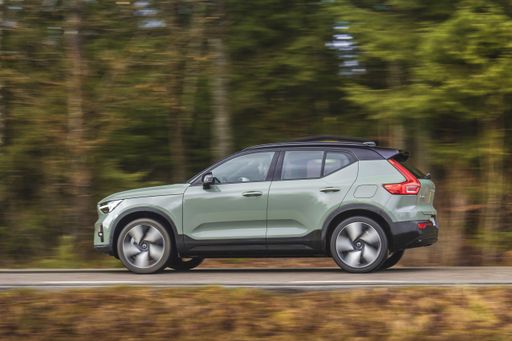
XC40

Street style and presence

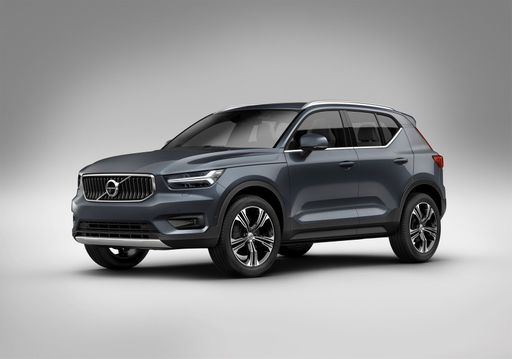
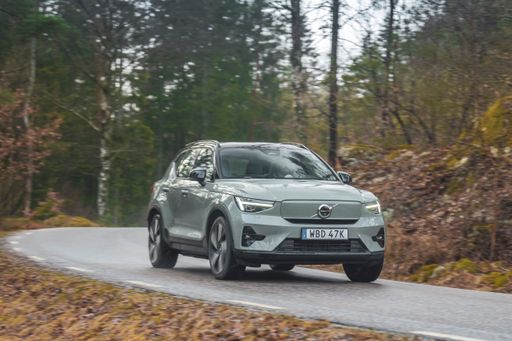
From a distance the two share Volvo’s restrained elegance, yet up close their characters diverge; the EX40 reads as modern minimalism with smooth surfaces and a contemporary stance, while the XC40 carries a more rugged, compact SUV attitude that still looks lively in the city. Material choices and trim accents give each a unique flavour of sophistication, so your impression will hinge on whether you prefer avant‑garde or a classic crossover look. Either way, both wear their badge with dignity rather than flamboyance.

EX40

Cabin mood and daily usability

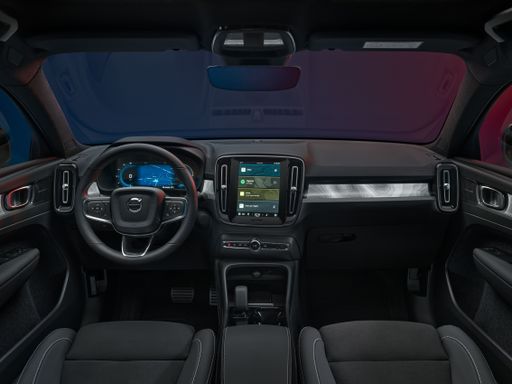
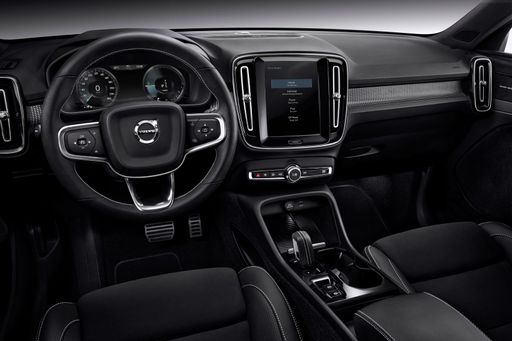
Step inside and you’ll notice the difference in ambiance: the EX40 favours a calm, uncluttered sanctuary that encourages relaxed, low‑stress journeys, whereas the XC40 presents a familiar driver‑centric cockpit that’s comforting and straightforward. Controls feel thought‑through in both, but their layouts reflect different priorities — one leans toward serenity and the other toward tactile familiarity. For everyday life, small details like seat comfort, sightlines and storage pockets will tell you which suits your routine.

XC40

How they handle the road

On twisty backroads the two reveal contrasting temperaments: the XC40 tends to feel nimble and alert, rewarding quick direction changes and an engaged driving style, while the EX40 prefers to iron out imperfections and stay composed under pressure, trading raw immediacy for a smoother, steadier experience. Steering weight and suspension tuning make each feel purposeful in its own right, with compromises that suit different driver moods. If you like to hustle through corners you’ll notice it, and if you prefer to glide the difference is equally clear.

EX40

Family duty and weekend flexibility

Both cars are practical companions for family life, but they make different promises: the XC40 is easy to live with day‑to‑day, with accessible seating and familiar cargo handling that’s intuitive for school runs and groceries, while the EX40 stretches the definition of versatility with clever packaging and a calm rear cabin that’s particularly pleasant on longer stints. Fitment of child seats, ease of loading and the ergonomics of rear doors and tailgate are where you’ll sense which one aligns with your household. Ultimately it’s less about space charts and more about how the car integrates into your rhythm of life.

XC40

Running it as your everyday partner

Ownership isn’t just about sticker impressions; it’s about how the car fits into your weekly patterns, from refuelling or recharging routines to service visits and usage habits. The EX40 appeals if you value low‑noise cruising and a modern ownership experience, whereas the XC40 rewards drivers who like the straightforward, established feel of a well‑sorted compact crossover. Resale perceptions, dealer networks and the simple pleasure of living with the car should all factor into your decision — these are the things that matter months after the test drive.

Who should choose which path?

If you commute in dense traffic or prize a refined, contemporary interior, the EX40 leans toward the peace‑seeking buyer; if you want a lively, familiar companion that feels at home in mixed use and likes an engaging nudge from the driver’s seat, the XC40 will appeal more. Both are credible Volvos that suit different lifestyles rather than one being universally better, so your choice comes down to which character fits your week. Keep reading — the DriveDuel Champion will be revealed afterwards.

Here’s where it gets real: The technical differences in detail

EX40

Costs and Efficiency:

Looking at overall running costs, both models reveal some interesting differences in everyday economy.

Volvo XC40 is only slightly cheaper – starting at 41,900 £ , while the Volvo EX40 costs 45,200 £ . That’s a price difference of around 3,343 £.

XC40

Engine and Performance:

Power, torque and acceleration are the classic benchmarks for car enthusiasts – and here, some clear differences start to show.

When it comes to engine power, the Volvo EX40 offers significantly more power – delivering 442 HP compared to 197 HP. That’s roughly 245 HP more horsepower.

When accelerating from 0 to 100 km/h, the Volvo EX40 is considerably quicker – completing the sprint in 4.6 s, while the Volvo XC40 takes 7.6 s. That’s about 3 s quicker.

There’s also a difference in torque: the Volvo EX40 delivers significantly more torque with 670 Nm compared to 300 Nm. That’s about 370 Nm more.

EX40

Space and Everyday Use:

Beyond pure performance, interior space and usability matter most in daily life. This is where you see which car is more practical and versatile.

Both vehicles offer seating for 5 people.

In terms of curb weight, Volvo XC40 is markedly lighter – 1,688 kg compared to 2,040 kg. The difference is around 352 kg.

When it comes to payload, the Volvo XC40 carries very slightly more – 532 kg compared to 480 kg. That’s a difference of about 52 kg.

Who wins the race in the data check?

The Volvo EX40 stands well ahead of its rival in the objective data comparison.
This result only shows which model scores more points on paper – not which of the two cars feels right for you.

from £45,200
EX40

Volvo EX40

  • Engine Type : Electric
  • Transmission : Automatic
  • Drive Type : Rear-Wheel Drive, All-Wheel Drive
  • Power HP : 238 - 442 HP
  • Consumption kWh/100km : 16.6 - 17.6 kWh/100km
  • Electric Range : 477 - 576 km
Volvo EX40
Volvo XC40

Costs and Consumption

View detailed analysis

Engine and Performance

View detailed analysis

Dimensions and Body

View detailed analysis

Volvo EX40

The Volvo EX40 wraps Scandinavian calm and clever practicality into a compact electric package that feels both premium and refreshingly uncomplicated. It's the grown-up answer to flashier rivals — a safe, comfy, and city-friendly EV with thoughtful tech that makes everyday driving quietly satisfying.

details

Volvo XC40

The Volvo XC40 wraps Scandinavian minimalism into a compact, city-ready SUV with a premium cabin that feels both practical and grown-up. It will suit buyers who prize safety, clever storage and a composed ride, proving that small dimensions don't mean small personality.

details
Volvo EX40
Volvo XC40

Costs and Consumption

Price
45,200 - 58,200 £
Price
41,900 - 46,100 £
Consumption L/100km
-
Consumption L/100km
6.5 L/100km
Consumption kWh/100km
16.6 - 17.6 kWh/100km
Consumption kWh/100km
-
Electric Range
477 - 576 km
Electric Range
-
Battery Capacity
-
Battery Capacity
-
co2
0 g/km
co2
148 g/km
Fuel tank capacity
-
Fuel tank capacity
-

Dimensions and Body

Body Type
SUV
Body Type
SUV
Seats
5
Seats
5
Doors
-
Doors
-
Curb weight
2,040 - 2,170 kg
Curb weight
1,688 kg
Trunk capacity
410 L
Trunk capacity
-
Length
-
Length
-
Width
1,863 mm
Width
1,863 mm
Height
-
Height
-
Max trunk capacity
-
Max trunk capacity
-
Payload
430 - 480 kg
Payload
532 kg

Engine and Performance

Engine Type
Electric
Engine Type
Petrol MHEV
Transmission
Automatic
Transmission
Automatic
Transmission Detail
Reduction Gearbox
Transmission Detail
Dual-Clutch Automatic
Drive Type
Rear-Wheel Drive, All-Wheel Drive
Drive Type
Front-Wheel Drive
Power HP
238 - 442 HP
Power HP
163 - 197 HP
Acceleration 0-100km/h
4.6 - 7.3 s
Acceleration 0-100km/h
7.6 - 8.6 s
Max Speed
-
Max Speed
-
Torque
420 - 670 Nm
Torque
265 - 300 Nm
Number of Cylinders
-
Number of Cylinders
4
Power kW
175 - 325 kW
Power kW
120 - 145 kW
Engine capacity
-
Engine capacity
1,969 cm3

General

Model Year
2,024 - 2,026
Model Year
2026
CO2 Efficiency Class
A
CO2 Efficiency Class
E
Brand
Volvo
Brand
Volvo
DriveDuel uses data analysis and artificial intelligence to evaluate vehicle data and create content. Content is regularly reviewed and improved. The displayed prices are estimates based on German list prices, adjusted to the respective country’s VAT. Country-specific registration taxes are not included. This information is not legally binding.