VS

Volvo EX40 vs Skoda Elroq comparison

Compare performance (442 HP vs 340 HP), boot space and price (45,200 £ vs 32,000 £ ) at a glance. Find out which car is the better choice for you – Volvo EX40 or Skoda Elroq?

Volvo EX40 vs Skoda Elroq: Key differences

Volvo EX40

4.5 (2 Reviews)
rate
  • clearly more power
  • very slightly more electric range
  • slightly quicker 0–100 km/h
details

Skoda Elroq

4.5 (8 Reviews)
rate
  • considerably cheaper
  • very slightly more efficient
  • only slightly lighter
  • somewhat more trunk space
details

All details on performance, efficiency, range and trunk space can be found in the technical comparison below – including user reviews for both models.

By Achim Sedelmaier

EX40

Volvo EX40 vs Skoda Elroq: what really matters in daily driving

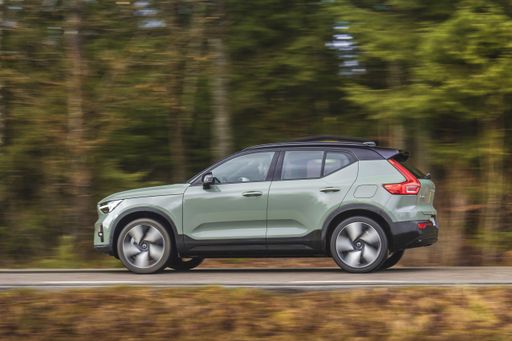
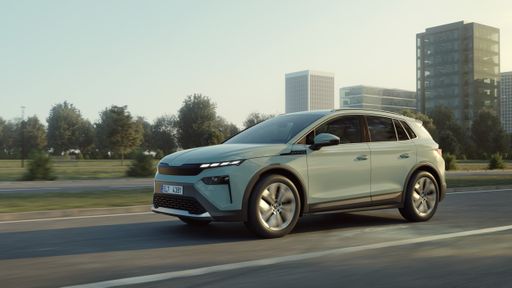
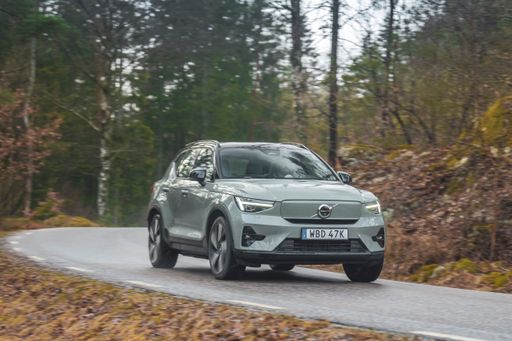
The Volvo EX40 and Skoda Elroq meet head‑to‑head in a compact EV showdown that’s less about numbers and more about how they live with you. Think of this Volvo EX40 VS Skoda Elroq comparison as a reality check on character, comfort and usability. The EX40 leans into a calm, premium vibe with effortless punch, while the Elroq majors on space, softness and value. Both are quiet and easygoing, but they go about ease of use in different ways that will quickly become obvious on your commute and your next family trip.
Elroq

Driving character and everyday feel

The Volvo EX40 feels instantly stronger when you tap the accelerator, yet it prefers a relaxed rhythm to backroad antics. Steering is light and secure but a touch aloof, underlining its serene, safety‑first character. The Skoda Elroq feels more neutral and steady than urgent, with a chassis tuned for stability and confidence rather than thrills. If you want quick thrust with a premium hush, the EX40 suits; if you value calm, predictable responses and a settled gait, the Elroq plays to that brief.

EX40

Ride comfort and long‑distance manners

On motorways both settle down nicely, though they take different paths to the same destination. The EX40’s front seats are superb for hours at a time and cabin noise is impressively low; just be mindful that very large wheels can chip away at its plushness on rougher surfaces. The Skoda Elroq rides with a gentle, well‑damped composure that keeps bad roads at arm’s length and remains wonderfully stable at speed. Efficiency tends to tilt toward the Elroq on long hauls, while the EX40’s integrated Google route planning makes charging stops feel less stressful when you press on.

Elroq

Cabin tech and usability

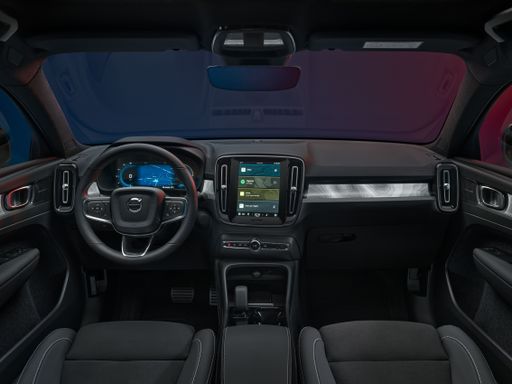
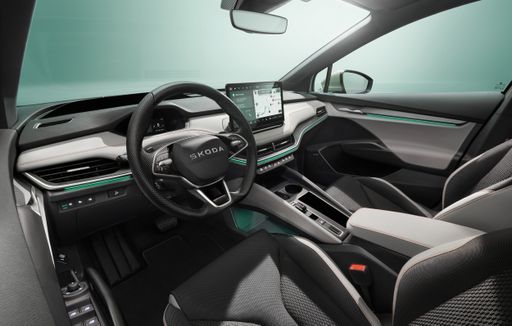
The EX40’s Google‑built‑in setup nails navigation and voice control, but occasional software hiccups and menu‑deep settings for regen can frustrate. Its interface is clean and the one‑pedal mode is great in town, though the reversing camera could be crisper and rearward visibility isn’t its strong suit. The Elroq’s latest infotainment boots quickly and the menu logic is straightforward, but key climate functions live behind the touchscreen and take a week to feel second nature. If you want seamless maps and route planning, the Volvo feels smarter; if you prefer a clear, conventional menu flow and less tech drama, the Skoda keeps things easy.

EX40

Space, practicality and family life

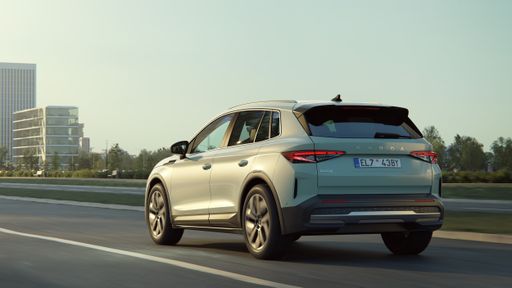
Families will notice the Elroq’s generous second row first: access is easy, head‑ and kneeroom are adult‑friendly, and fitting child seats is simple. Its boot is usefully shaped and carries more, though the load lip is high and you don’t get a perfectly flat floor with the seats folded. The EX40 isn’t as airy in the back, but it counters with clever touches: a variable boot floor that doubles as a divider and a small front trunk for cables and messy bits. Day to day, the Skoda wins for outright space and payload, while the Volvo’s thoughtful storage and tidy footprint make city living simpler.

Elroq

Costs, efficiency and buyer fit

The Skoda Elroq undercuts the Volvo on price and typically sips a little less energy, making it the stronger value play for high‑mileage families. The Volvo EX40 feels more premium inside and delivers stronger acceleration, but asks more at the till and on faster journeys may require a touch more charging discipline. City dwellers will appreciate how easily the EX40 slots into tight streets and its relaxed one‑pedal flow, while the Elroq suits buyers who prioritise room, comfort and calm efficiency above all else. If your brief is premium feel and stress‑free thrust, lean Volvo; if it’s space, serenity and sensible running, the Skoda lines up neatly—now let’s see how the specs underpin those differences.

Video - Skoda Elroq

Video Thumbnail

Here’s where it gets real: The technical differences in detail

EX40

Costs and Efficiency:

Price and efficiency are often the first things buyers look at. Here it becomes clear which model has the long-term edge – whether at the pump, the plug, or in purchase price.

Skoda Elroq is considerably cheaper – starting at 32,000 £ , while the Volvo EX40 costs 45,200 £ . That’s a price difference of around 13,200 £.

In terms of energy consumption, the Skoda Elroq is very slightly more efficient: consuming 15.1 kWh/100km compared to 16.6 kWh/100km for the Volvo EX40. That’s a difference of about 1.5 kWh/100km.

As for electric range, the Volvo EX40 offers very slightly more range – reaching up to 576 km, about 2 km more than the Skoda Elroq.

Elroq

Engine and Performance:

Power, torque and acceleration say a lot about how a car feels on the road. This is where you see which model delivers more driving dynamics.

When it comes to engine power, the Volvo EX40 offers clearly more power – delivering 442 HP compared to 340 HP. That’s roughly 102 HP more horsepower.

When accelerating from 0 to 100 km/h, the Volvo EX40 is slightly quicker – completing the sprint in 4.6 s, while the Skoda Elroq takes 5.4 s. That’s about 0.8 s quicker.

There’s also a difference in torque: the Skoda Elroq delivers very slightly more torque with 679 Nm compared to 670 Nm. That’s about 9 Nm more.

EX40

Space and Everyday Use:

Cabin size, boot volume and payload all play a role in everyday practicality. Here, comfort and flexibility make the difference.

Both vehicles offer seating for 5 people.

In terms of curb weight, Skoda Elroq is only slightly lighter – 2,036 kg compared to 2,040 kg. The difference is around 4 kg.

Looking at boot space, the Skoda Elroq offers somewhat more boot space – 470 L compared to 410 L. That’s a difference of about 60 L.

When it comes to payload, the Skoda Elroq carries moderately more – 549 kg compared to 480 kg. That’s a difference of about 69 kg.

Who wins the race in the data check?

The Skoda Elroq holds a slight edge in the objective data comparison.
This result only shows which model scores more points on paper – not which of the two cars feels right for you.

from £32,000
Elroq

Skoda Elroq

  • Engine Type : Electric
  • Transmission : Automatic
  • Drive Type : Rear-Wheel Drive, All-Wheel Drive
  • Power HP : 190 - 340 HP
  • Consumption kWh/100km : 15.1 - 16.3 kWh/100km
  • Electric Range : 441 - 574 km
Volvo EX40
Skoda Elroq

Costs and Consumption

View detailed analysis

Engine and Performance

View detailed analysis

Dimensions and Body

View detailed analysis

Volvo EX40

The Volvo EX40 is a compact electric SUV that blends Scandinavian minimalism with a comfortable, high-quality interior suited to daily driving and longer trips. It prioritizes safety and intuitive technology, delivering a calm, refined experience that feels mature and easy to live with.

details

Skoda Elroq

The Skoda Elroq is a practical and well-rounded compact SUV that blends clever packaging with a calm, comfortable ride. It offers a sensible interior, straightforward technology and a value-focused approach, making it a particularly good choice for families and everyday drivers.

details
Volvo EX40
Skoda Elroq

Costs and Consumption

Price
45,200 - 58,200 £
Price
32,000 - 47,000 £
Consumption L/100km
-
Consumption L/100km
-
Consumption kWh/100km
16.6 - 17.6 kWh/100km
Consumption kWh/100km
15.1 - 16.3 kWh/100km
Electric Range
477 - 576 km
Electric Range
441 - 574 km
Battery Capacity
-
Battery Capacity
-
co2
0 g/km
co2
0 g/km
Fuel tank capacity
-
Fuel tank capacity
-

Dimensions and Body

Body Type
SUV
Body Type
SUV
Seats
5
Seats
5
Doors
-
Doors
-
Curb weight
2,040 - 2,170 kg
Curb weight
2,036 - 2,255 kg
Trunk capacity
410 L
Trunk capacity
470 L
Length
-
Length
-
Width
1,863 mm
Width
1,884 mm
Height
-
Height
-
Max trunk capacity
-
Max trunk capacity
-
Payload
430 - 480 kg
Payload
482 - 549 kg

Engine and Performance

Engine Type
Electric
Engine Type
Electric
Transmission
Automatic
Transmission
Automatic
Transmission Detail
Reduction Gearbox
Transmission Detail
Reduction Gearbox
Drive Type
Rear-Wheel Drive, All-Wheel Drive
Drive Type
Rear-Wheel Drive, All-Wheel Drive
Power HP
238 - 442 HP
Power HP
190 - 340 HP
Acceleration 0-100km/h
4.6 - 7.3 s
Acceleration 0-100km/h
5.4 - 8.5 s
Max Speed
-
Max Speed
-
Torque
420 - 670 Nm
Torque
350 - 679 Nm
Number of Cylinders
-
Number of Cylinders
-
Power kW
175 - 325 kW
Power kW
140 - 250 kW
Engine capacity
-
Engine capacity
-

General

Model Year
2,024 - 2,026
Model Year
2026
CO2 Efficiency Class
A
CO2 Efficiency Class
A
Brand
Volvo
Brand
Skoda
DriveDuel uses data analysis and artificial intelligence to evaluate vehicle data and create content. Content is regularly reviewed and improved. The displayed prices are estimates based on German list prices, adjusted to the respective country’s VAT. Country-specific registration taxes are not included. This information is not legally binding.