VS

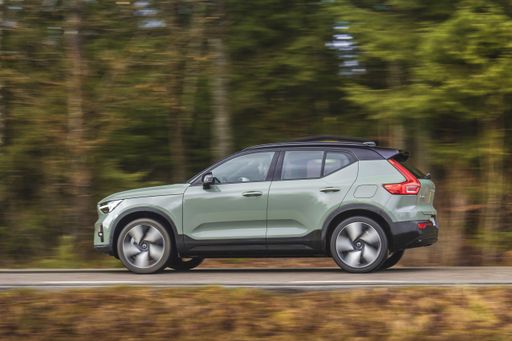
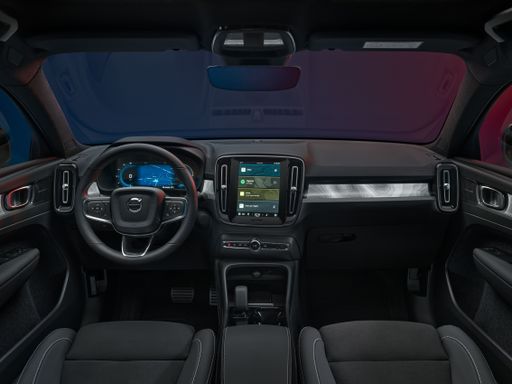
Volvo EX30 vs Volvo EX40 comparison

Compare performance (428 HP vs 442 HP), boot space and price (33,000 £ vs 42,800 £ ) at a glance. Find out which car is the better choice for you – Volvo EX30 or Volvo EX40?

Volvo EX30 vs Volvo EX40: Key differences

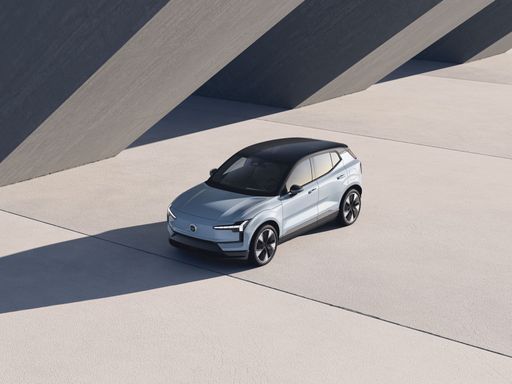
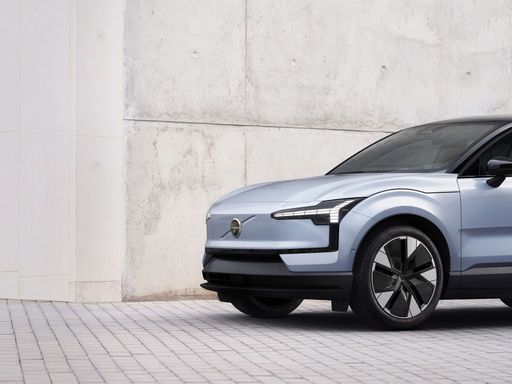
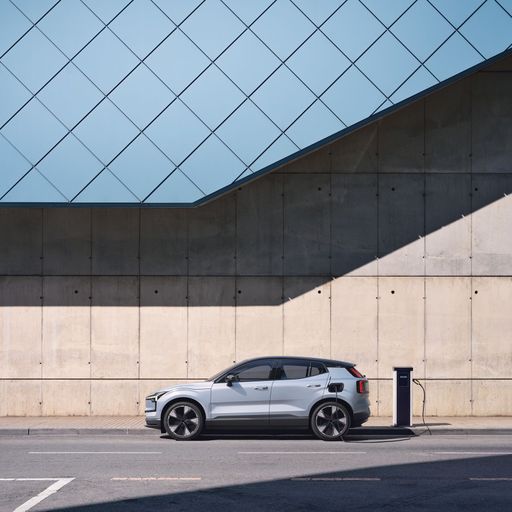
Volvo EX30

3.6 (5 Reviews)
rate
  • visibly cheaper
  • clearly quicker 0–100 km/h
  • moderately lighter

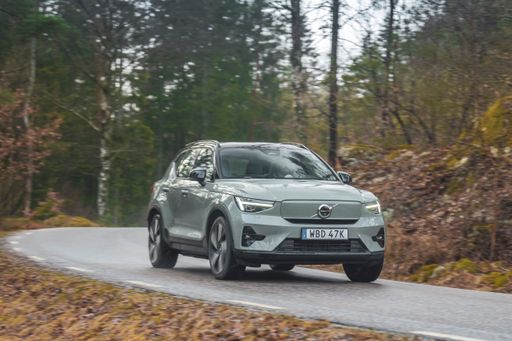
Volvo EX40

5 (1 Reviews)
rate
  • only slightly more power
  • only slightly more efficient
  • somewhat more electric range
  • noticeably more trunk space

All details on performance, efficiency, range and trunk space can be found in the technical comparison below – including user reviews for both models.

EX30

The automotive world is rapidly evolving, and as electric vehicles (EVs) become increasingly popular, manufacturers like Volvo are diversifying their offerings. Two of their newest entrants into the electric SUV segment are the Volvo EX30 and the Volvo EX40. Both vehicles promise exceptional performance and cutting-edge technologies, but they cater to slightly different audiences and preferences. This comparison delves into the technical aspects and innovations that set these two models apart.

EX40

Powertrain and Performance

The Volvo EX30 is available in two configurations with power outputs of 272 HP (200 kW) for the base model and up to 428 HP (315 kW) for the high-performance variant. This SUV achieves a remarkable acceleration from 0 to 100 km/h in as little as 3.6 seconds, thanks to a torque rating of up to 543 Nm.

In contrast, the Volvo EX40 features a slightly different engine configuration with power outputs of 238 HP (175 kW) in the base model and peaking at 408 HP (300 kW). Its acceleration time is also impressive, reaching 100 km/h in just 4.8 seconds, with a maximum torque of 670 Nm for the high-performance versions. While both vehicles boast automatic transmissions with reduction gearboxes, the EX30 edges ahead in raw power.

EX30

Battery Capacity and Range

Battery performance is crucial in the EV segment, and both the EX30 and EX40 make strong statements in this regard. The EX30 offers two battery options: a 49 kWh capacity that delivers an electric range of up to 339 km and a larger 65 kWh version that achieves up to 476 km. This gives the EX30 a balanced performance feel, perfect for urban driving and short trips.

The Volvo EX40 steps up with larger battery capacities of 67 kWh and 79 kWh, allowing it to deliver an impressive electric range of up to 576 km. This longer range makes the EX40 a suitable option for longer journeys, providing peace of mind for those who prioritize extended travel without frequent charging stops.

EX40

Interior Space and Comfort

Both models are designed to accommodate five passengers comfortably, but the EX40 takes the lead in cargo space. The EX30 offers a trunk capacity of 318 liters, suitable for daily needs and errands, while the EX40 boasts a larger trunk capacity of 410 liters, making it better equipped for family outings or significant road trips.

The dimensions of both vehicles reflect their SUV build, with the EX30 measuring 4233 mm in length, 1837 mm in width, and 1549 mm in height. On the other hand, the EX40 is slightly larger, with dimensions of 4440 mm in length, 1863 mm in width, and a height of 1647 mm. This additional size in the EX40 contributes to a more spacious feel inside, appealing to those who prioritize interior comfort.

EX30

Charging Efficiency and Consumption

Efficient charging times are vital for the daily usability of electric vehicles. The EX30 has a consumption rate of 17 to 17.5 kWh/100 km, while the EX40 ranges between 16.6 to 17.5 kWh/100 km. The EX40's slightly lower energy consumption makes it advantageous for longer journeys, as it can potentially stretch its range further with less frequent charging.

EX40

Innovations and Technology

Both models are equipped with state-of-the-art technological innovations that enhance safety, driving experience, and comfort. Volvo’s commitment to sustainability is prominent, as both the EX30 and EX40 have been given a CO2 efficiency class of A, reflecting their environmentally friendly nature with zero tailpipe emissions.

In addition to this, advanced driver-assistance systems and connectivity features are standard across both models, including an intuitive infotainment system that promotes convenience and safety. However, the EX40 might have additional tech features available as optional upgrades, catering to tech-savvy consumers who crave the latest gadgets.

EX30

Conclusion: Choosing Between the EX30 and EX40

The choice between the Volvo EX30 and EX40 largely depends on individual needs and lifestyle preferences. The EX30 stands out for its performance and agility, making it ideal for urban environments. Meanwhile, the EX40 shines with its enhanced range, additional cargo space, and slightly reduced energy consumption, making it an excellent choice for families and long-distance travel.

Ultimately, both the Volvo EX30 and EX40 represent a significant step forward in Volvo's electric vehicle strategy, each offering unique advantages that cater to different markets while maintaining the brand’s commitment to safety, sustainability, and innovation.

Here’s where it gets real: The technical differences in detail

EX30

Costs and Efficiency:

Price and efficiency are key factors when choosing a car – and this is often where the real differences emerge.

Volvo EX30 is visibly cheaper – starting at 33,000 £ , while the Volvo EX40 costs 42,800 £ . That’s a price difference of around 9,857 £.

In terms of energy consumption, the Volvo EX40 is only slightly more efficient: consuming 16.6 kWh/100km compared to 17 kWh/100km for the Volvo EX30. That’s a difference of about 0.4 kWh/100km.

As for electric range, the Volvo EX40 offers somewhat more range – reaching up to 576 km, about 100 km more than the Volvo EX30.

EX40

Engine and Performance:

Power, torque and acceleration say a lot about how a car feels on the road. This is where you see which model delivers more driving dynamics.

When it comes to engine power, the Volvo EX40 offers only slightly more power – delivering 442 HP compared to 428 HP. That’s roughly 14 HP more horsepower.

When accelerating from 0 to 100 km/h, the Volvo EX30 is clearly quicker – completing the sprint in 3.6 s, while the Volvo EX40 takes 4.6 s. That’s about 1 s quicker.

There’s no difference in top speed – both reach 180 km/h.

There’s also a difference in torque: the Volvo EX40 delivers a bit more torque with 670 Nm compared to 543 Nm. That’s about 127 Nm more.

EX30

Space and Everyday Use:

Whether family car or daily driver – which one offers more room, flexibility and comfort?

Both vehicles offer seating for 5 people.

In terms of curb weight, Volvo EX30 is moderately lighter – 1,840 kg compared to 2,040 kg. The difference is around 200 kg.

Looking at boot space, the Volvo EX40 offers noticeably more boot space – 410 L compared to 318 L. That’s a difference of about 92 L.

For maximum load capacity, the Volvo EX40 offers clearly more capacity – up to 1,400 L, about 400 L more than the Volvo EX30.

When it comes to payload, the Volvo EX40 carries slightly more – 480 kg compared to 390 kg. That’s a difference of about 90 kg.

Who wins the race in the data check?

The Volvo EX40 is decisively ahead in the objective data comparison.
This result only shows which model scores more points on paper – not which of the two cars feels right for you.

from £42,800
EX40

Volvo EX40

  • Engine Type : Electric
  • Transmission : Automatic
  • Drive Type : Rear-Wheel Drive, All-Wheel Drive
  • Power HP : 238 - 442 HP
  • Consumption kWh/100km : 16.6 - 17.6 kWh/100km
  • Electric Range : 480 - 576 km
Volvo EX30
Volvo EX40

Costs and Consumption

View detailed analysis

Engine and Performance

View detailed analysis

Dimensions and Body

View detailed analysis

Volvo EX30

The Volvo EX30 arrives as a compact electric with crisp Scandinavian design and a cheeky personality, proving you can be serious about safety and still enjoy a grin on your commute. Its cabin is cleverly packaged and delightfully easy to live with, offering smart tech and practical touches that make it feel like a grown-up's city car with a sense of fun.

details

Volvo EX40

The Volvo EX40 wraps Scandinavian calm and clever practicality into a compact electric package that feels both premium and refreshingly uncomplicated. It's the grown-up answer to flashier rivals — a safe, comfy, and city-friendly EV with thoughtful tech that makes everyday driving quietly satisfying.

details
Volvo EX30
Volvo EX40

Costs and Consumption

Price
33,000 - 49,100 £
Price
42,800 - 58,200 £
Consumption L/100km
-
Consumption L/100km
-
Consumption kWh/100km
17 - 18.3 kWh/100km
Consumption kWh/100km
16.6 - 17.6 kWh/100km
Electric Range
339 - 476 km
Electric Range
480 - 576 km
Battery Capacity
49 - 65 kWh
Battery Capacity
67 - 79 kWh
co2
0 g/km
co2
0 g/km
Fuel tank capacity
-
Fuel tank capacity
-

Dimensions and Body

Body Type
SUV
Body Type
SUV
Seats
5
Seats
5
Doors
5
Doors
5
Curb weight
1,840 - 1,960 kg
Curb weight
2,040 - 2,170 kg
Trunk capacity
318 L
Trunk capacity
410 L
Length
4,233 mm
Length
4,440 mm
Width
1,838 mm
Width
1,863 mm
Height
1,550 mm
Height
1,647 mm
Max trunk capacity
1,000 L
Max trunk capacity
1,400 L
Payload
370 - 390 kg
Payload
430 - 480 kg

Engine and Performance

Engine Type
Electric
Engine Type
Electric
Transmission
Automatic
Transmission
Automatic
Transmission Detail
Reduction Gearbox
Transmission Detail
Reduction Gearbox
Drive Type
Rear-Wheel Drive, All-Wheel Drive
Drive Type
Rear-Wheel Drive, All-Wheel Drive
Power HP
272 - 428 HP
Power HP
238 - 442 HP
Acceleration 0-100km/h
3.6 - 5.7 s
Acceleration 0-100km/h
4.6 - 7.3 s
Max Speed
180 km/h
Max Speed
180 km/h
Torque
343 - 543 Nm
Torque
420 - 670 Nm
Number of Cylinders
-
Number of Cylinders
-
Power kW
200 - 315 kW
Power kW
175 - 325 kW
Engine capacity
-
Engine capacity
-

General

Model Year
2,024 - 2,025
Model Year
2,024
CO2 Efficiency Class
A
CO2 Efficiency Class
A
Brand
Volvo
Brand
Volvo
DriveDuel uses data analysis and artificial intelligence to evaluate vehicle data and create content. Content is regularly reviewed and improved. The displayed prices are estimates based on German list prices, adjusted to the respective country’s VAT. Country-specific registration taxes are not included. This information is not legally binding.