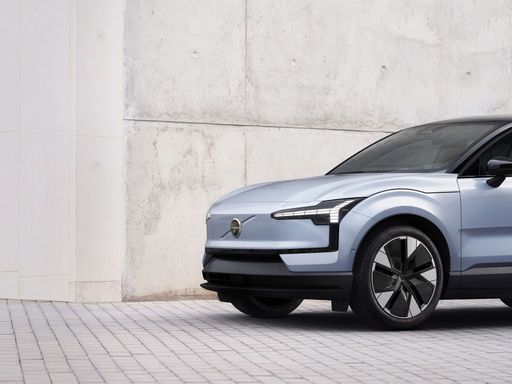
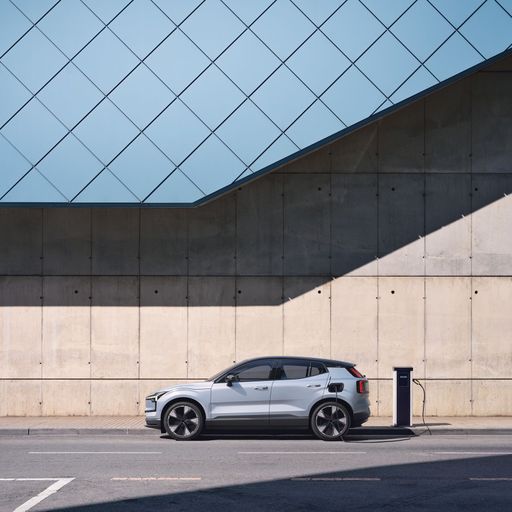
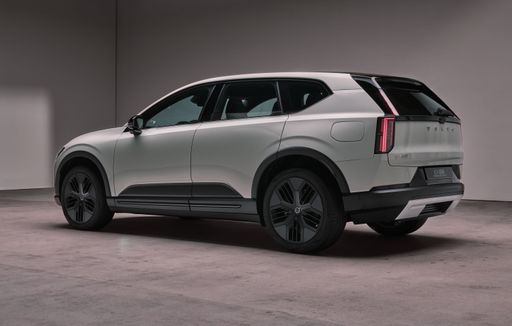
VS

Volvo EX30 vs Volvo EX60 comparison

Compare performance (428 HP vs 680 HP), boot space and price (30,000 £ vs 54,000 £ ) at a glance. Find out which car is the better choice for you – Volvo EX30 or Volvo EX60?

Volvo EX30 vs Volvo EX60: Key differences

Volvo EX30

3.5 (8 Reviews)
rate
  • substantially cheaper
  • marginally quicker 0–100 km/h
  • moderately lighter
details

Volvo EX60

  • markedly more power
  • moderately more efficient
  • clearly more electric range
  • noticeably more trunk space
details

All details on performance, efficiency, range and trunk space can be found in the technical comparison below – including user reviews for both models.

By Achim Sedelmaier

EX30

Volvo EX30 VS Volvo EX60: small premium crossover meets calm mid‑size SUV

Volvo EX30 VS Volvo EX60 sets up a clear contrast: the EX30 is a compact, spirited city‑focused crossover while the EX60 is a larger, more serene family SUV. The EX30 sells on agility, sharp acceleration and a modern, minimalist cabin; the EX60 trades that immediacy for cabin space, acoustic insulation and longer‑distance composure. Buyers will notice these differences the moment they climb in — the EX30 feels tight and purposeful, the EX60 roomy and sedate. This comparison looks beyond specs to what those traits mean day to day for comfort, usability and family life. Read on to see which car suits your driving habits and priorities before you dive into the technical sheet.
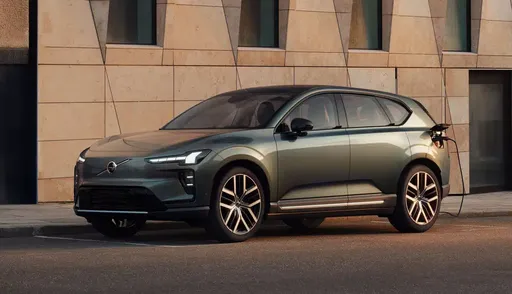
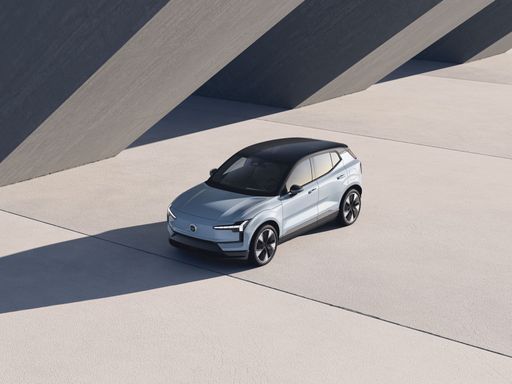
EX60

Character and driving feel

The Volvo EX30 drives like a city sprinter: light steering, eager throttle response and a small footprint that makes it feel quick off the line, while the EX60 prefers to hush things and absorb the road. If you enjoy direct, immediate responses and a car that feels lively in traffic, the EX30 gives a more engaging short‑trip experience; the EX60 instead cultivates a relaxed, insulated demeanour that masks speed and soothes long drives. Steering and suspension tuning underline the trade‑off — EX30 is tuned for nimbleness at the expense of tactile feedback, EX60 prioritises composure over sharp turn‑in. For buyers who value poise over pizzazz, EX60’s calmness will be more appealing, but drivers who relish quick city maneuvers will prefer the EX30.

EX30

Comfort and long‑distance usability

On long runs the Volvo EX60 clearly leans into comfort: a very quiet cabin, cushioned suspension and generous rear legroom make it a natural for repeated motorway miles and adult passengers in the back. The Volvo EX30, despite its compact size, surprises up front with supportive seats and a relaxed cruising ability, but its smaller rear bench and tighter boot limit true long‑distance practicality for four adults or heavy luggage. Charging behaviour and range shape trip planning too — EX60’s architecture reduces the frequency and length of stops on long journeys, whereas EX30 owners will plan more frequent charging if they regularly tackle long stages. If motorway serenity and rear‑seat comfort matter, EX60 is the obvious choice; if most journeys are shorter and you prioritize front‑seat comfort plus agility, the EX30 makes sense.

EX60

Practicality, cabin usability and perceived quality

Practical differences are stark: the EX60 offers a noticeably larger load area and more usable cabin storage, while the EX30 is compact and cleverly packaged but taxed when you need volume. Both cabins feel Scandinavian in design, yet the EX60’s materials and spatial generosity create a stronger premium impression for passengers, whereas the EX30 trades some rear comfort and trunk depth for a lower entry price and easier urban parking. The two also approach controls differently — EX30 is minimalist and touch‑centric which can demand more attention, EX60 combines modern voice and screen tech with some physical controls that reduce distraction. In everyday terms that means families who pack a lot or frequently carry adults will appreciate the EX60’s practicality, while city buyers who accept compromises for style and price will be satisfied with the EX30.

EX30

City friendliness and everyday usability

In town the Volvo EX30 is the easier car to live with: narrower body, smaller turning circle and a bouncier, lighter character that makes curbside parking and tight lanes less stressful. The Volvo EX60 counters with a composed ride and extensive camera and parking aids that mitigate its greater width, but it still demands more space and awareness when parking in cramped city garages. Visibility trade‑offs appear in both: EX30’s rear window lines and EX60’s broad shoulders mean cameras and sensors become everyday necessities rather than luxuries. If your driving is dominated by urban errands and tight spaces, the EX30 will feel more nimble; if you value a calm cabin for the occasional city run and don’t mind the bulk, the EX60’s driver aids carry the load.

Buyer fit — who should choose each Volvo?

Choose the Volvo EX30 if you’re a city commuter or tech‑minded buyer who values lower purchase cost, sharp on‑demand performance and easy manoeuvrability over rear‑seat space and maximum range. Opt for the Volvo EX60 if you’re a family or frequent long‑distance traveller who prizes quiet cabins, rear passenger comfort and fewer, faster charging stops on trips. Each car is a clear answer to different needs: EX30 for compact agility and accessible premium style, EX60 for calm, long‑distance competence and everyday practicality. The technical comparison that follows will make those trade‑offs concrete by showing how range, charging speed and output translate into real‑world advantages for each model.

Here’s where it gets real: The technical differences in detail

EX30

Costs and Efficiency:

Looking at overall running costs, both models reveal some interesting differences in everyday economy.

Volvo EX30 is substantially cheaper – starting at 30,000 £ , while the Volvo EX60 costs 54,000 £ . That’s a price difference of around 24,000 £.

In terms of energy consumption, the Volvo EX60 is moderately more efficient: consuming 14.9 kWh/100km compared to 17 kWh/100km for the Volvo EX30. That’s a difference of about 2.1 kWh/100km.

As for electric range, the Volvo EX60 offers clearly more range – reaching up to 810 km, about 335 km more than the Volvo EX30.

EX60

Engine and Performance:

Power, torque and acceleration say a lot about how a car feels on the road. This is where you see which model delivers more driving dynamics.

When it comes to engine power, the Volvo EX60 offers markedly more power – delivering 680 HP compared to 428 HP. That’s roughly 252 HP more horsepower.

When accelerating from 0 to 100 km/h, the Volvo EX30 is marginally quicker – completing the sprint in 3.6 s, while the Volvo EX60 takes 3.9 s. That’s about 0.3 s quicker.

There’s also a difference in torque: the Volvo EX60 delivers clearly more torque with 790 Nm compared to 543 Nm. That’s about 247 Nm more.

EX30

Space and Everyday Use:

Whether family car or daily driver – which one offers more room, flexibility and comfort?

Both vehicles offer seating for 5 people.

In terms of curb weight, Volvo EX30 is moderately lighter – 1,840 kg compared to 2,189 kg. The difference is around 349 kg.

Looking at boot space, the Volvo EX60 offers noticeably more boot space – 523 L compared to 318 L. That’s a difference of about 205 L.

When it comes to payload, the Volvo EX60 carries a bit more – 461 kg compared to 390 kg. That’s a difference of about 71 kg.

Who wins the race in the data check?

The Volvo EX60 is far ahead overall in the objective data comparison.
This result only shows which model scores more points on paper – not which of the two cars feels right for you.

from £54,000
EX60

Volvo EX60

  • Engine Type Electric
  • Transmission Automatic
  • Drive Type Rear-Wheel Drive, All-Wheel Drive
  • Power HP 374 - 680 HP
  • Consumption kWh/100km 14.9 - 16.2 kWh/100km
  • Electric Range 611 - 810 km
Volvo EX30
Volvo EX60

Costs and Consumption

View detailed analysis

Engine and Performance

View detailed analysis

Dimensions and Body

View detailed analysis

Volvo EX30

The Volvo EX30 is a compact all-electric crossover that mixes Volvo's strong safety focus with clean Scandinavian design for a really city-friendly package. It feels lively and easy to live with, pairing a premium-feeling interior and modern connectivity with a practical footprint for urban driving.

details

Volvo EX60

The Volvo EX60 is a stylish electric SUV that pairs Scandinavian minimalism with a high-quality, comfortable cabin and an intuitive infotainment experience. It delivers a composed, refined ride with advanced safety and driver-assist systems that make daily driving relaxed and confident.

details
Volvo EX30
Volvo EX60

Costs and Consumption

Price
30,000 - 47,800 £
Price
54,000 - 67,500 £
Consumption L/100km
-
Consumption L/100km
-
Consumption kWh/100km
17 - 18.3 kWh/100km
Consumption kWh/100km
14.9 - 16.2 kWh/100km
Electric Range
339 - 475 km
Electric Range
611 - 810 km
Battery Capacity
-
Battery Capacity
-
co2
0 g/km
co2
0 g/km
Fuel tank capacity
-
Fuel tank capacity
-

Dimensions and Body

Body Type
SUV
Body Type
SUV
Seats
5
Seats
5
Doors
-
Doors
-
Curb weight
1,840 - 1,960 kg
Curb weight
2,189 - 2,405 kg
Trunk capacity
318 L
Trunk capacity
523 L
Length
-
Length
-
Width
1,838 mm
Width
1,899 mm
Height
-
Height
-
Max trunk capacity
-
Max trunk capacity
-
Payload
370 - 390 kg
Payload
455 - 461 kg

Engine and Performance

Engine Type
Electric
Engine Type
Electric
Transmission
Automatic
Transmission
Automatic
Transmission Detail
Reduction Gearbox
Transmission Detail
Reduction Gearbox
Drive Type
Rear-Wheel Drive, All-Wheel Drive
Drive Type
Rear-Wheel Drive, All-Wheel Drive
Power HP
150 - 428 HP
Power HP
374 - 680 HP
Acceleration 0-100km/h
3.6 - 8.6 s
Acceleration 0-100km/h
3.9 - 5.9 s
Max Speed
-
Max Speed
-
Torque
343 - 543 Nm
Torque
480 - 790 Nm
Number of Cylinders
-
Number of Cylinders
-
Power kW
110 - 315 kW
Power kW
275 - 500 kW
Engine capacity
-
Engine capacity
-

General

Model Year
2026
Model Year
2,026 - 2,027
CO2 Efficiency Class
A
CO2 Efficiency Class
A
Brand
Volvo
Brand
Volvo
DriveDuel uses data analysis and artificial intelligence to evaluate vehicle data and create content. Content is regularly reviewed and improved. The displayed prices are estimates based on German list prices, adjusted to the respective country’s VAT. Country-specific registration taxes are not included. This information is not legally binding.